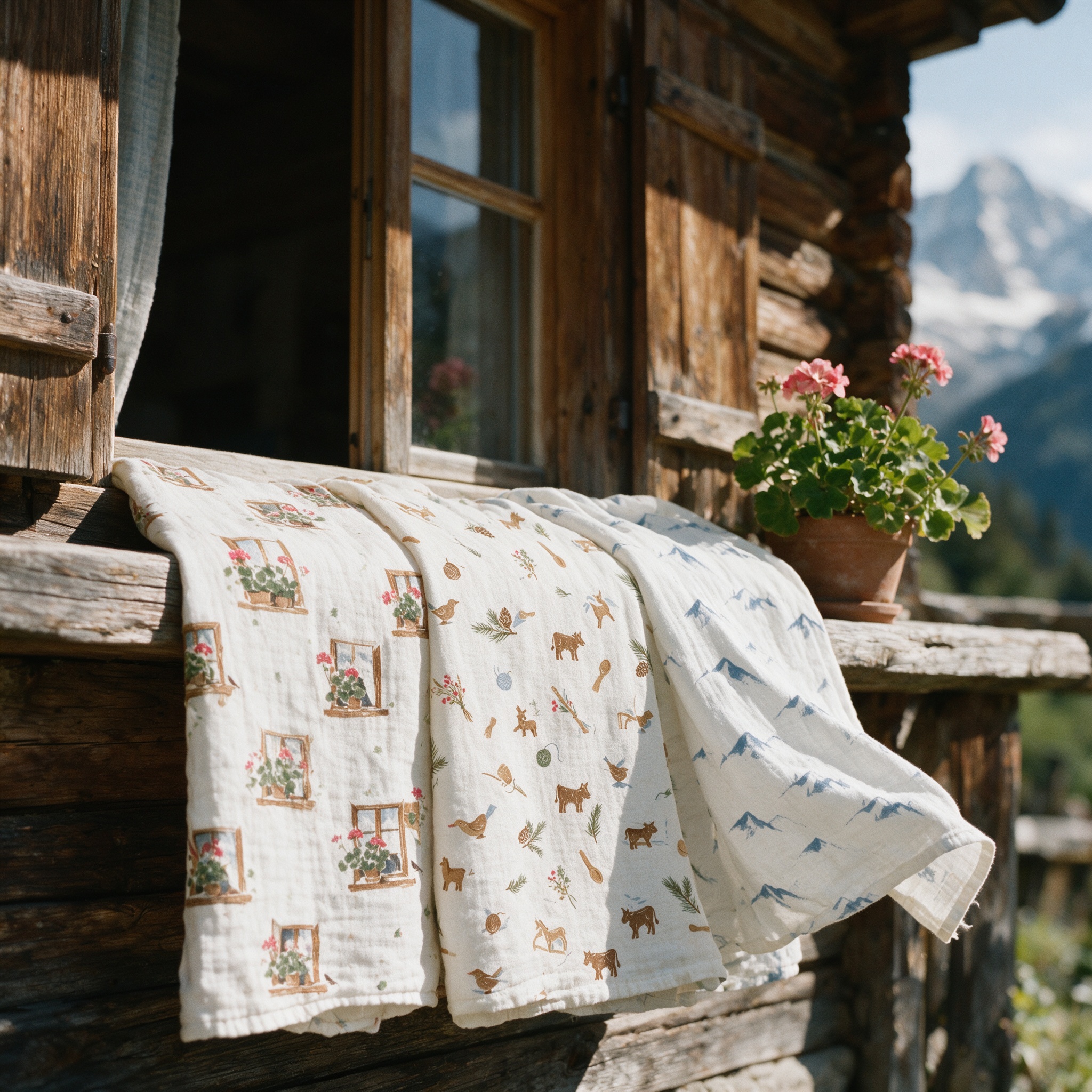
No. 06 · The England Line · The Watch (First Night Line)
The Fog Bell
Cornwall, England · A Summer Night, 1958
"Someone keeps the lamp for you — and you dare to sleep."
Mae, six years old, was back for another summer. Grandpa Tom was the keeper — the white lighthouse with its red top stood at the very edge of the cliff, and his cottage sat at its foot.
Grandpa had a rule: before lighting the lamp each evening, wipe the glass of the lantern room. He climbed the spiral stone stair round and round, and Mae counted his footsteps — one hundred and twenty-seven to the top. When the lamp is lit, the ships know the way home.
In the evenings they sat on the flat stone by the door and drank tea. The sea changed color, layer by layer; the sea pink on the cliffs was in full bloom — purple-pink, cluster after cluster, nodding in the wind.
At night Mae slept in the small room facing the sea. The lighthouse beam swept past her window — light, then dark. Light, then dark.
"Grandpa, what is the lighthouse doing?"
"It's blinking — keeping watch over your sleep for me."
On foggy nights, when the sea disappeared, Grandpa rang the fog bell. Boom — boom — one stroke every few minutes. Mae counted to the seventh, and fell asleep.
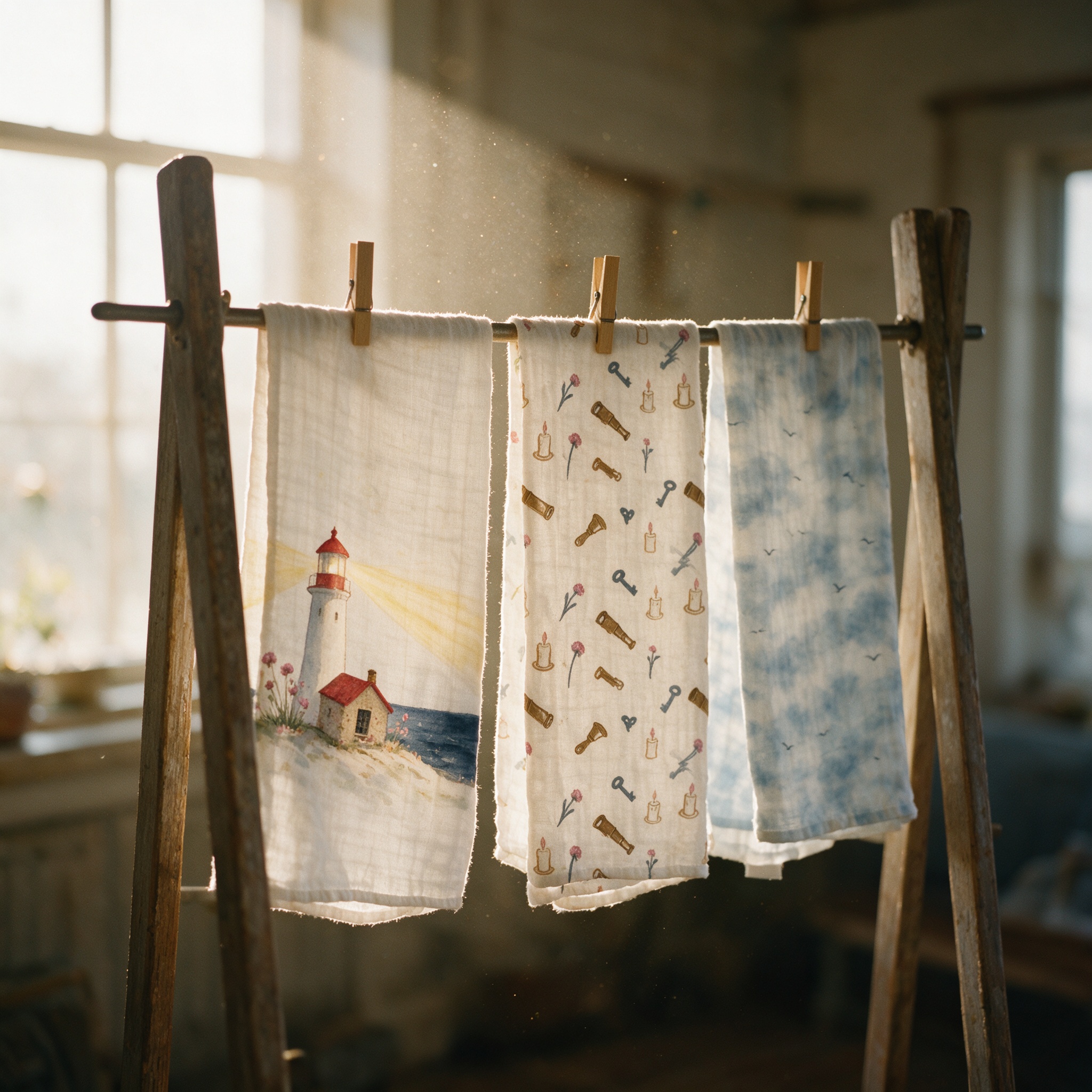
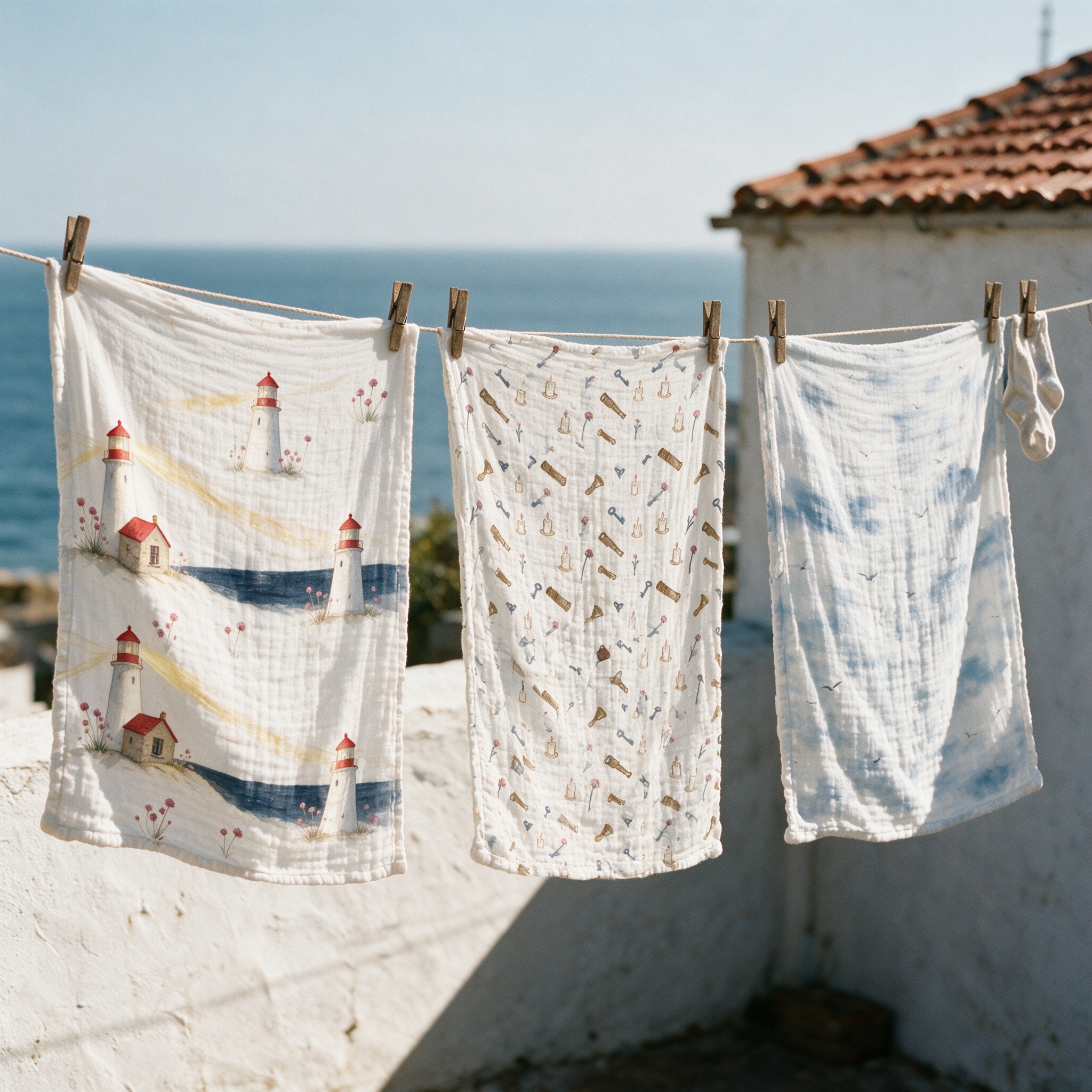
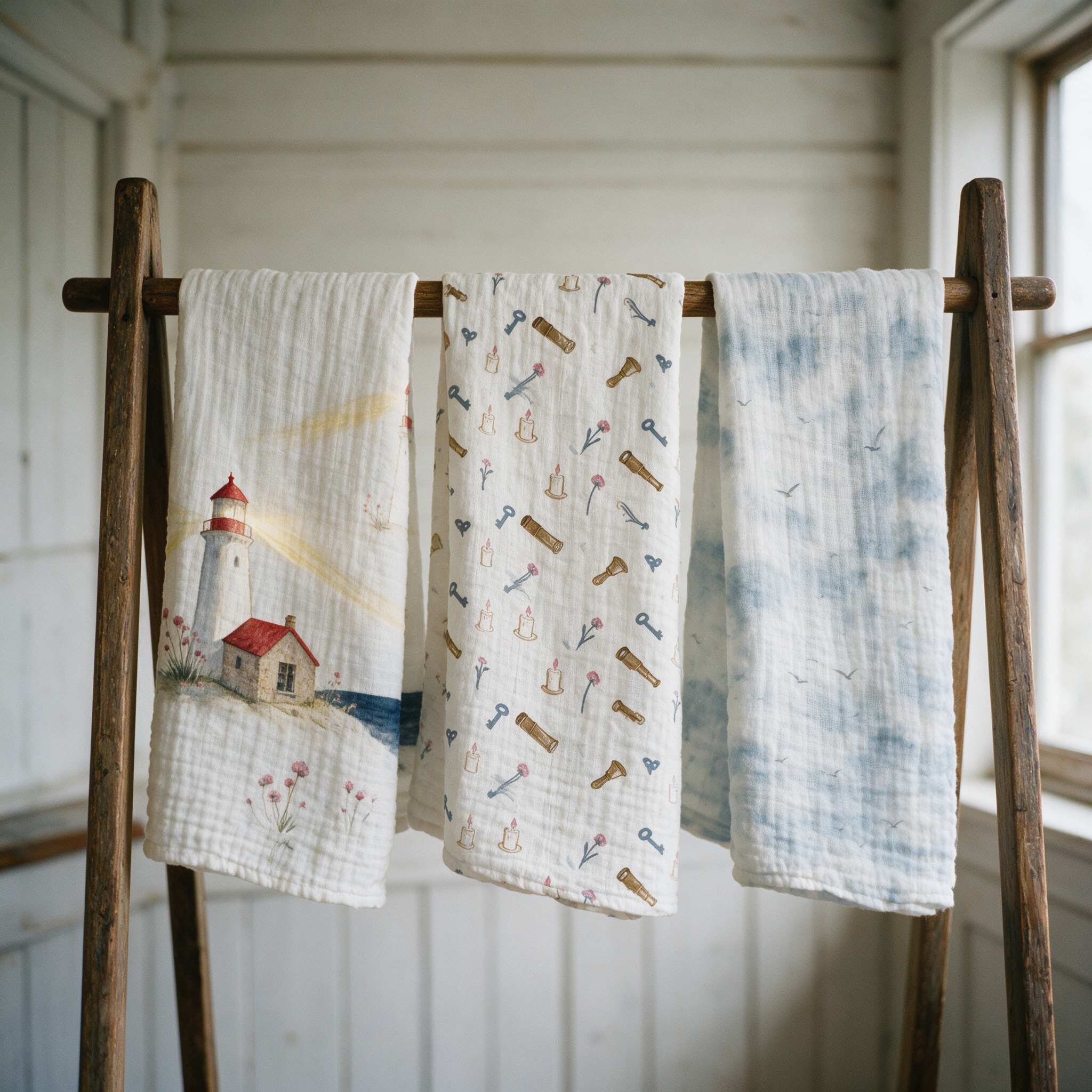
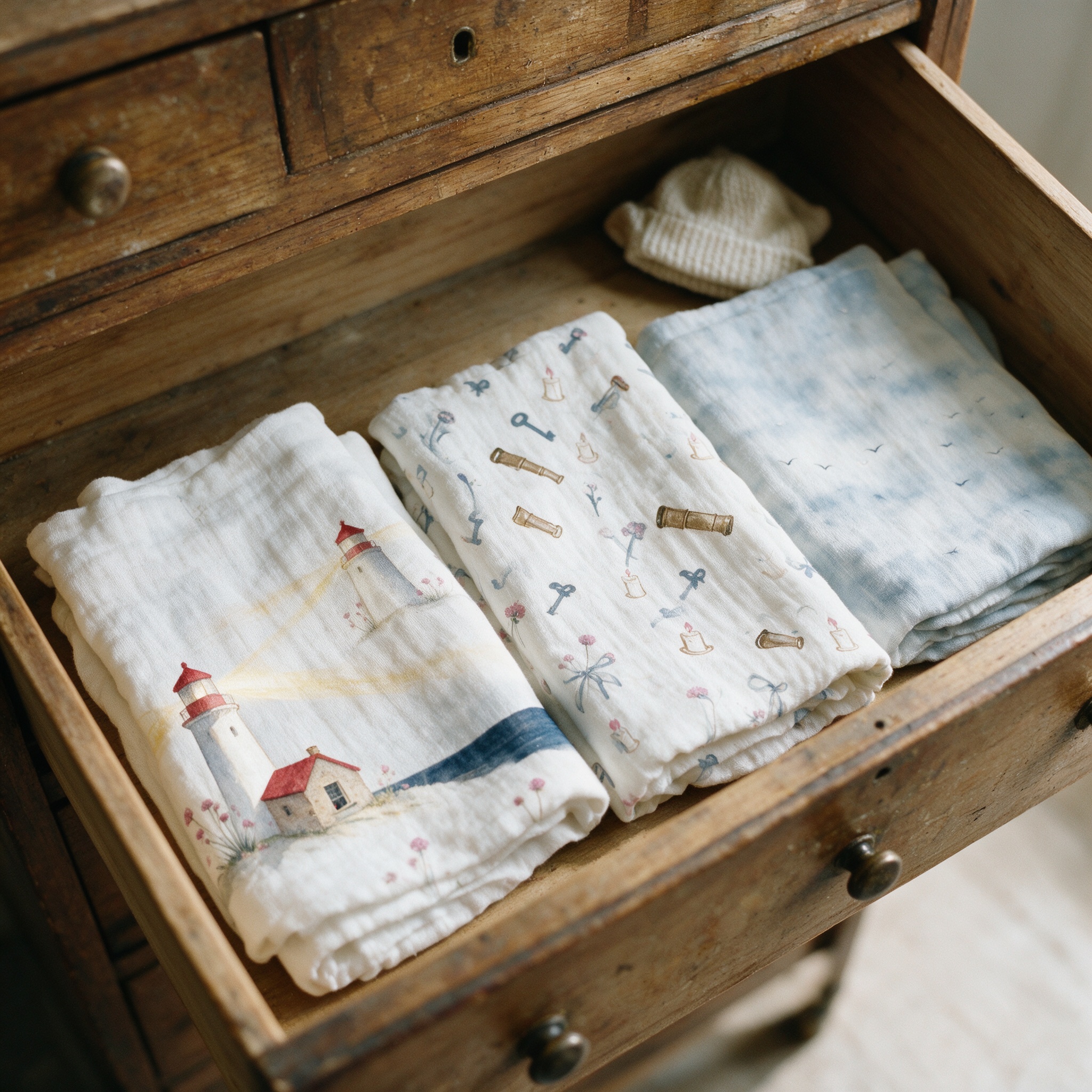
A lamp (P1), a pocket of old things (P2), a fog (P3).
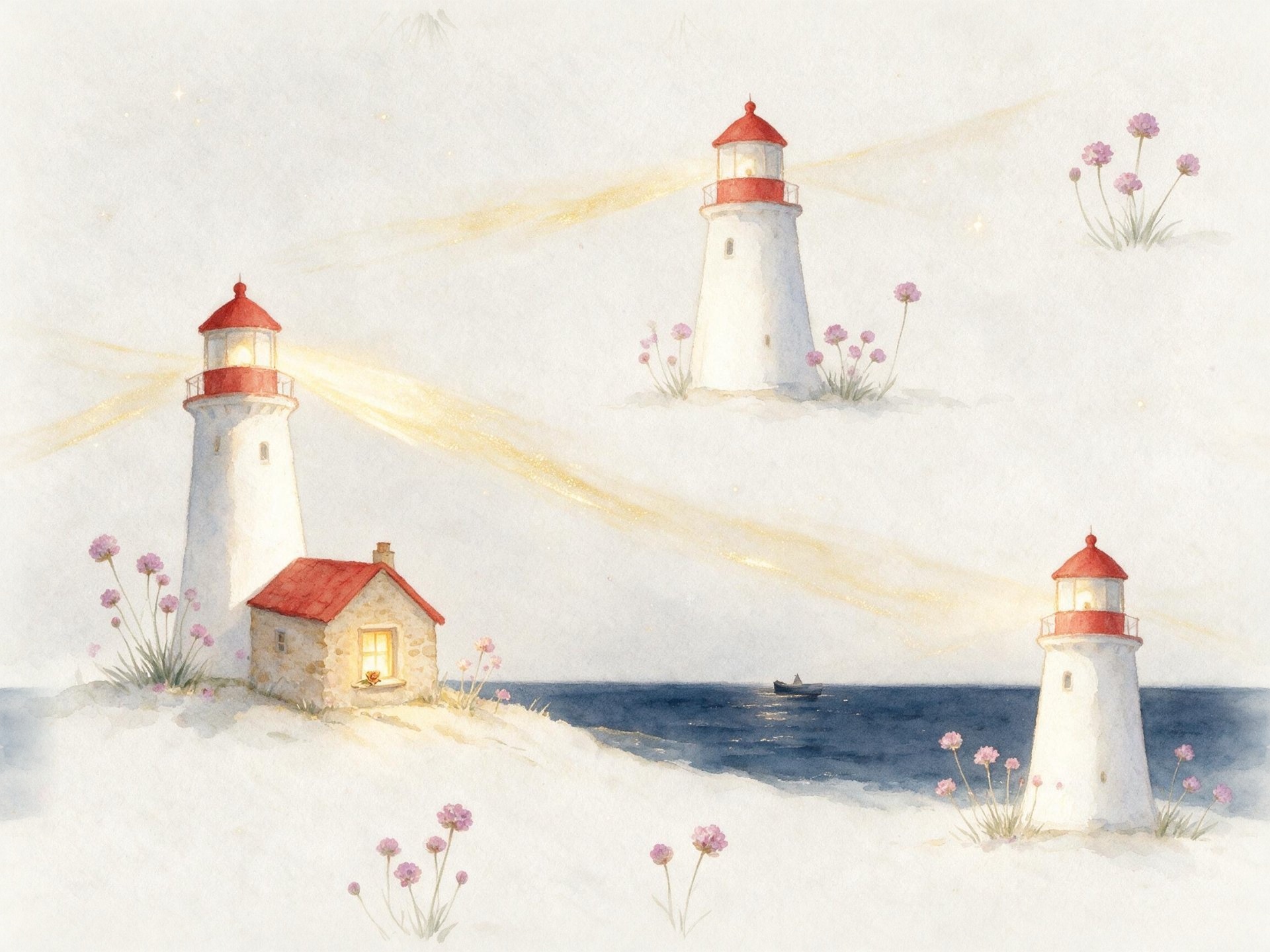
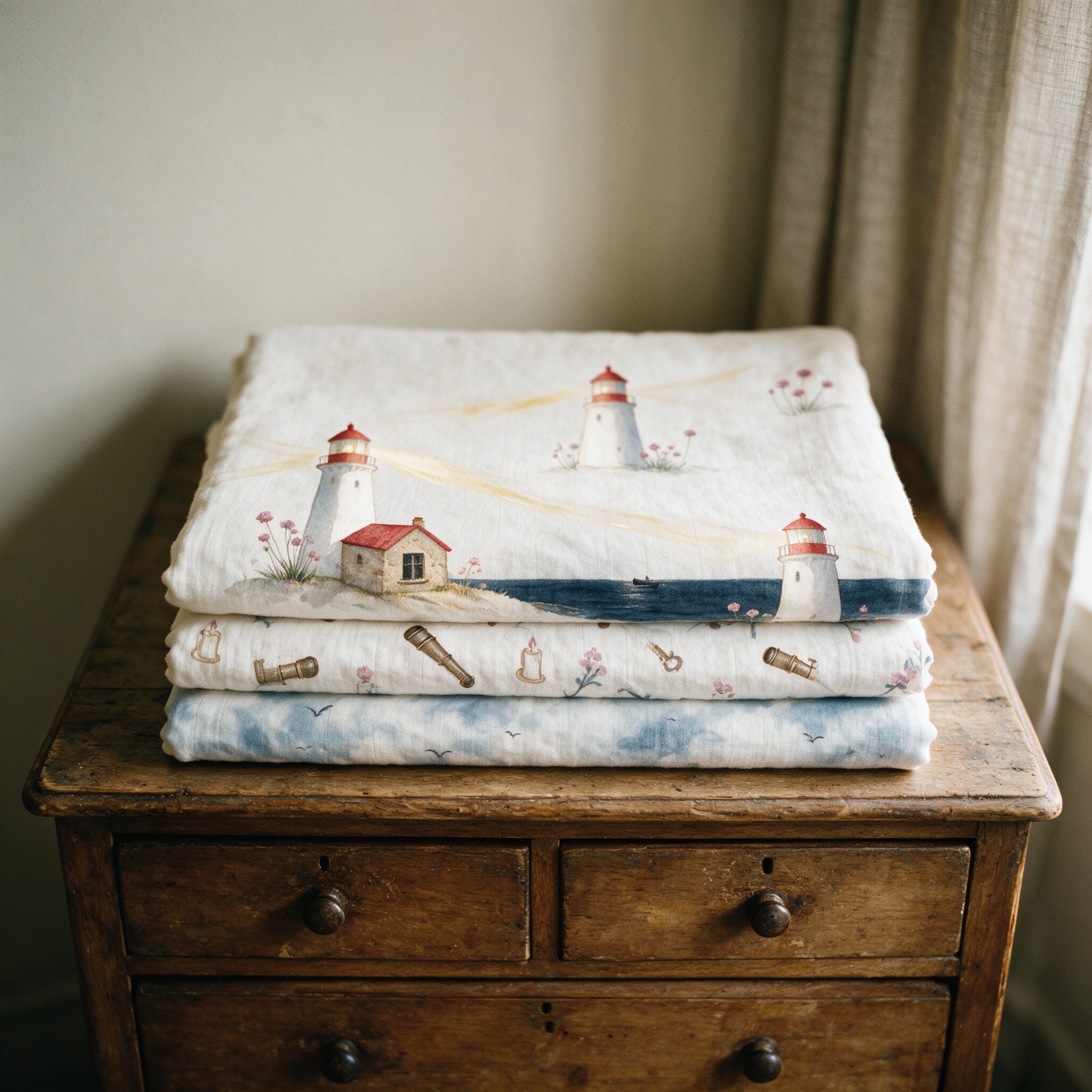
A white lighthouse with a red top, a slanting beam of warm gold, one yellow-lit cottage window, sea pink on the cliffs — and in the far line of night blue, now and then, the silhouette of one tiny fishing boat.
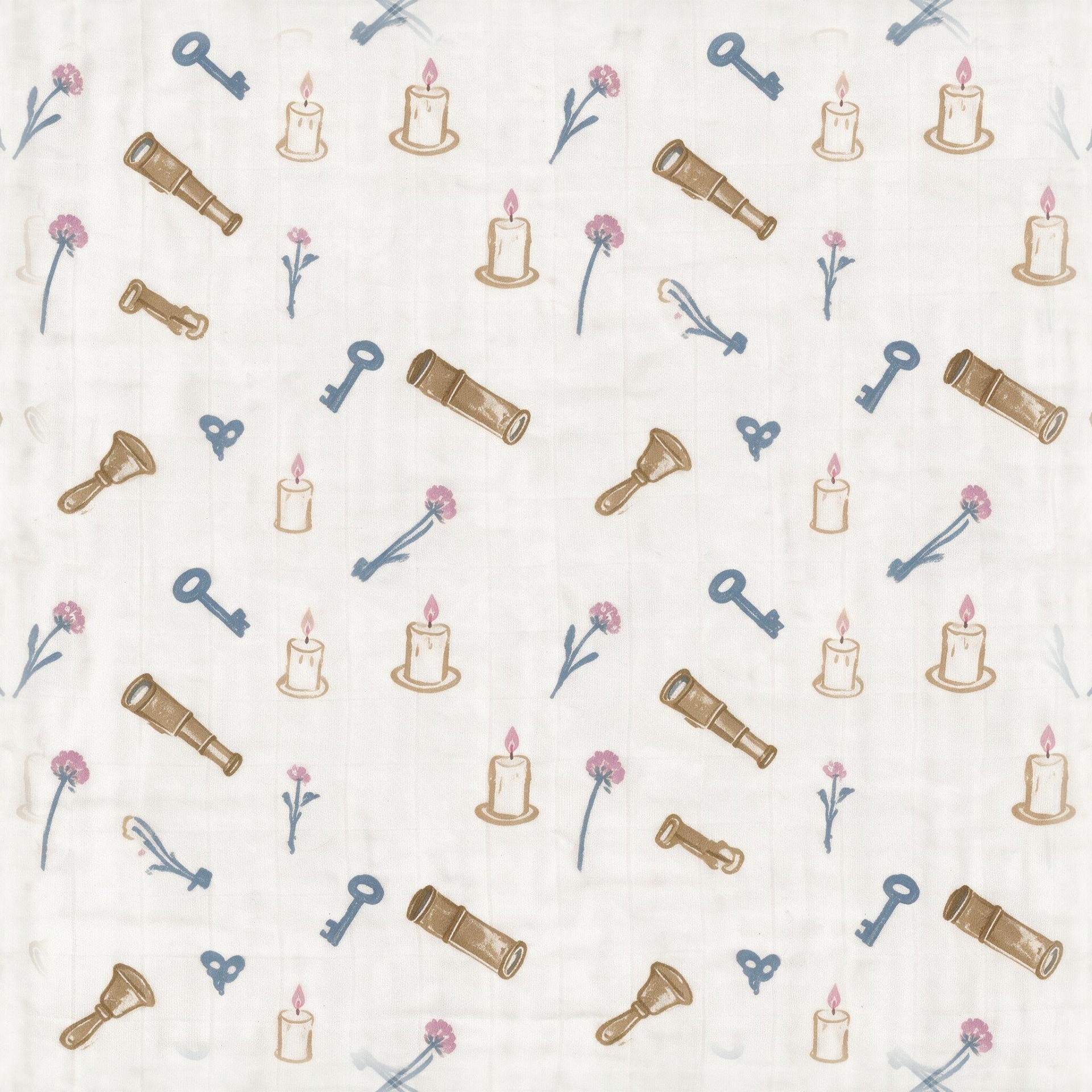
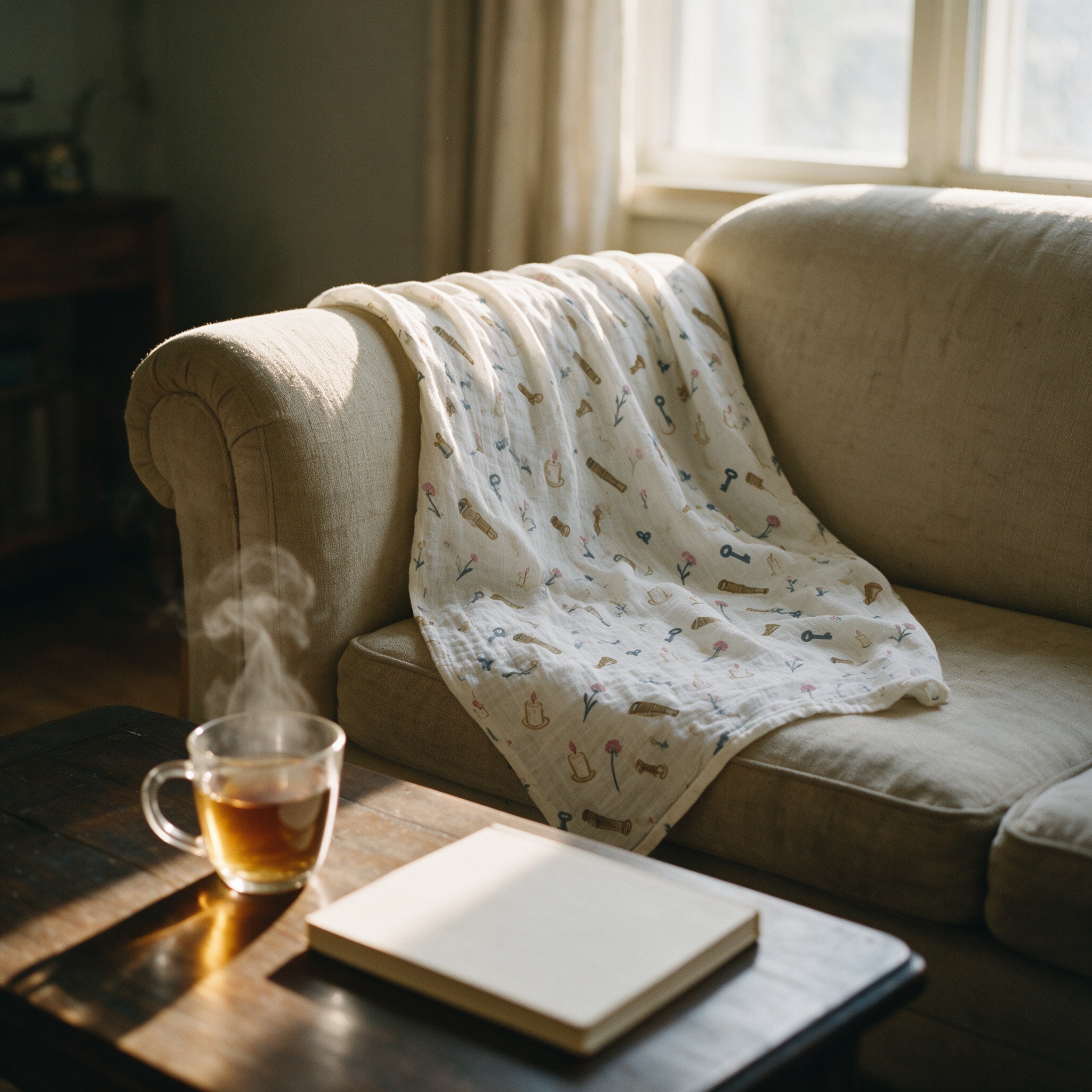
Flat-brush motifs — the fog bell's small hammer, an old telescope, a lamp wick, a sprig of sea pink, a tiny lighthouse silhouette. The things a keeper carries, half a lifetime deep.
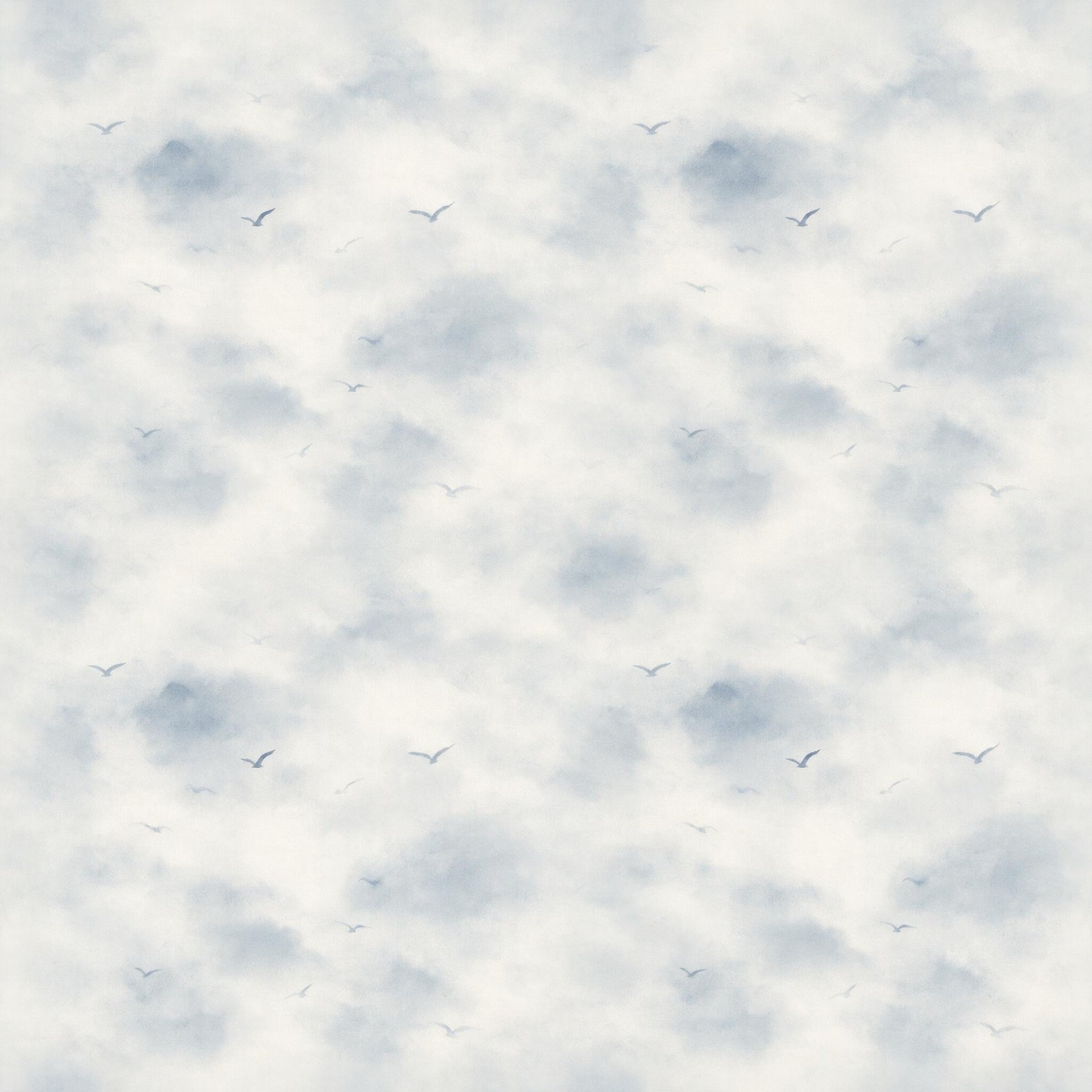
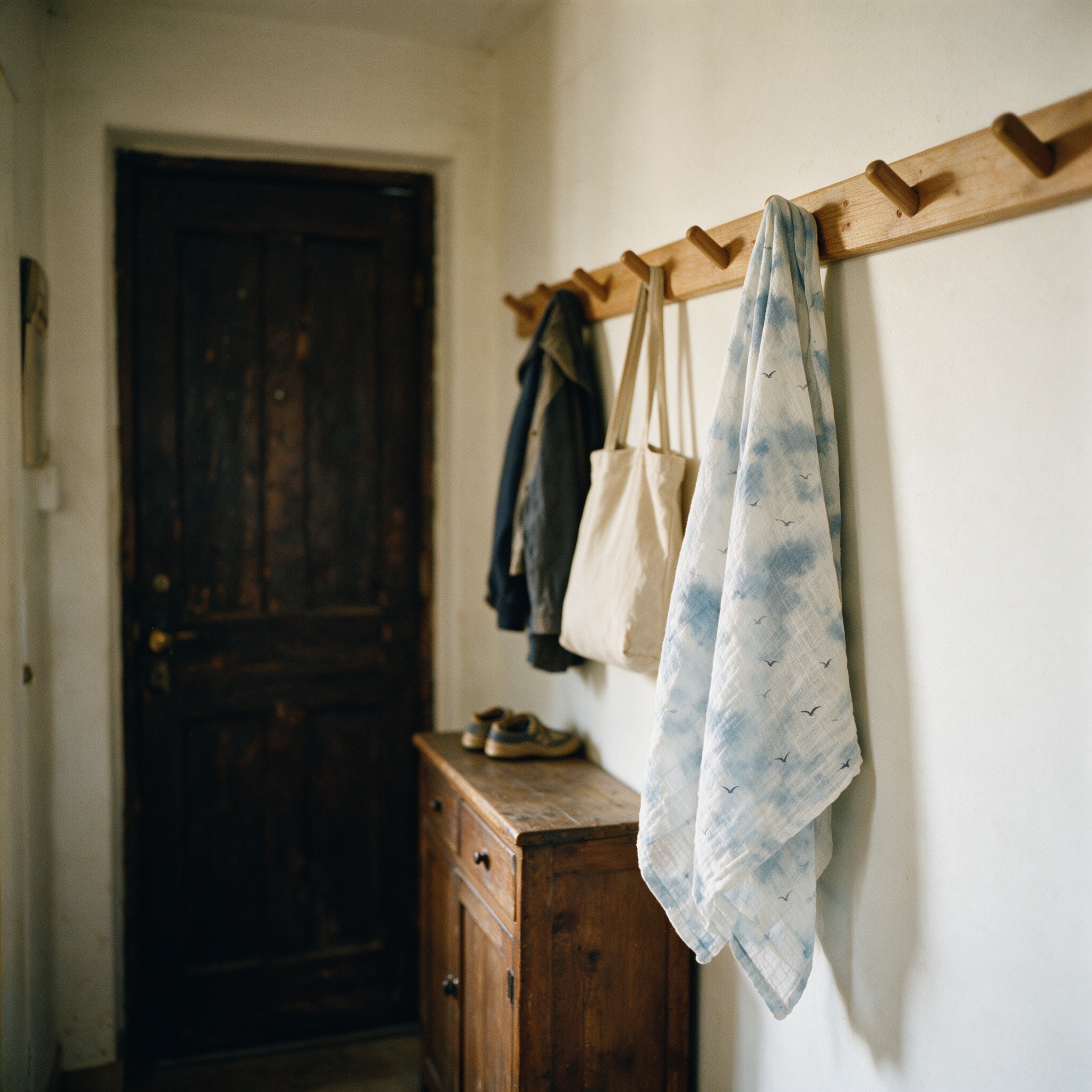
Horizontal wisps of advection fog, layer upon layer across the cliff — the palest blue-grey. A solid from across the room; a moving fog up close.
The discipline of night: blue only as one line; the cloth is always fog-white. We print light on white cloth — never a night scene on black.
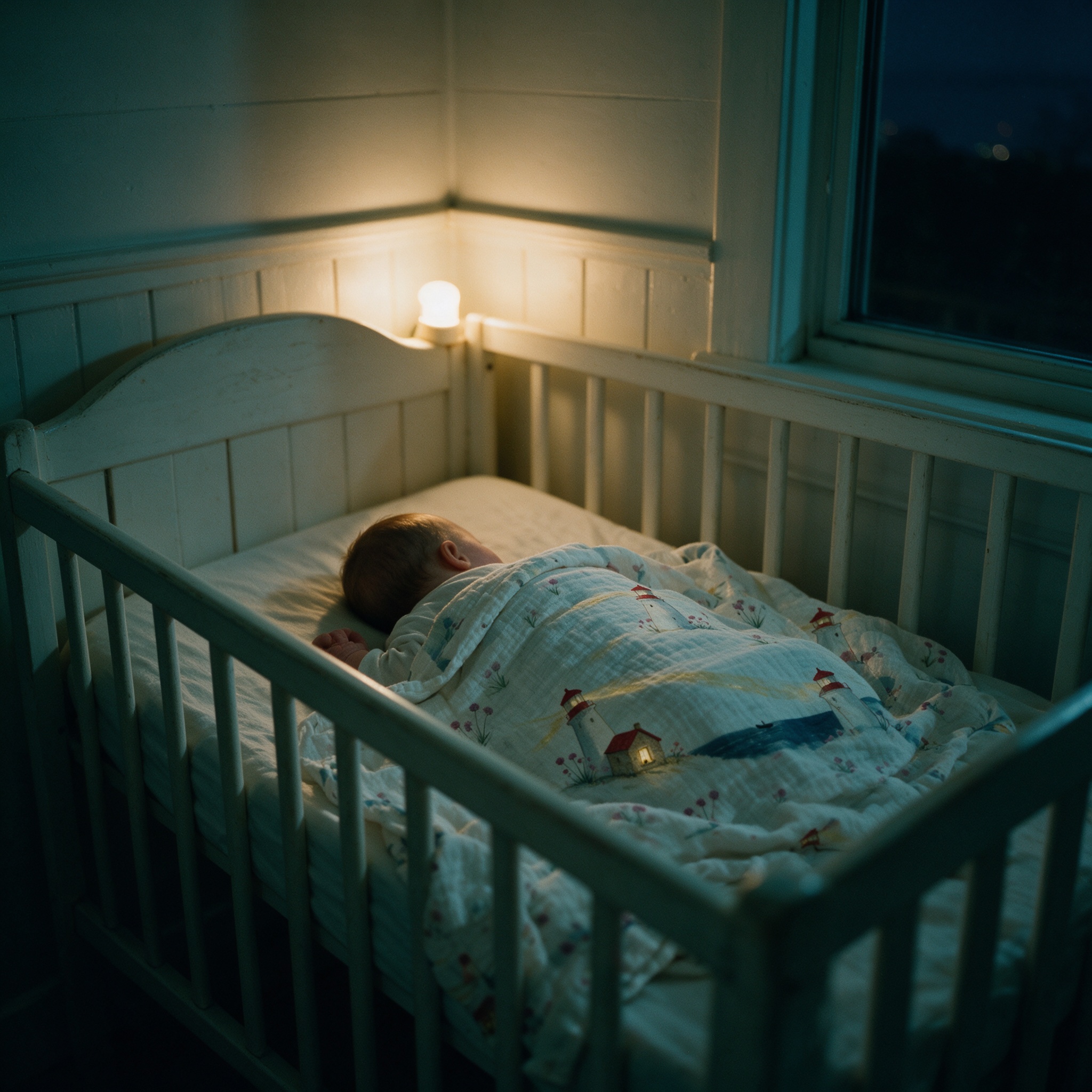
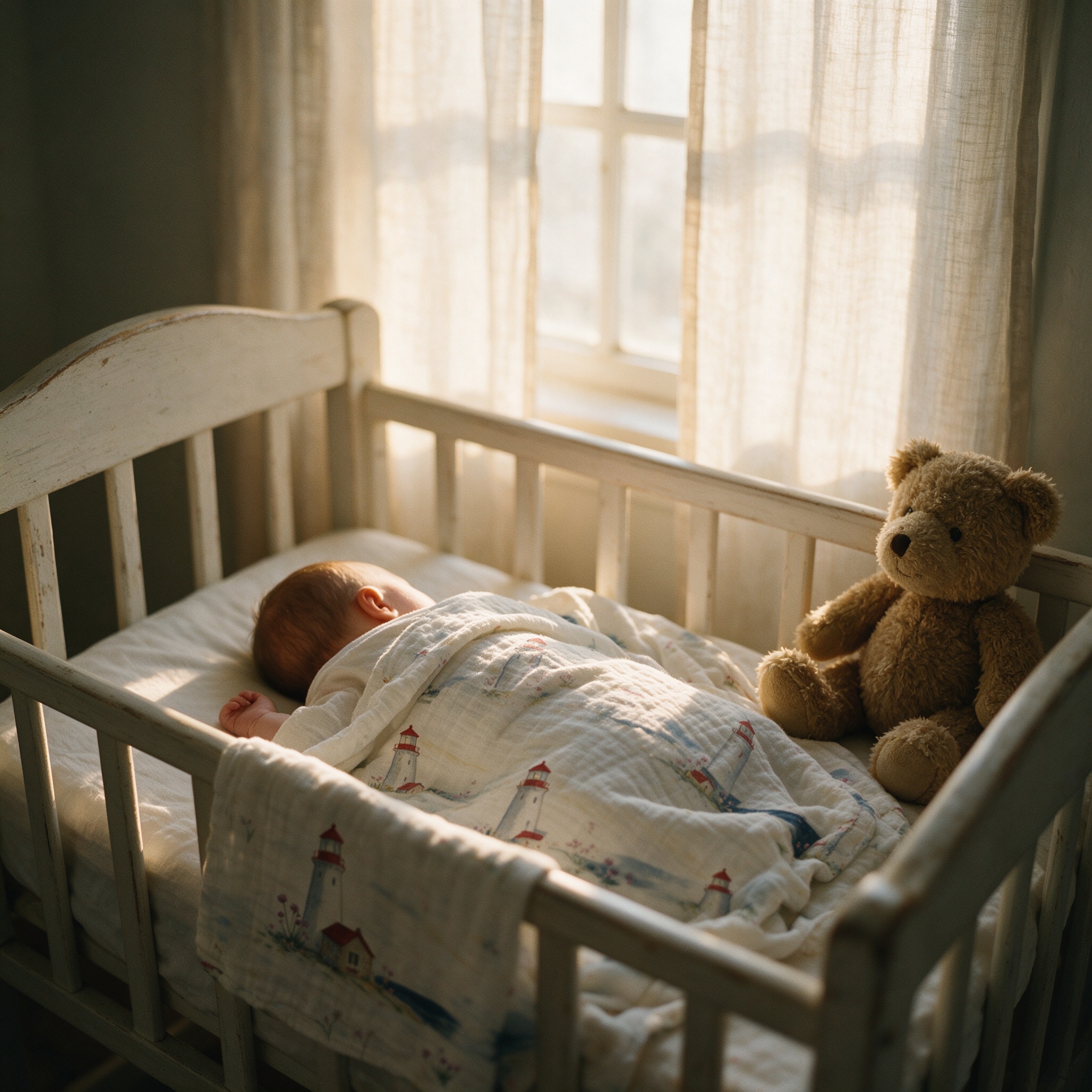
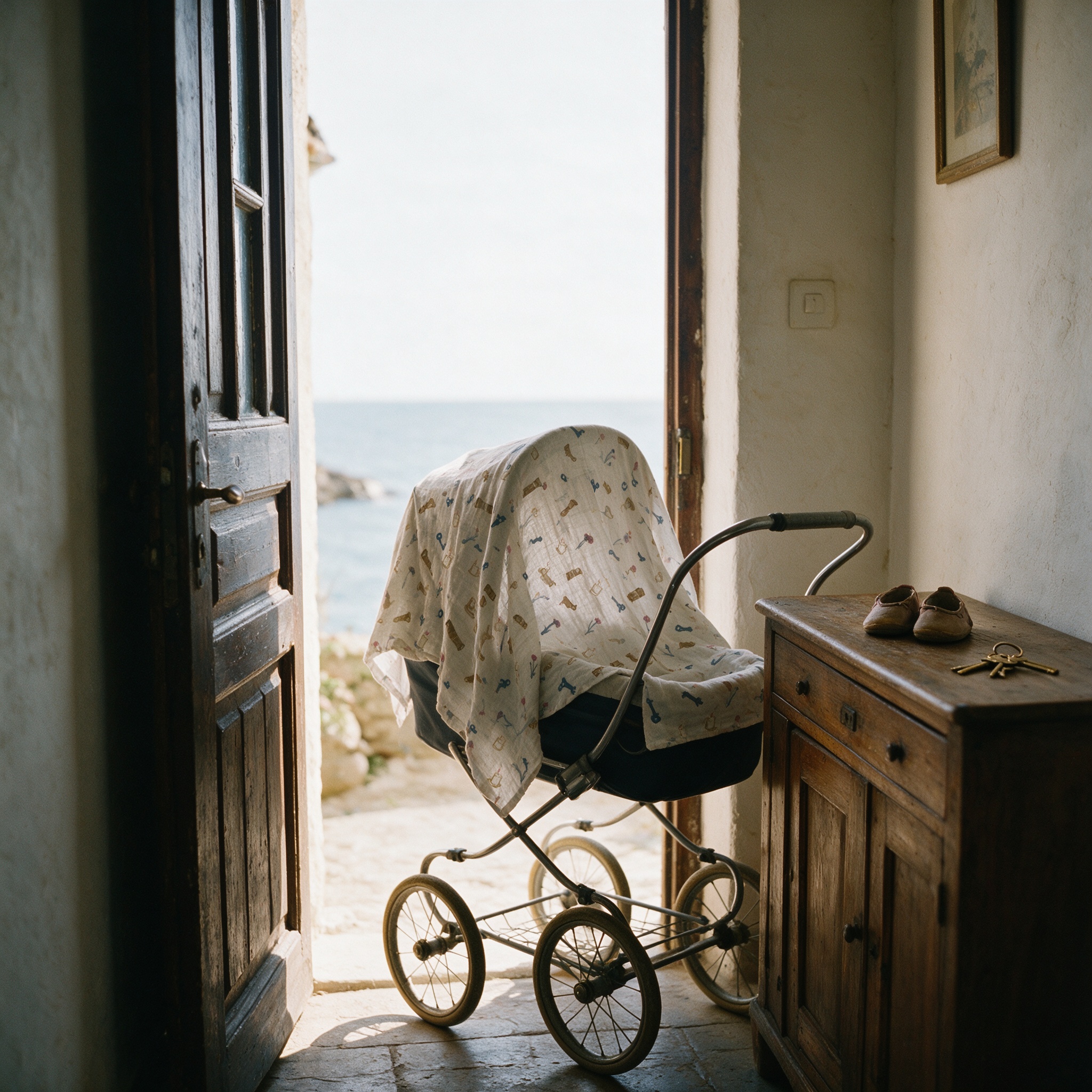
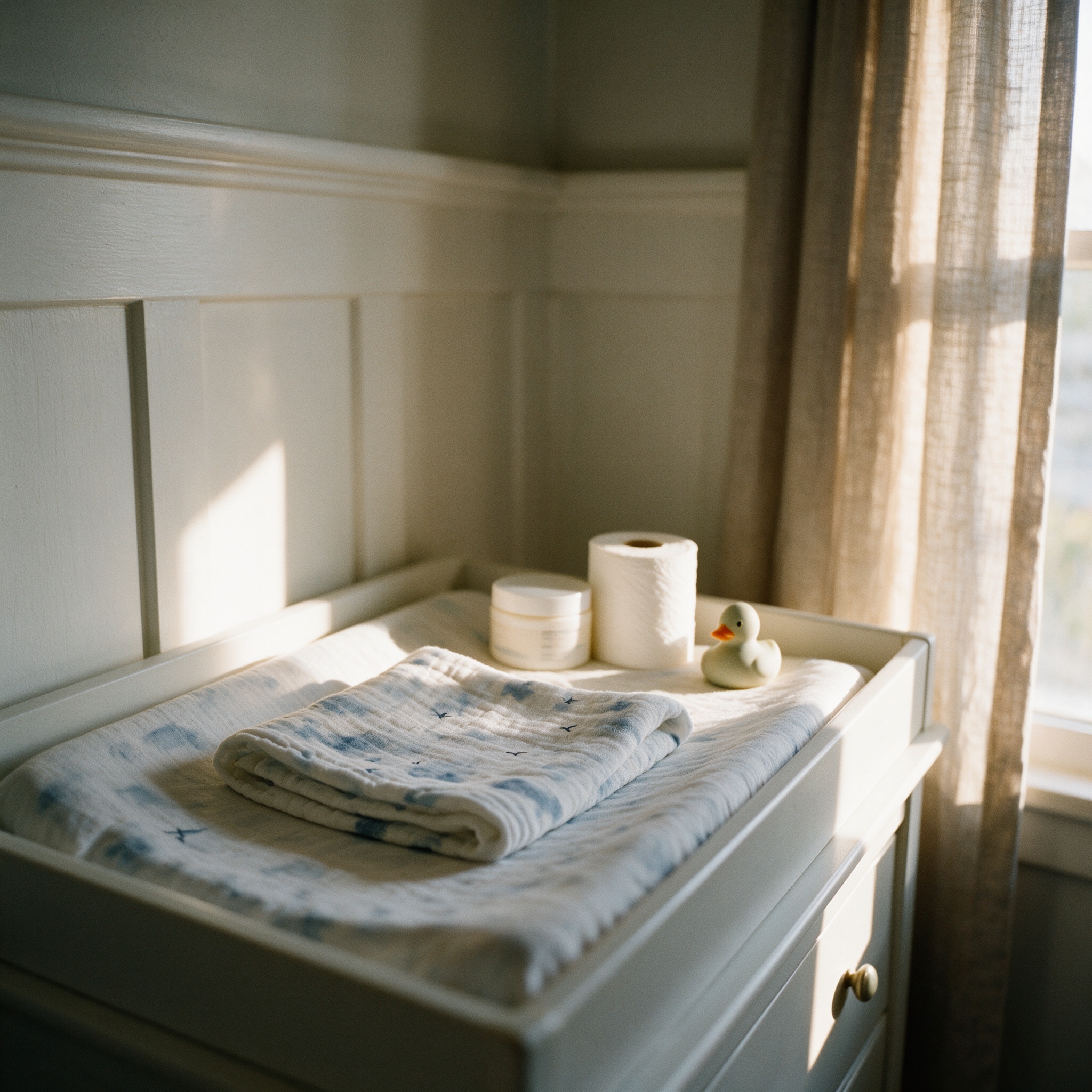
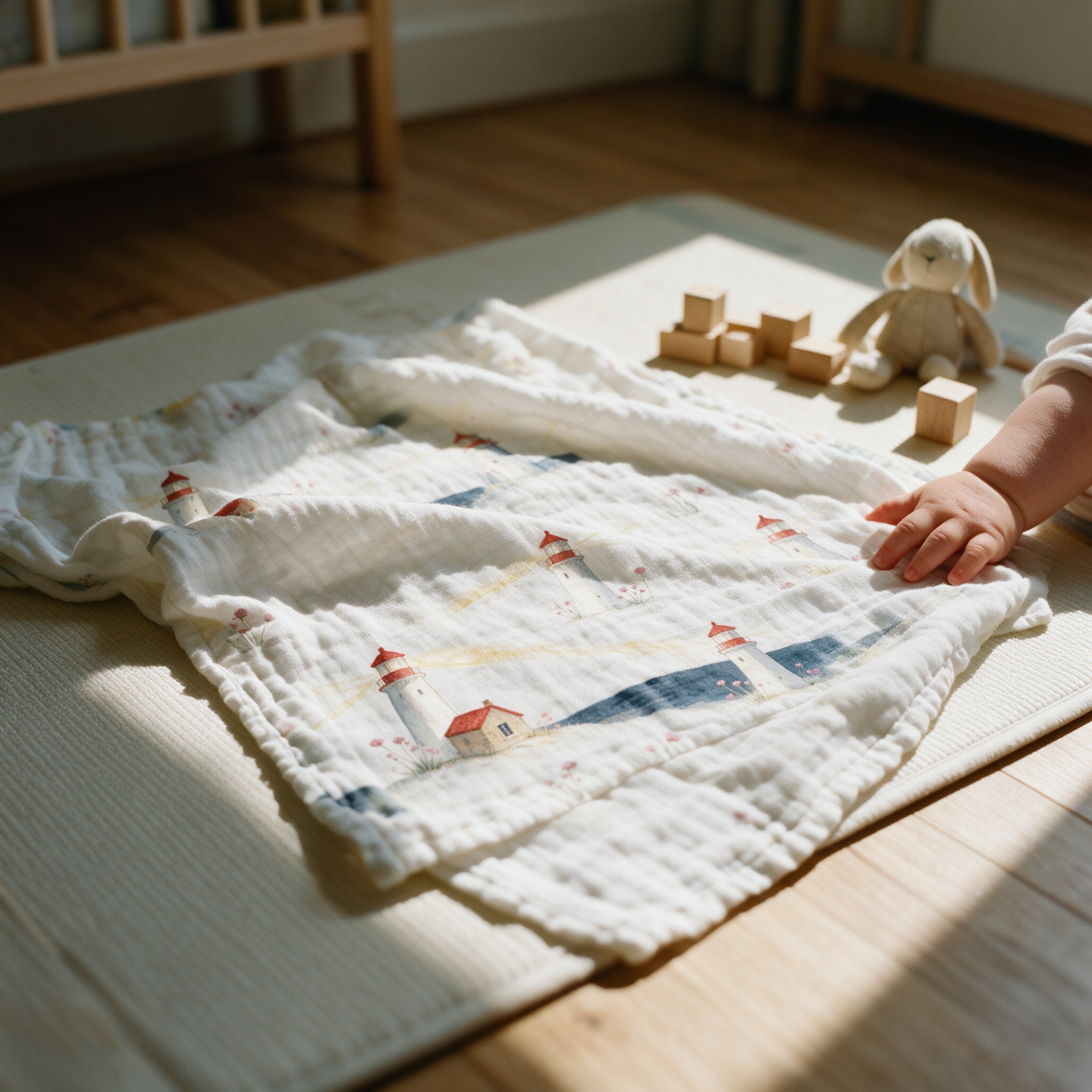
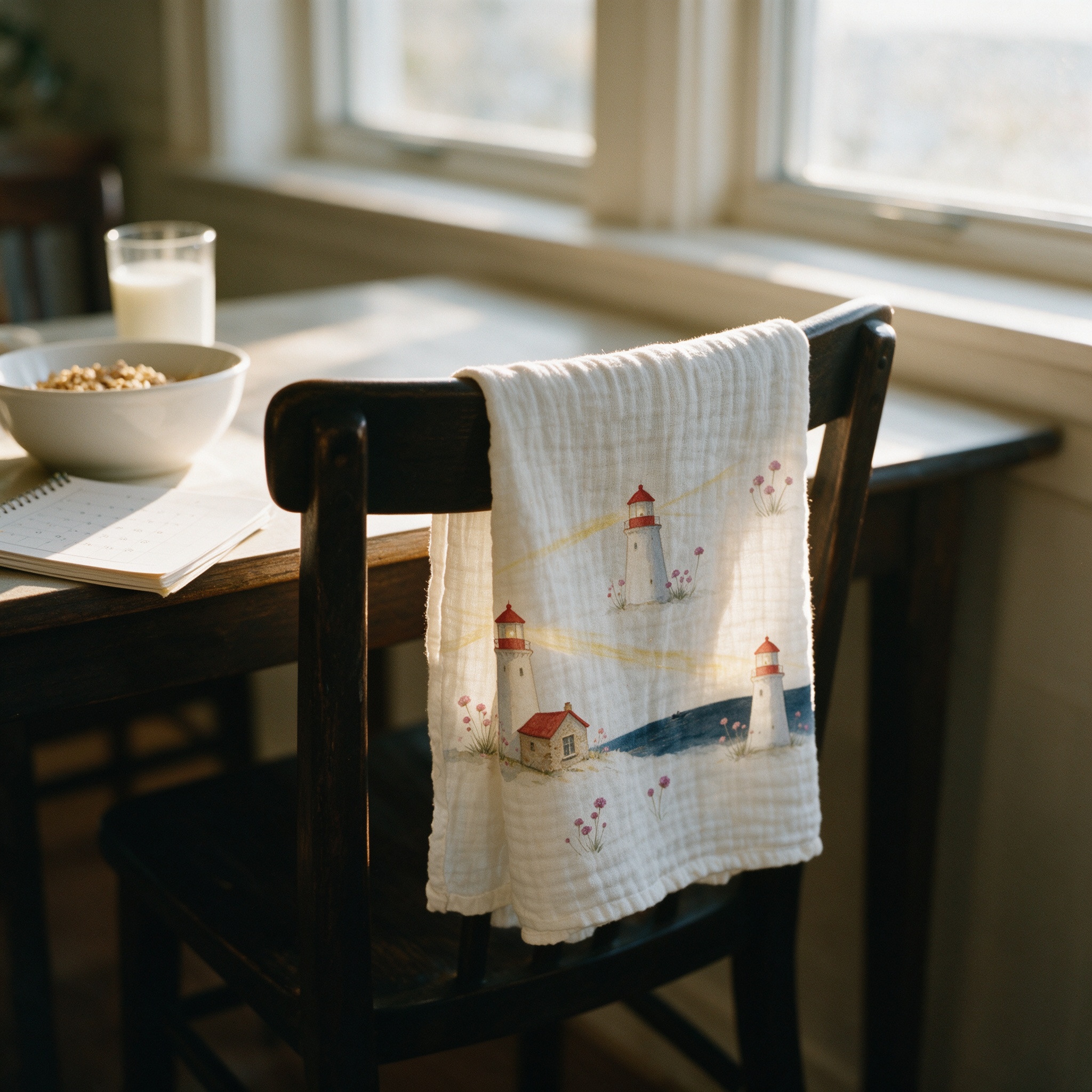
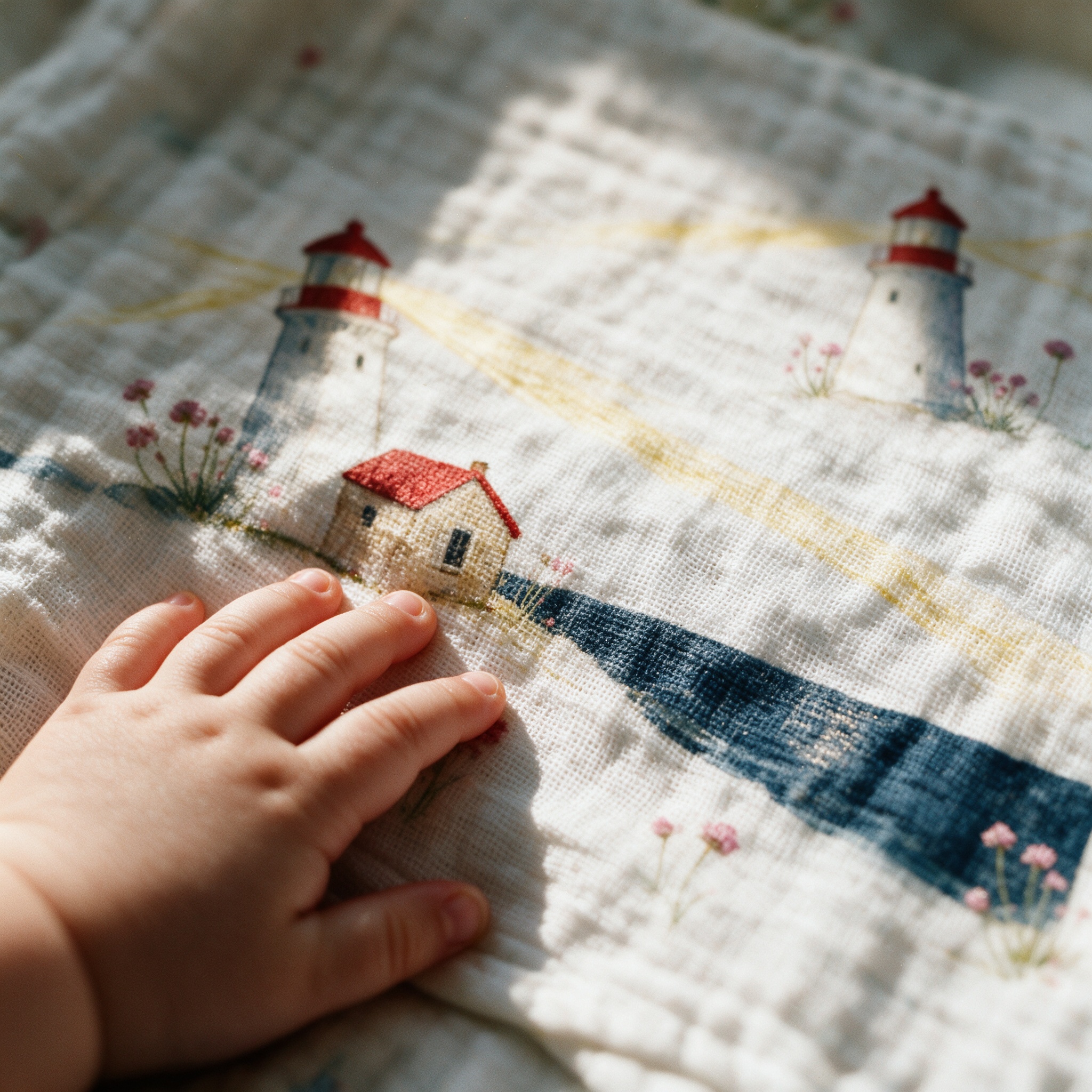
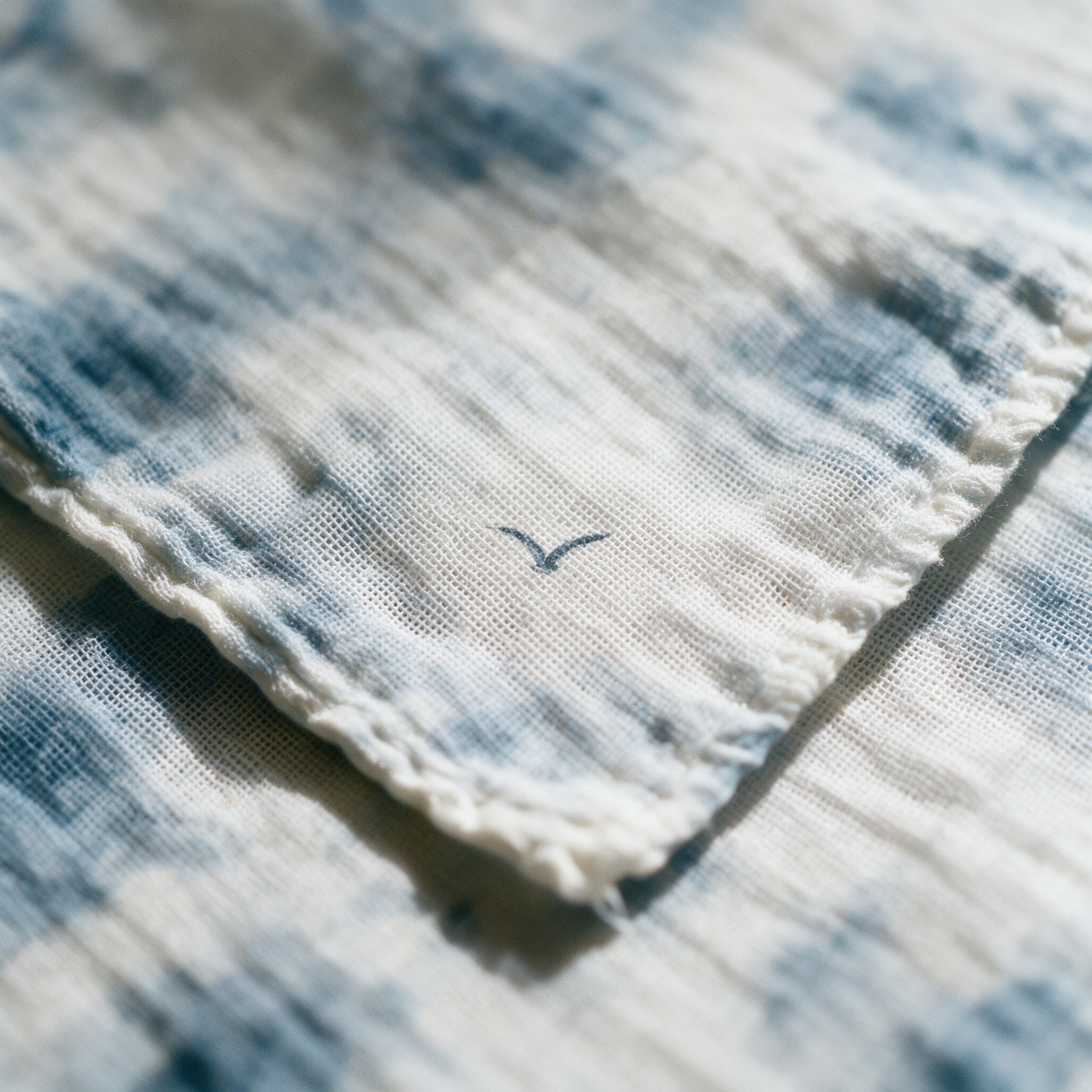
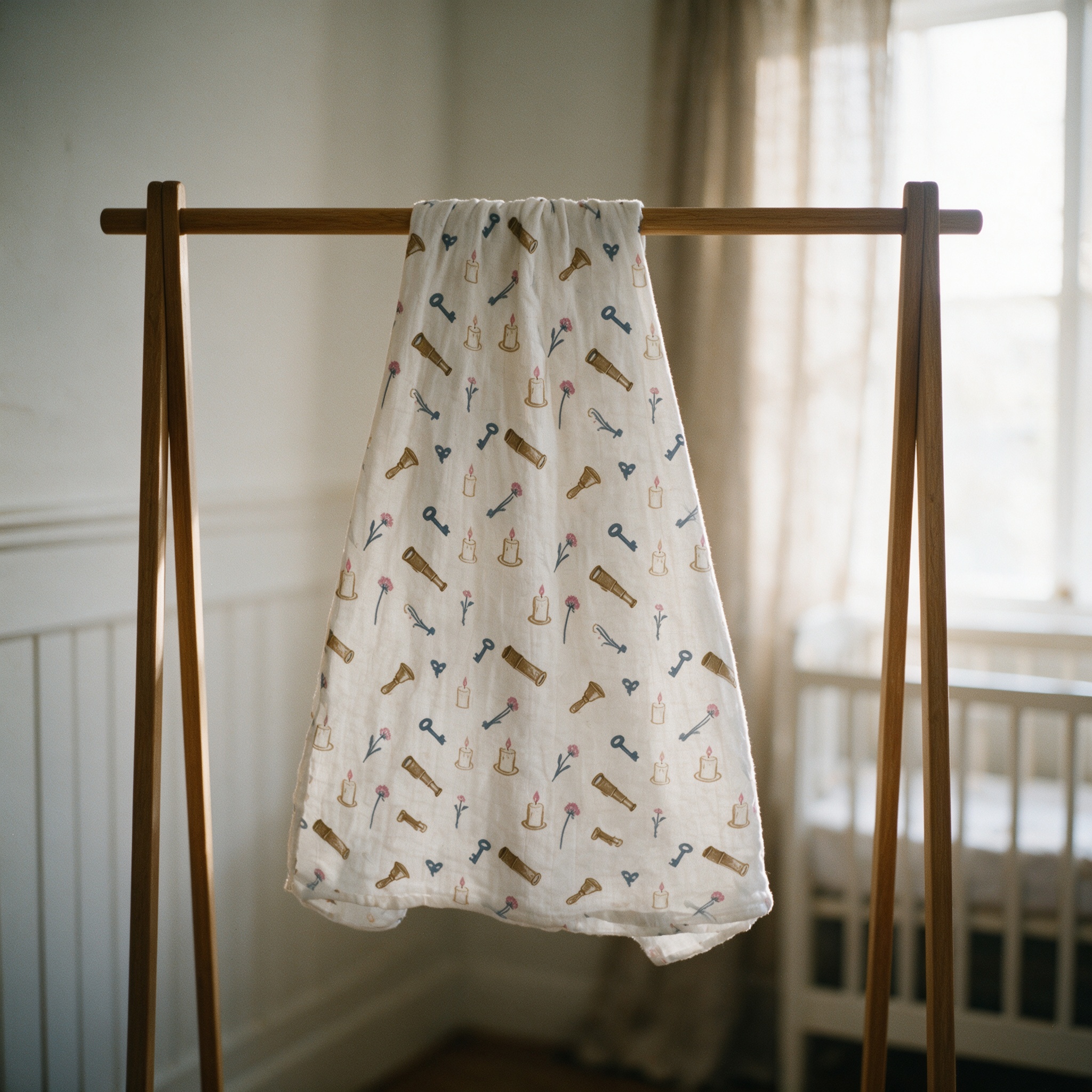
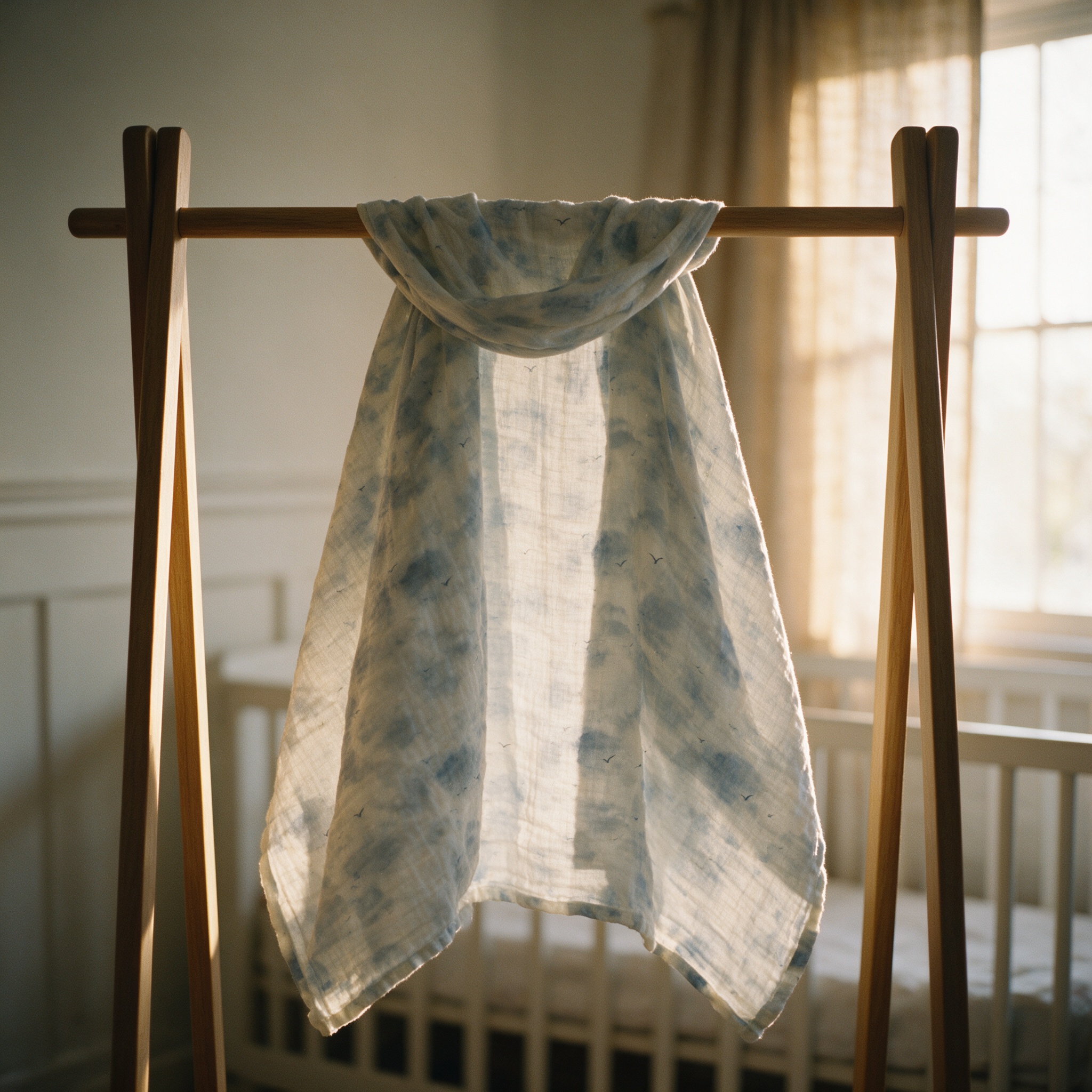
The child in the story falls asleep to the beam; the baby at home falls asleep under this cloth — the one line where story and product are the same scene.
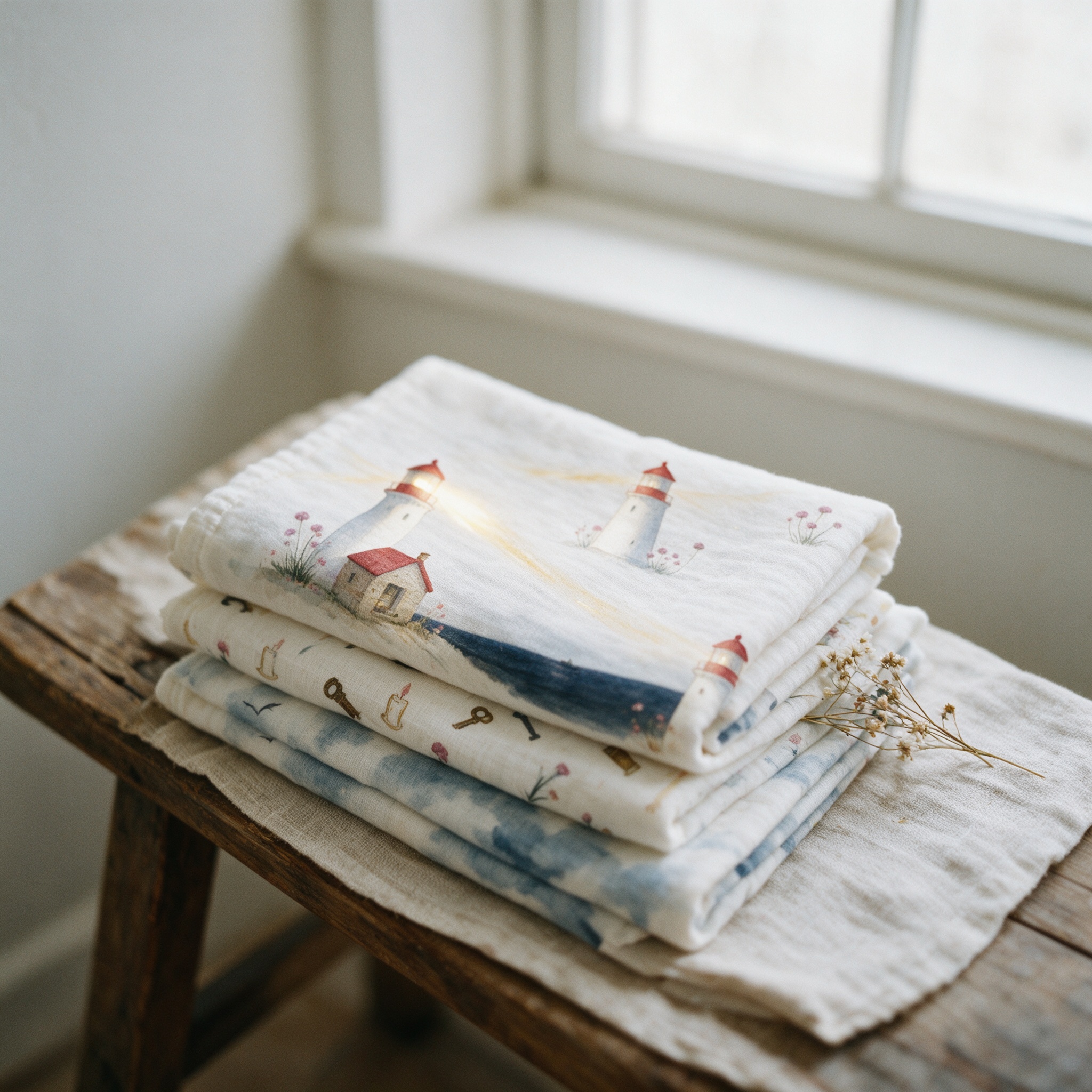
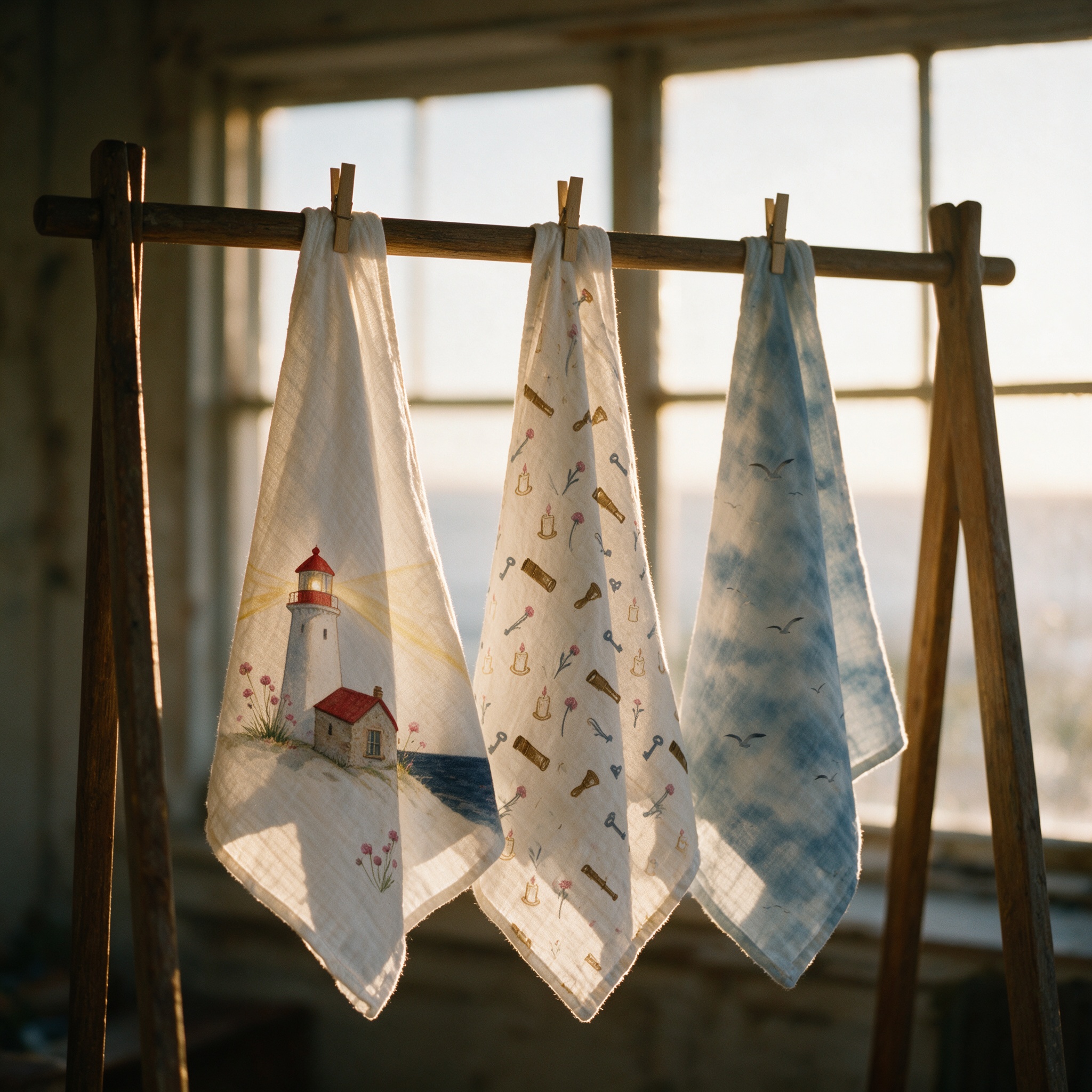
Three things for the watch, folded together — lamp, pocket, fog.
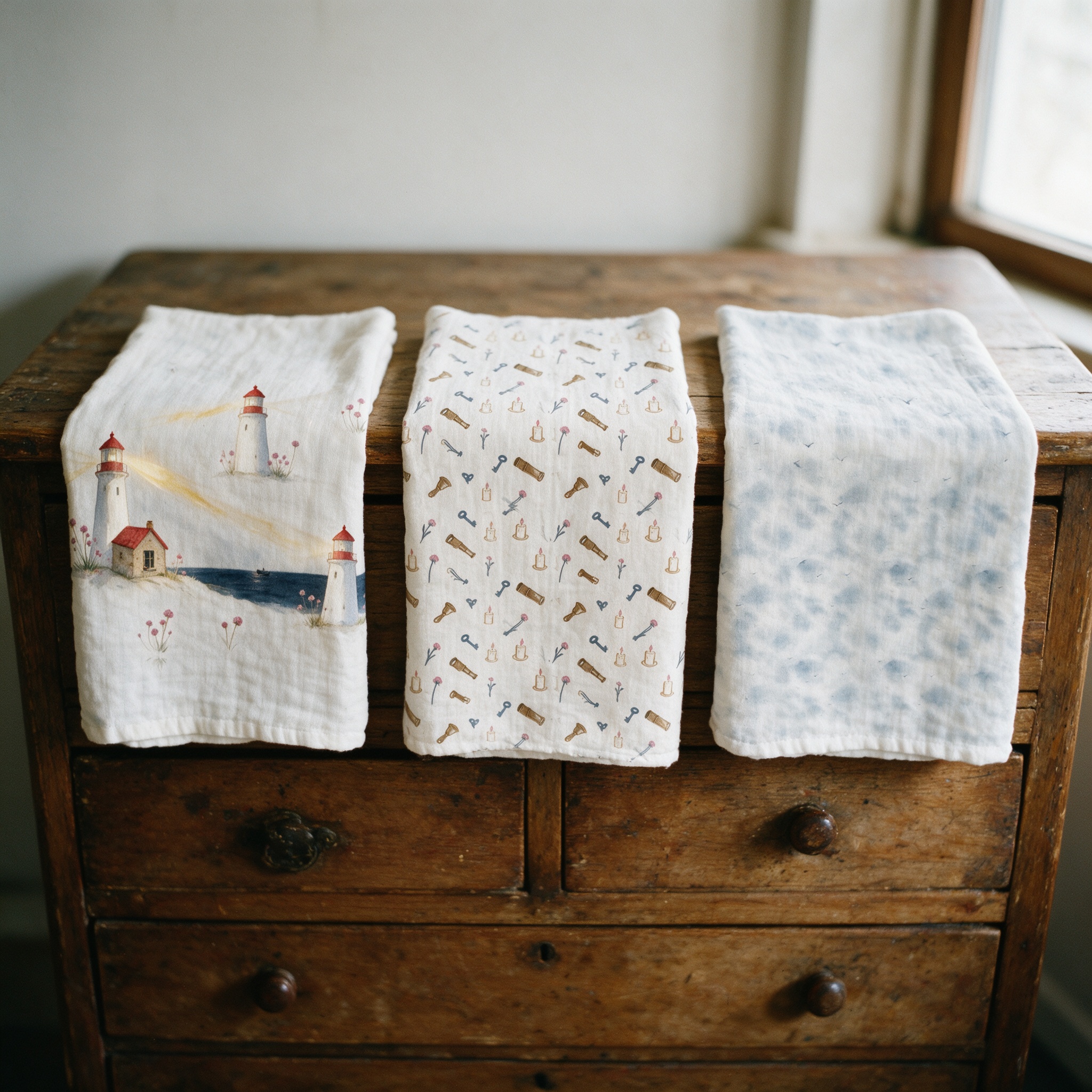
Three patterns in a row — from lighthouse to pocket to fog.
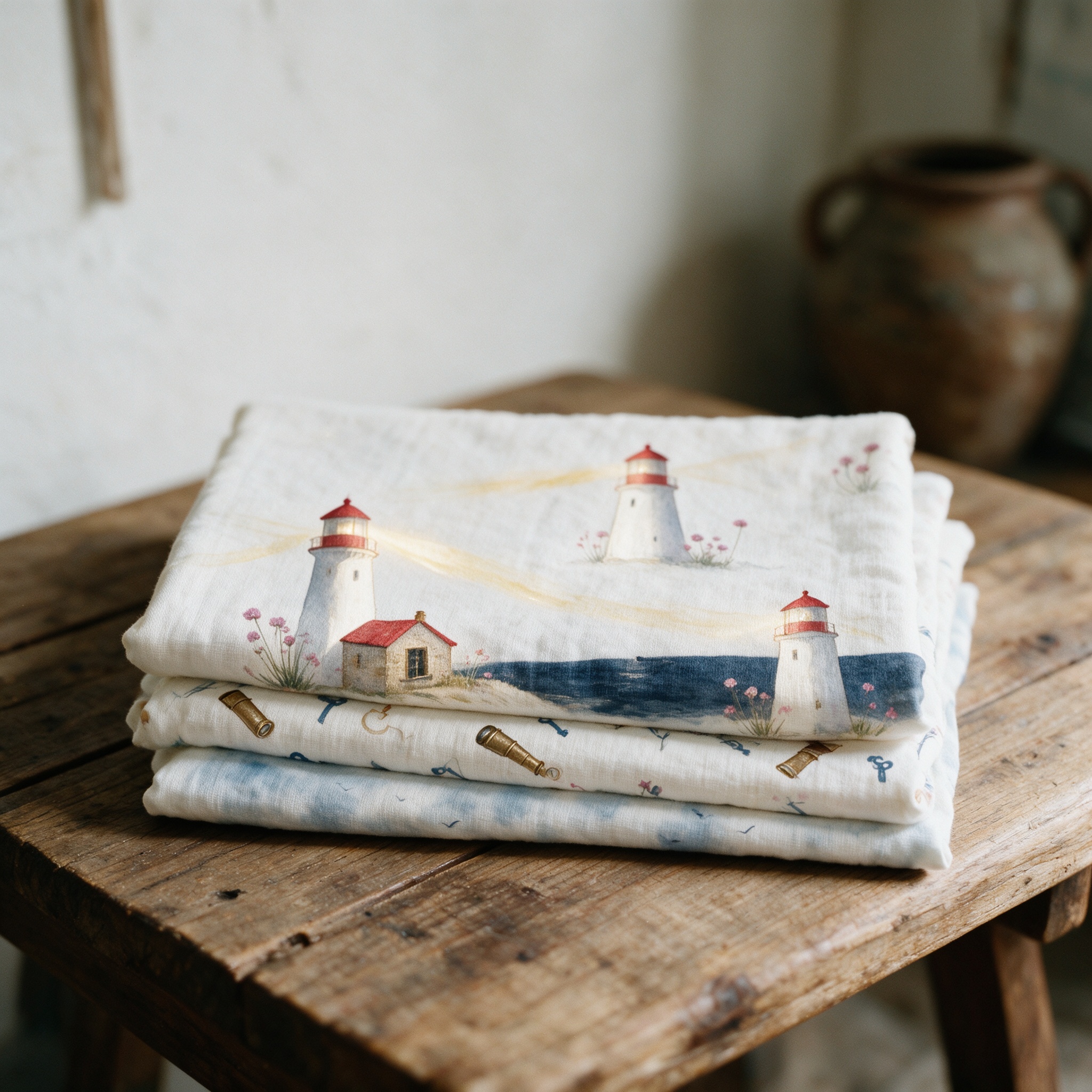
One in use, one in the wash, one in the drawer.
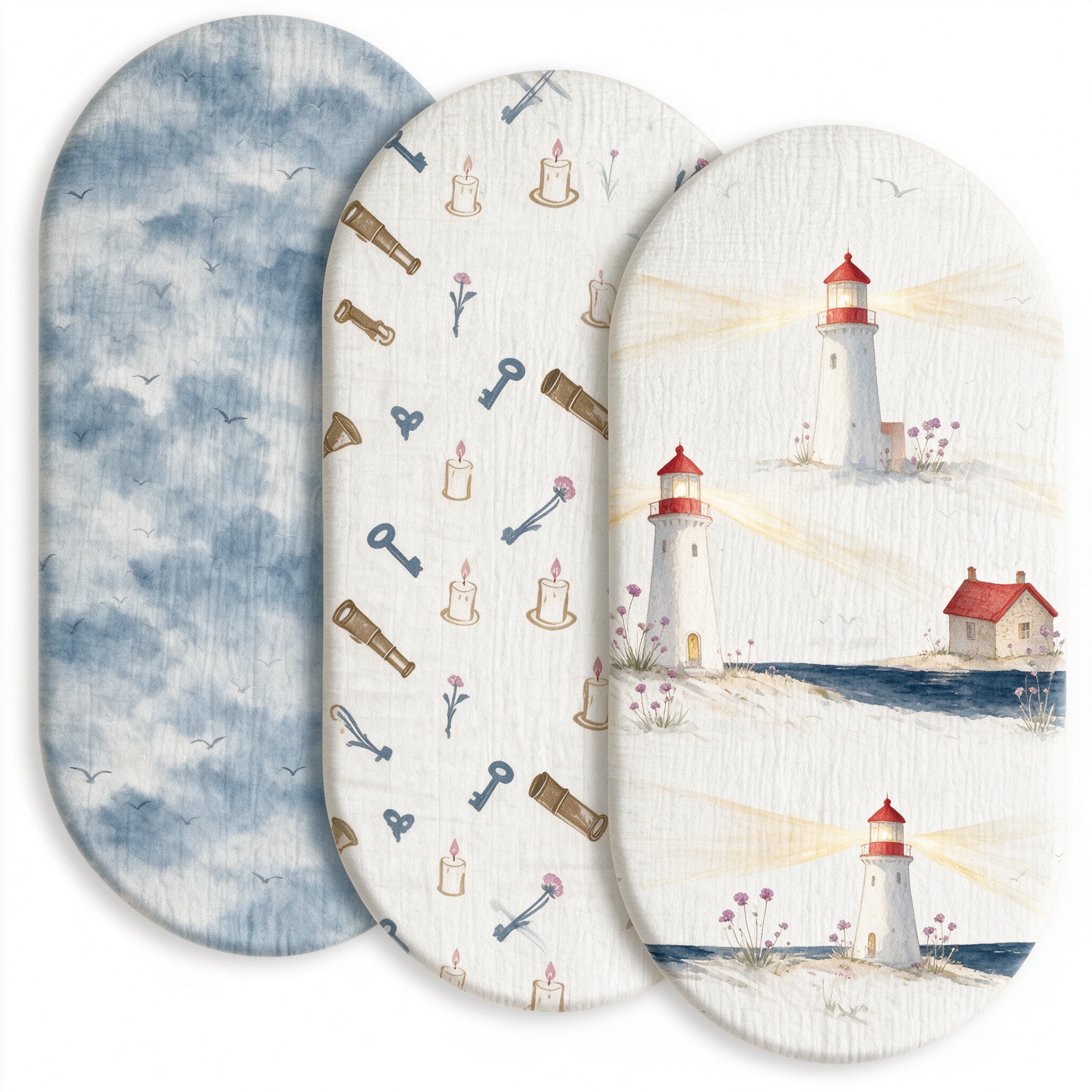
The whole family in white — fog-white ground, light printed on it.
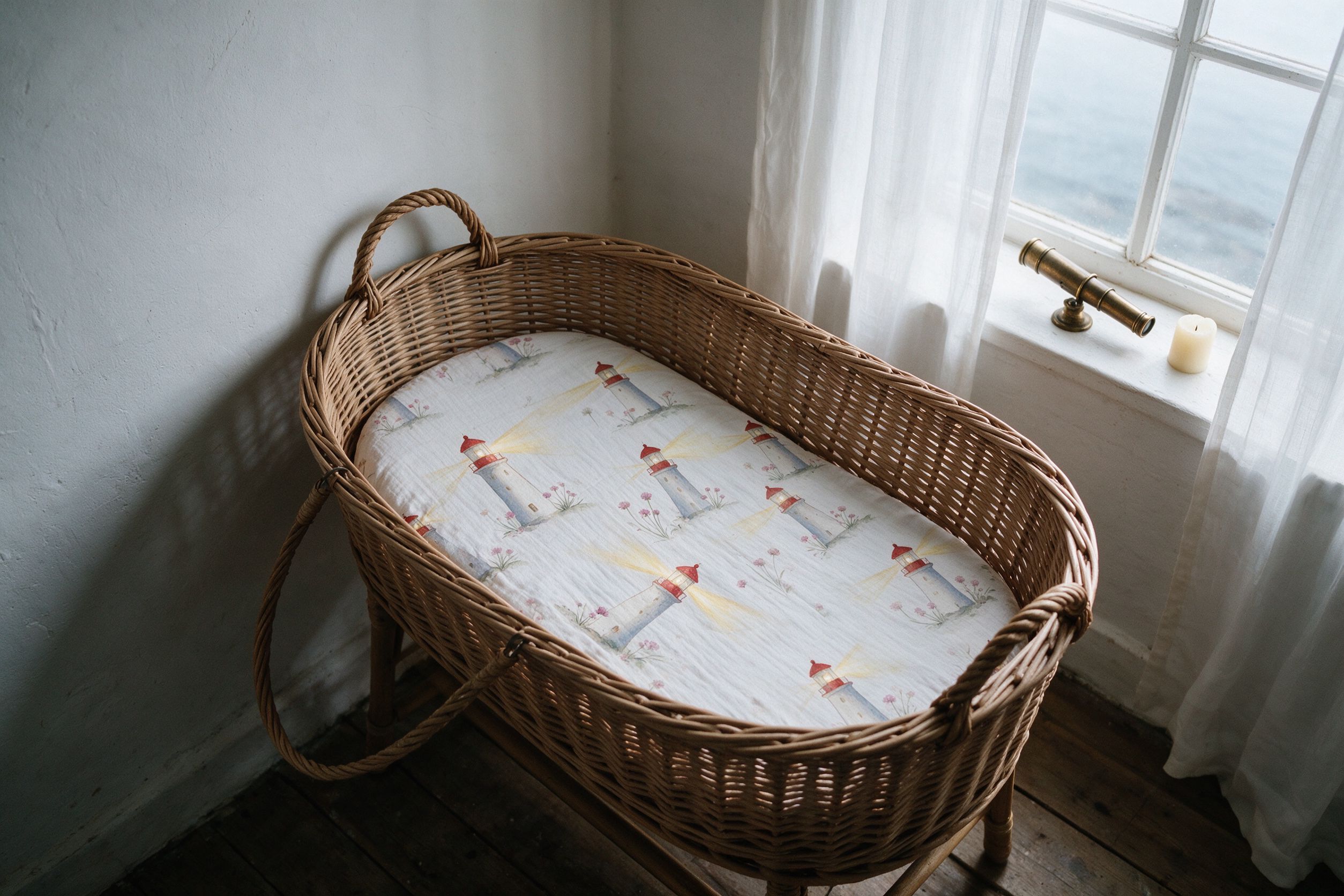
The lighthouse beam crossing the little bed — light, then dark.
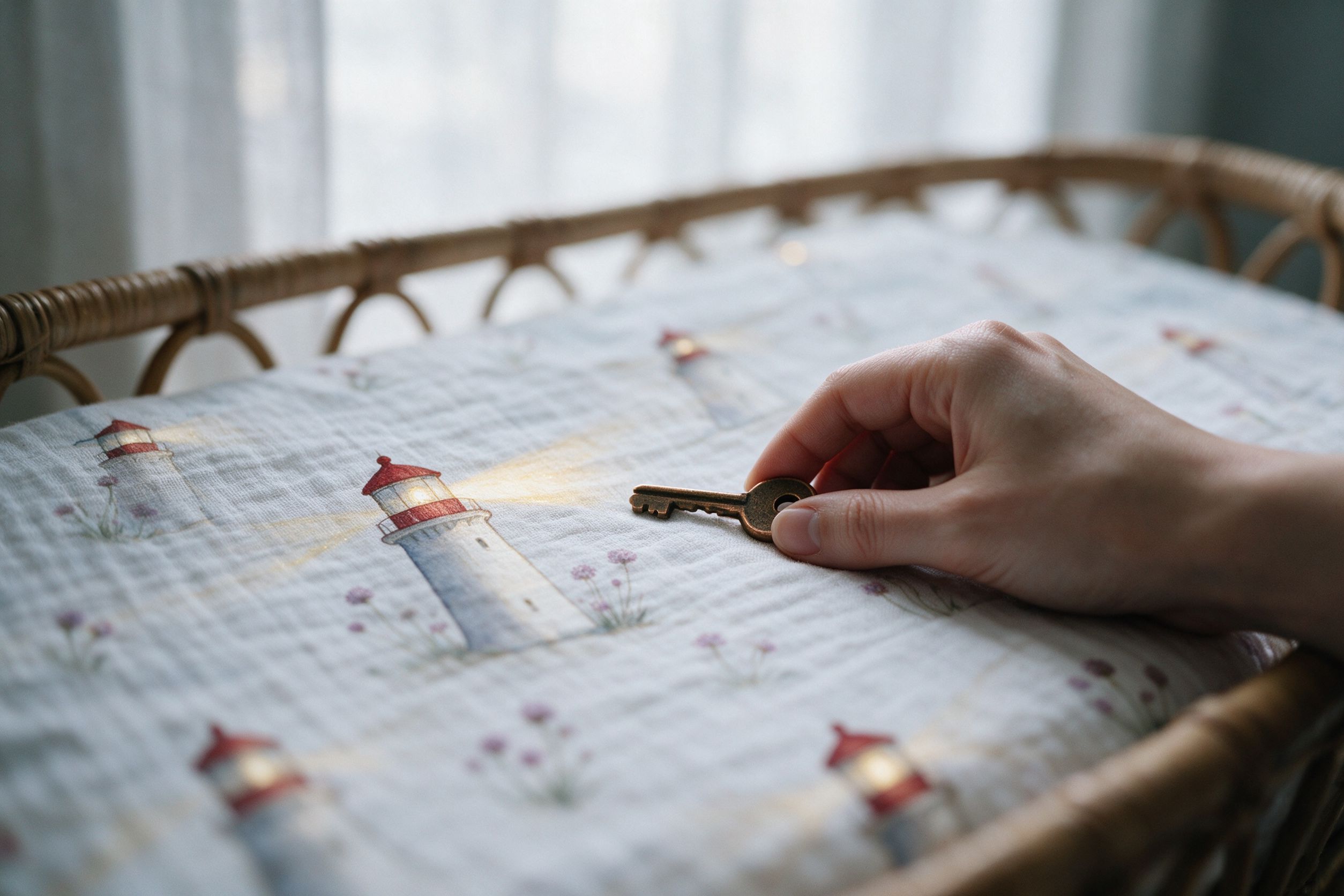
The softness you can find in the dark — the kind that keeps watch.
The Cornish cliff lighthouse — white body, red cap, keeper's cottage at its foot. In 1958, lighthouses still needed keeping: wipe the glass, light the lamp, and on foggy nights, ring the bell.
On the cottage windowsill in P1 hides a pressed flower — Lizzy's flower, from the journal, now blooming inside the lighthouse. On the far water, now and then, the silhouette of one tiny boat — Nonna's boat, from the little bay. Both lines are visible from here.
The first night line of the series — the grove keeps the morning, the bay keeps the day, the journal keeps the afternoon; the fog bell keeps the night. A baby blanket's first scene is night: falling asleep, night feeds, being covered. The child in the story and the baby at home are the same child.
No storm rescues, no heroics, no tourist postcards. A keeper's daily round: wipe the lamp, drink the tea, count the bell — the same ritual, every day.
I grew up by the sea in eastern Zhejiang; I know the low-pressure sky before a typhoon. In the nights of finishing this chapter, Typhoon White Dolphin was passing over my hometown — the warning point fifty kilometres from Taizhou. Revising to the sound of rain, I thought of the Cornish lighthouse, of every window with a light on. In a typhoon, every lit window is a small lighthouse.
— Sophia, 10 August 2026, the rain stopped at night