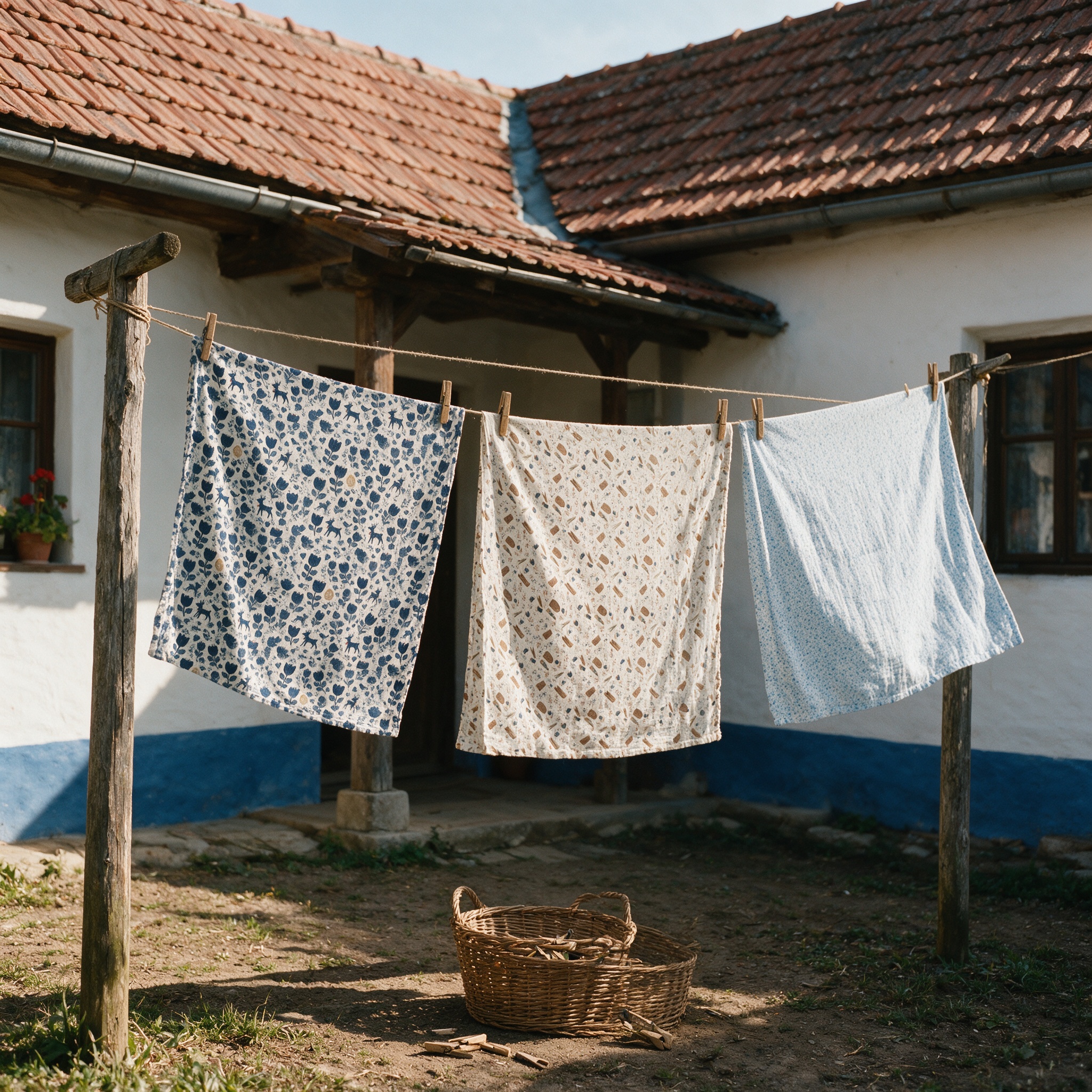
No. 07 · Grandmothers' Europe · The Mountain Home
Oma's Windowsill
The Dolomites, Italy · A Summer Afternoon, When the Cows Come Home
"In the mountains the weather turns fast — and the windowsill sees it first."
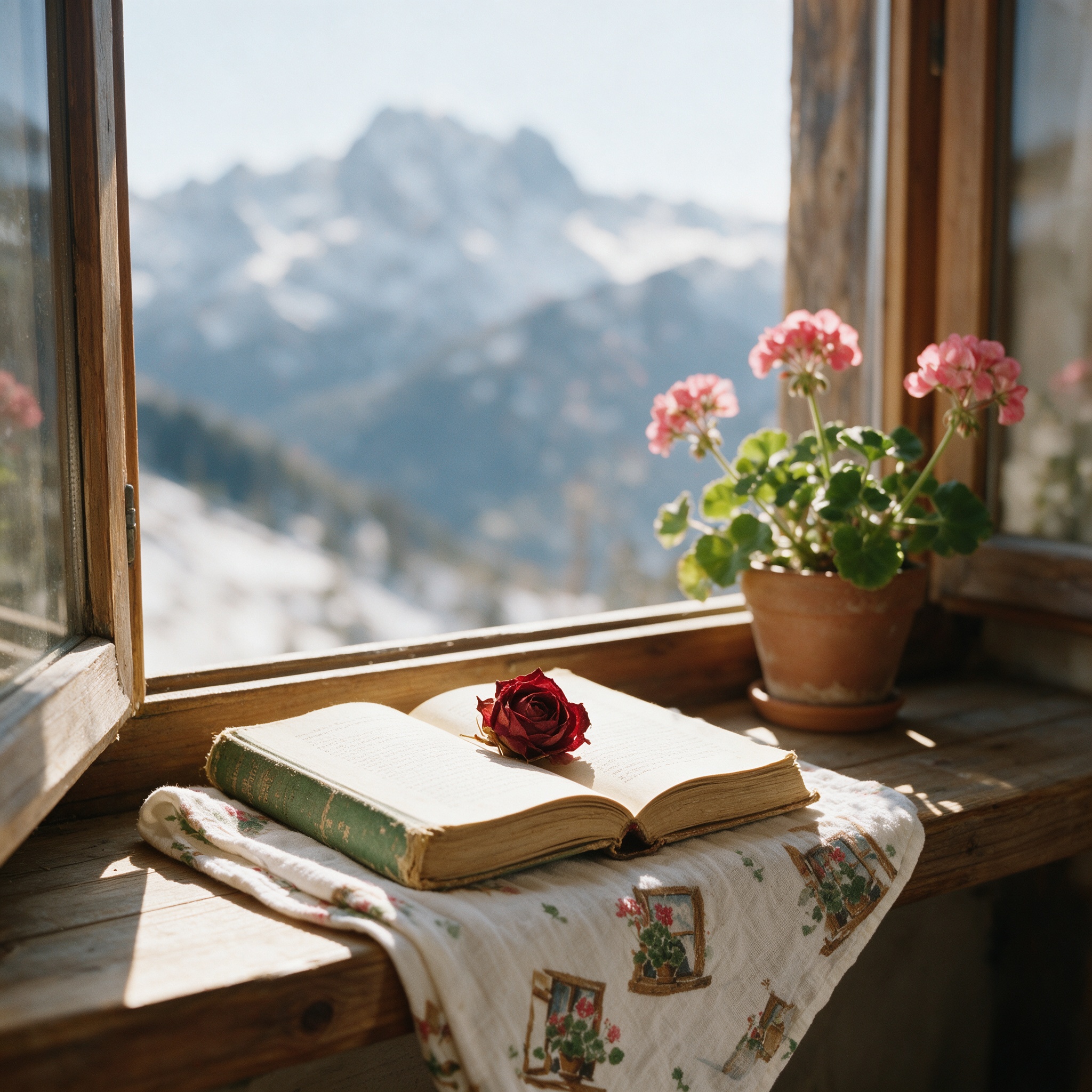
Summer in the Dolomites is short, so every geranium blooms with everything it has. Oma's house has three windows, and every sill holds flowers.
Coming down the slope in the afternoon, the herdsman sees those three windows first from far away — red flowers, wooden frames, and behind them one line of snow.
Mountain weather turns fast. The morning is clear; a cloud comes up, and the snowline disappears. Oma never checks the sky — she checks the sill: if the geranium leaves are perky, good weather; if they droop, bring in the laundry.
The windowsill knows before the forecast does.
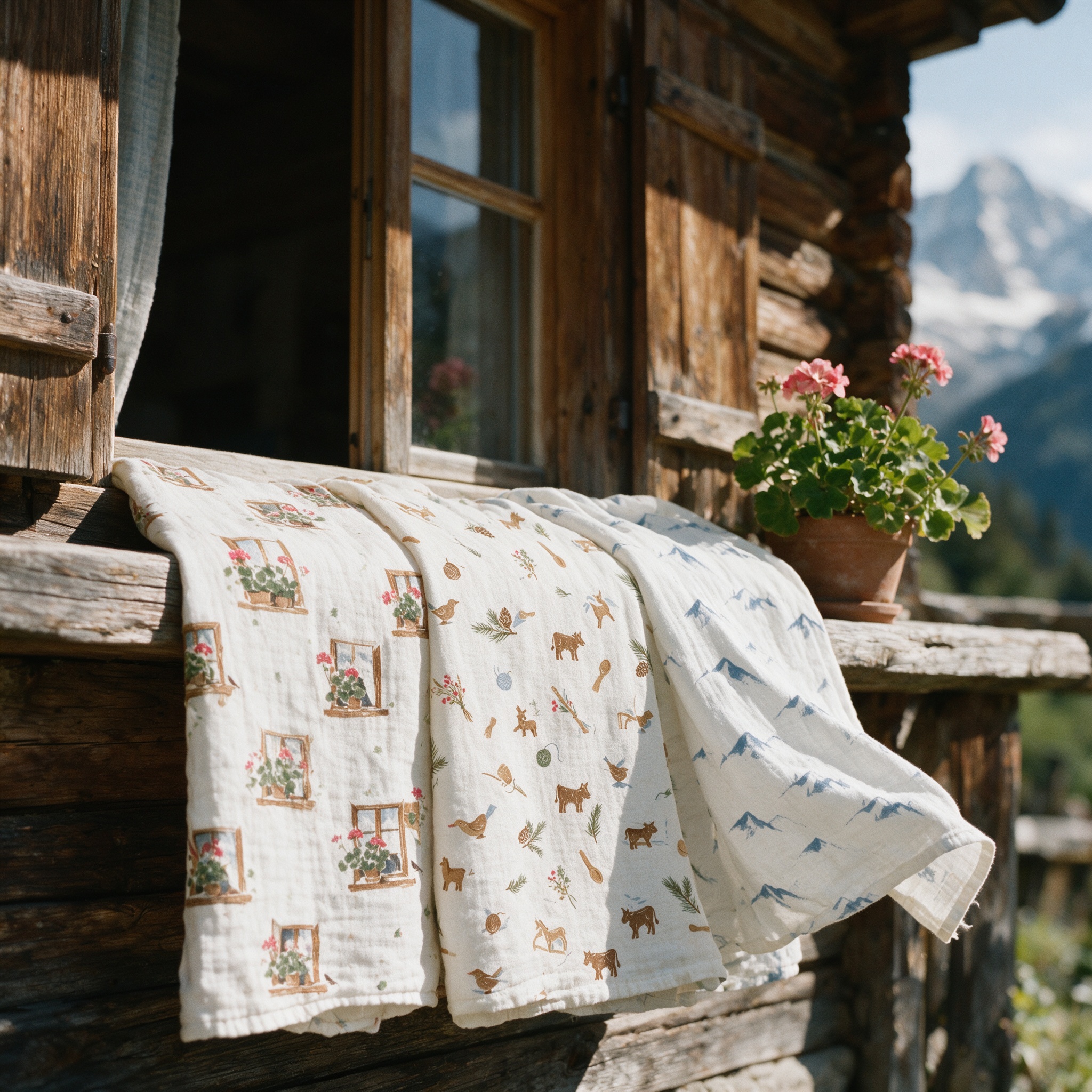
A window (P1), a house of small things (P2), a line of snow (P3).
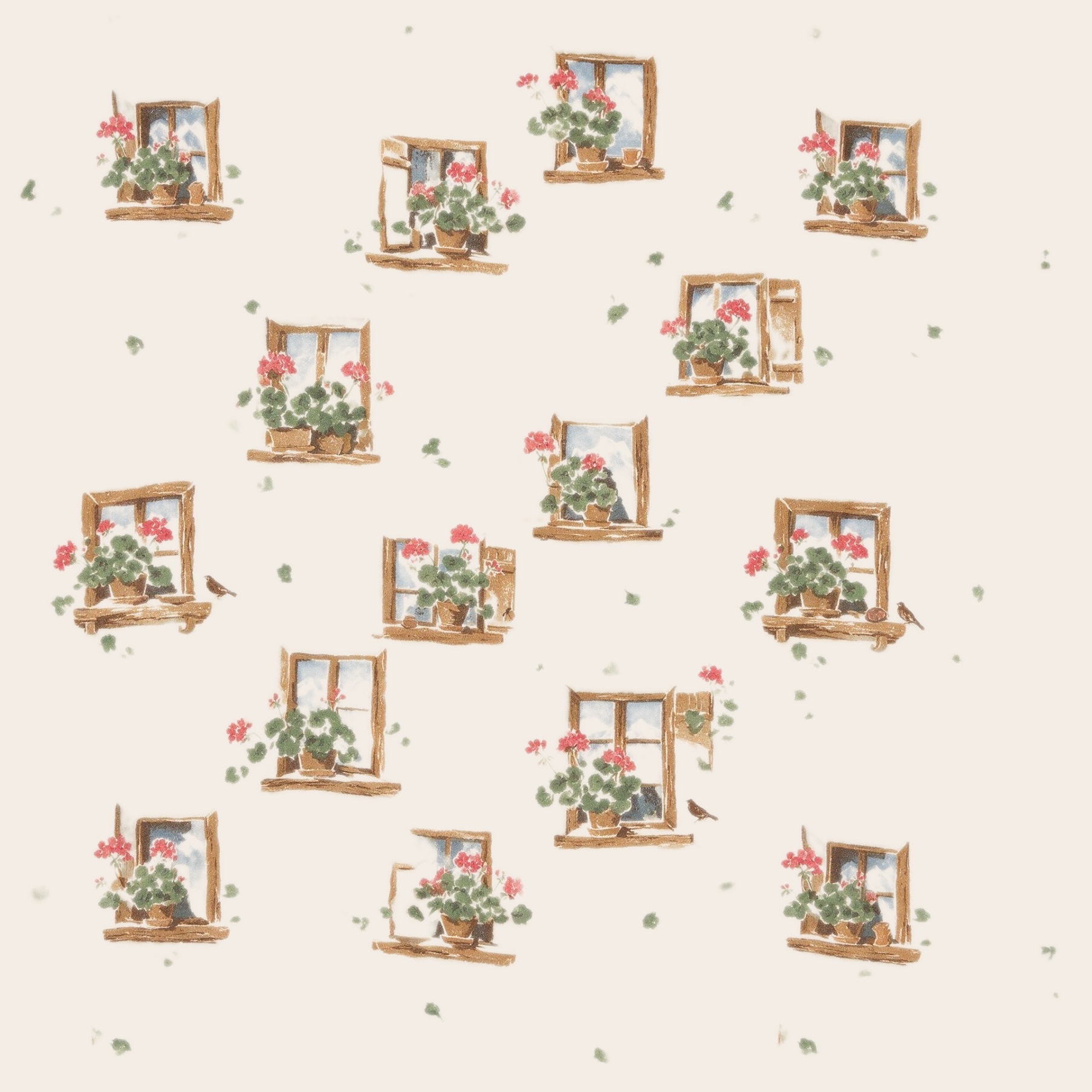
Wooden frame, geraniums, one line of snow — for the first time, the print unit is a scene-frame: one windowsill, one sentence. Crisp woodcut blocks, softened by a wash of watercolor.
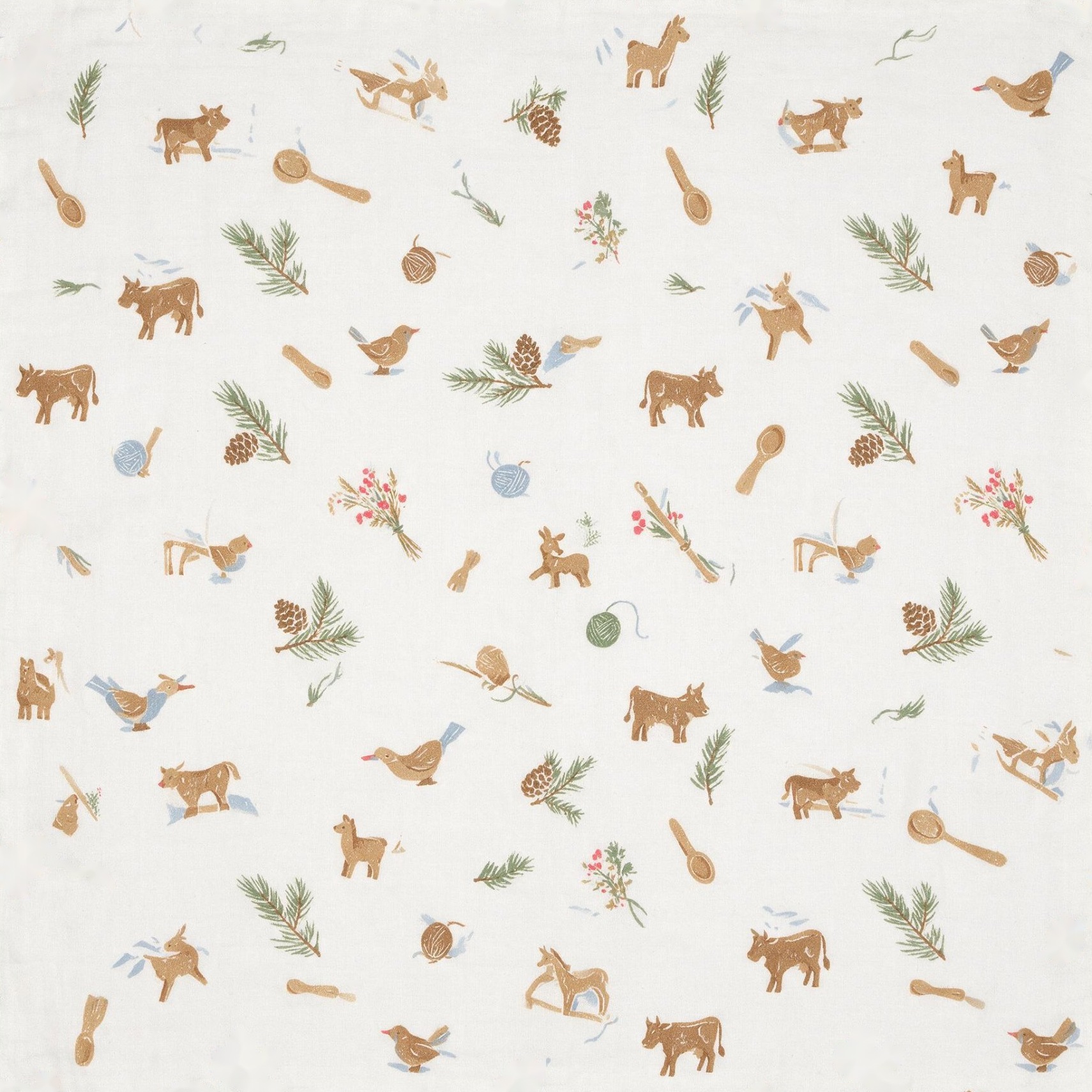
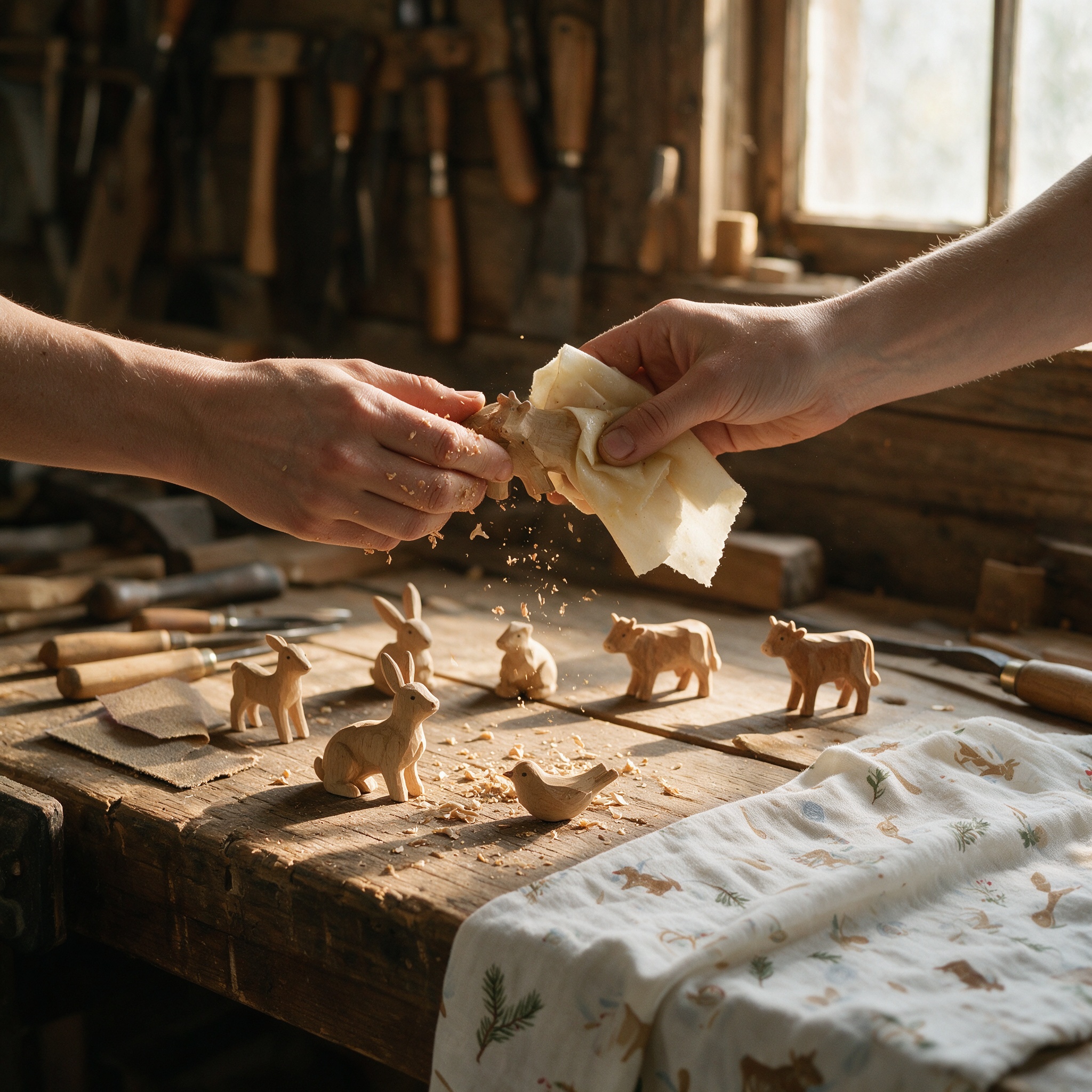
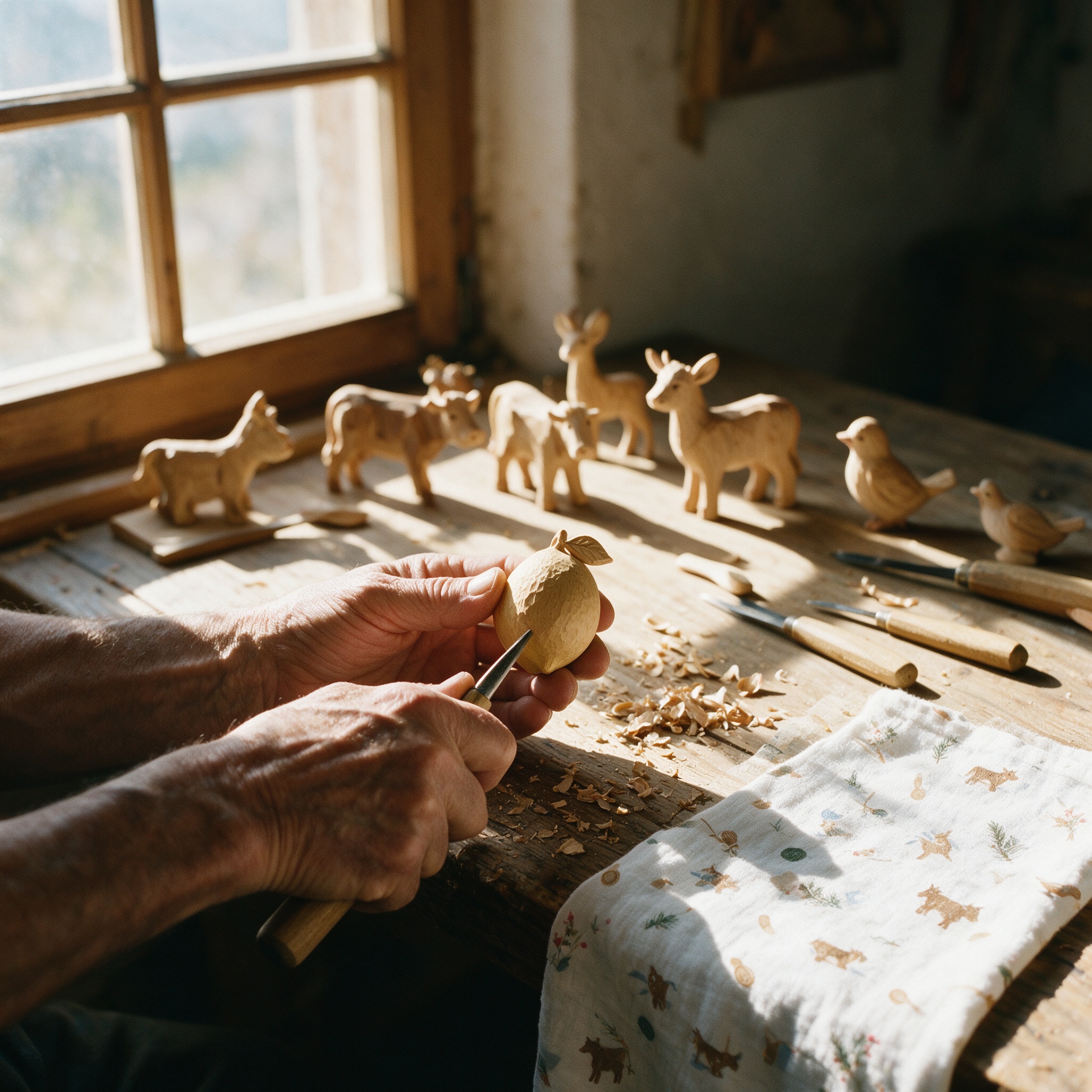
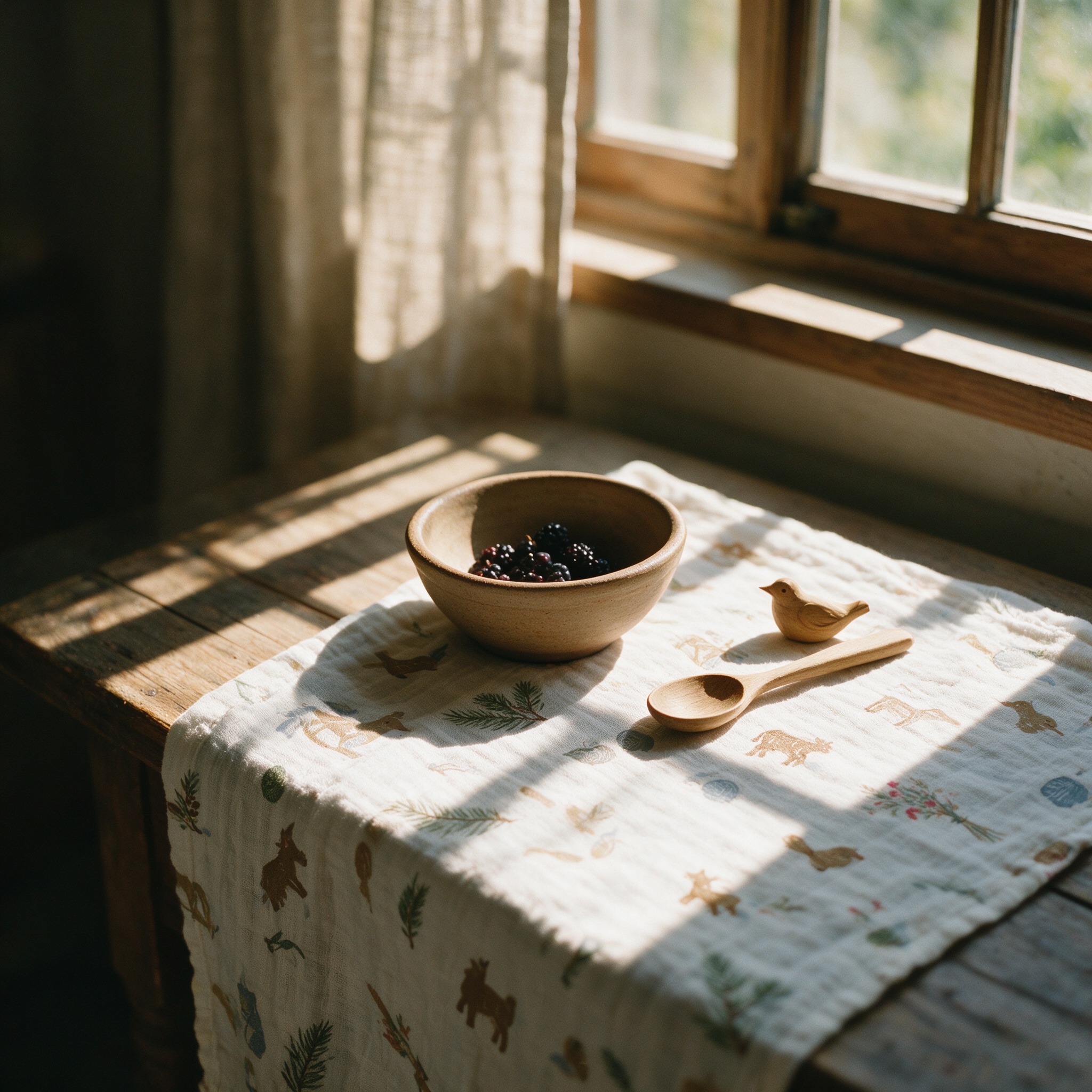
Little carved animals — cow, bird, llama — pine cones, small flowers, a wooden spoon: the craft of Val Gardena, the woodcarving valley, laid out across a cloth.

A single snowline blue — the ridge of the mountain, small pines. A solid from afar; a mountain range up close.
Three reds, three lines: Mémé's washed brick, the Thief's juice red, Oma's mountain-flower pink.
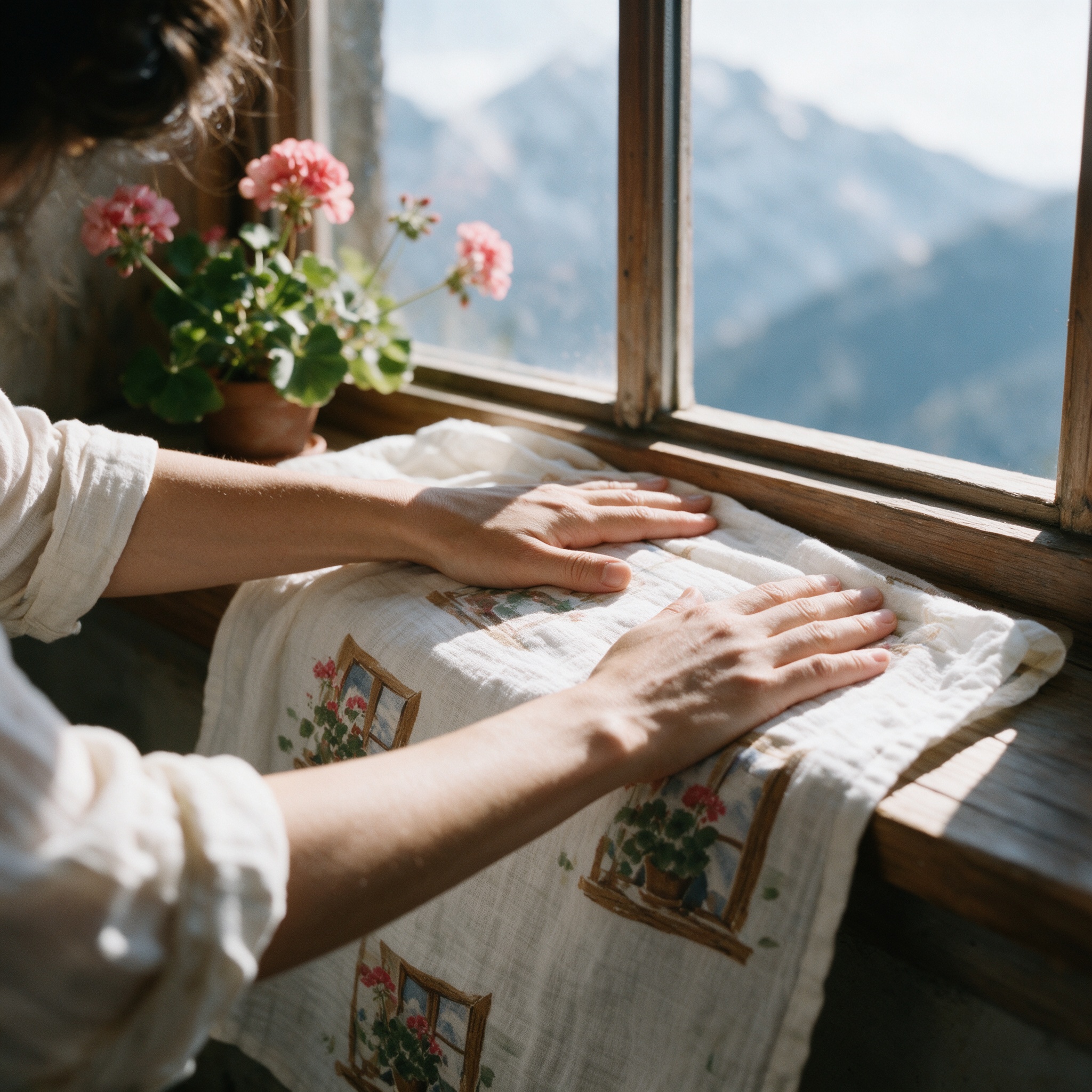
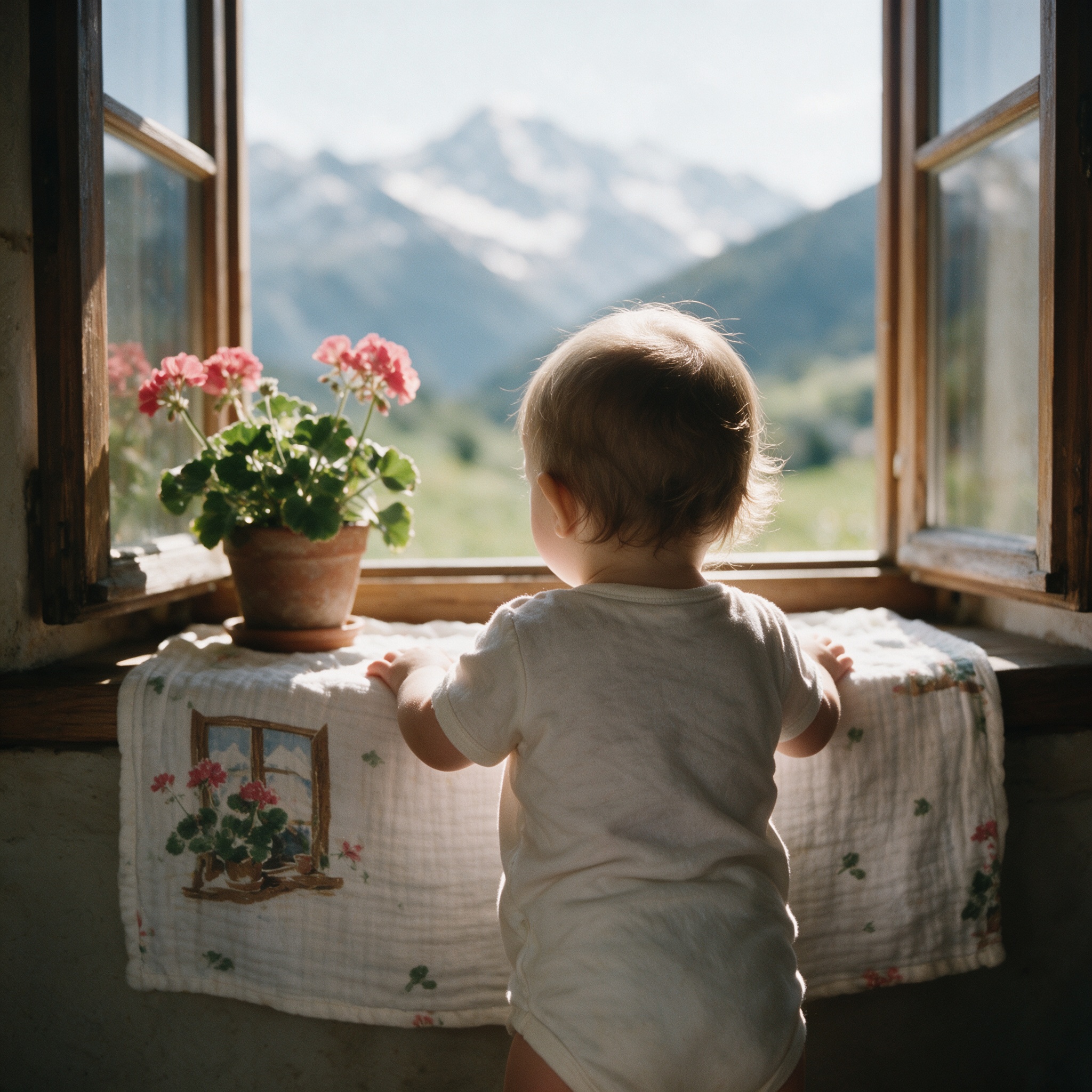
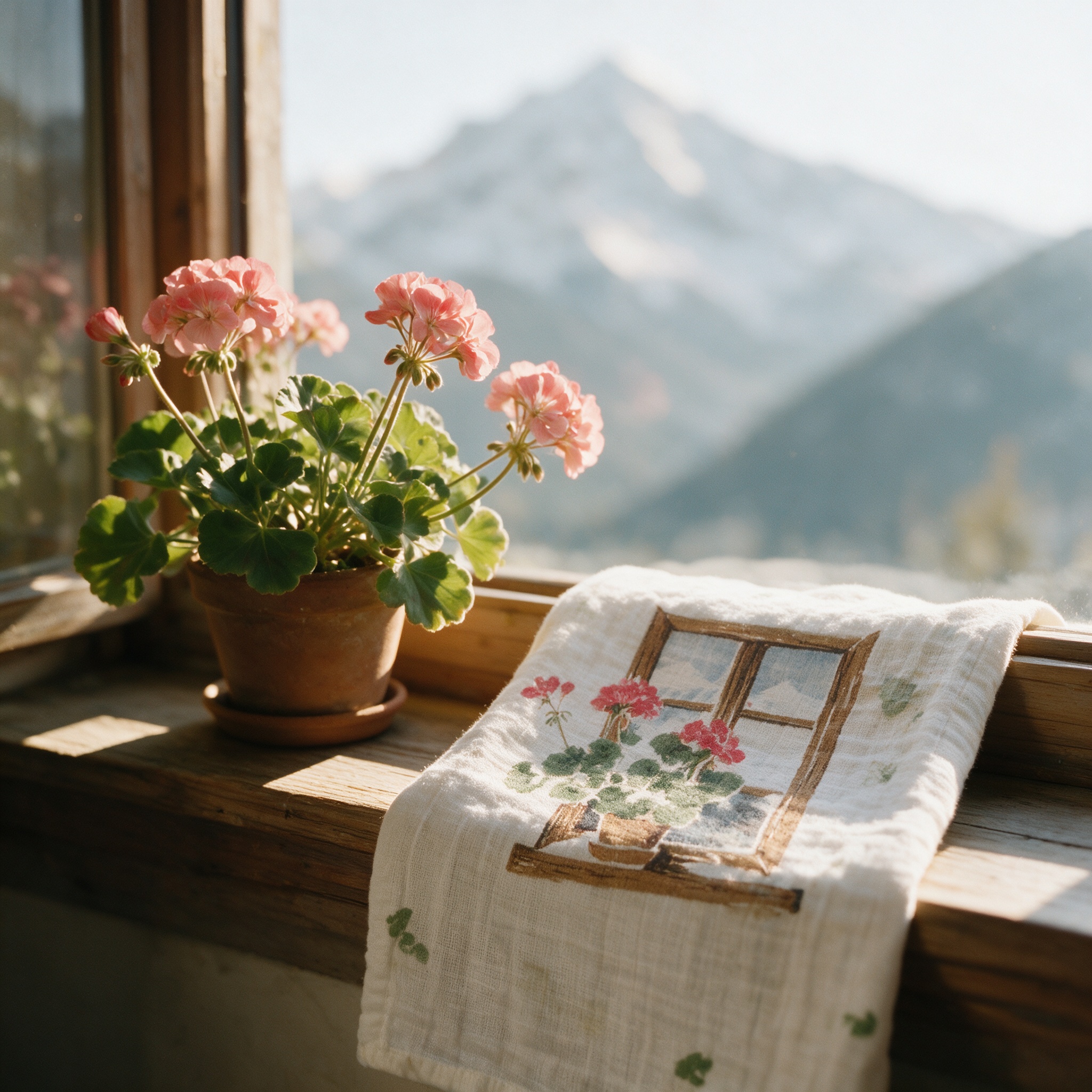
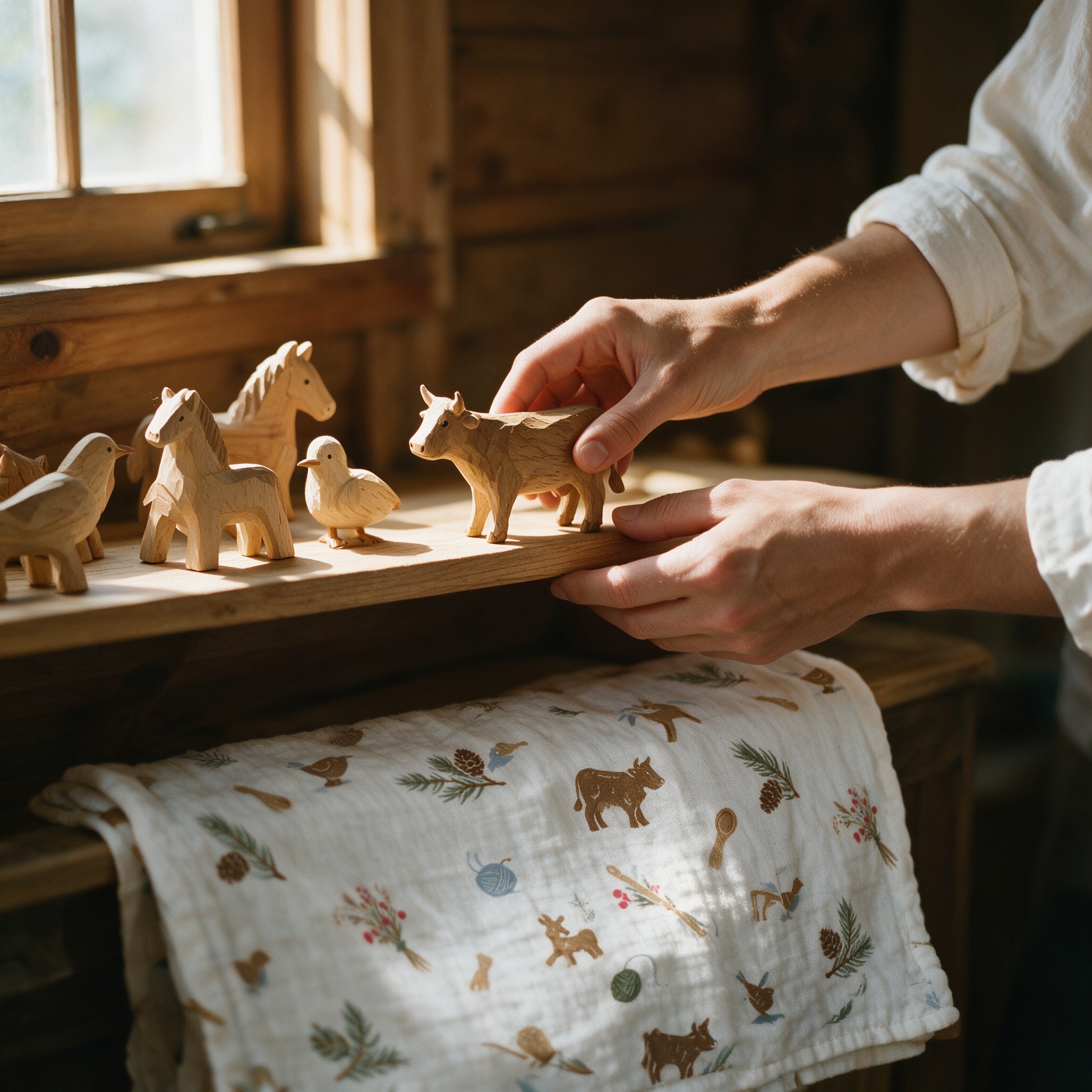
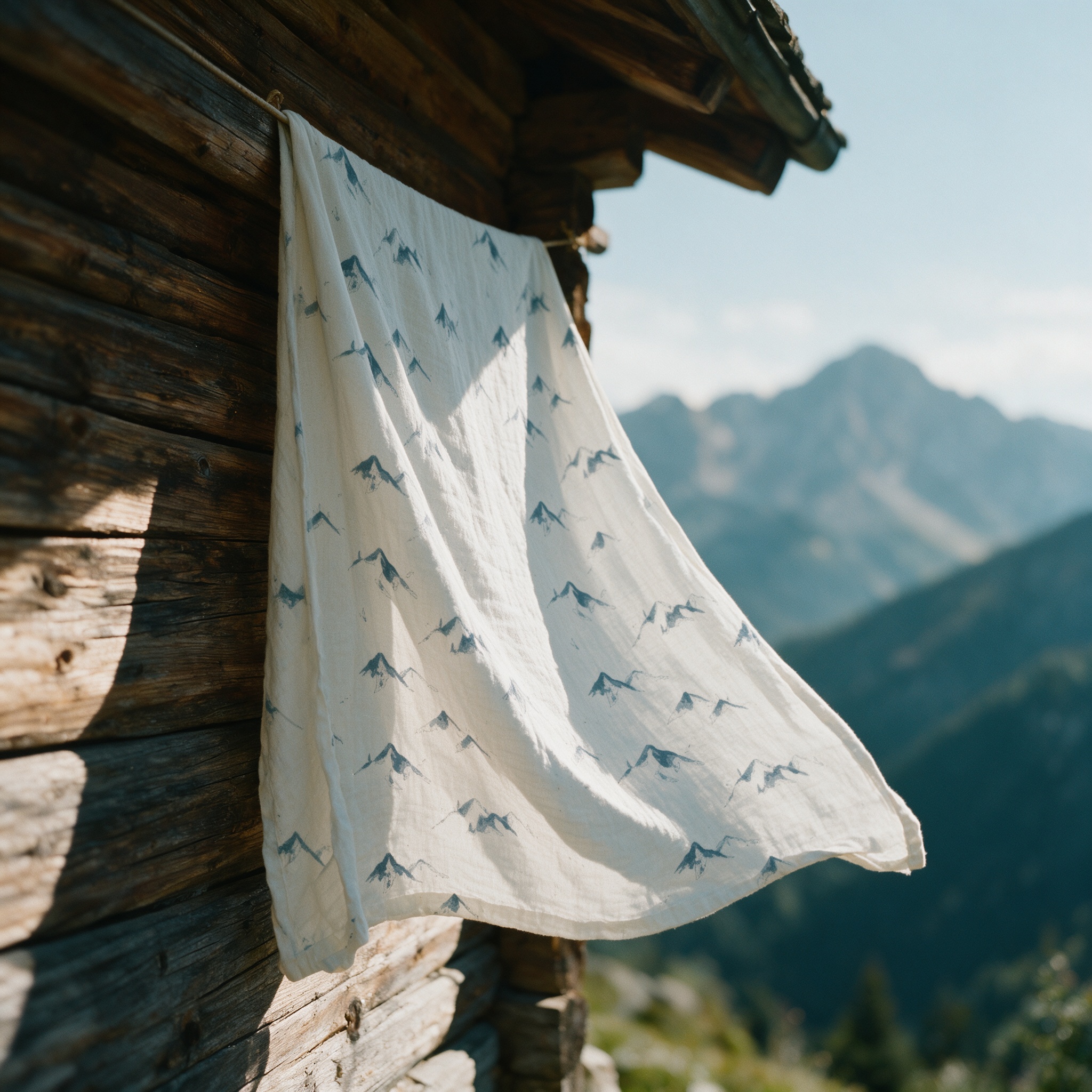
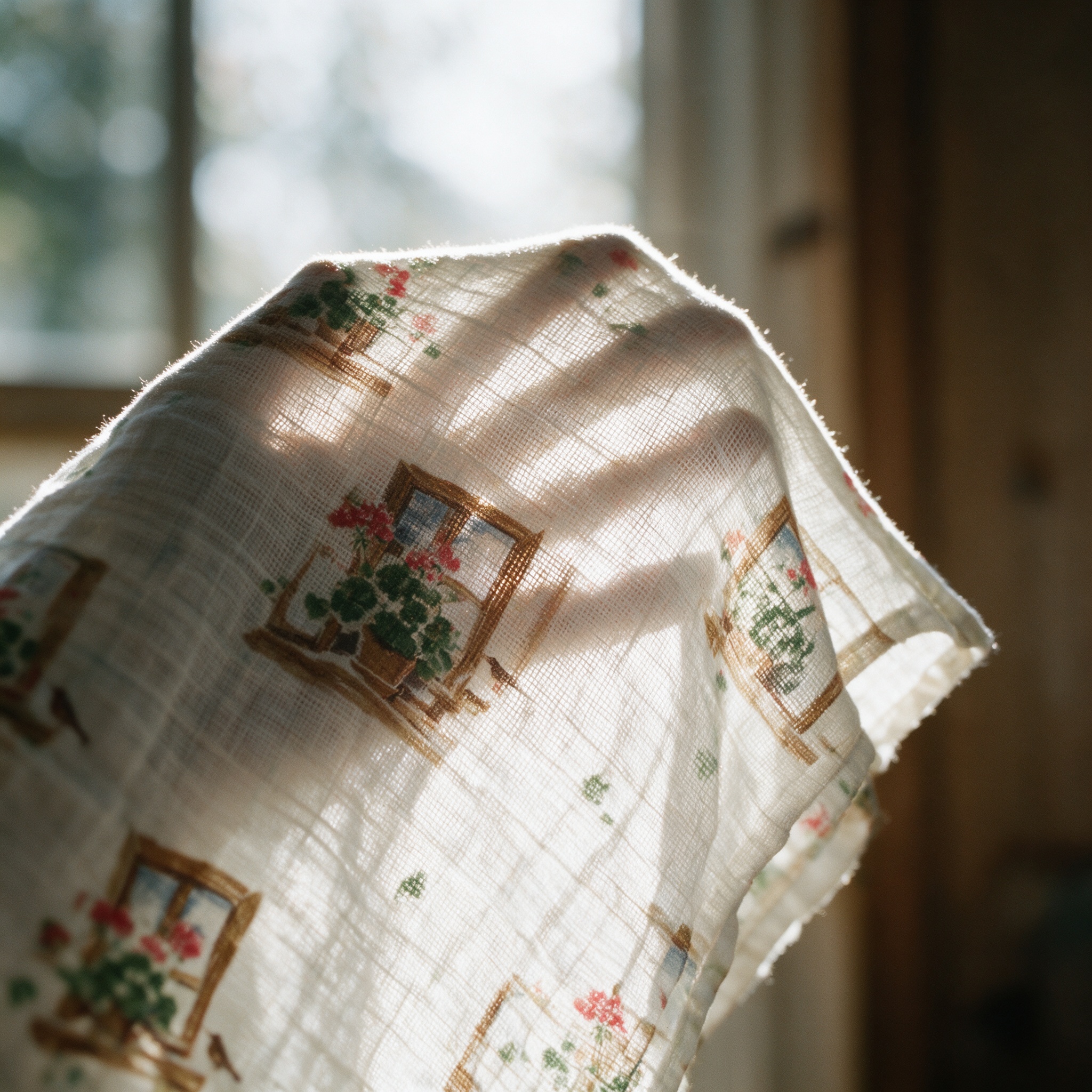
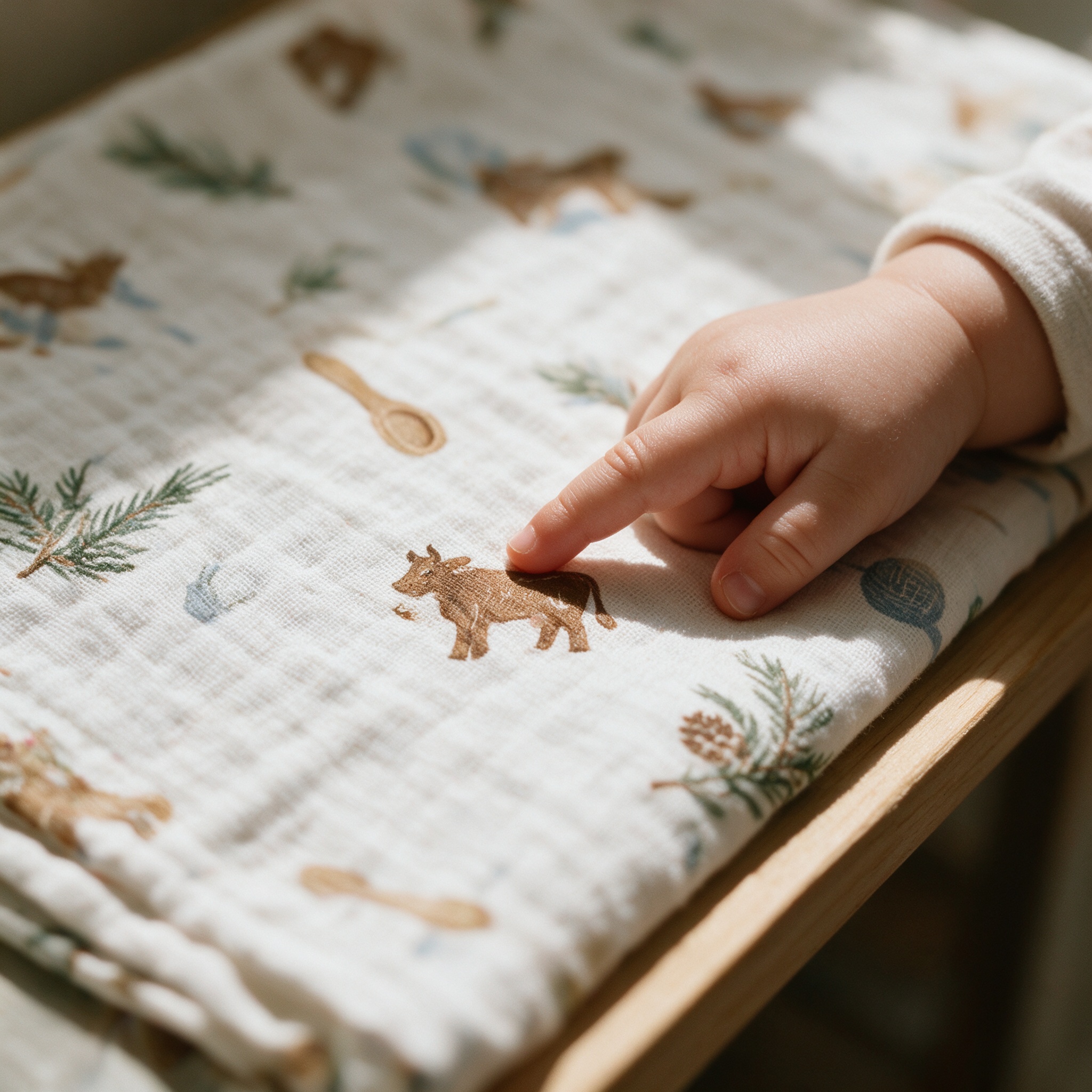
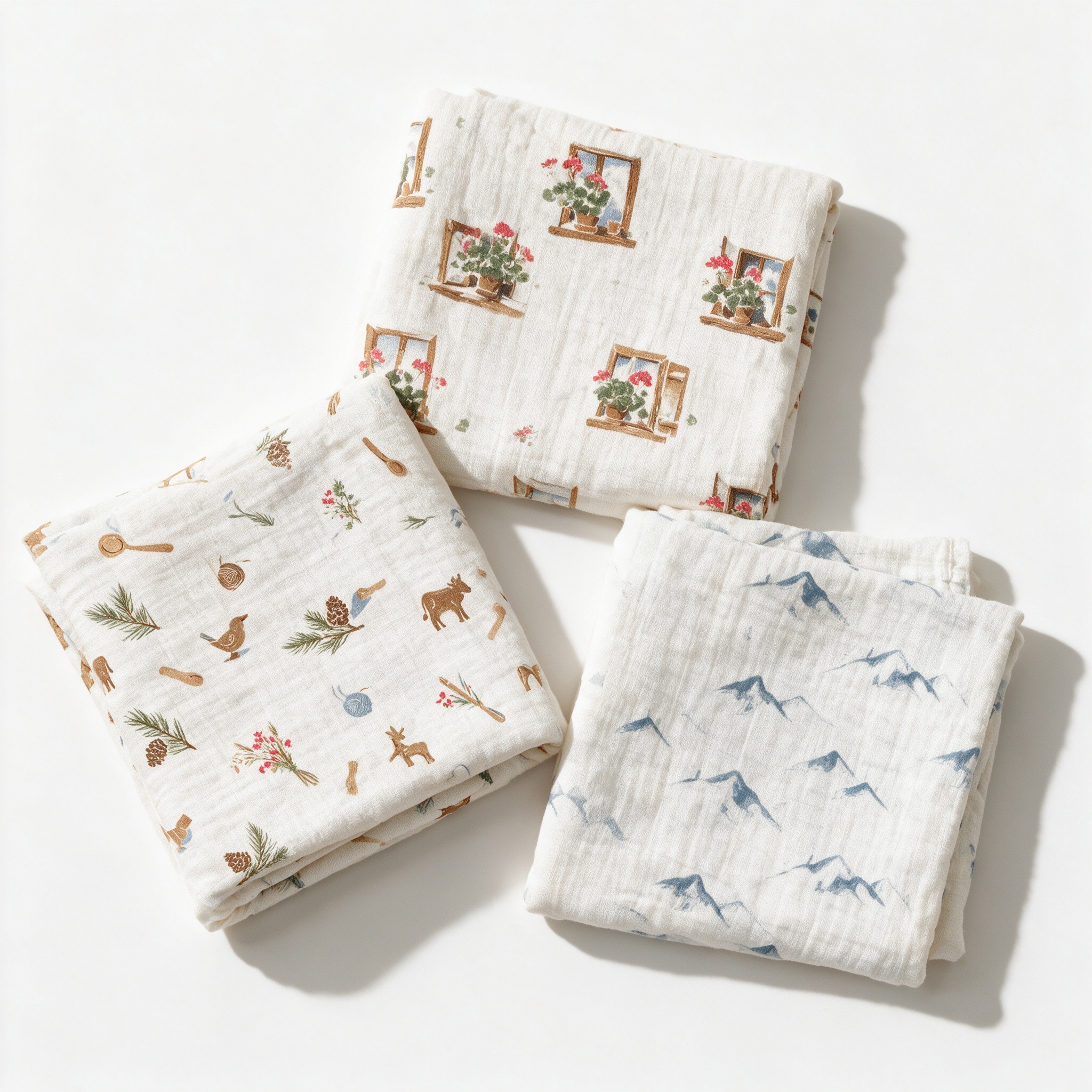
From windowsill to hayrack to table — every story grows into a family.
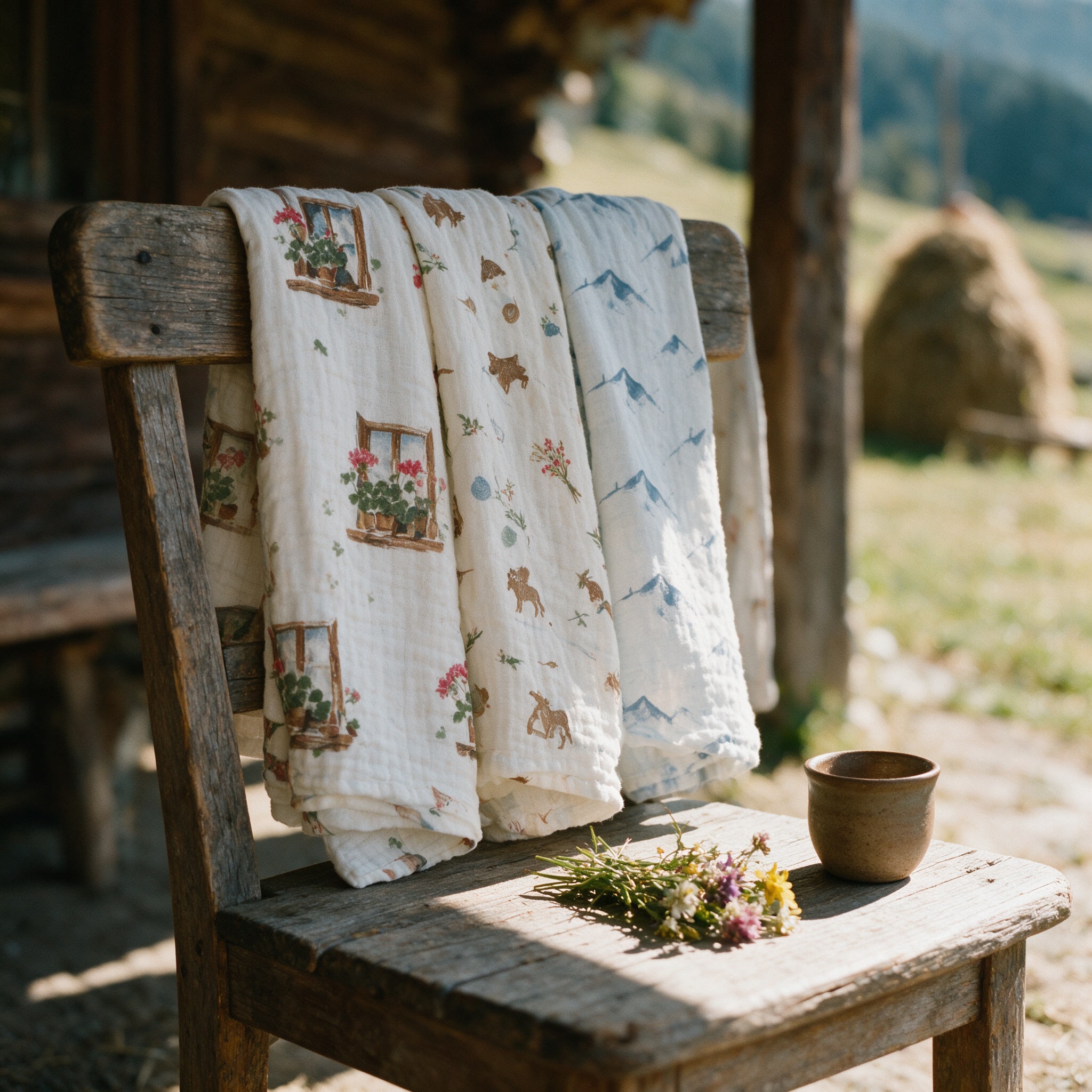
Over the chair back — the first thing inside the door.
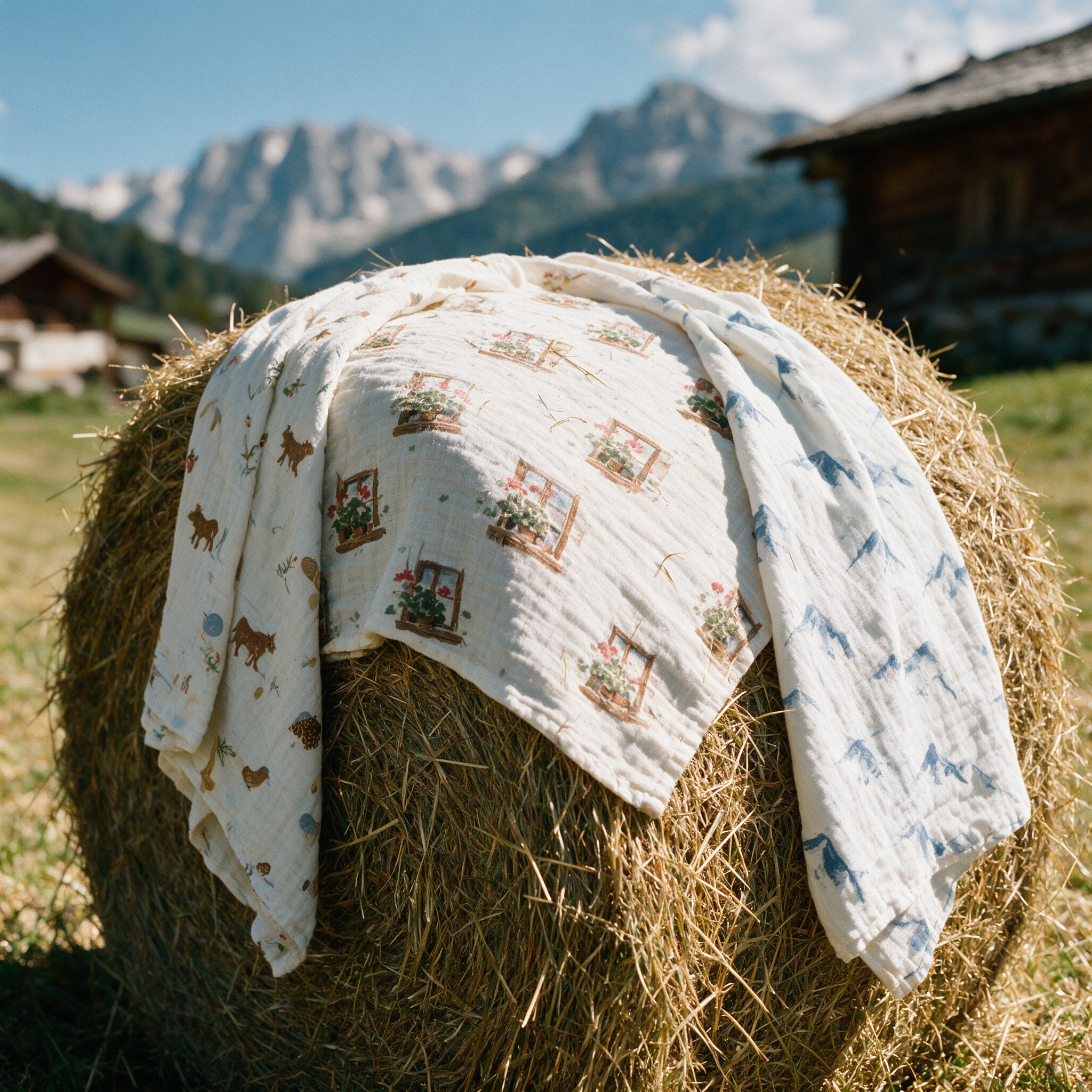
Spread beside the hayrack — a short summer's whole effort, in cloth.
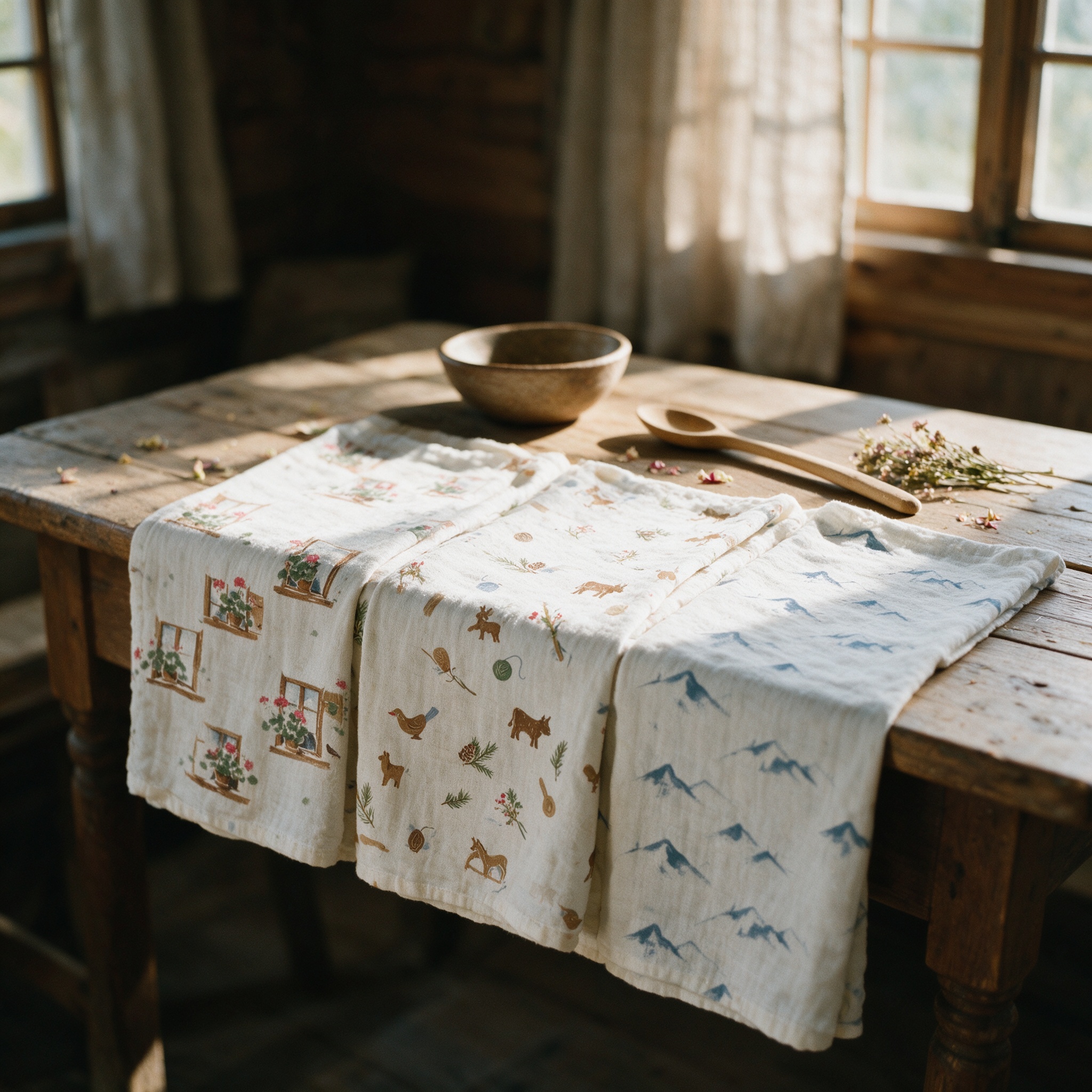
Three layers on the wooden table — window, small things, snow.
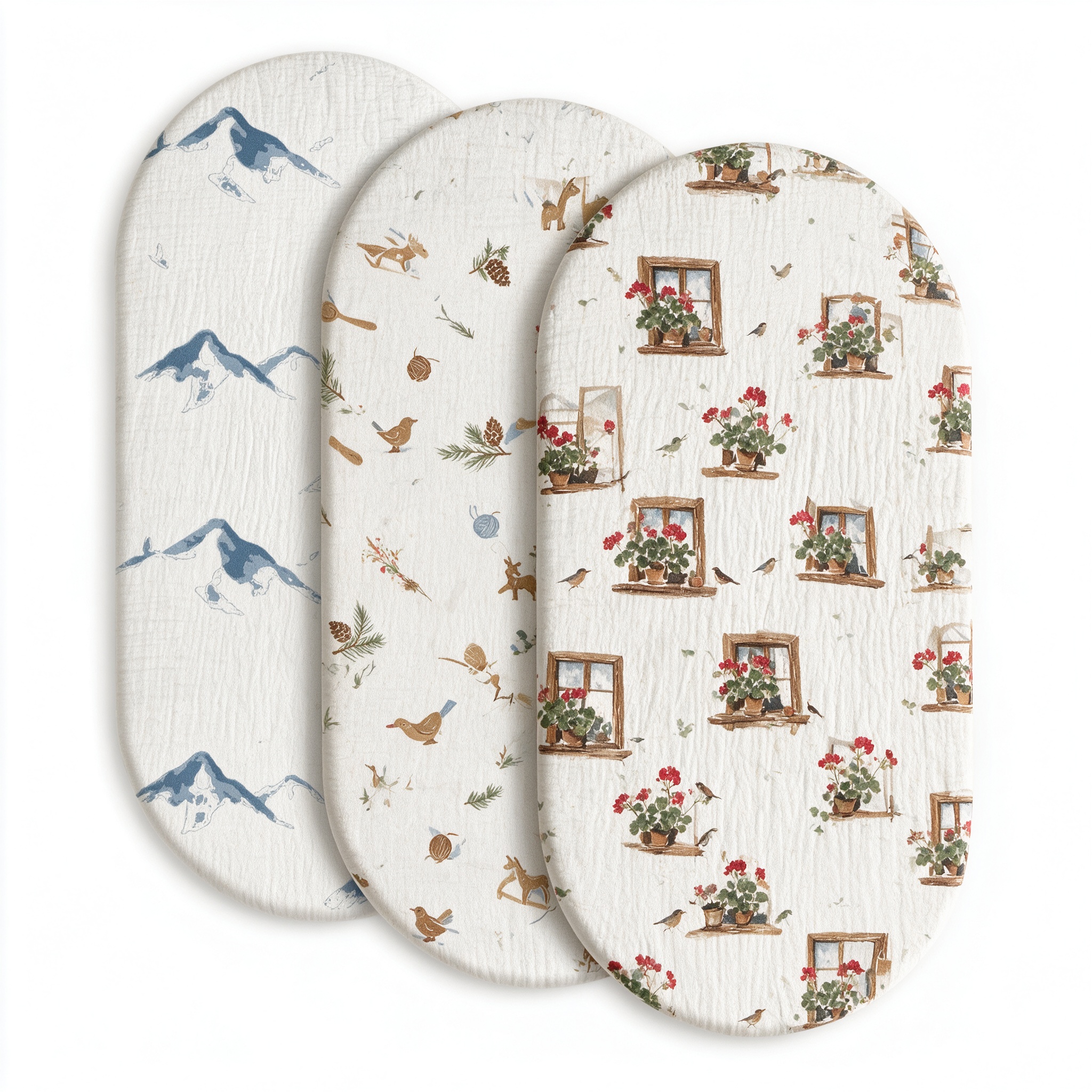
The whole family in white — raw wood and mountain-flower red.
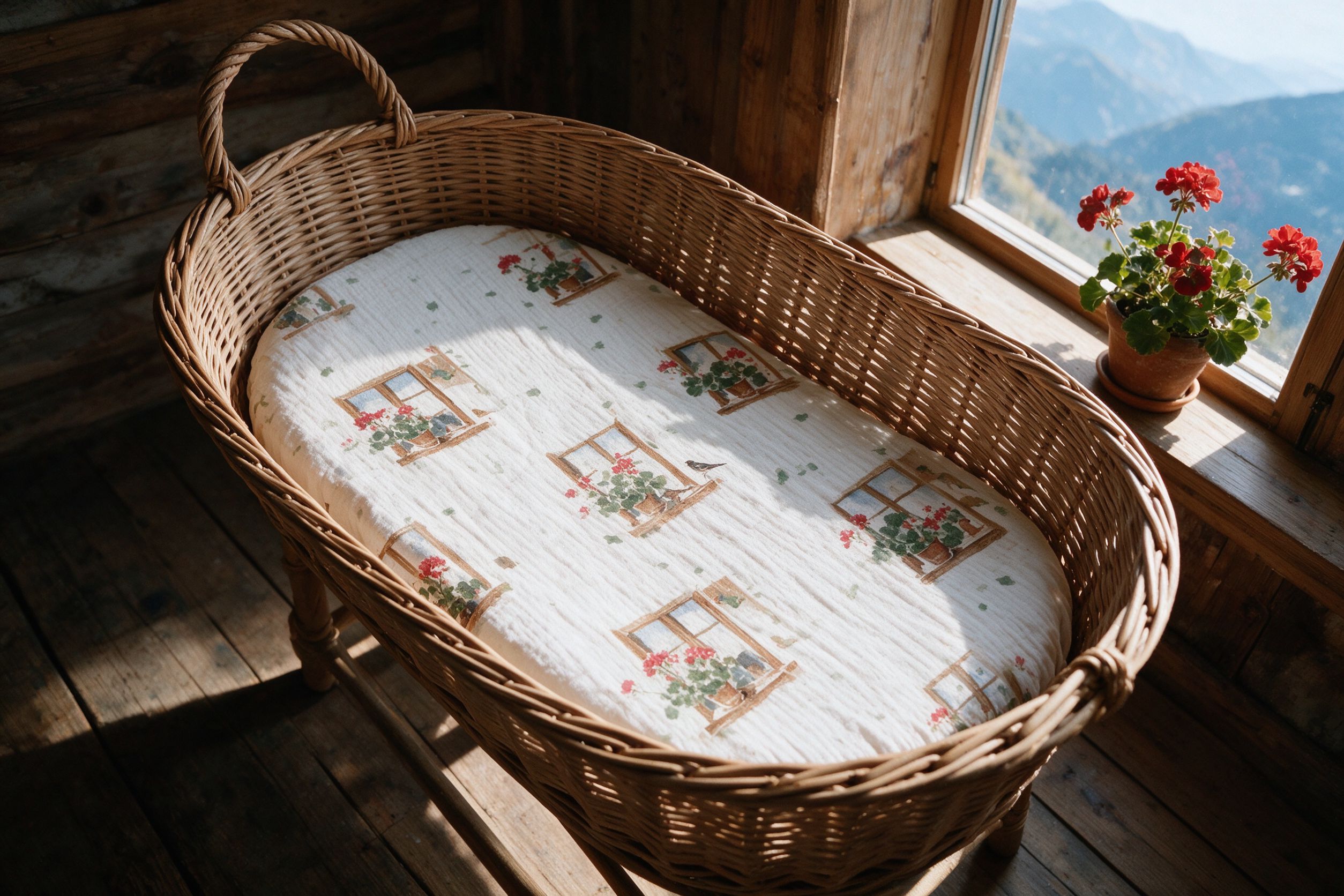
The sill opens over the little bed — geraniums and the snowline together.
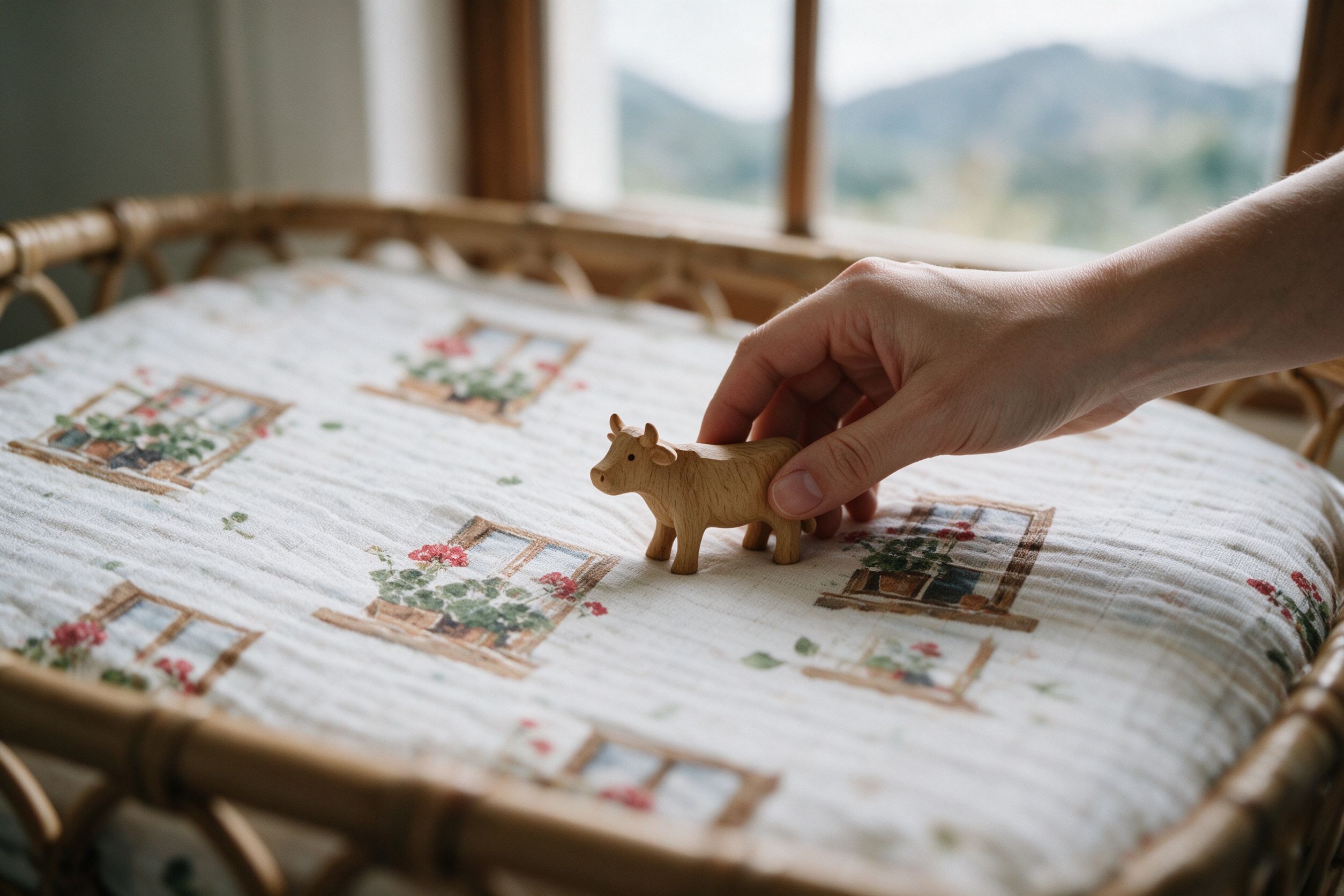
Mountain-afternoon softness — the sun-dried kind.
The windowsill of a Dolomite farmhouse — geraniums, linen curtain, the snowline beyond. South Tyrol is Italy's German-speaking region, which is why the grandmother here is called Oma. Flowers on the sill are a living tradition in a UNESCO World Heritage landscape.
The little carved things in P2 speak the language of Val Gardena — the woodcarving valley of the Dolomites, four hundred years of real craft. Carved animals, pine cones, a wooden spoon: everything that fits on a workbench there.
Nonna keeps the southern sea — the grove and the bay; Oma keeps the northern mountains. Two faces of one country, facing each other across the Apennines on the atlas.
No cable cars, no sleds, no gingerbread hearts, no souvenirs. One real farmhouse window, and the weather you can see from it.
The windowsill will keep till I'm back. Someone will water the flowers.
— Sophia, 14 August 2026, a note left on the door