No. 08 · Moravia · The Handing-Down
The Indigo Print
Moravia, Czechia · An Early-Summer Afternoon at the Dye Works
"Indigo cloth, bluer with every wash."
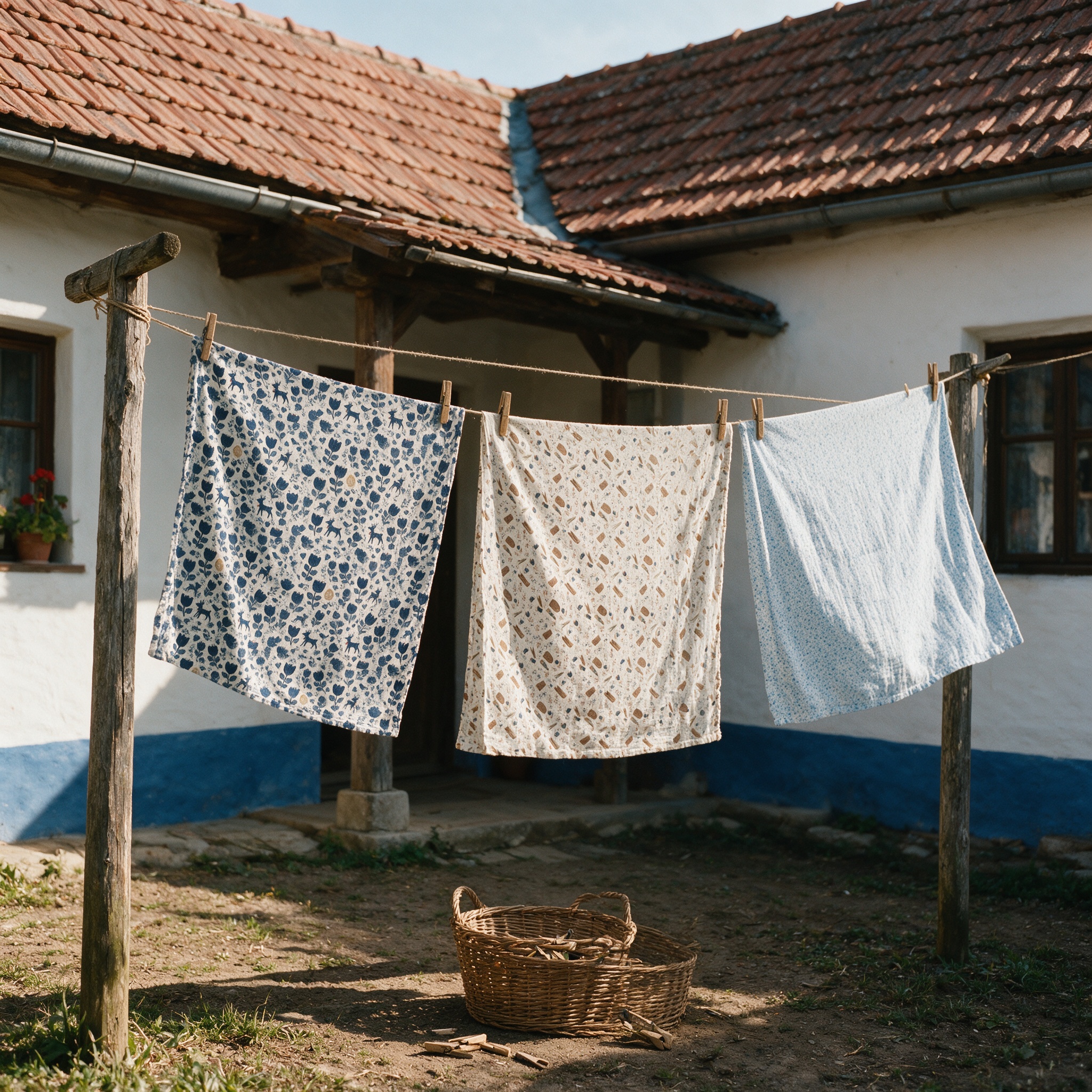
Anežka, five years old, stood on tiptoe to watch Babička squeegee the paste across the wooden table. The printing block pressed onto the white cloth — one stroke — and a tulip stood up on its own.
The dye vat was indigo, and so were grandmother's fingers. Anežka asked when they would come clean. At New Year, grandmother said.
The wind rose in the afternoon, and the printed cloth filled the whole courtyard — tulips floating in the wind, little deer running through it. Anežka ducked in among the hanging strips, as if into a forest that rustled.
Grandmother said: indigo cloth, bluer with every wash.
Some things only get brighter with use.
A bolt of cloth (P1), a table of tools (P2), one hem (P3).
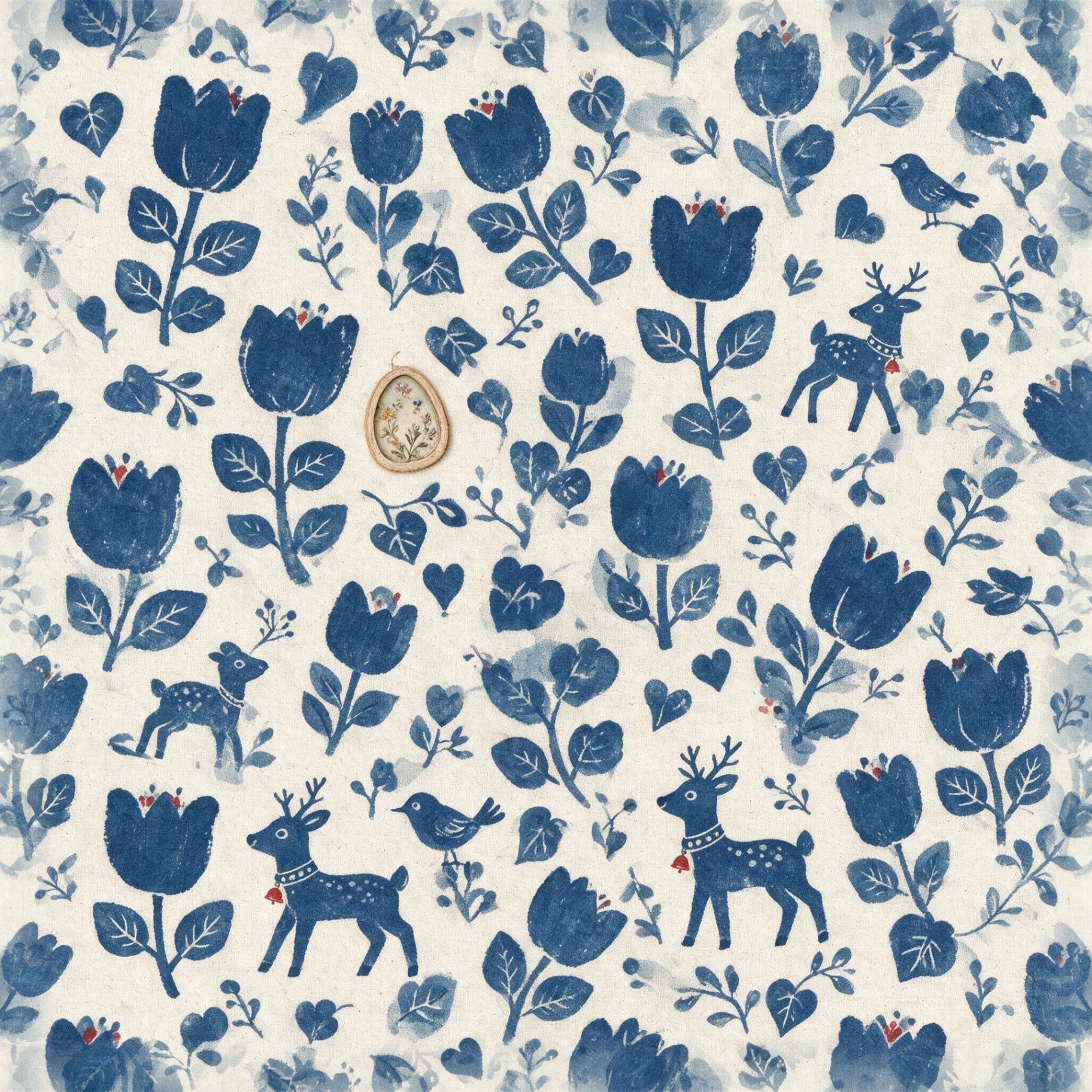
Tulips, little deer, small birds, heart-shaped leaves — thick outlines, honest shapes, the slight mis-registration of block printing. Indigo throughout; madder red only on the deer's bell and the flower's heart.
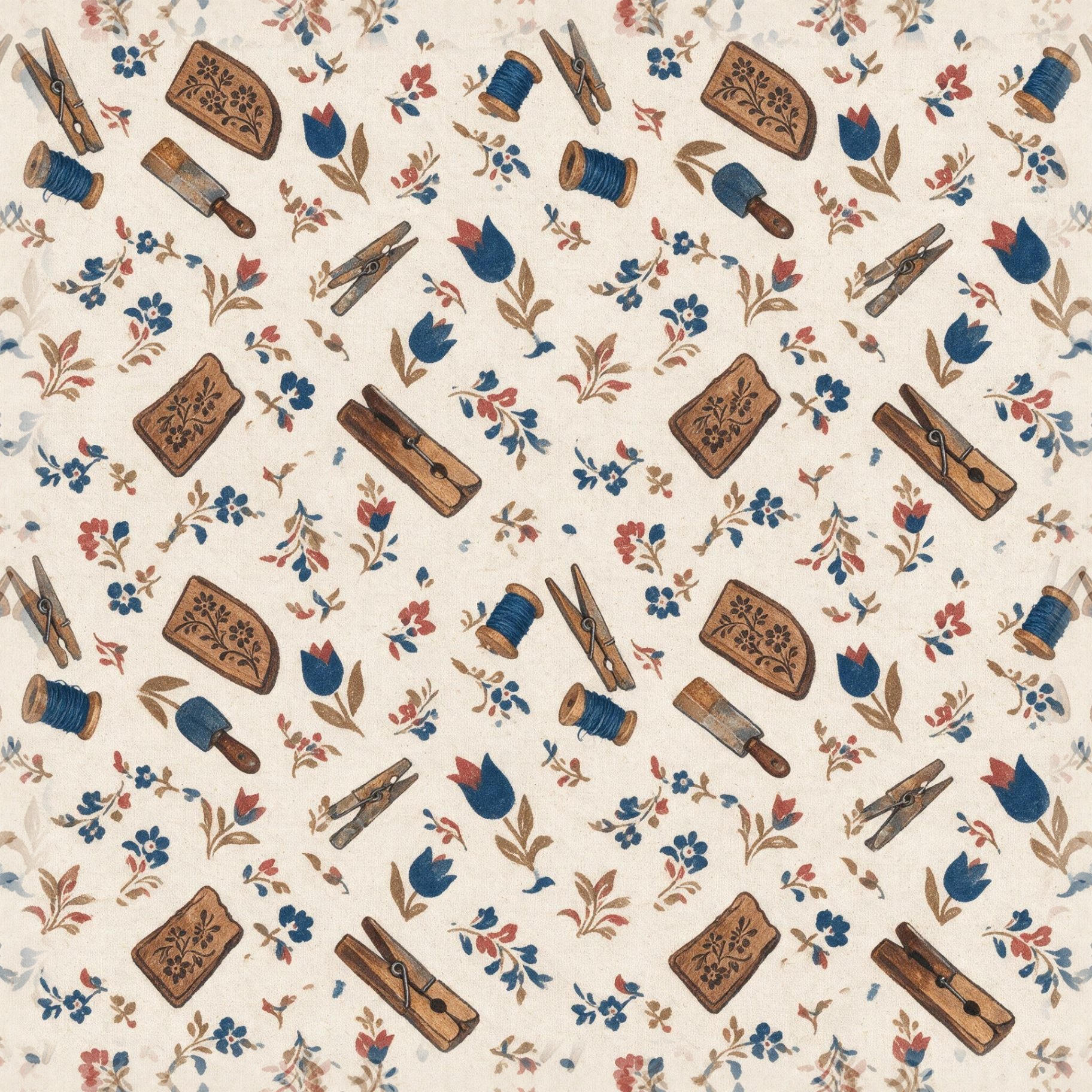
Wooden printing blocks, the squeegee, cloth clips, a wooden spool, a single tulip — the tools of half a lifetime, laid out on grandmother's table.

The traditional border texture of indigo cloth — fine indigo dots and short dashes, like hand-stitching enlarged. A solid from afar; a fine comb of stitches up close.
The discipline: one blue only — vat indigo, faded half a tone. Like a quilt washed for ten years, never new porcelain.
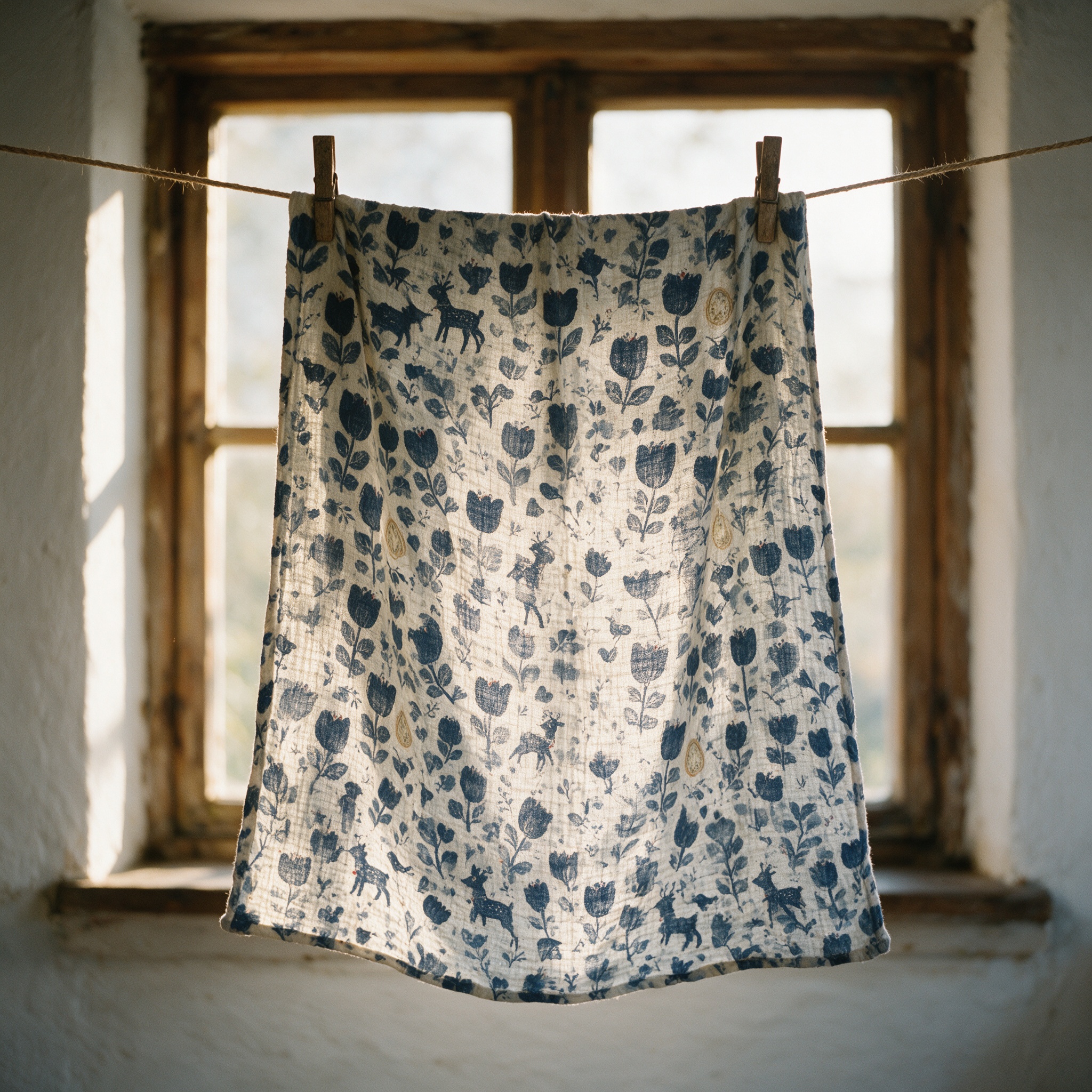
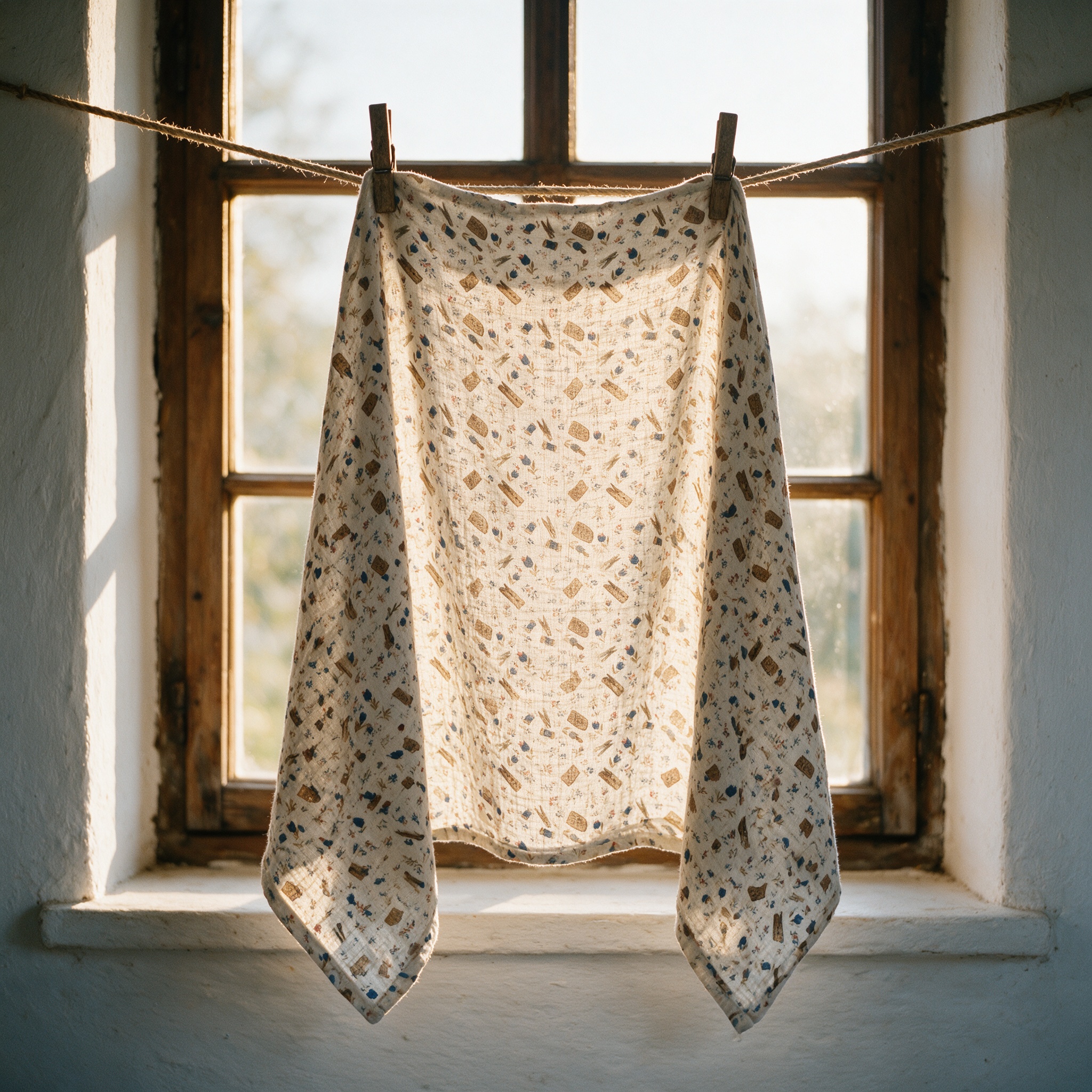
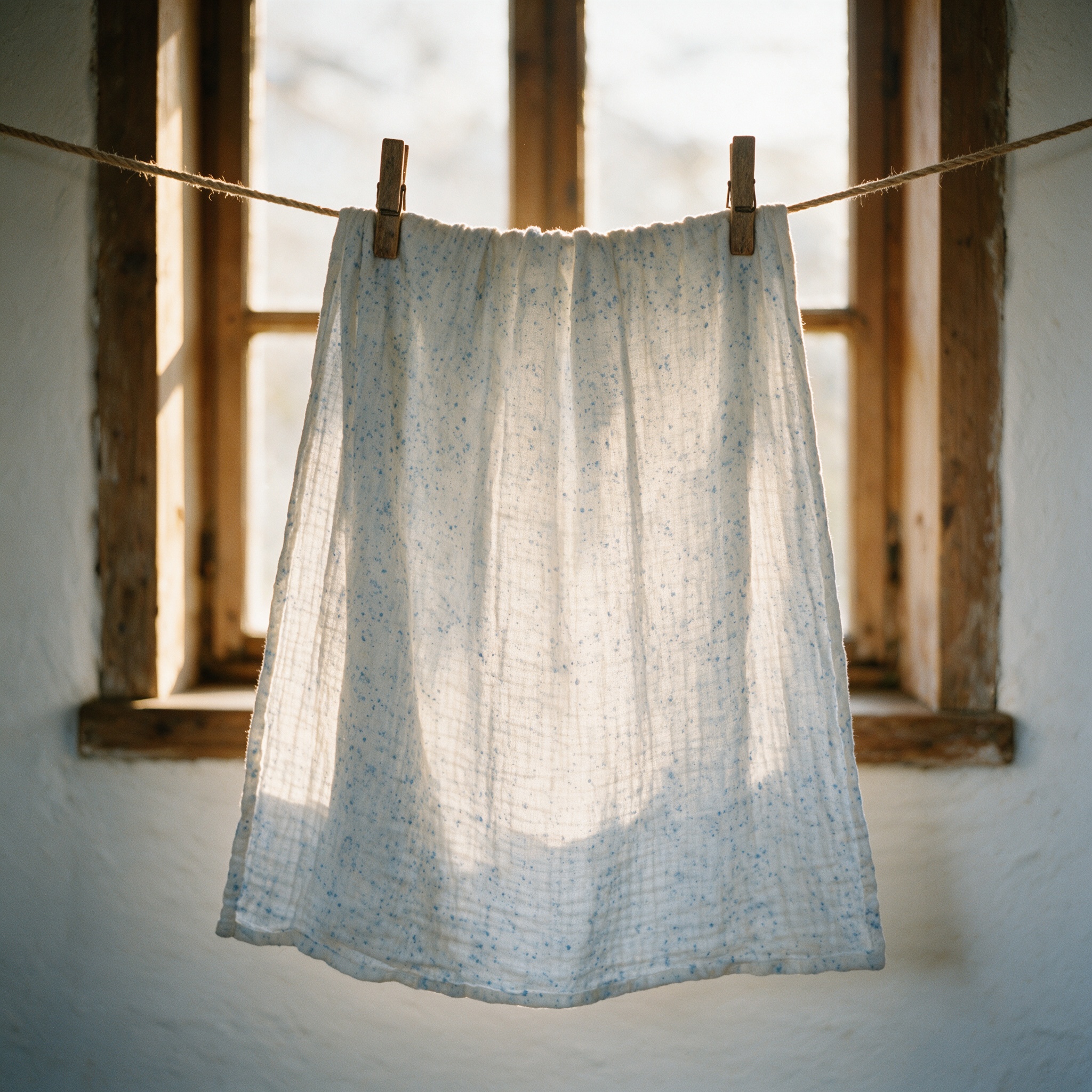
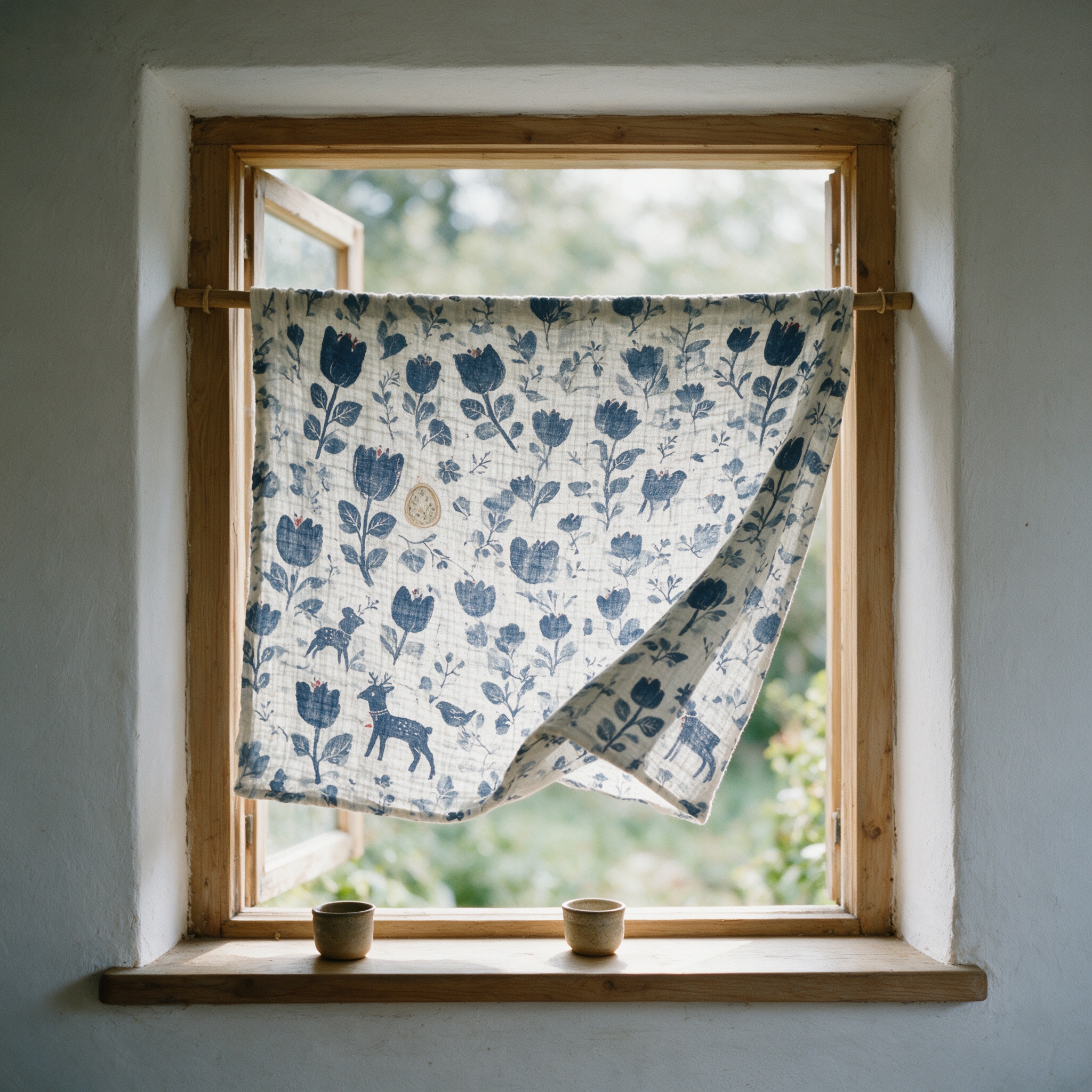
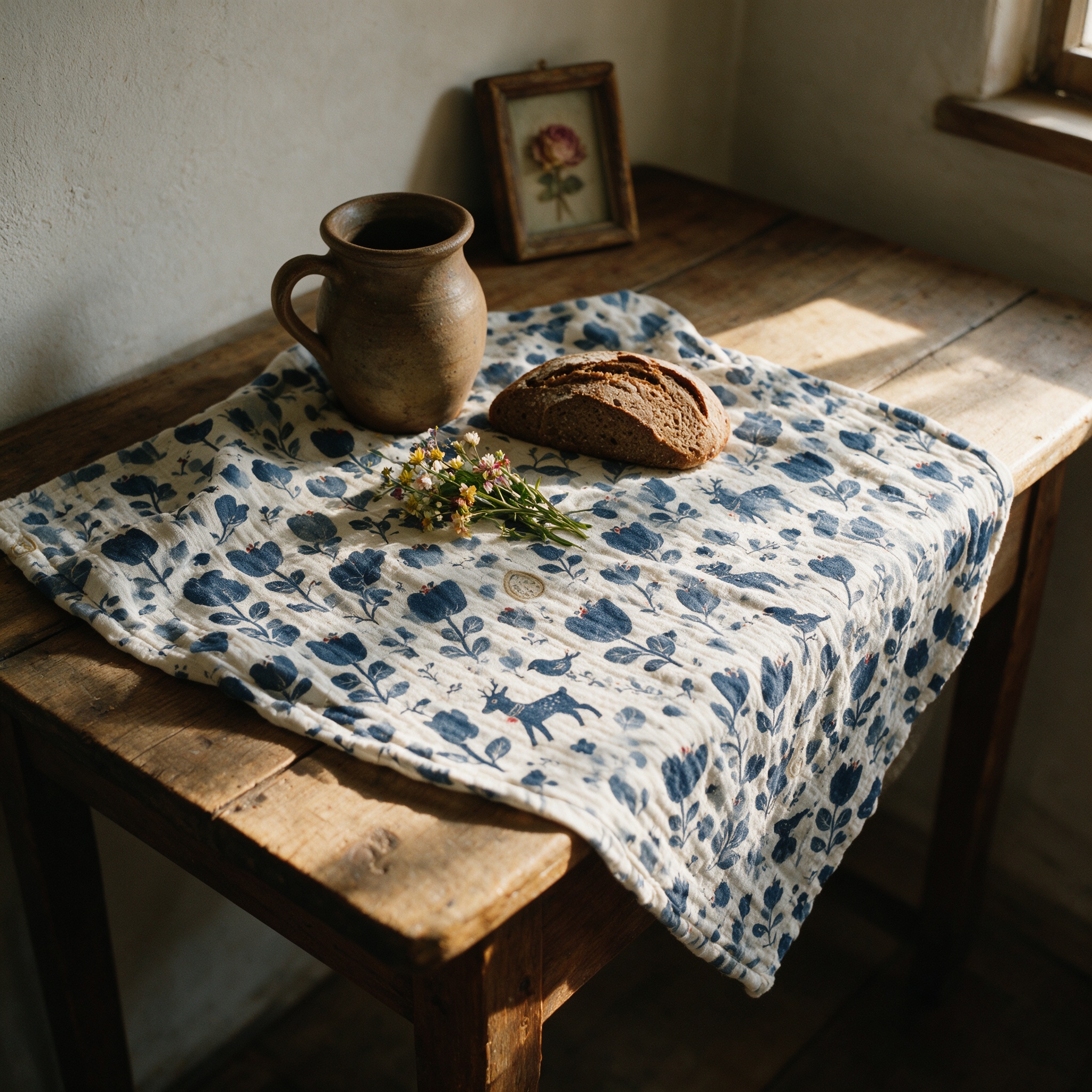
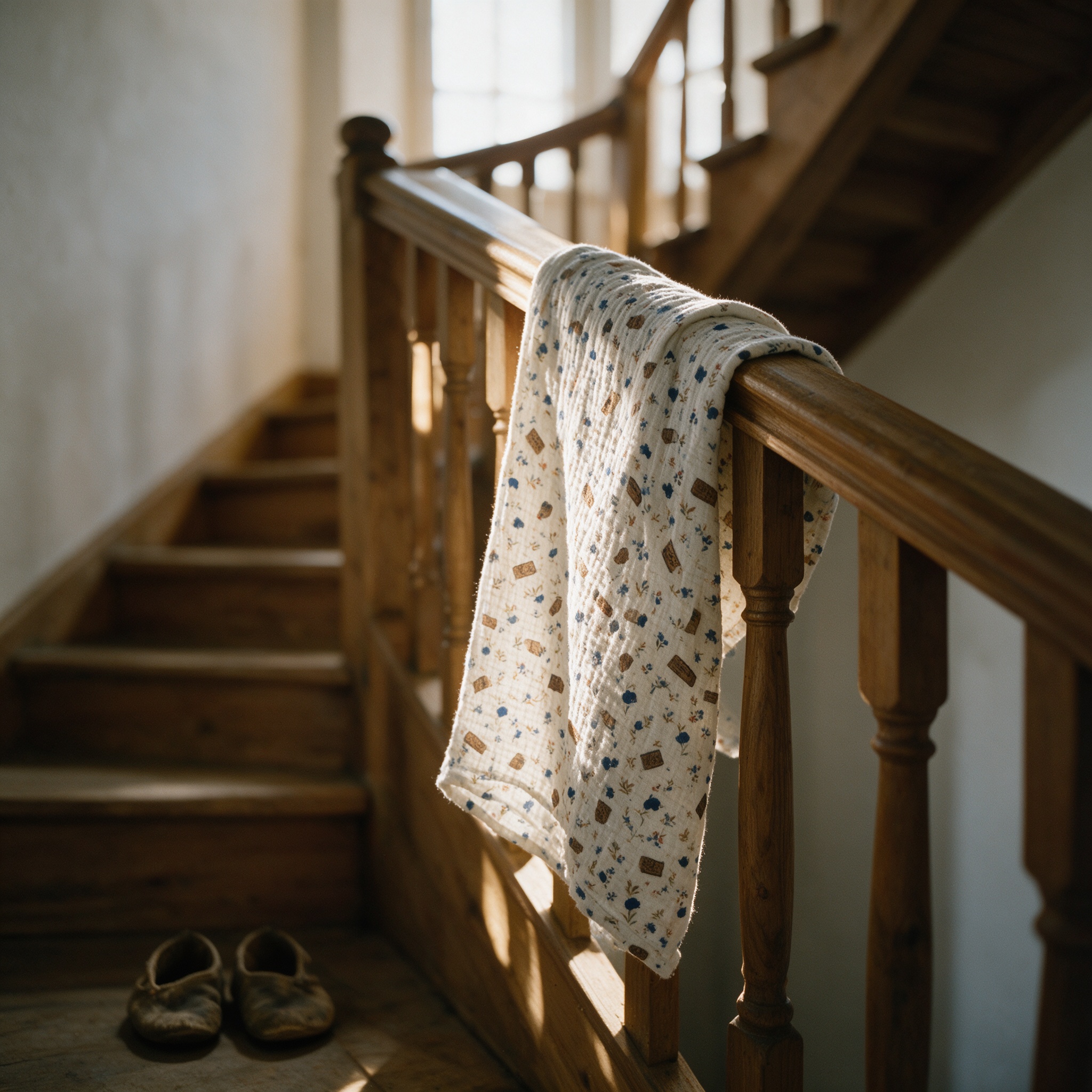
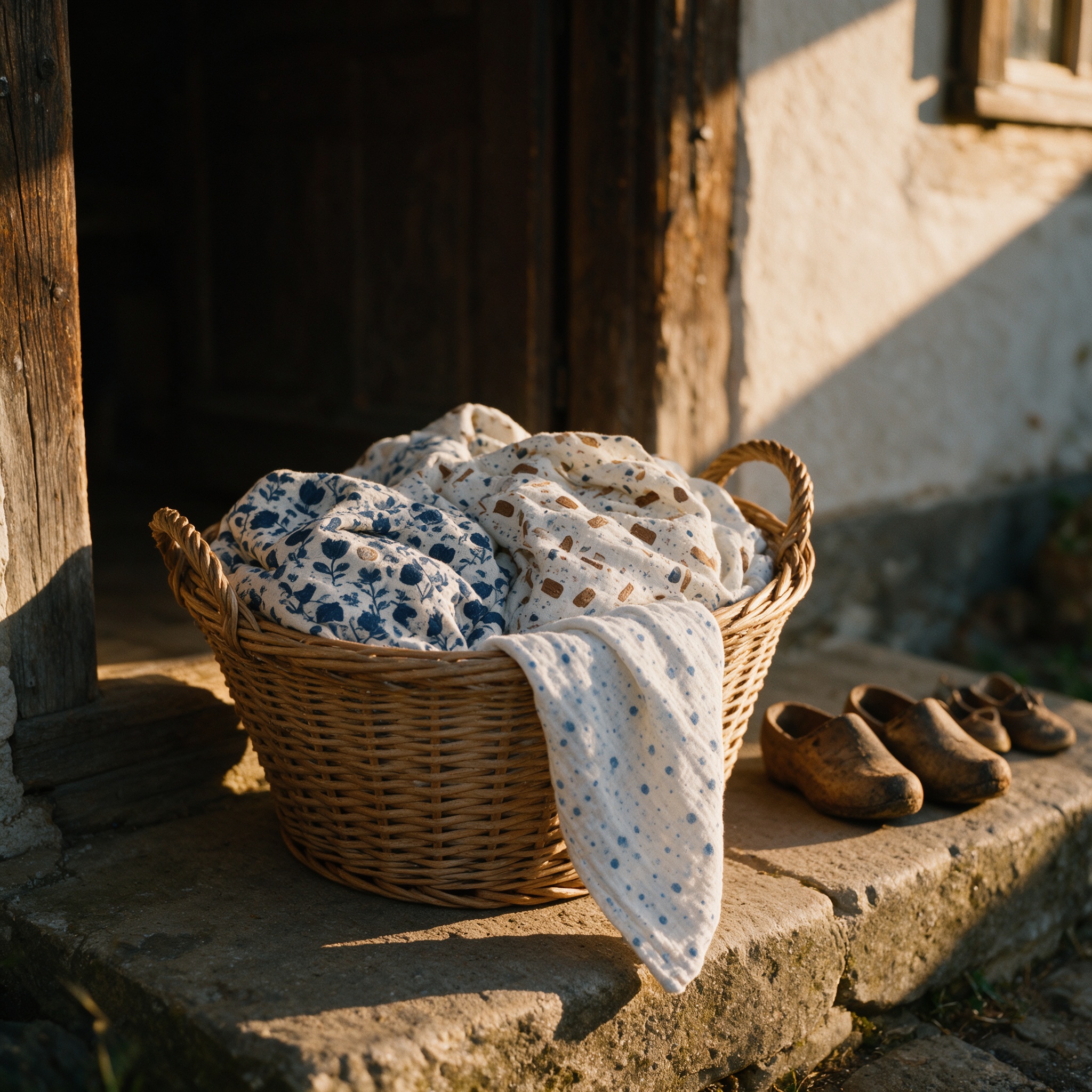
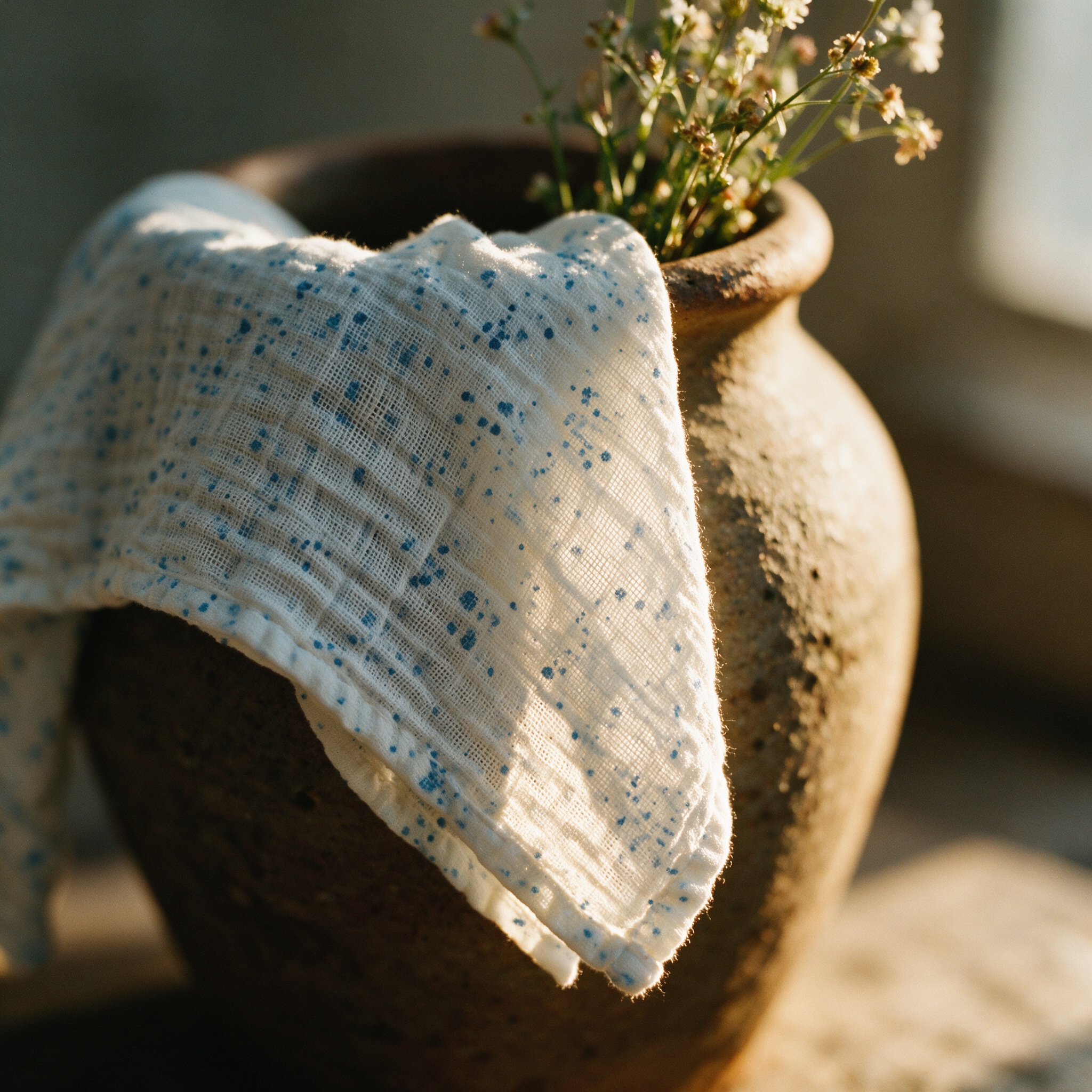
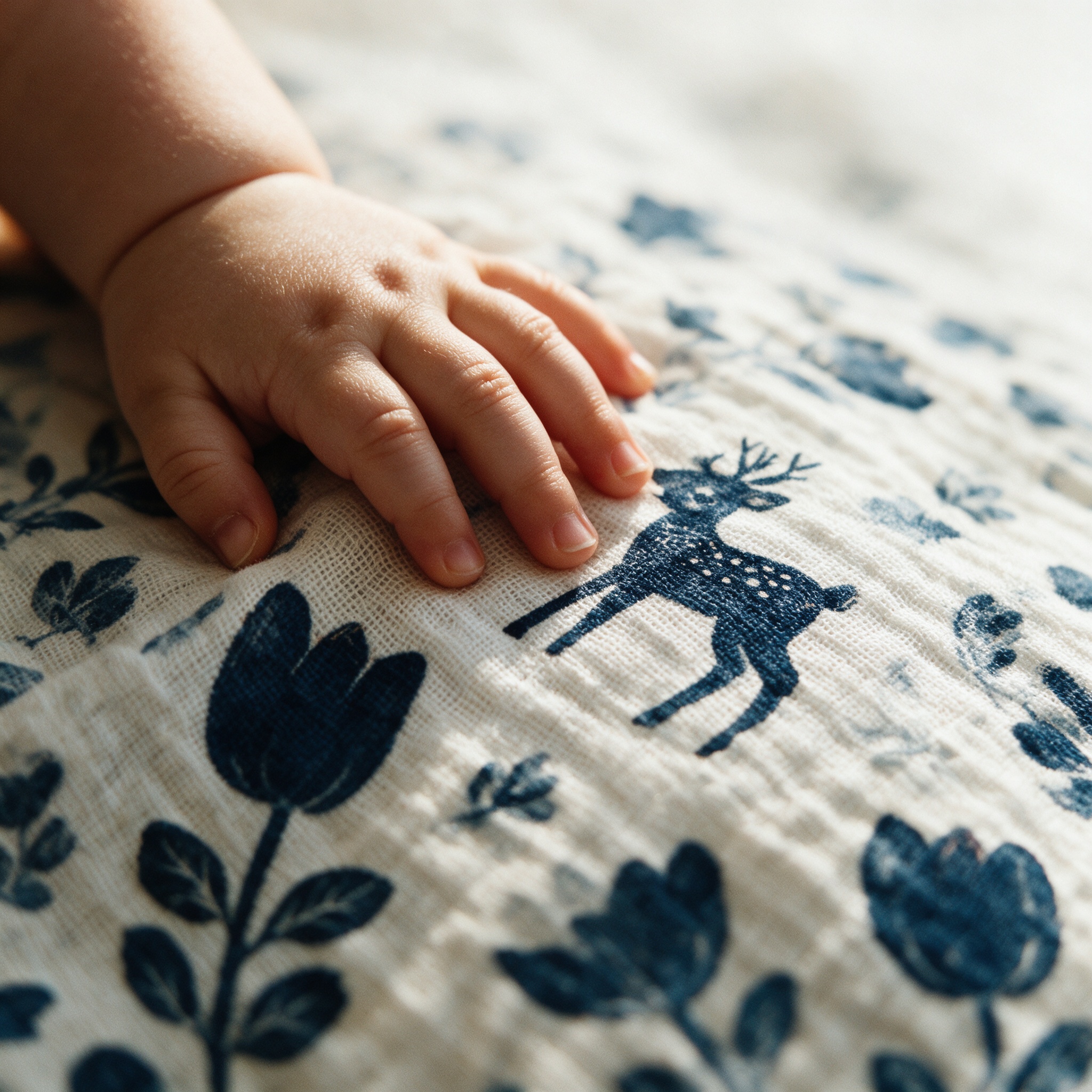
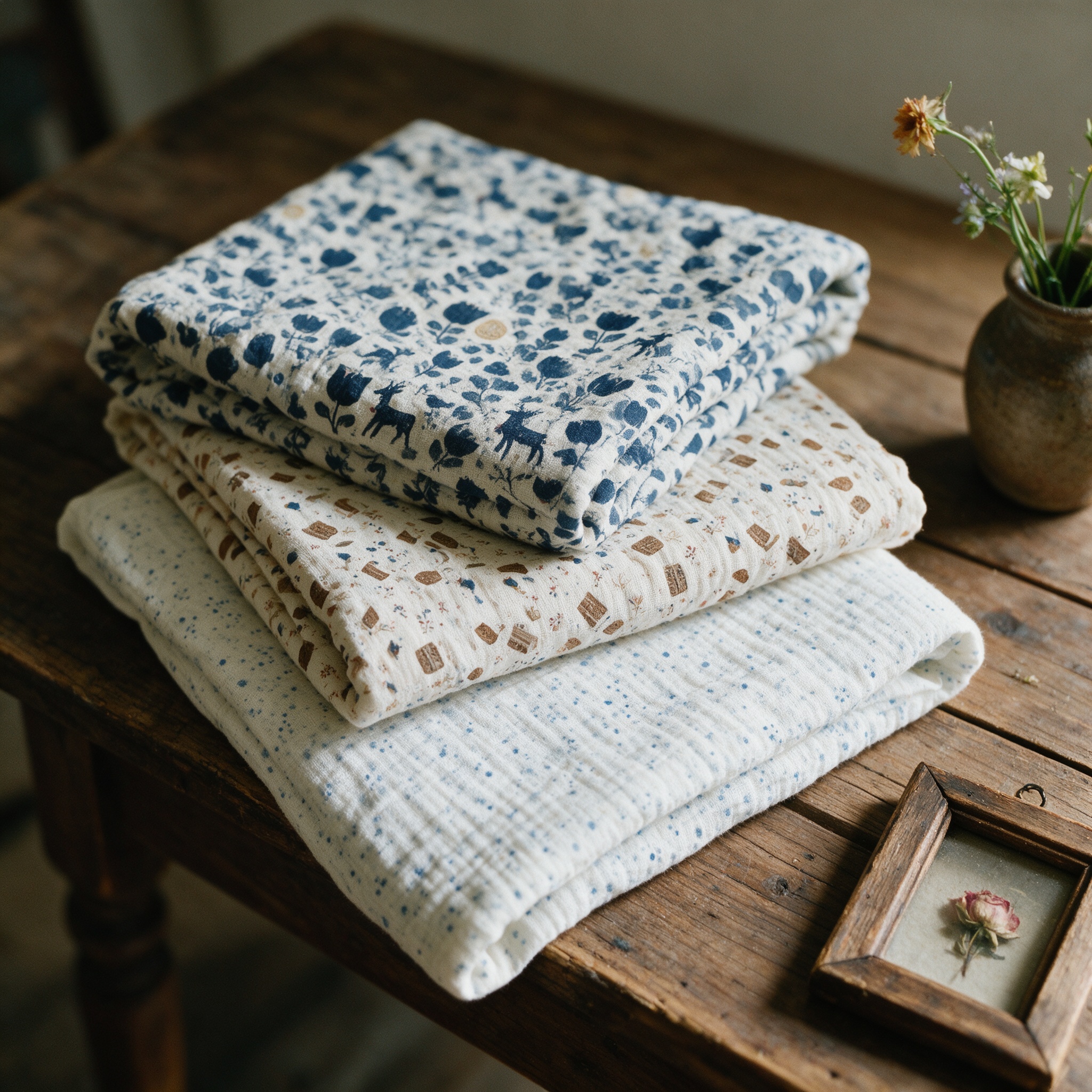
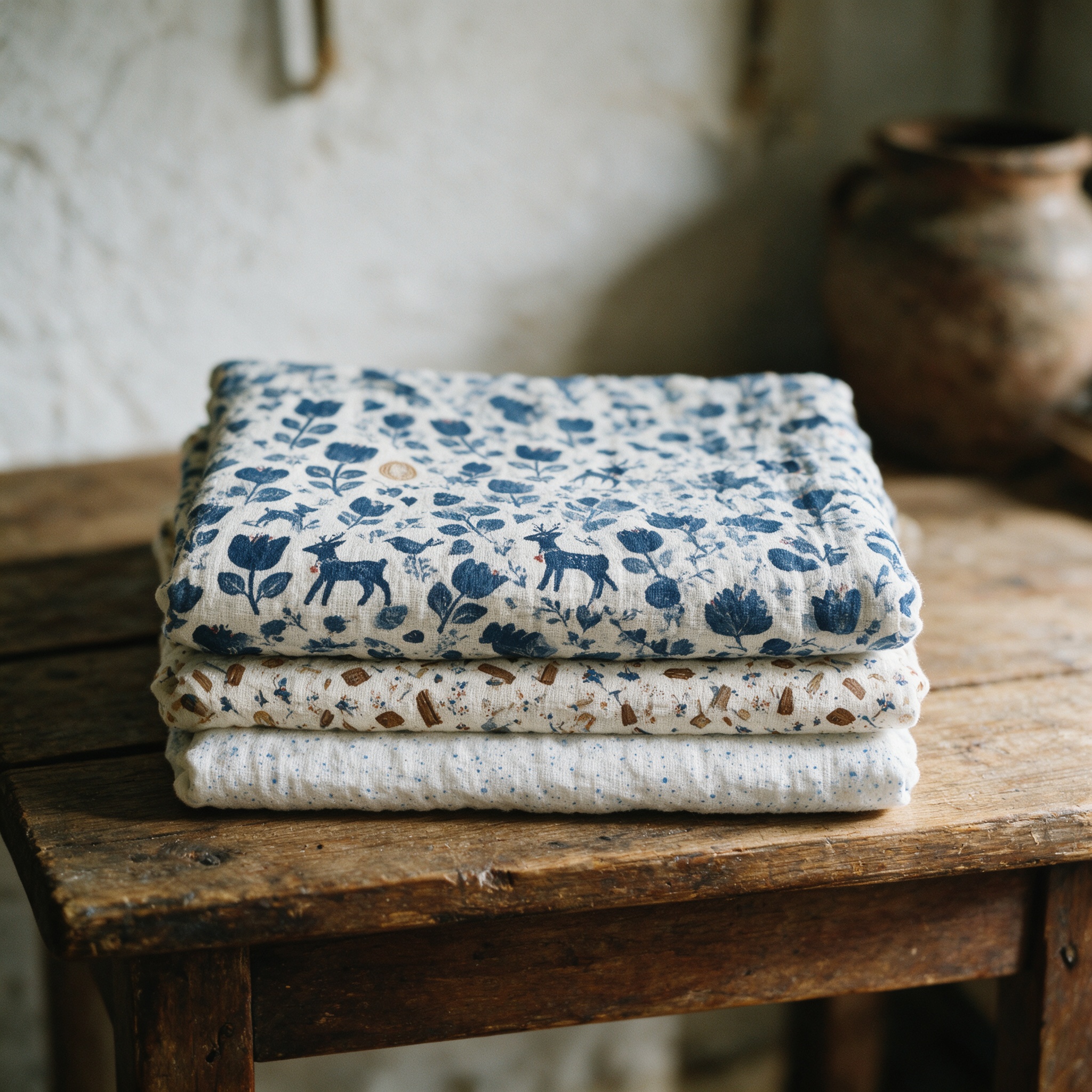
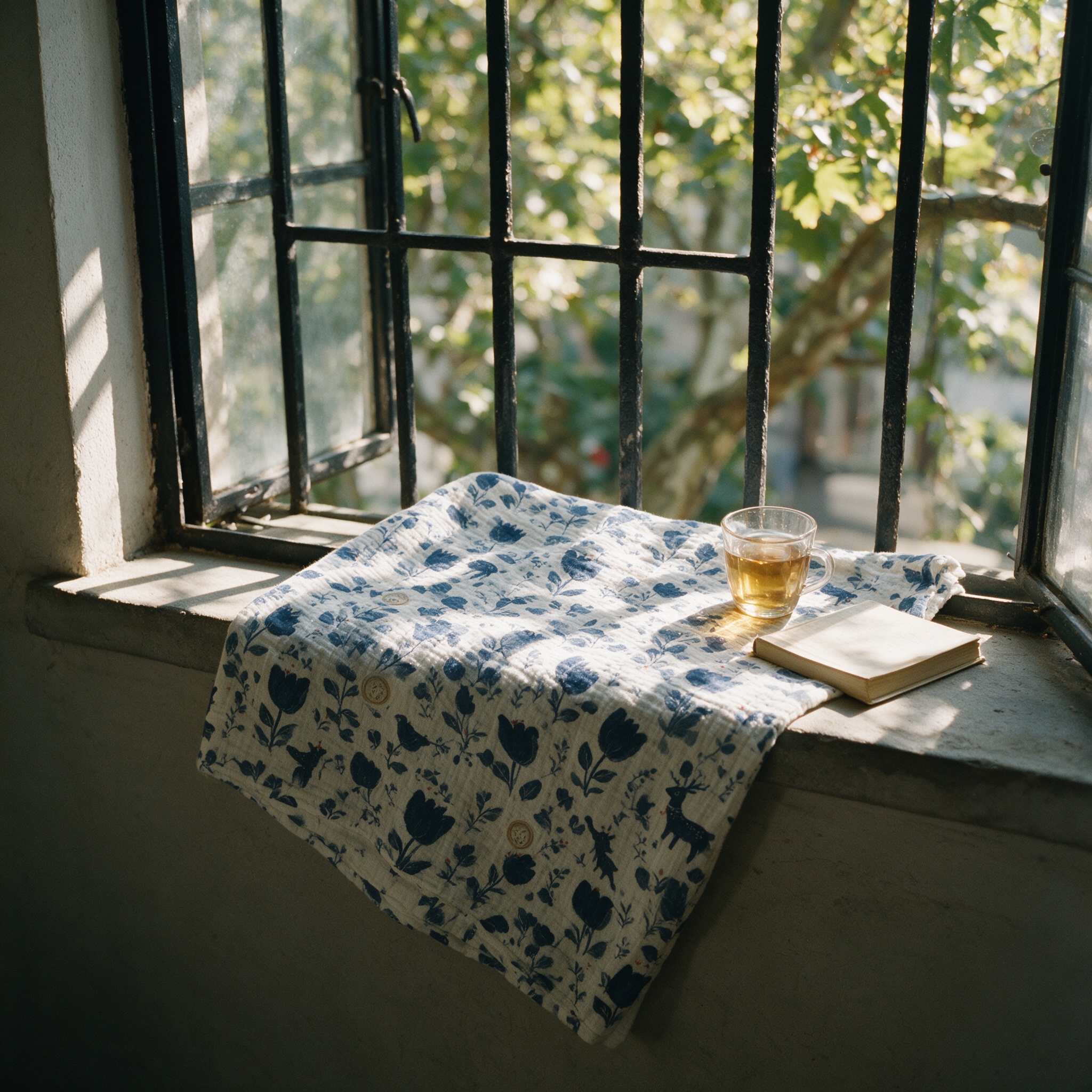
A cloth printed with flowers, telling the story of printing flowers — the cloth itself is the main character.
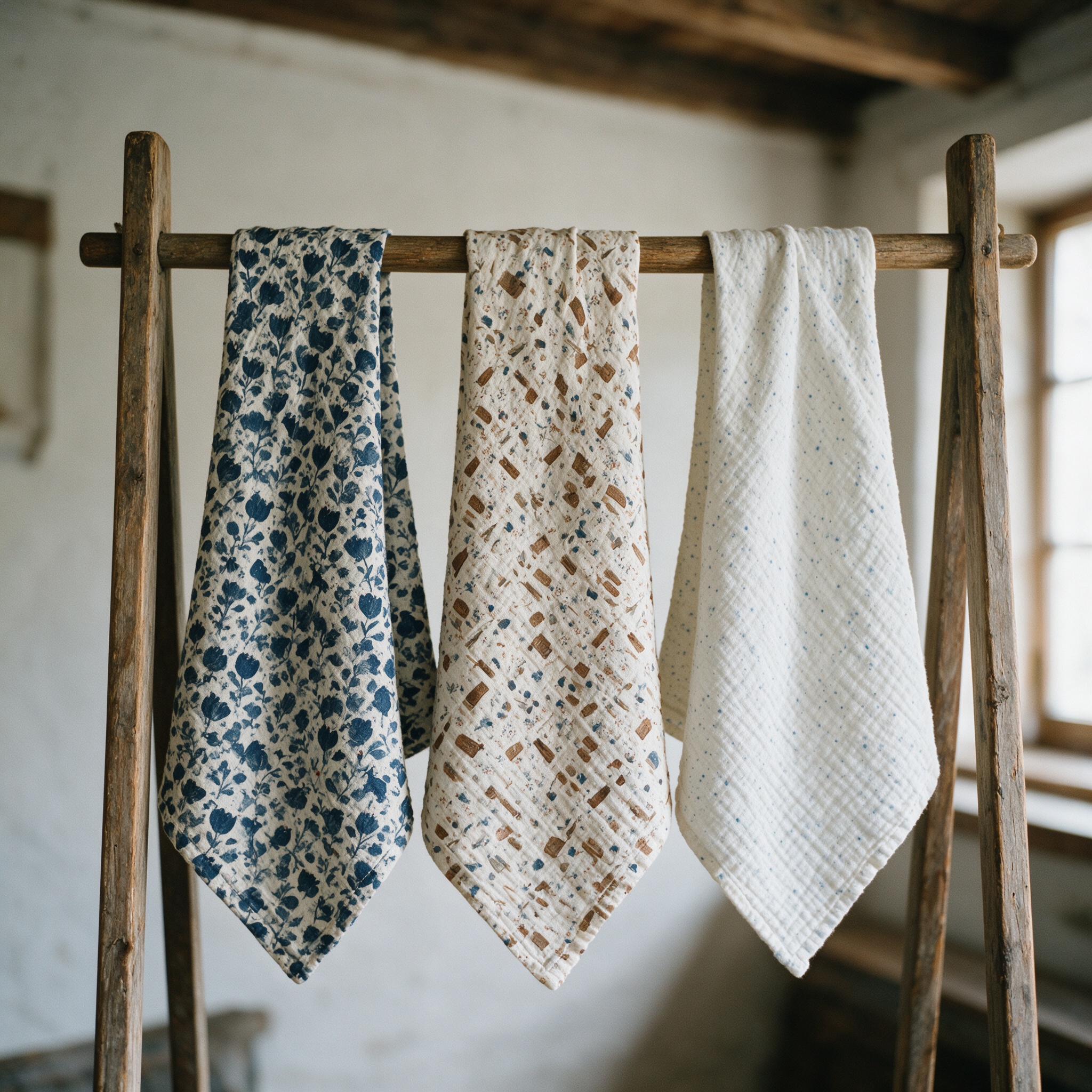
A day at the dye works, hung up — bolt, tools, hem.
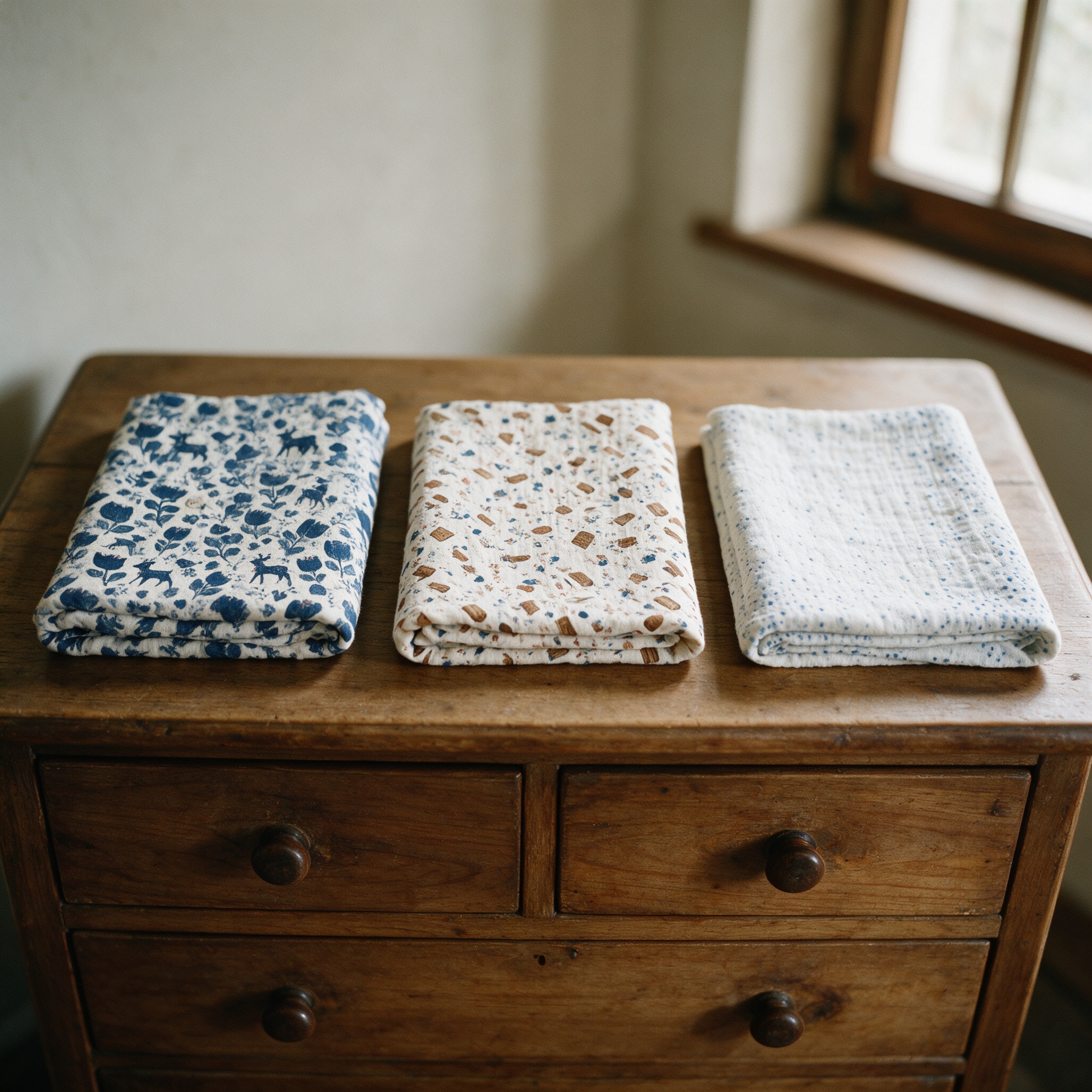
Three patterns in a row — courtyard to tools to hem.
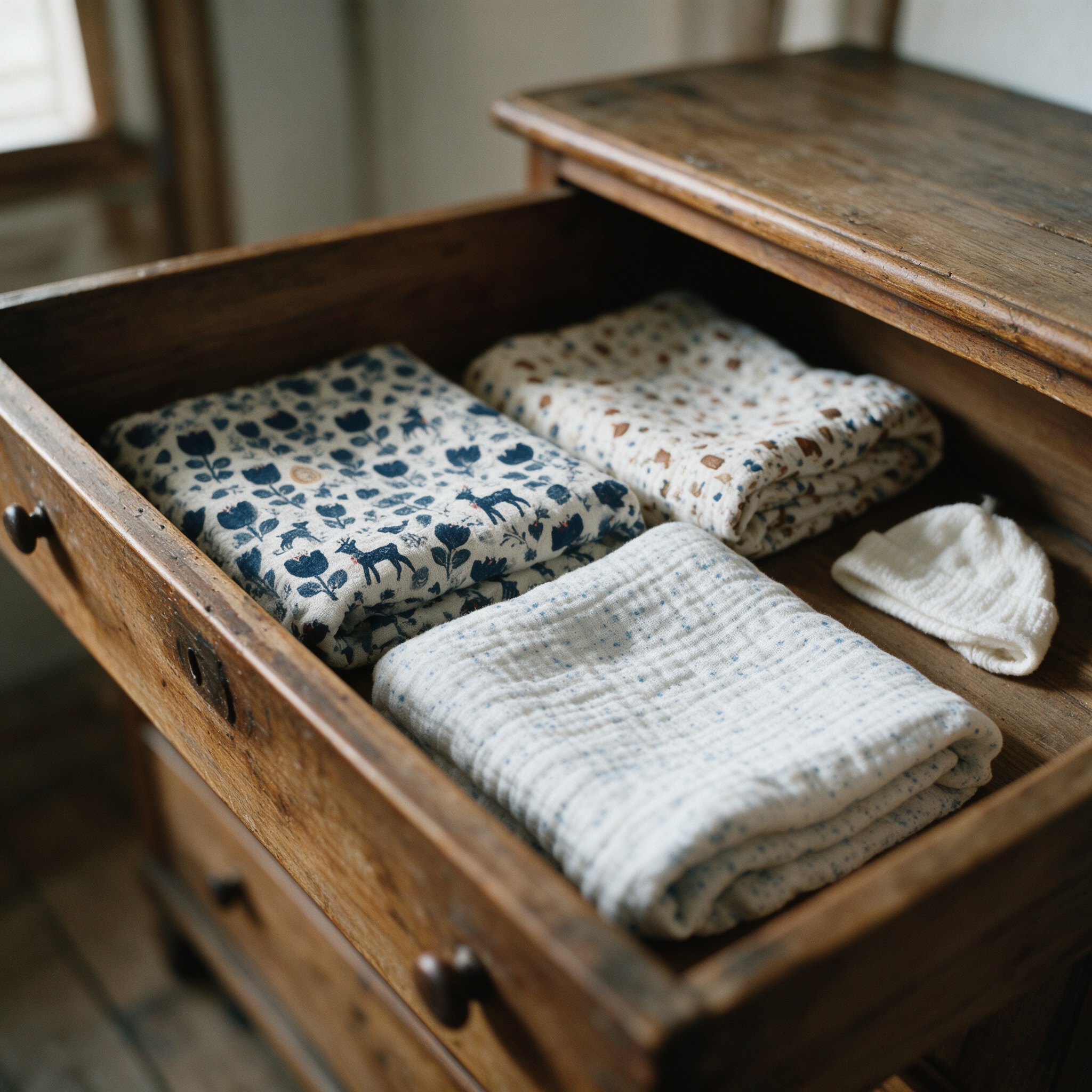
One in use, one in the wash, one in the drawer — bluer each time.
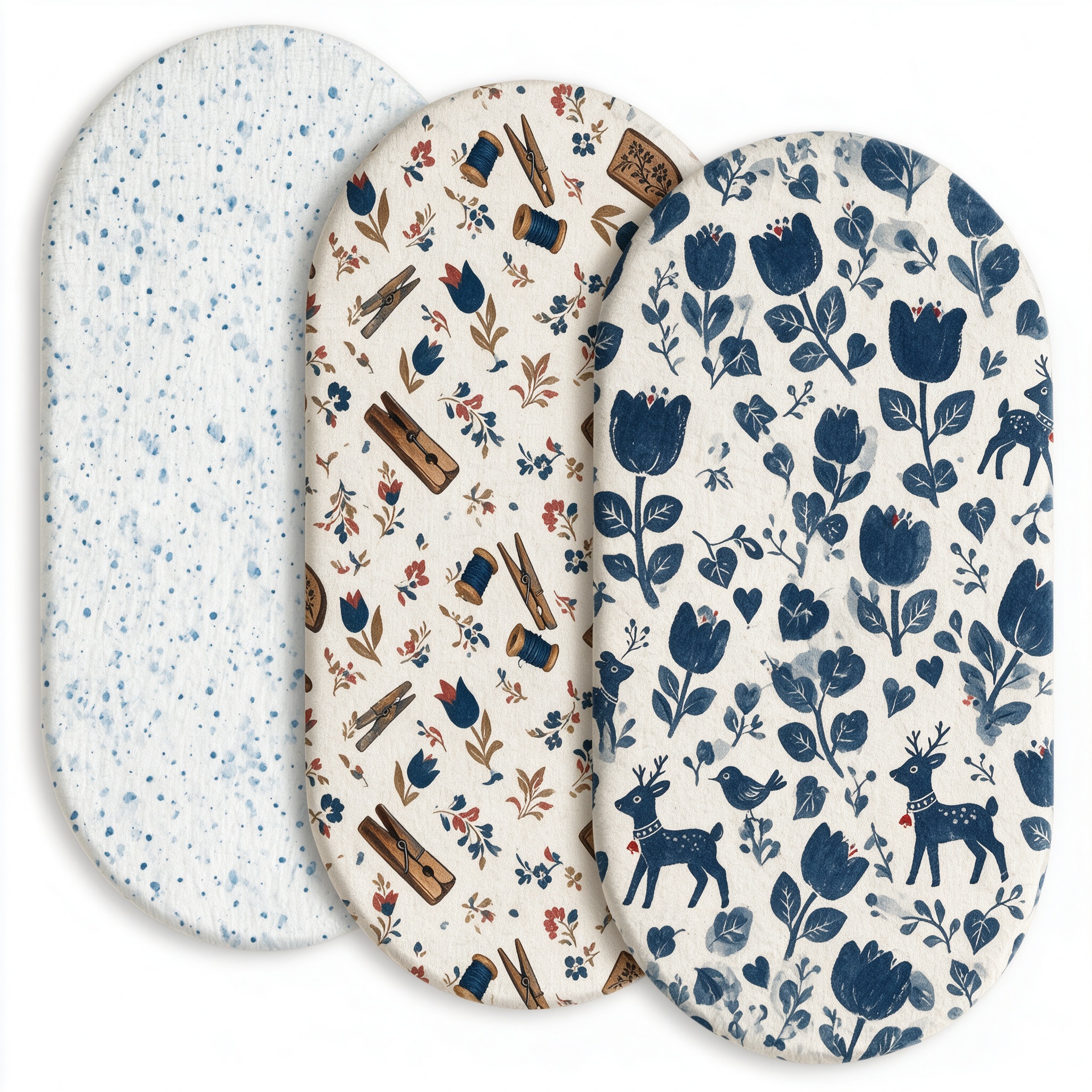
The whole family in white — indigo and cream, tulips and deer.
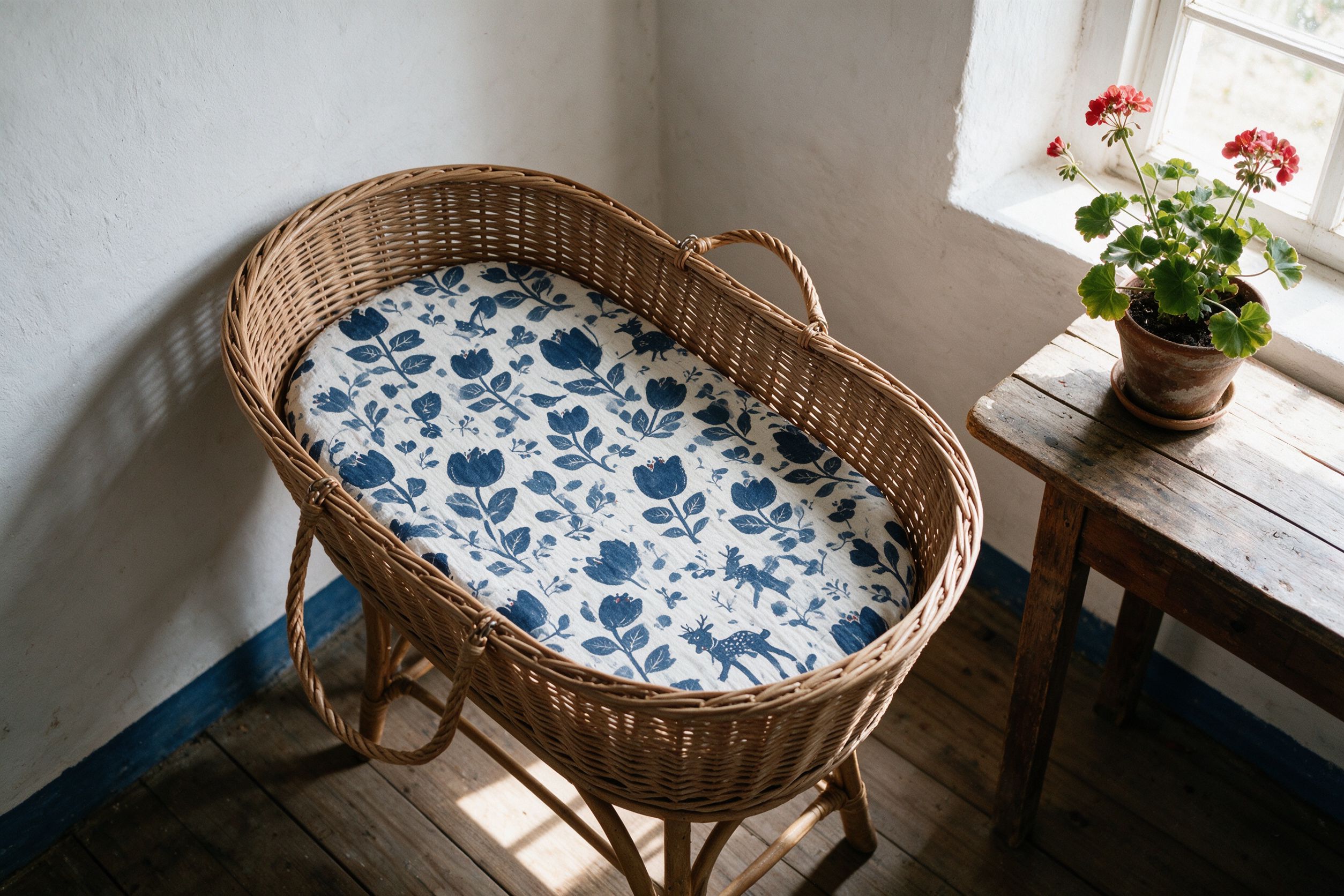
A courtyard of blue, opened over the little bed — floating in dreams when the wind rises.
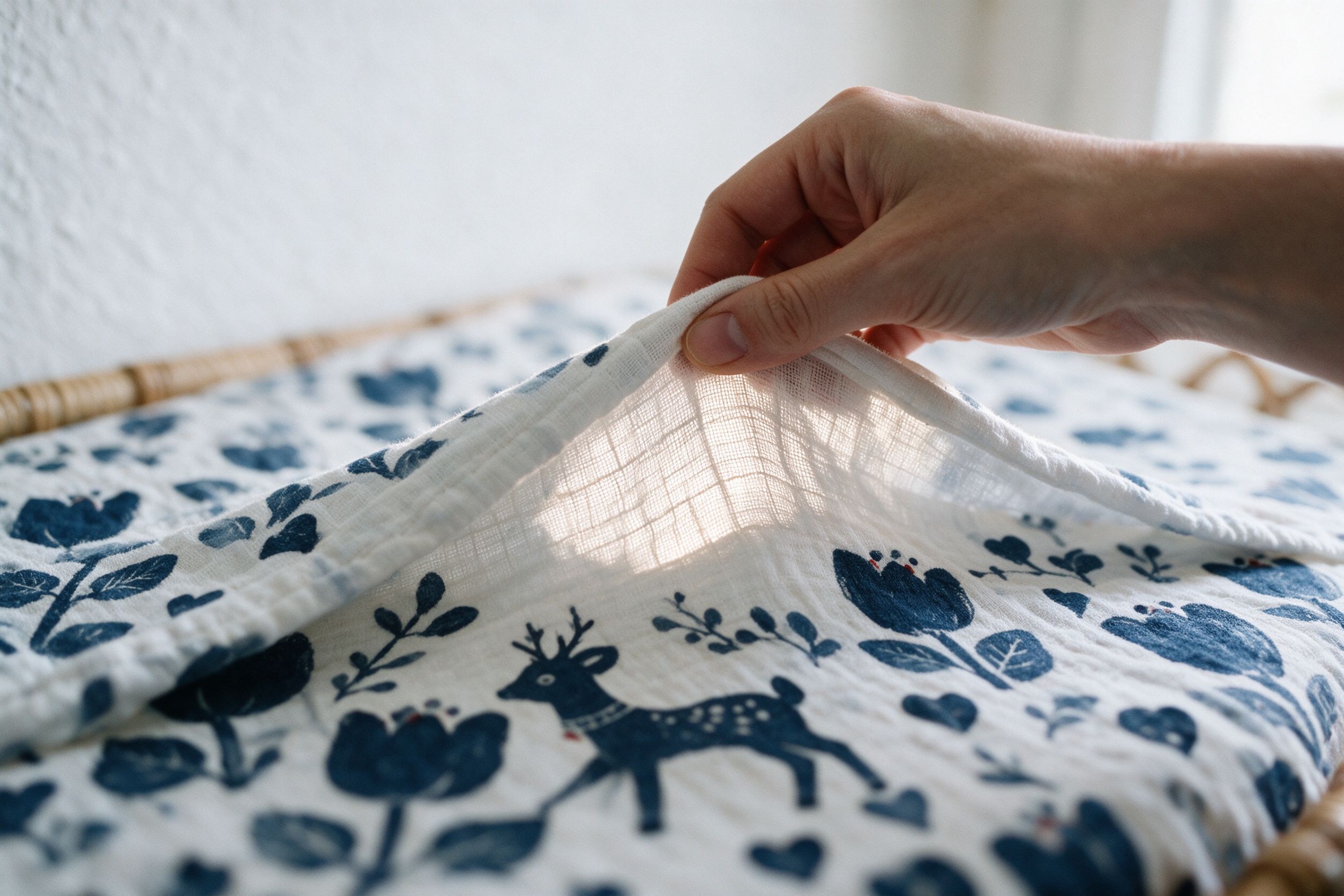
The weave — what thirty years of hands feel like on cloth.
Modrotisk — Moravian indigo resist block printing, UNESCO intangible heritage: the indigo vat, the paste squeegee, white cloth and blue flowers. Tulips, deer, birds, heart-leaves — "the blue calico of Europe."
On the block rack in P1 leans an old wooden frame, and inside it, a pressed flower — the flower of Lizzy's journal, framed inside the dye works. One pressed flat and kept; one printed a thousand times over — collecting and creating, one west, one east.
With this line, the four corners of Europe are complete: southwest (Abuela, Iberia), south (Nonna, southern Italy), northwest (the two English lines), east (Moravia). The fifth grandmother of the ledger: Babička — Czech for grandmother, keeper of the handing-down.
Not boho-chic, no tassels, no crocheted fringe. The romance of a working dye shop — folk craft, made by hand, handed down. No tourist symbols, no fashion styling: only the table, the vat, and a pair of hands that never quite come clean.
Dear Babička,
Seeing your handwriting is like seeing you.
Far from Moravia, I have seen the blue you print. My grandmother's quilt-cover was this blue — washed pale, softer with every wash.
Is your grandmother's pear-wood block still there? Ours is long gone, but I remember the blue.
It turns out the people of blue cloth are all doing the same thing: keeping the flowers, keeping the colour, keeping the days.
Give my regards to your grandmother. Are her hands clean for the New Year yet?