No. 04 · The Nonna Coast Line · Slow Sea Hours
Nonna's Little Bay
Amalfi Coast, Italy · Early Summer, First Light
"The little fishing boat sways, and lays the sea breeze gently on the baby."
At first light, five-year-old Elena followed Nonna down the long stone steps — Grandfather Pepe's fishing boat was coming home. Round-bowed, round-sterned, its blue-and-white stripes faded by the sun, a string of coloured floats at the bow — you knew it from far away.
Before the boat was even tied up, Elena was in the shallows, barefoot, the water cool on her ankles. Nonna spread a cloth on the sand, and Elena lined up her shells one by one on it: white ones, pink ones, ones with spiral ridges.
A gull perched on the mooring rope, head tilted; the little silver fish in the basket caught the light.
When the shells are all in a row, Nonna said, we'll go home and fry the fish for lunch, with lemon water. Sea wind, shells, a boat worth the whole morning's wait — that is everything she would remember about slowness.
One for the eyes (the boat), one for little hands (the shells), one for the nap (the sound of the waves).
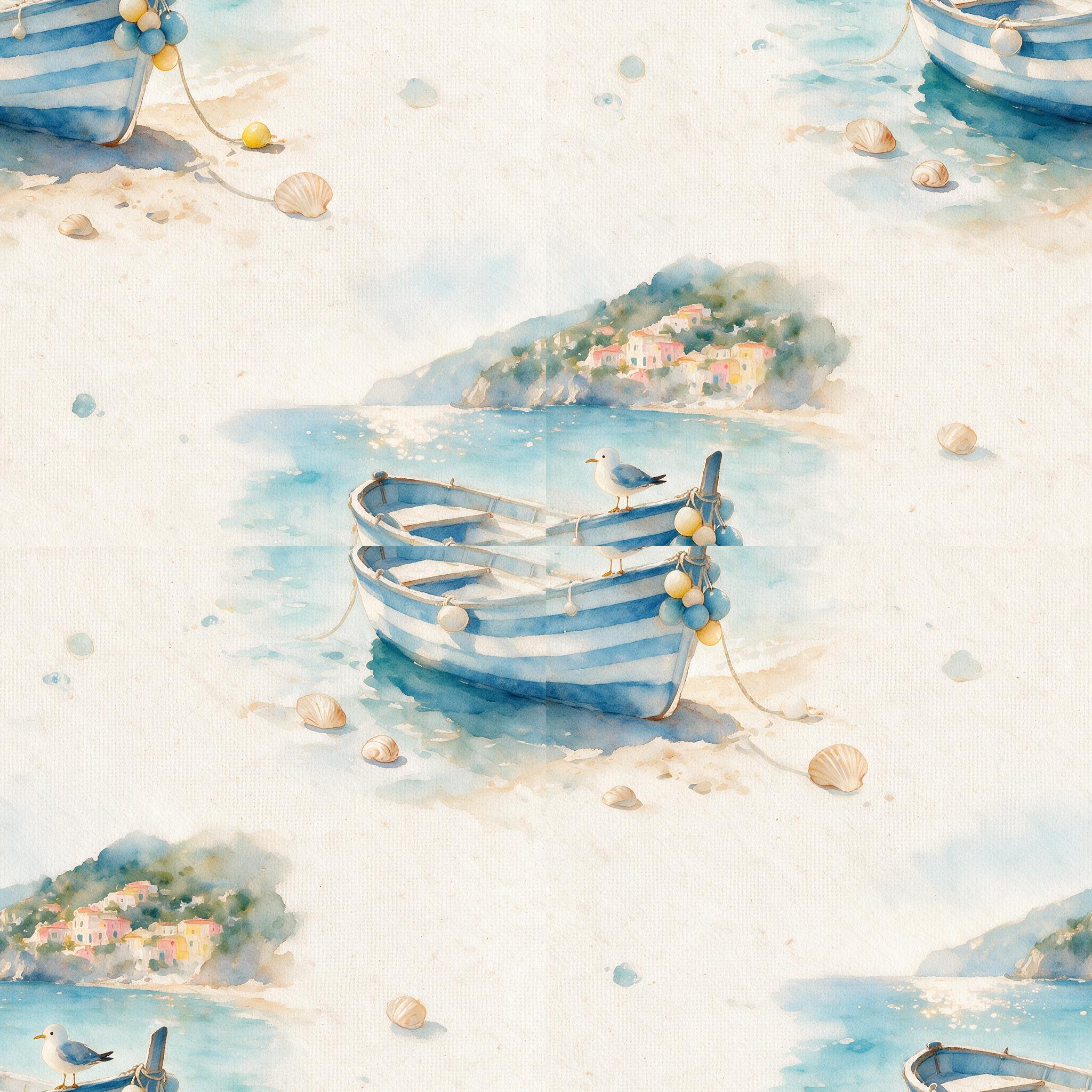
A round little gozzo moored in the shallows, a string of colored floats at the bow (one of them lemon yellow), a gull on the mooring rope. Wide sea-space, breathing like first light.
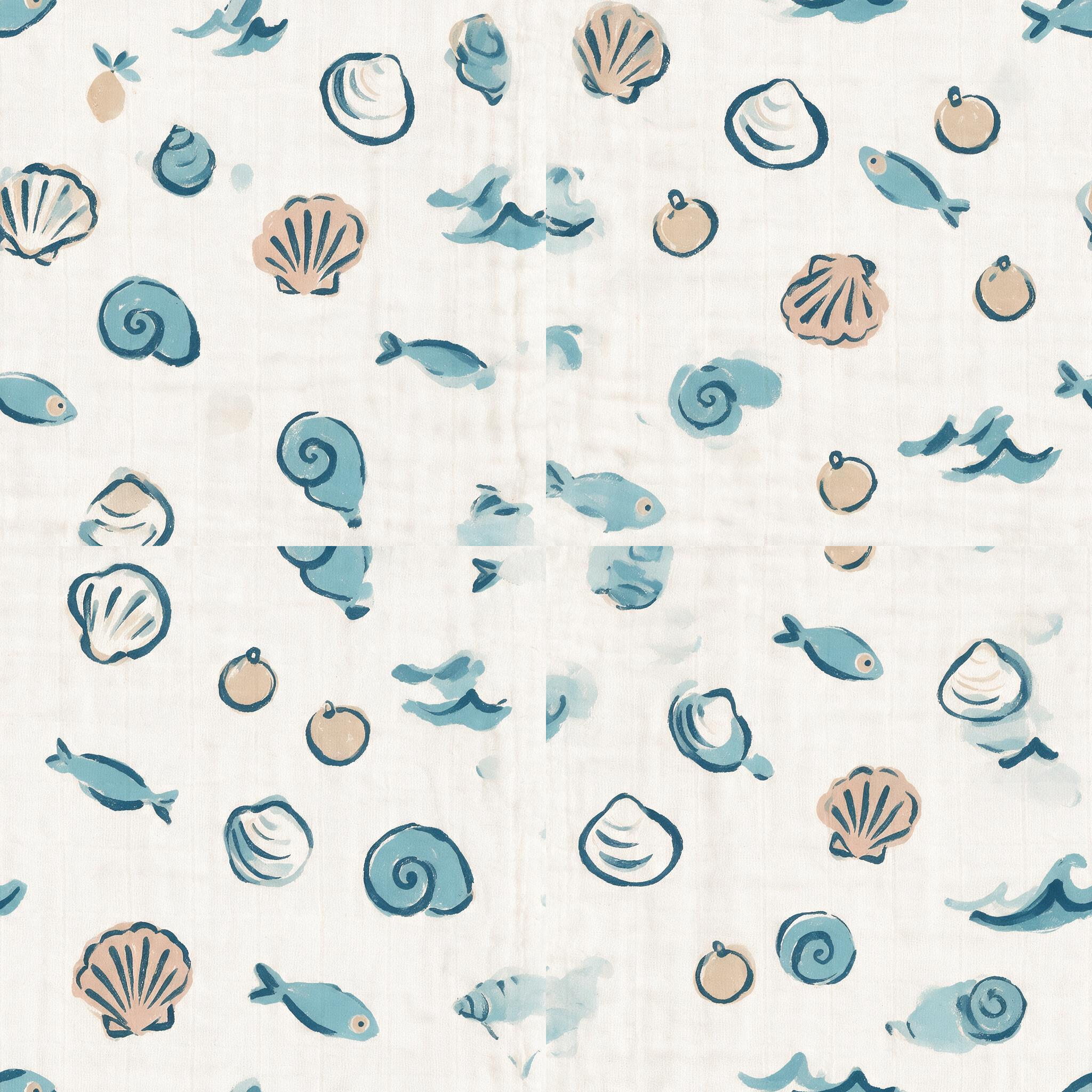
Little shells — clam, scallop, spiral — silver fish, mini floats, dots of foam, in the flat maiolica brushwork the Amalfi coast has painted on ceramics for centuries.
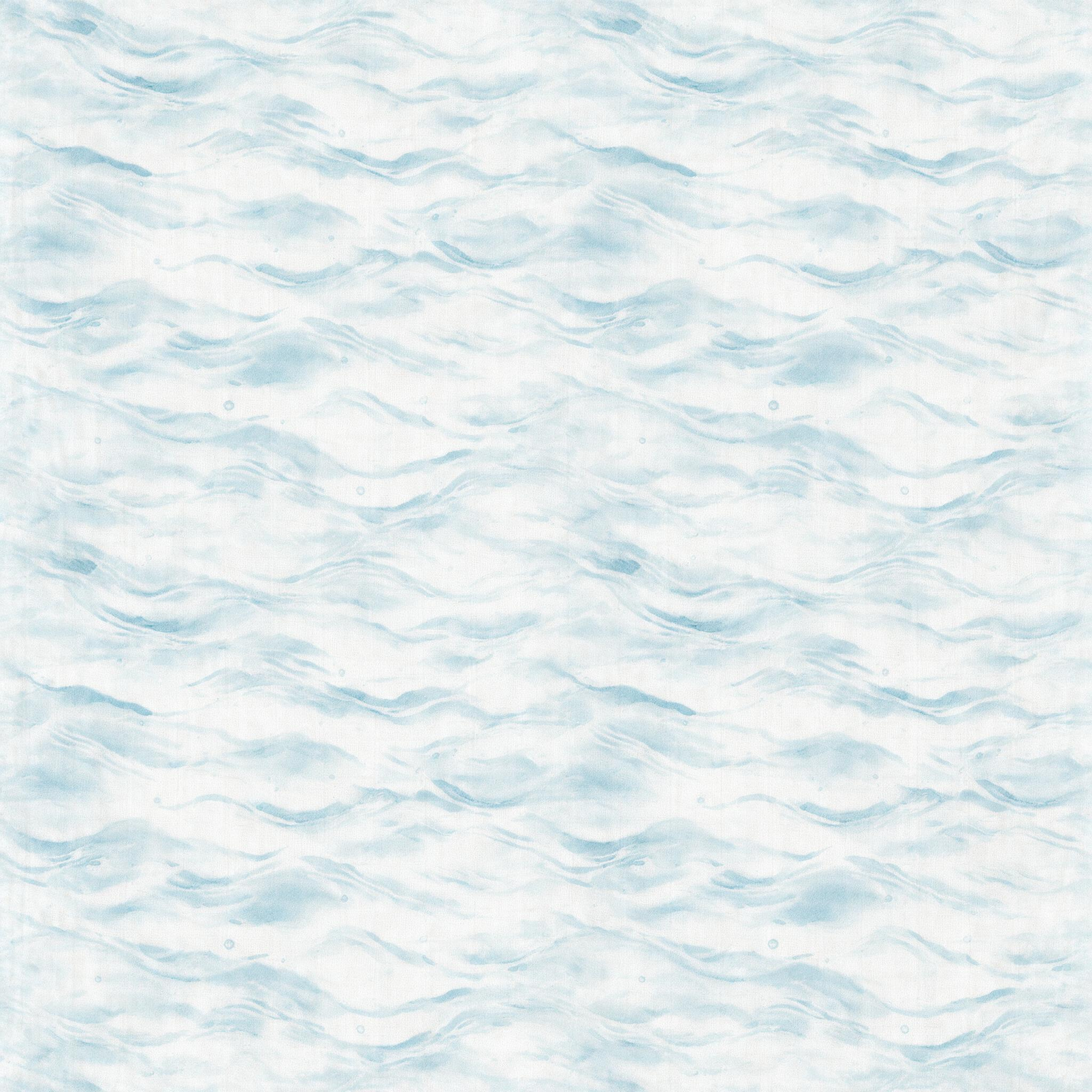
A misty sea blue with the faintest ripple texture — like the trace shallow waves leave on cloth. Clean from afar; quietly breathing up close.
The whole palette warmed half a tone — no cold, deep ocean blues, ever.
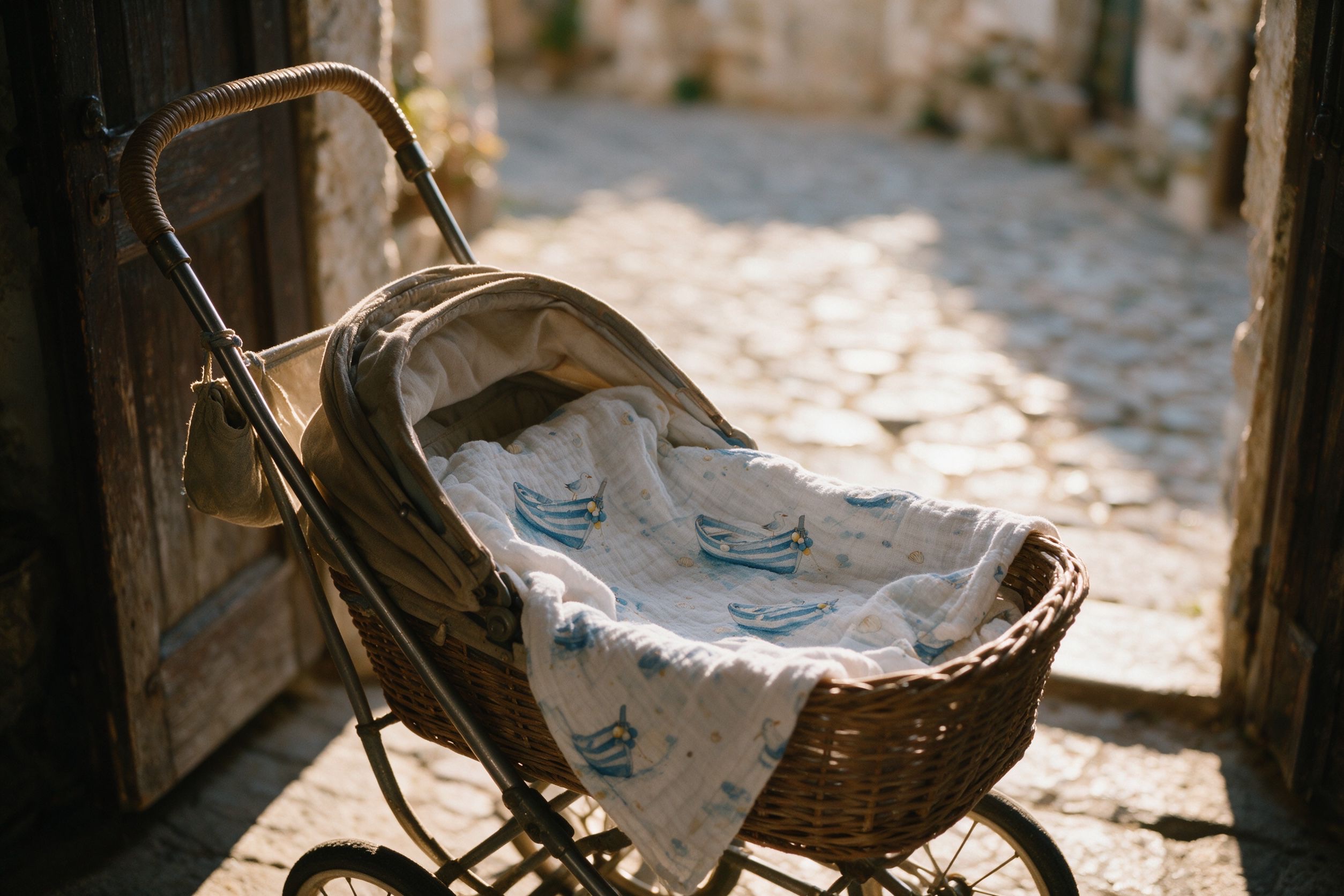
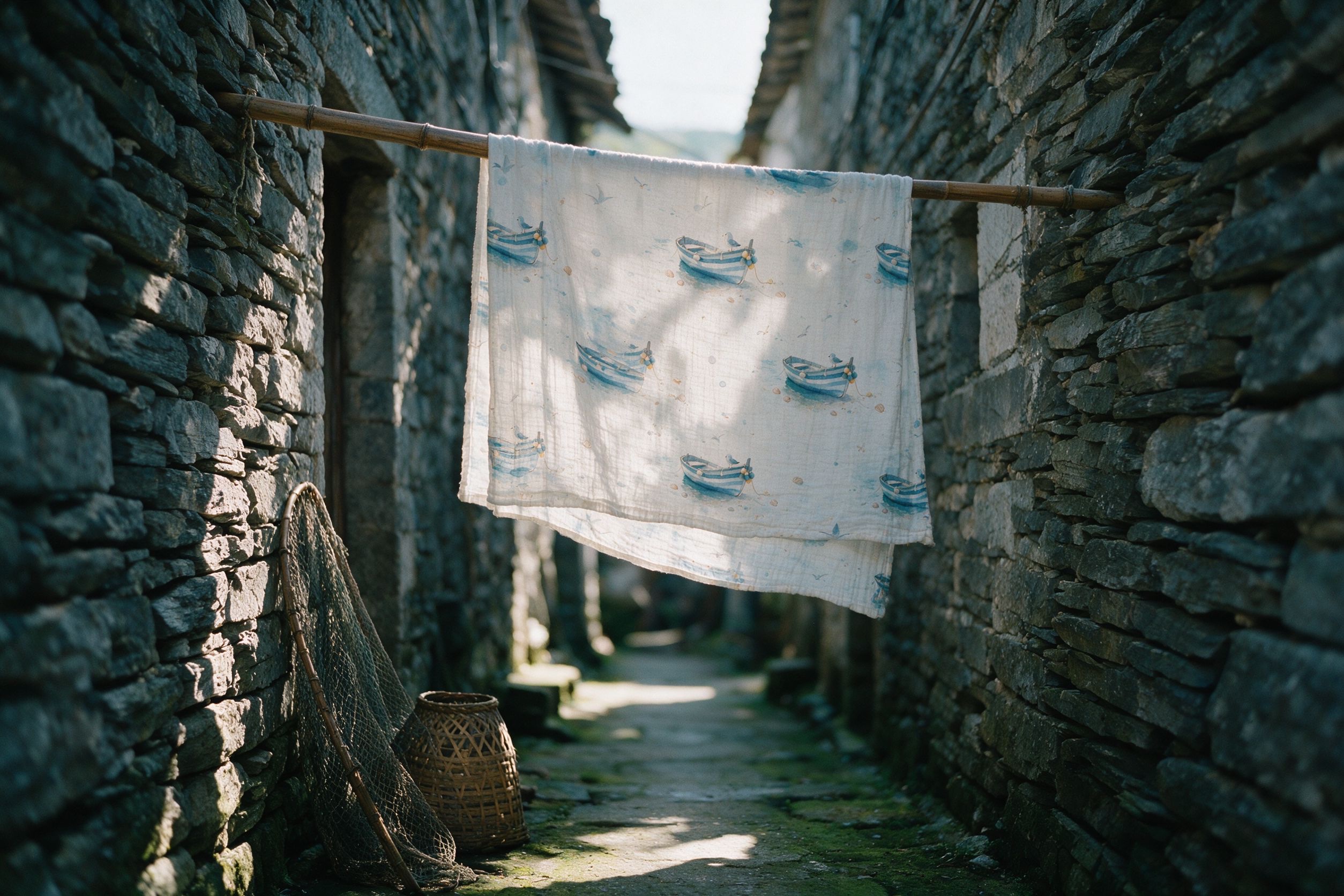
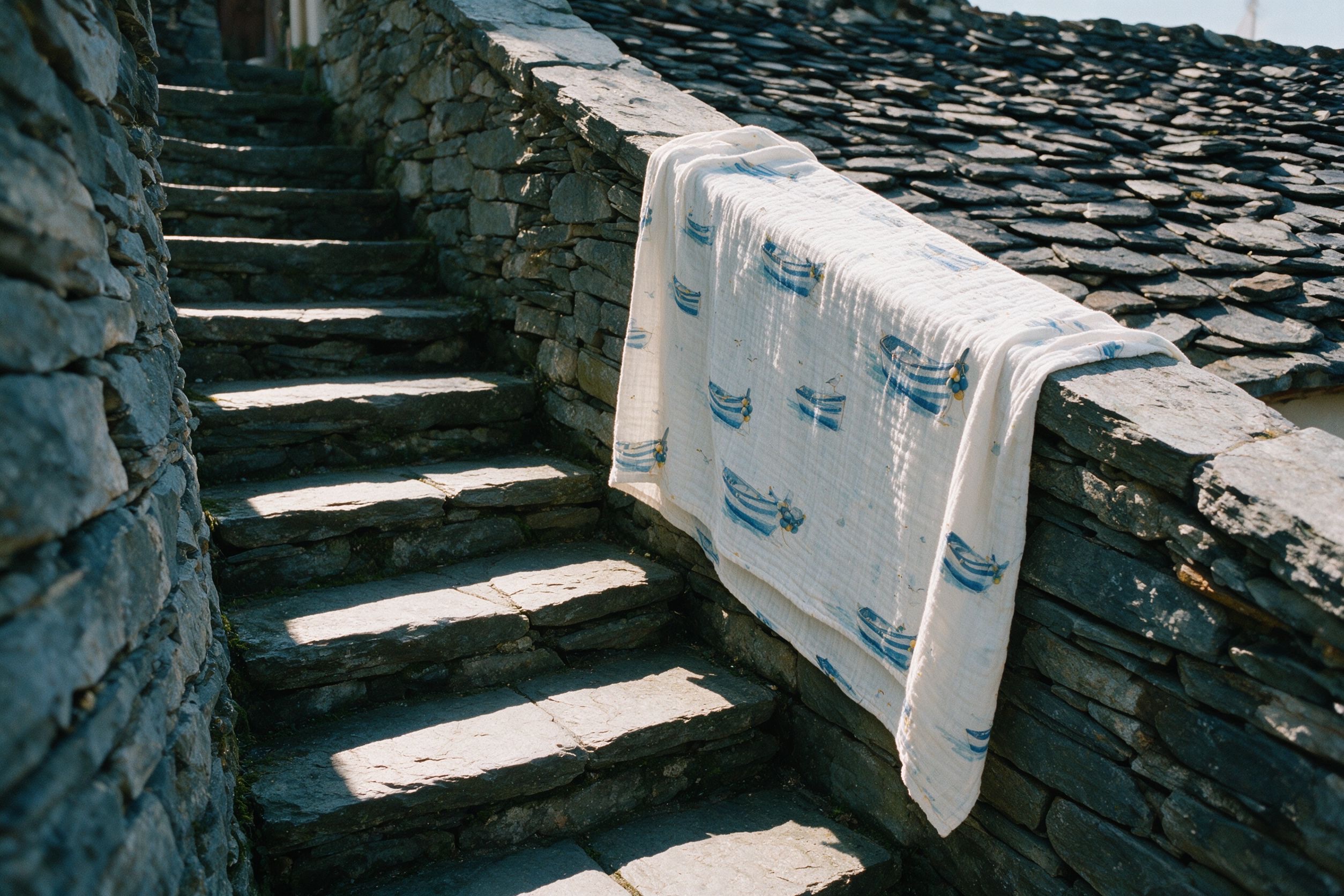
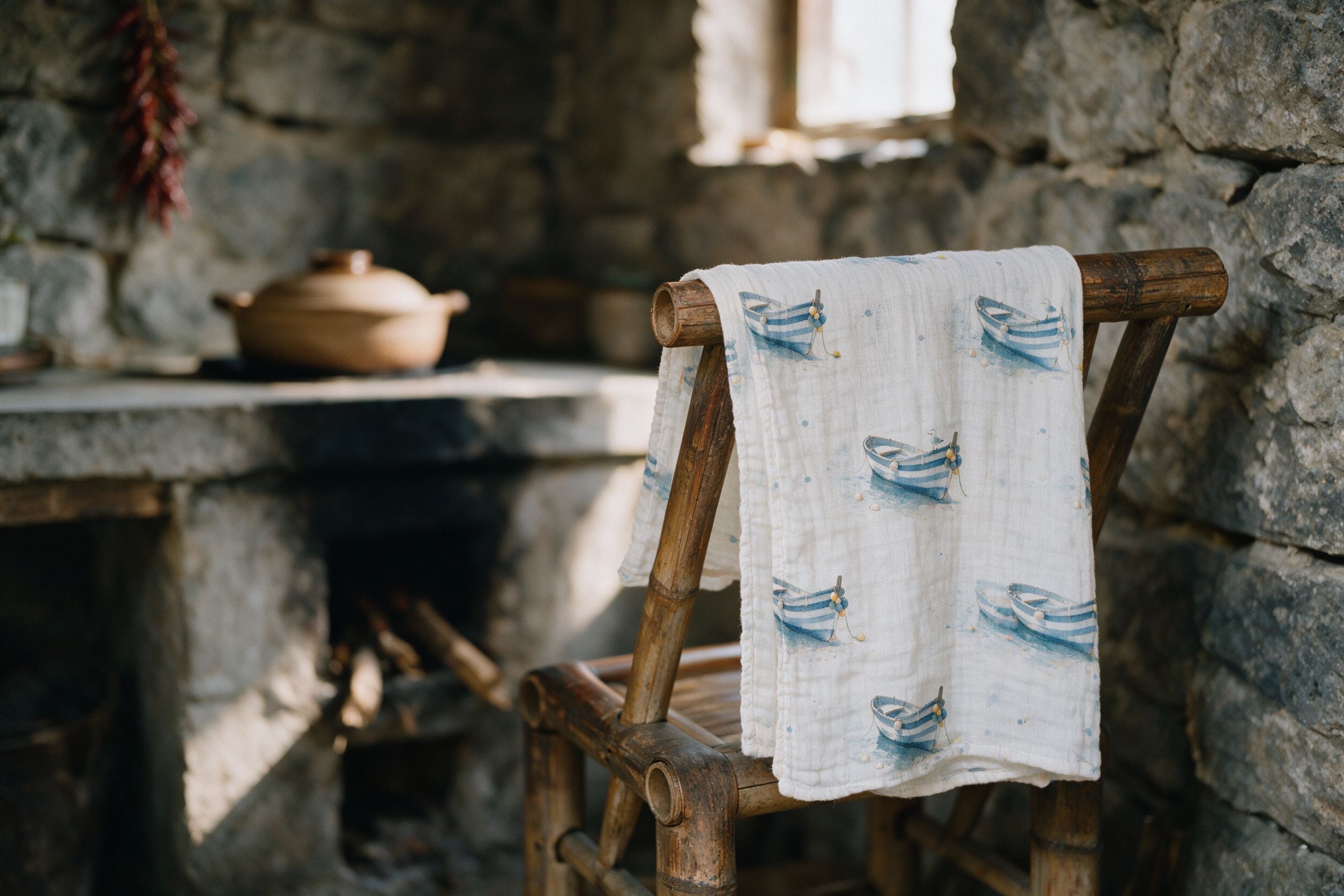
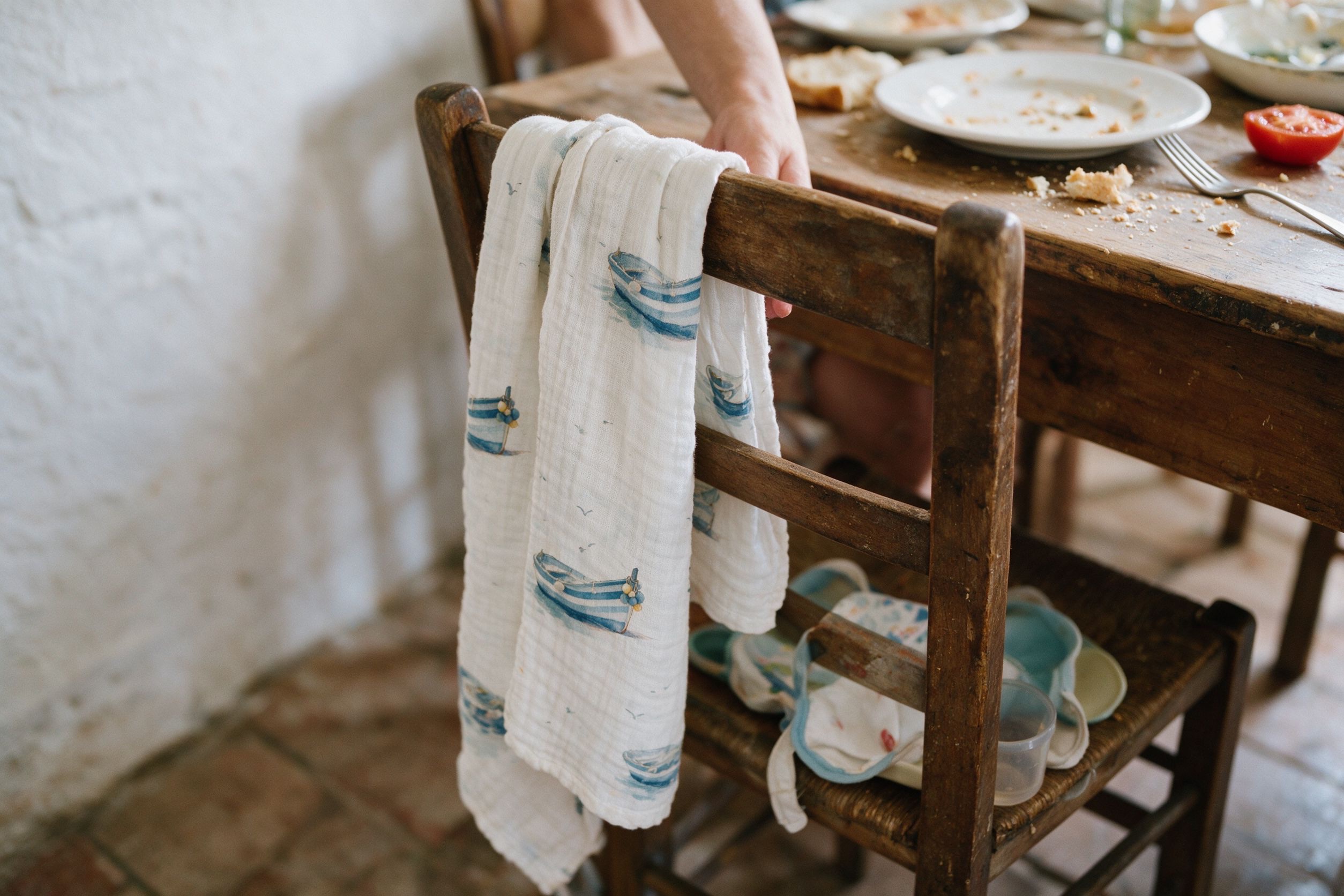
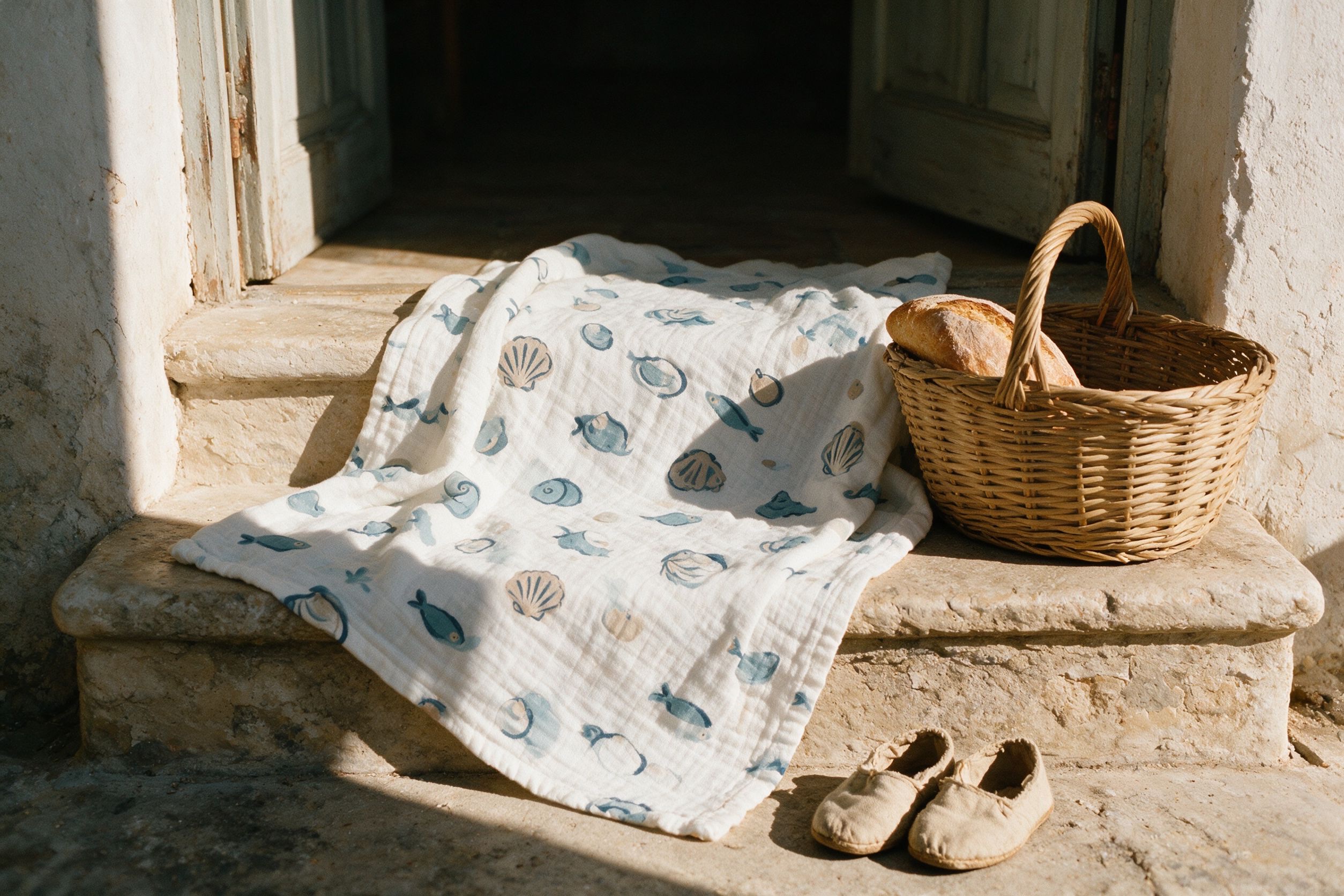
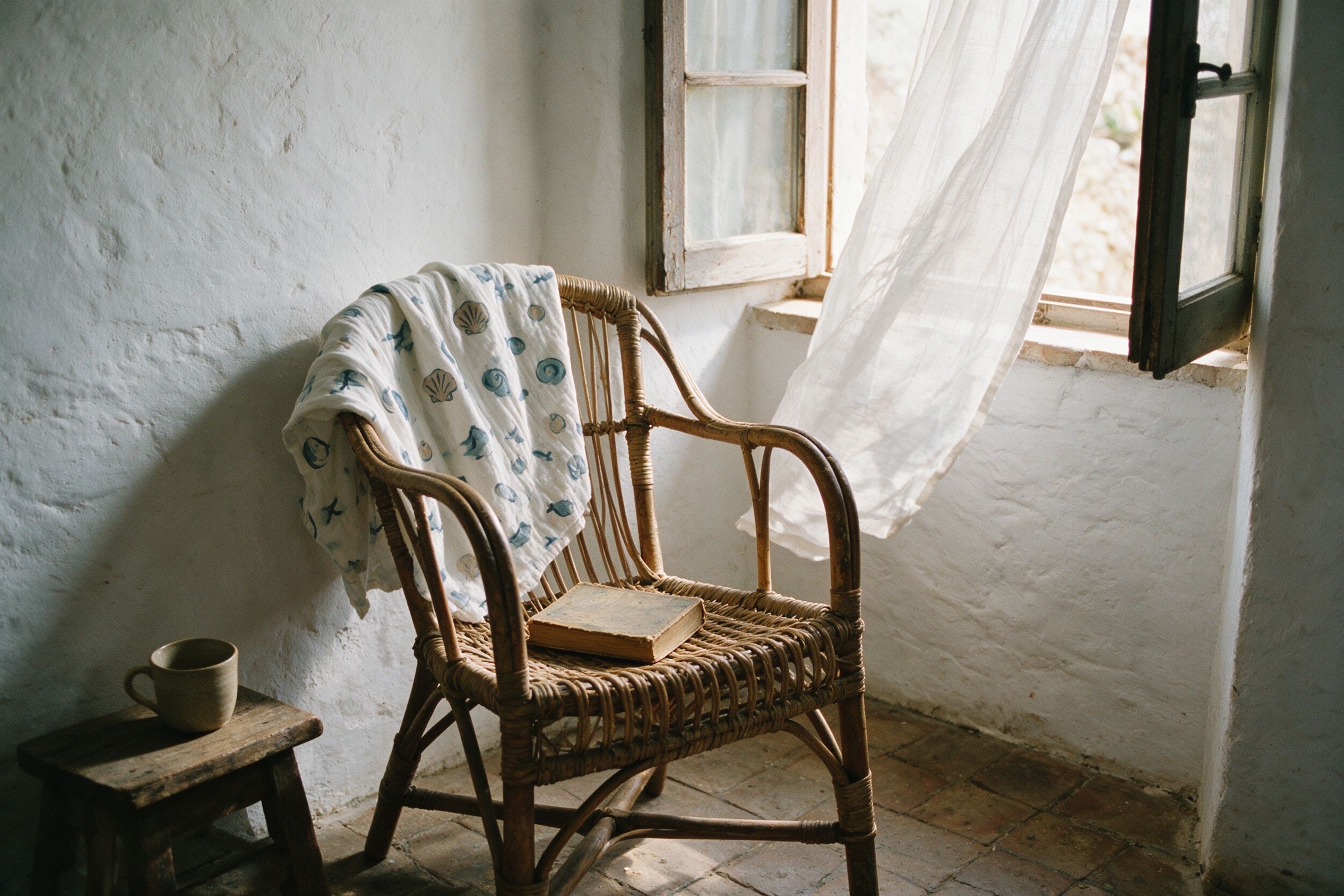
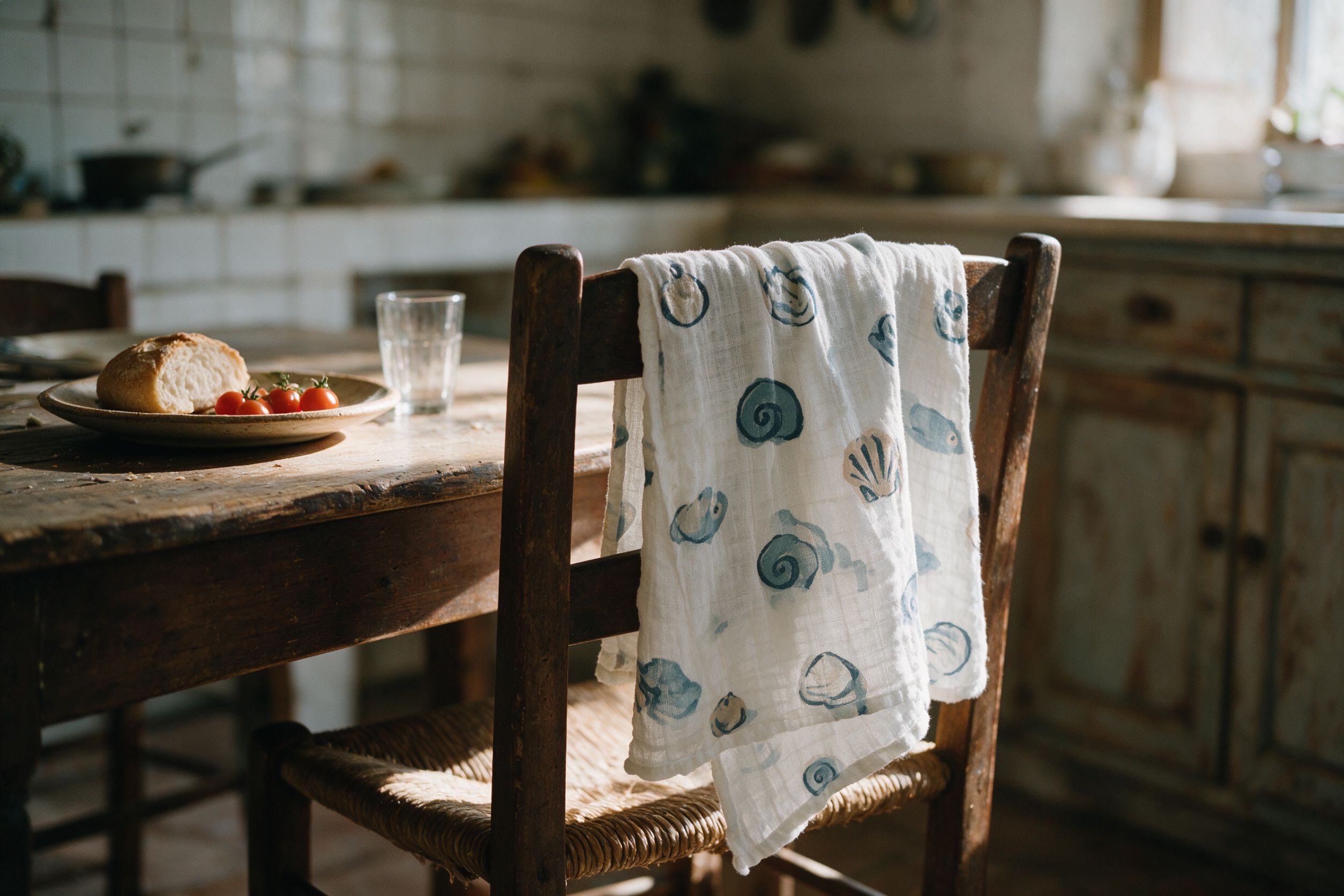
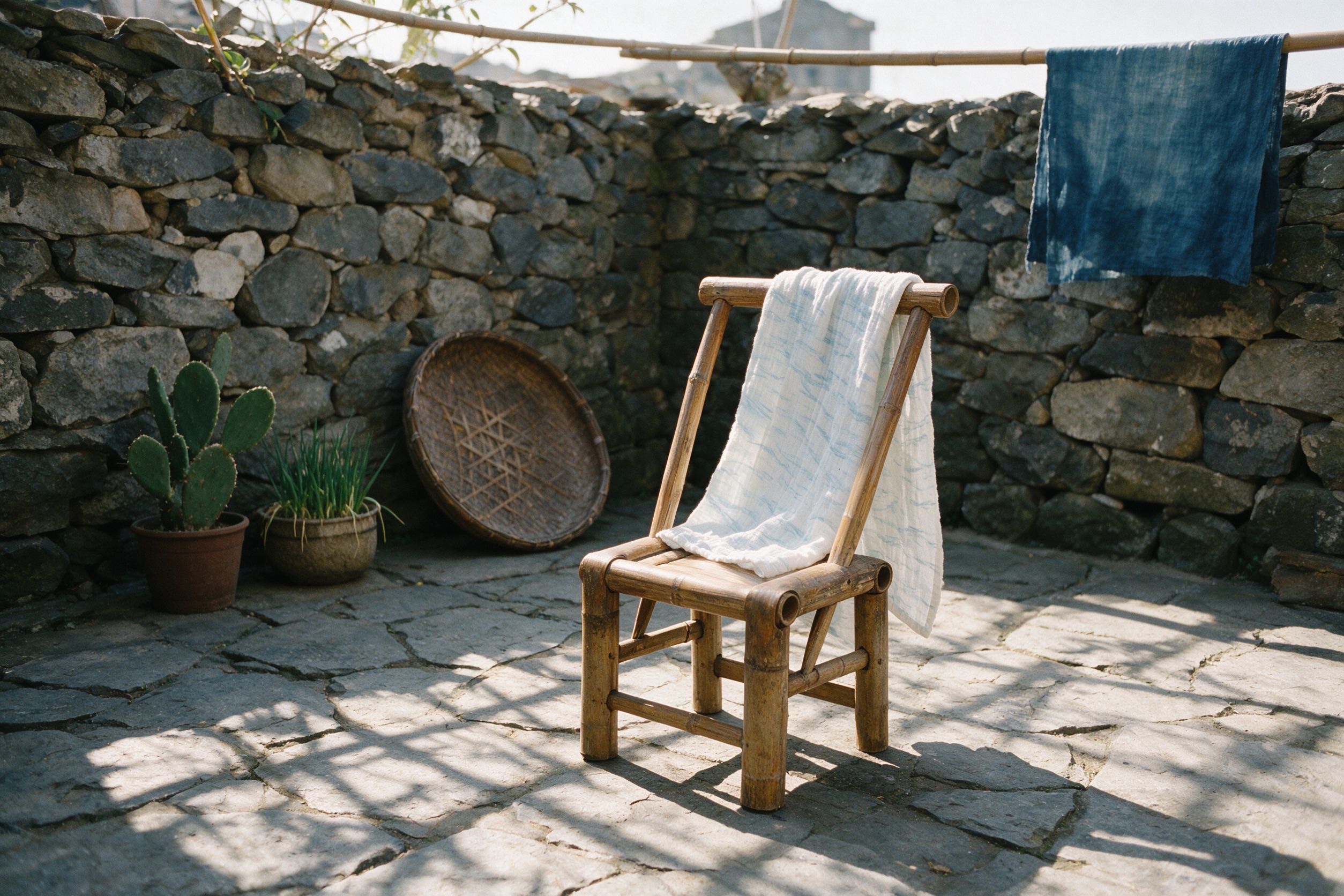
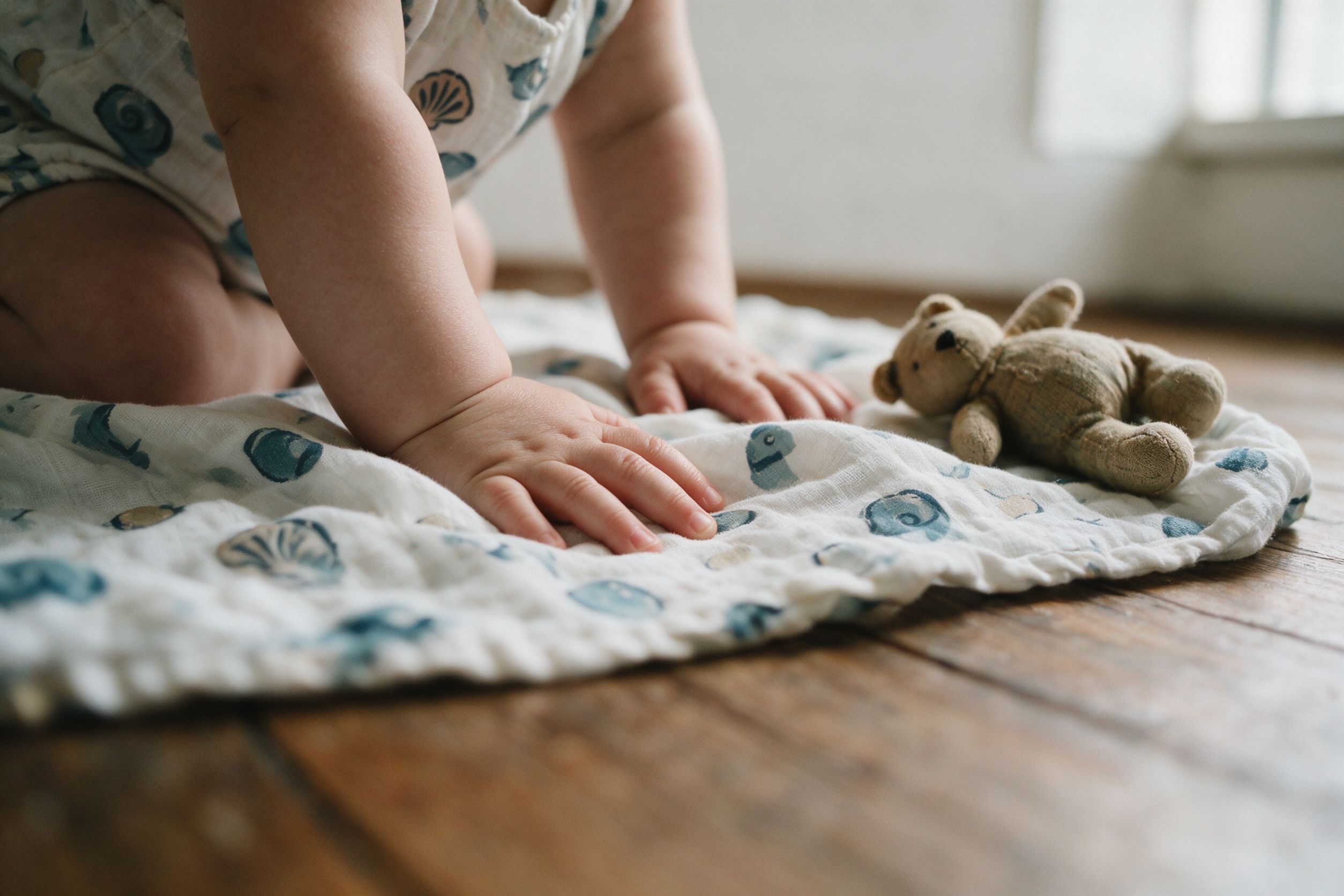
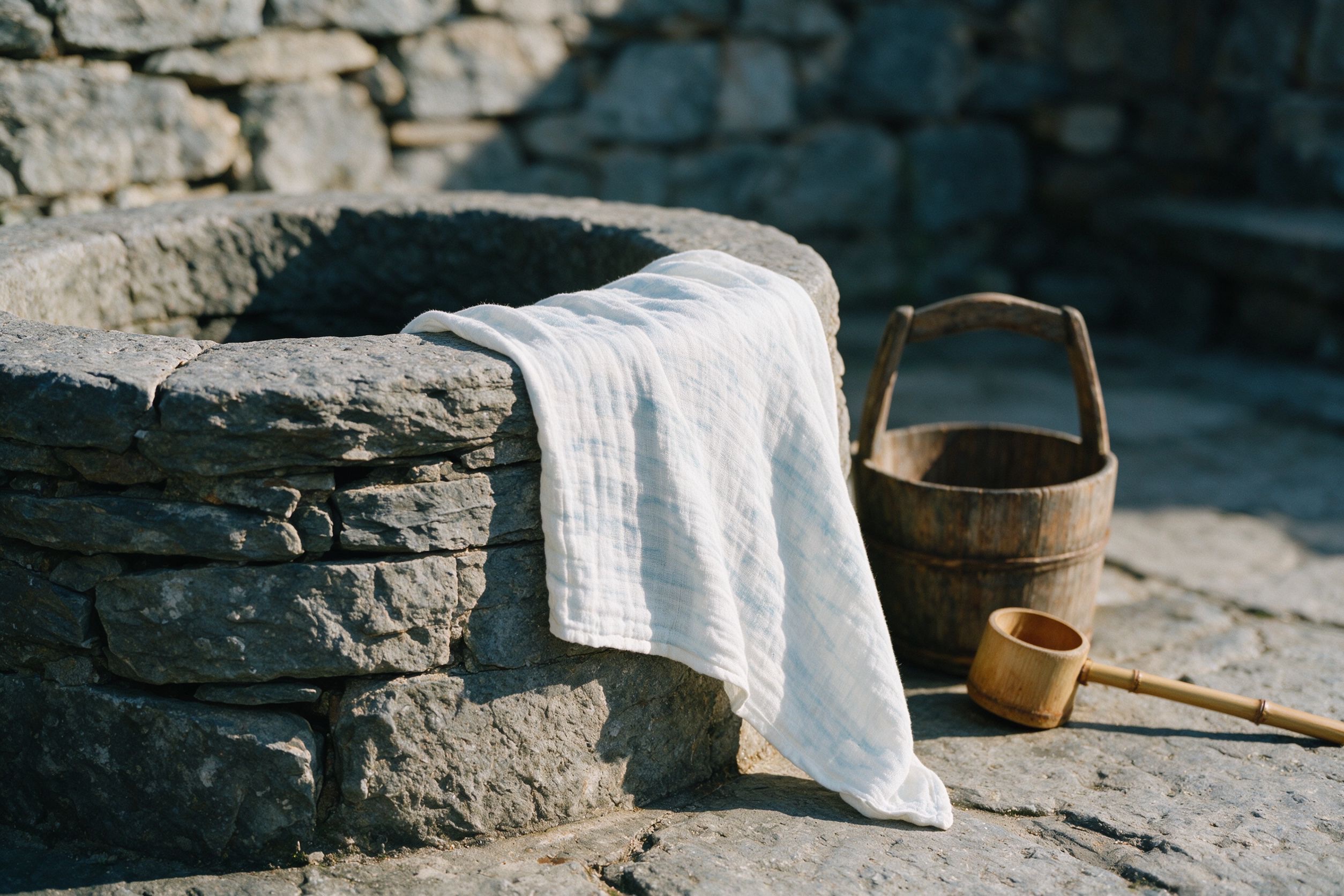
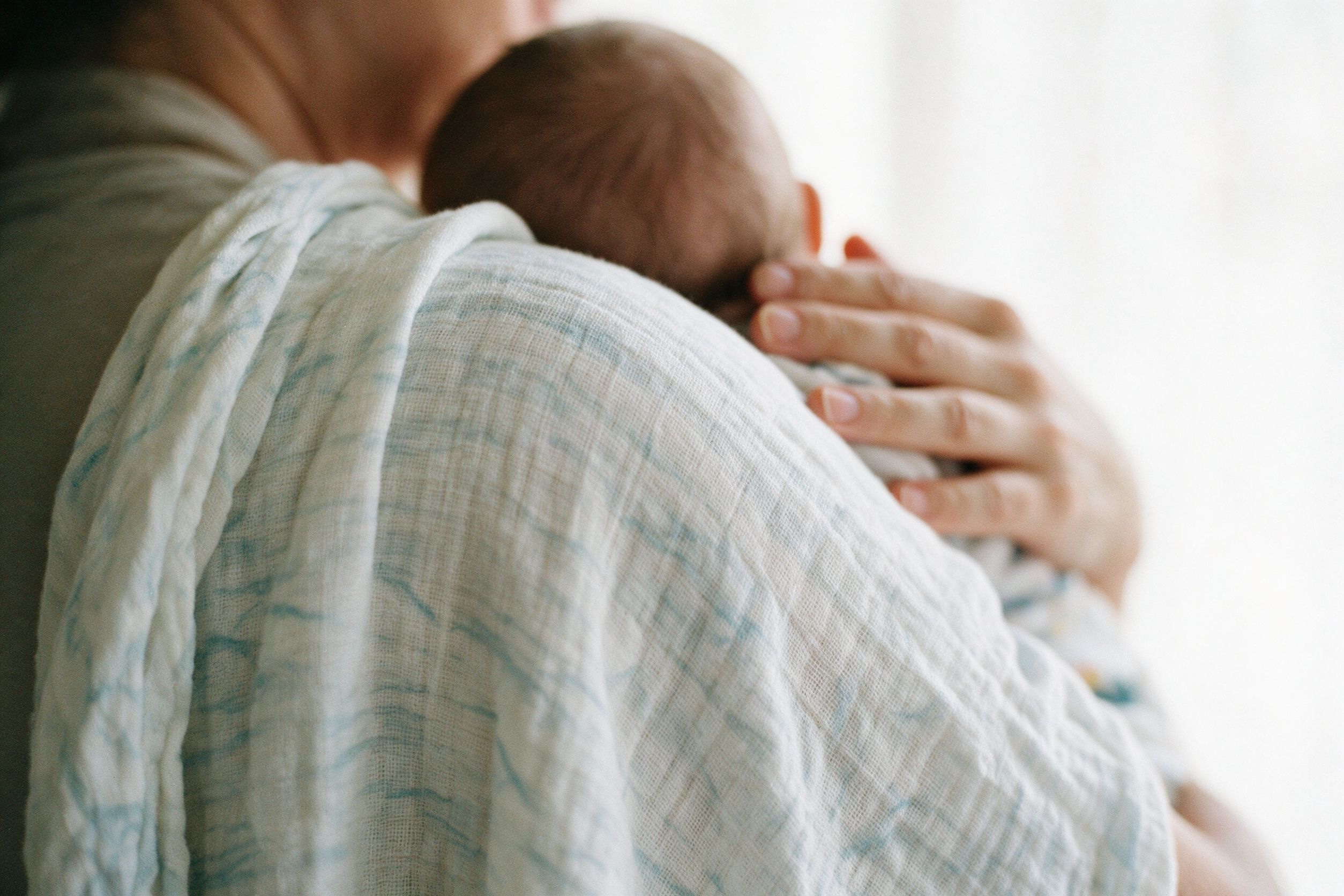
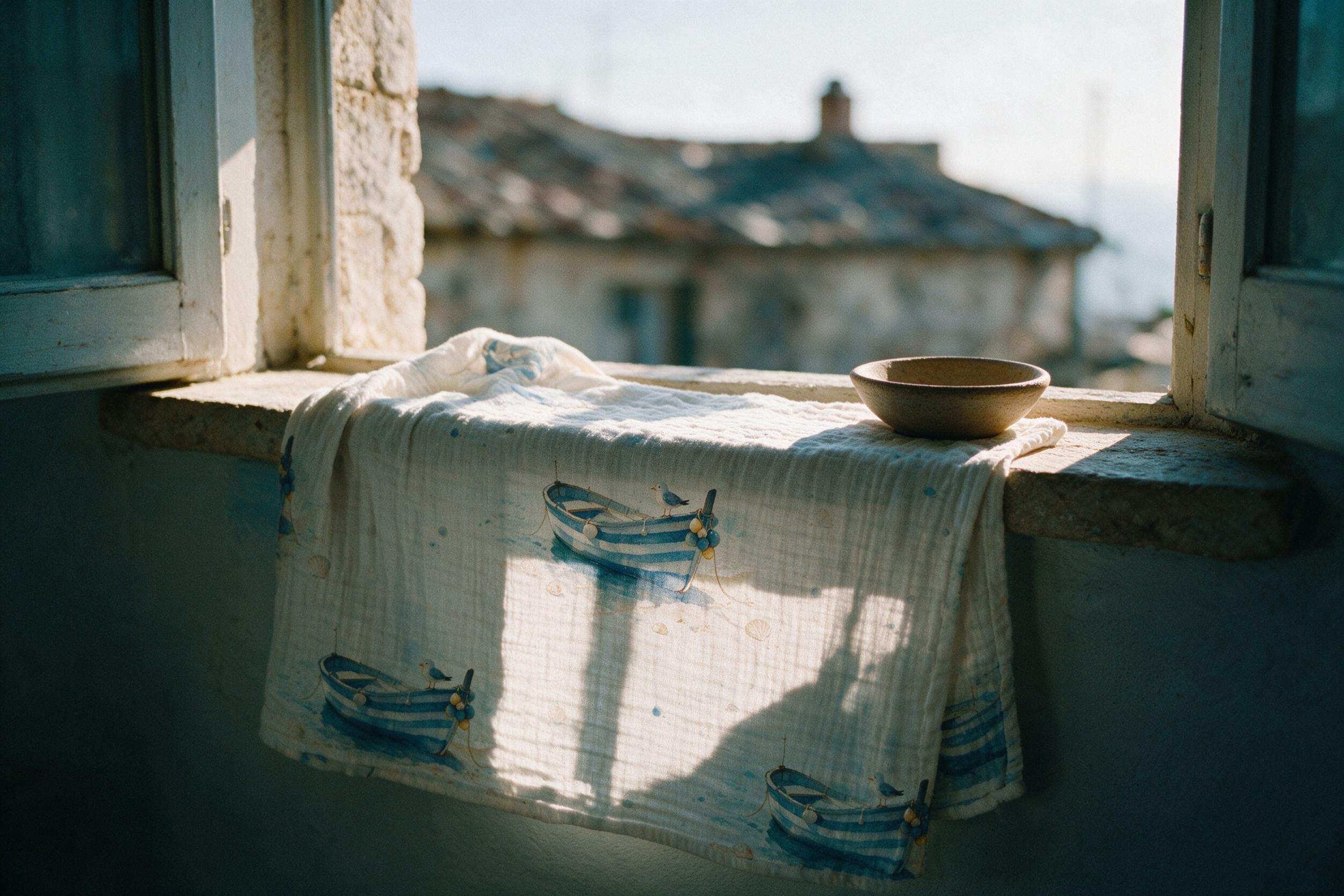
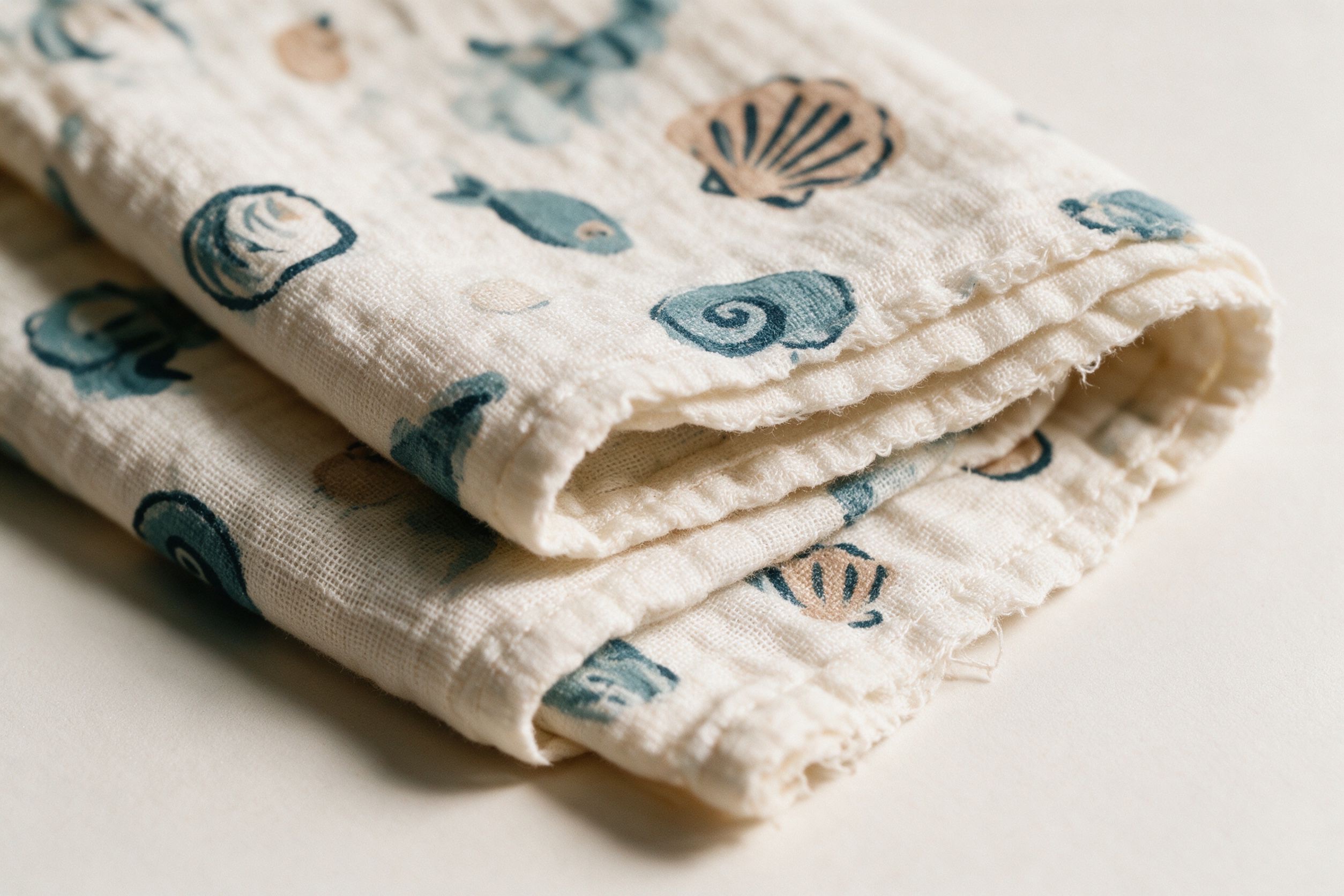
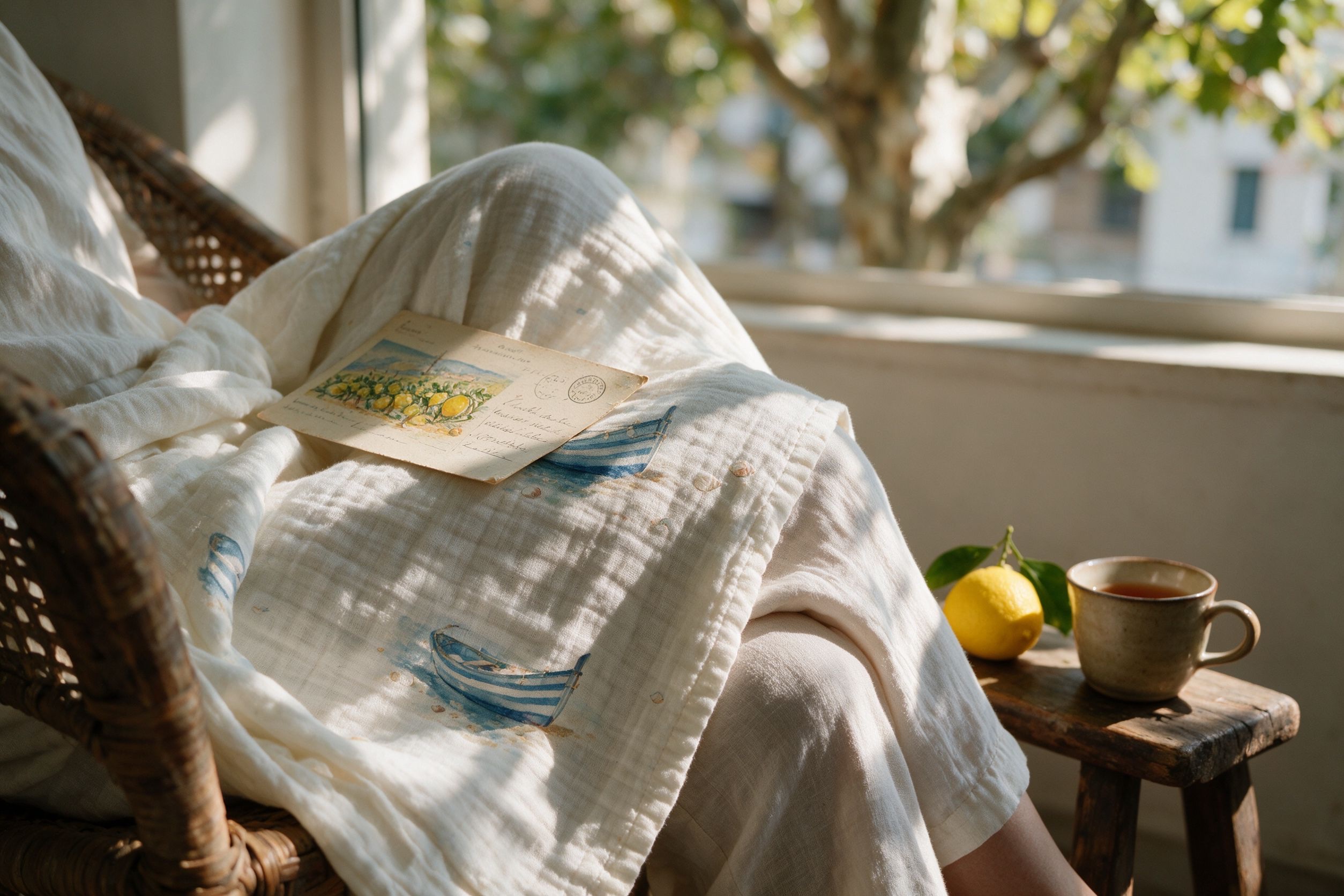
The bay's three patterns, already traveling across the range — every story grows into a family.
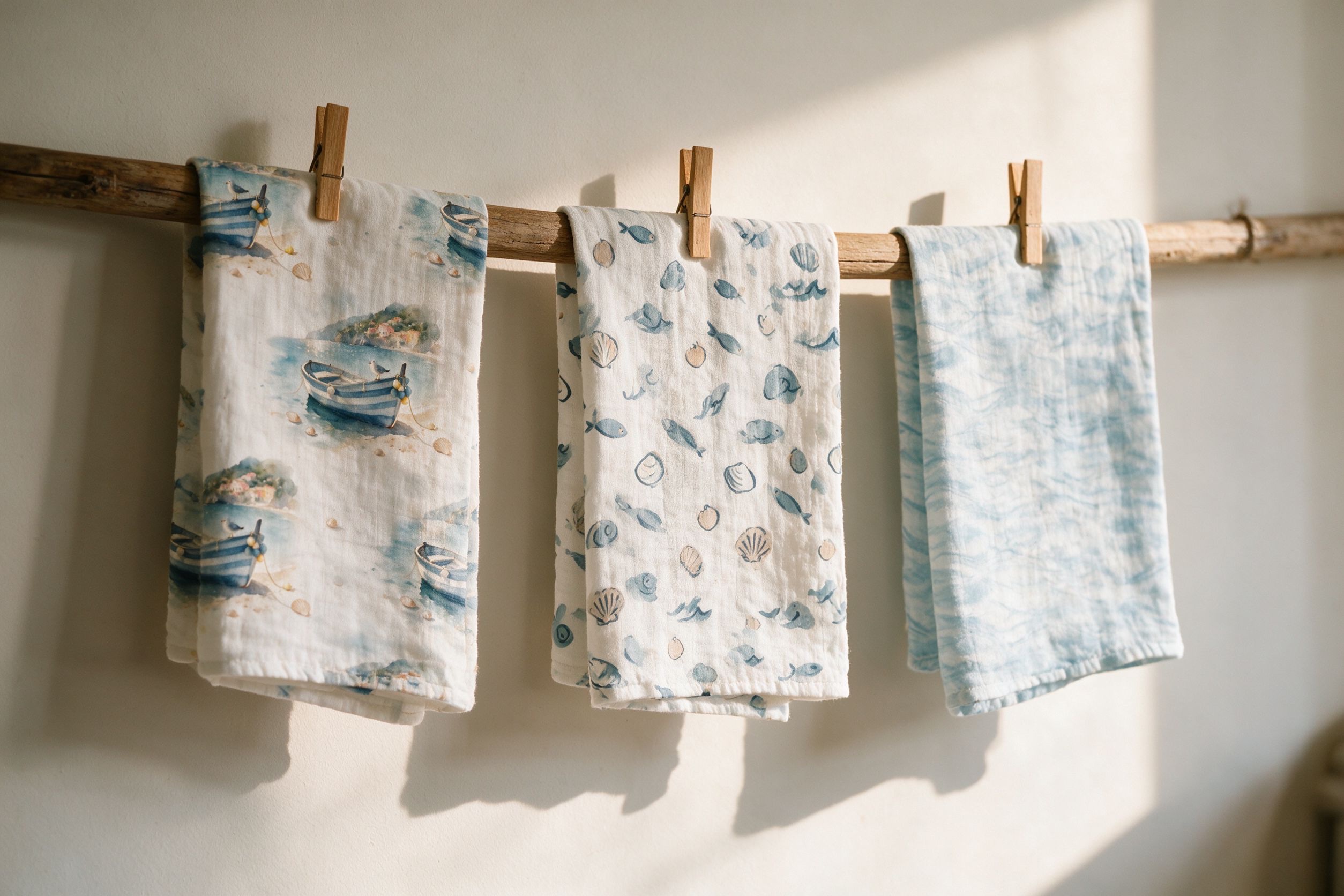
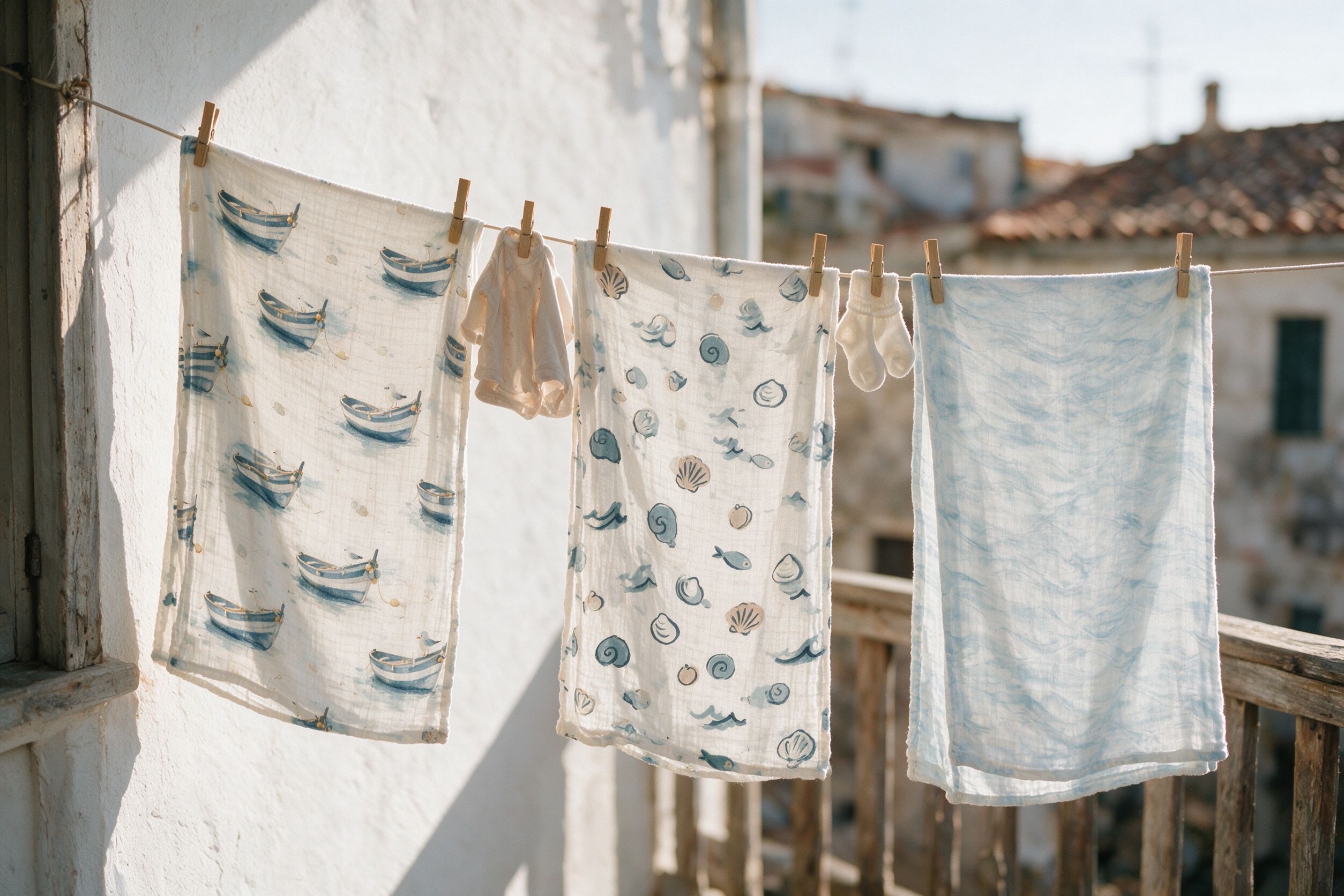
The boat, the shells, the waves — three cloths together are the whole morning of the bay.
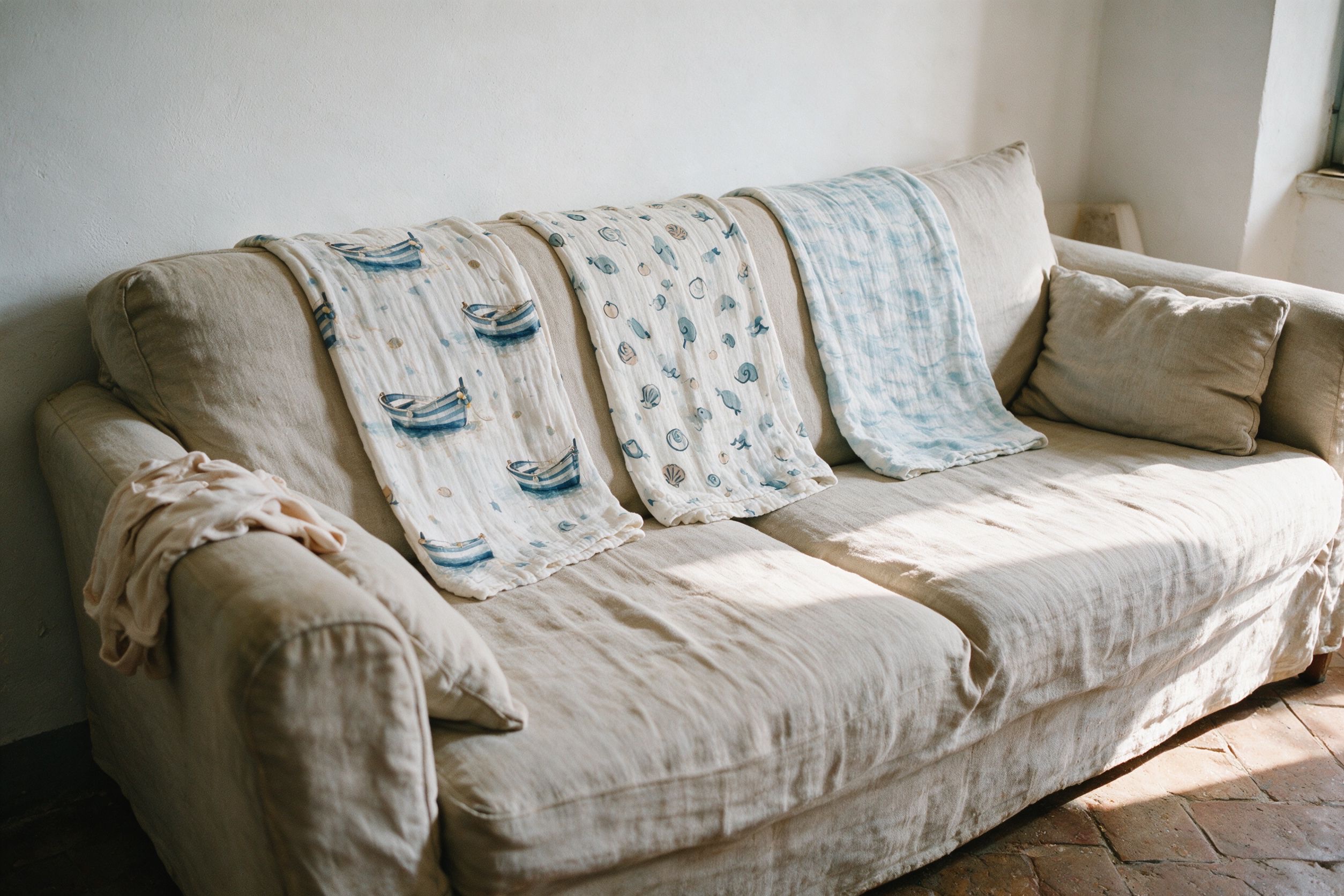
An afternoon on the sofa — blue-and-white stripes riding at anchor.
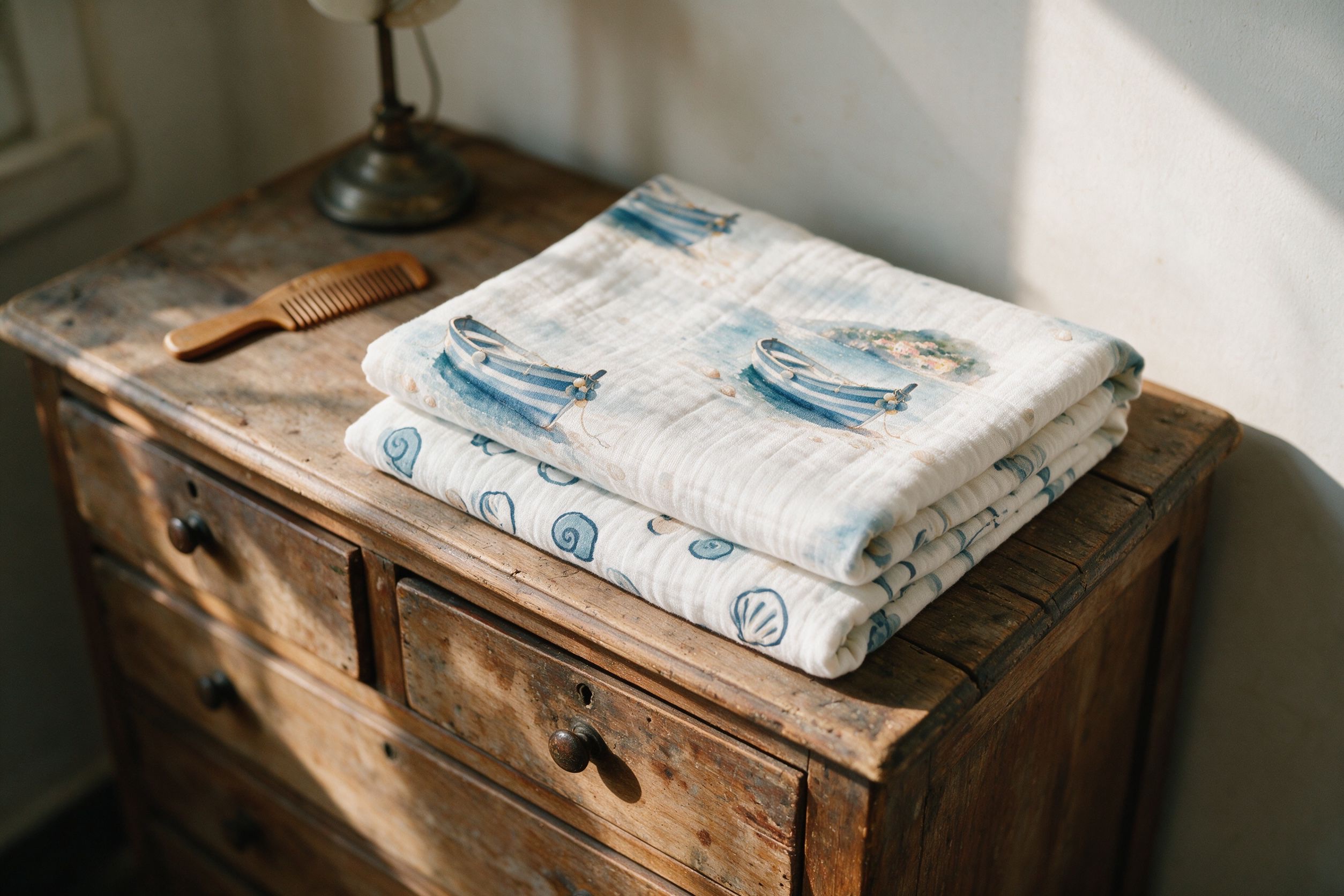
One in use, one in the wash, one in the drawer — cotton that softens with every wash.
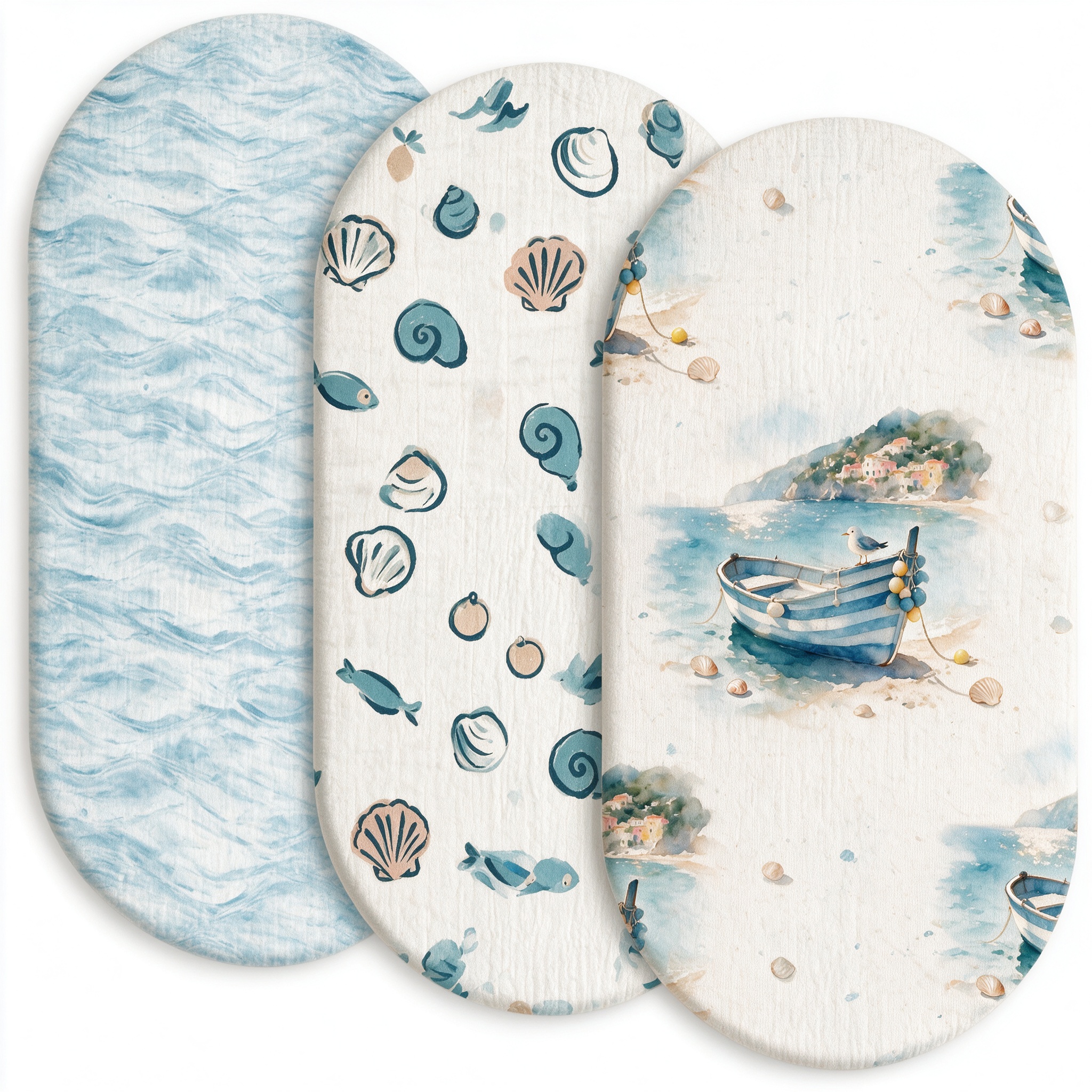
The boat, the shells, the waves — the whole morning, in white.
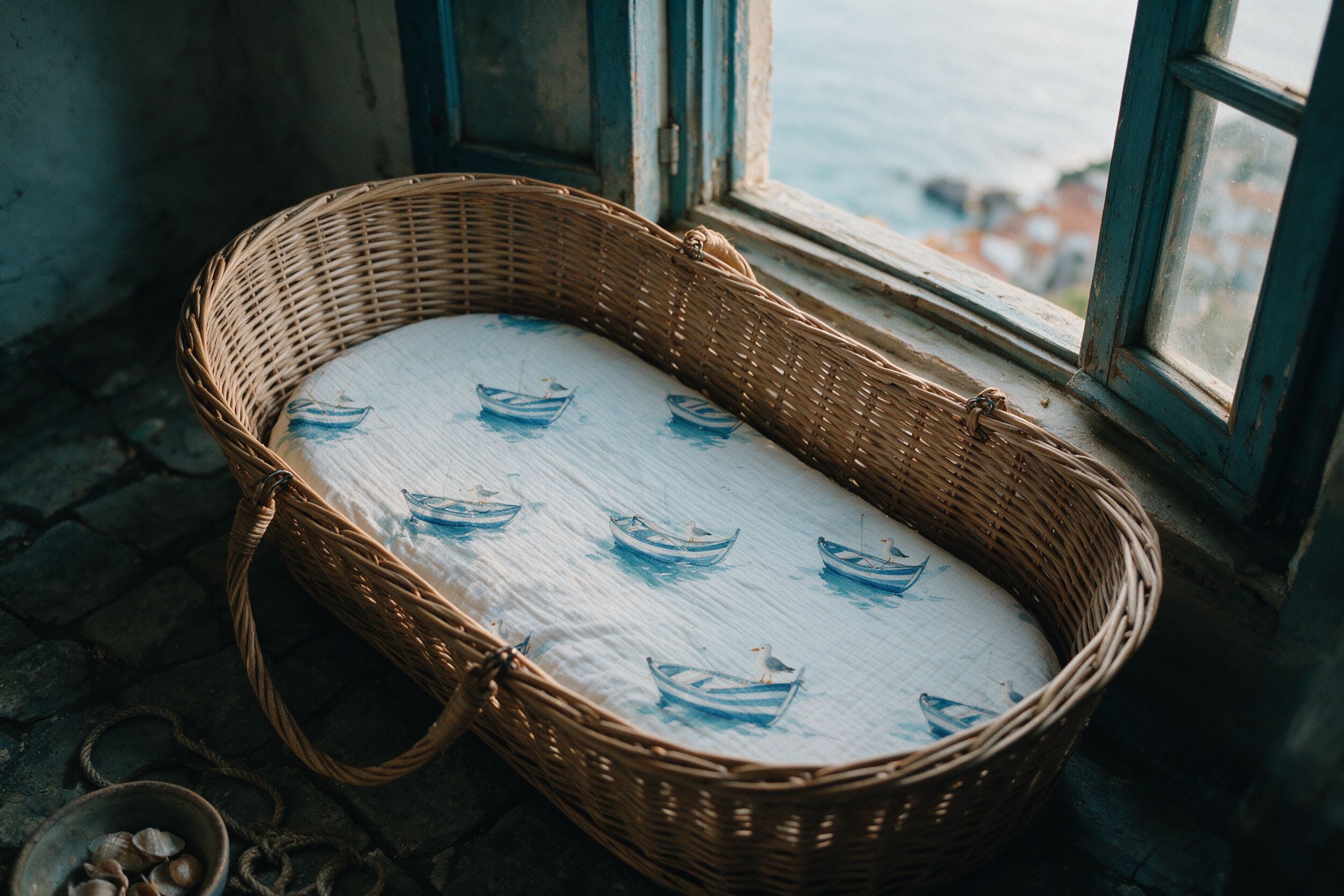
A little boat moored in the cradle — blue-and-white stripes riding at anchor.
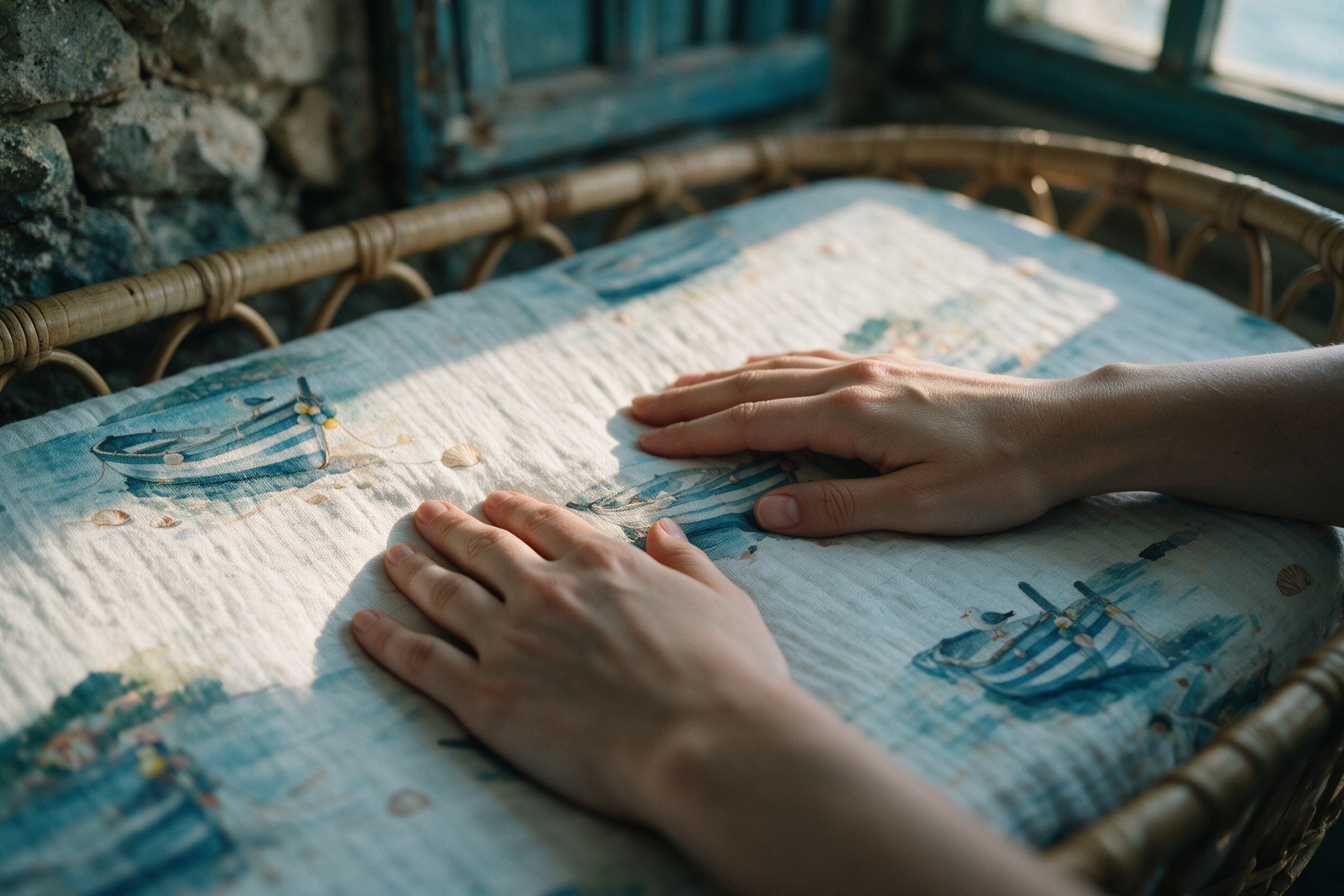
Cotton that softens with every wash — the part of the sea wind you can touch.
The gozzo — the traditional fishing boat of the Amalfi and Sorrento coasts: round-bowed, round-sterned, striped blue and white, still working today. Not a yacht, not a sailboat — the boat the Grandfather Pepes of the world go out in.
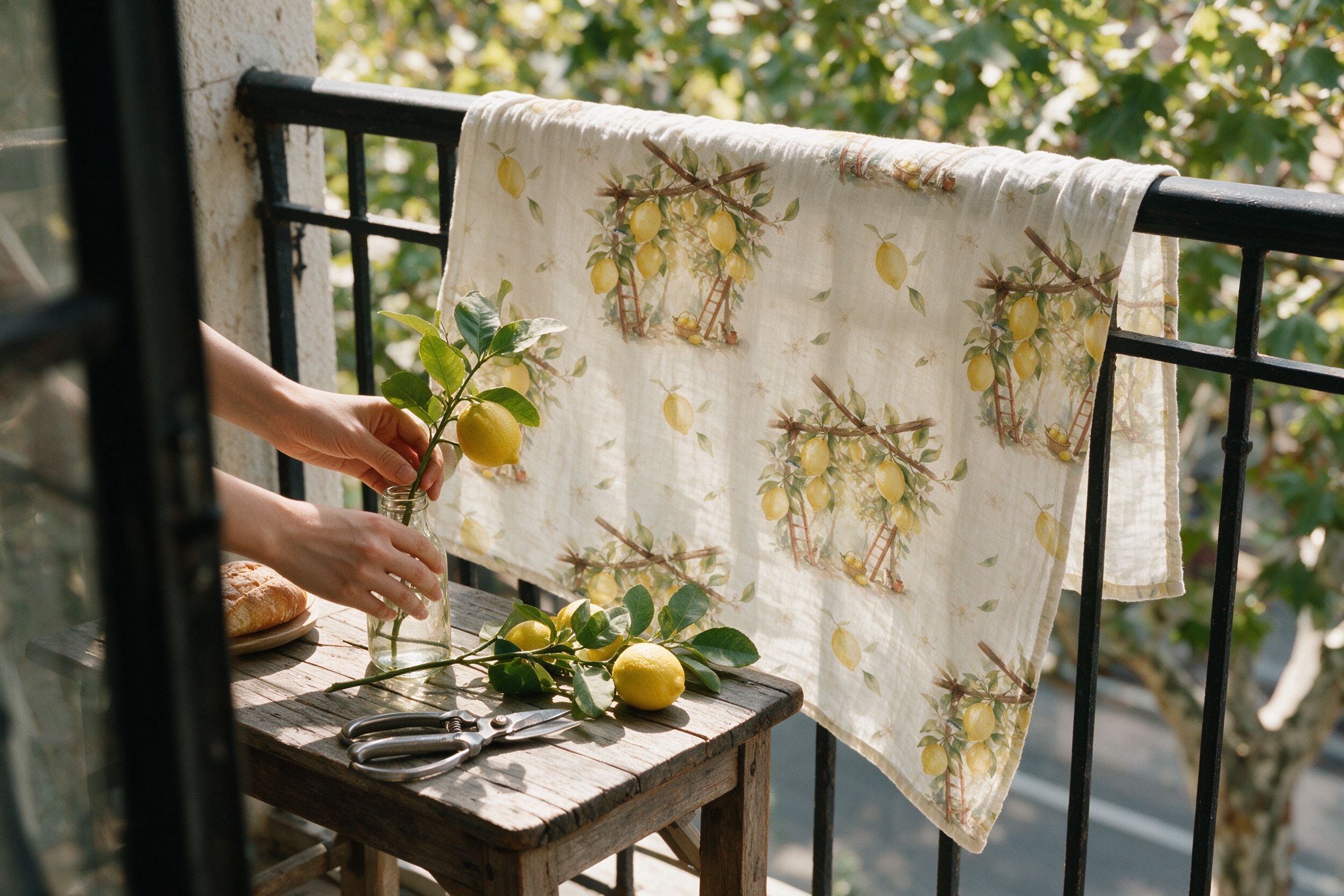
Hidden in each pattern: a tiny lemon the size of a fingernail — beside the mooring rope, among the shells, inside the foam — answering the ceramic fish hidden in the Lemon Grove line. The egg-hunt is now official: find the sea in the grove, find the grove by the sea.
The Lemon Grove (yellow) on the north shore of the Sorrento peninsula and the Little Bay (blue) on the south — one Nonna, one peninsula, a grove and a sea. The two lines share cloth, craft, and postmark, and travel as a twin gift box.
No yachts, no beach umbrellas, no infinity pools; no pirates, no anchors, no steering wheels. A fisherman's little bay — not a travel postcard.
I grew up by the sea in eastern Zhejiang, and later studied in Europe and America. When I saw those round-bowed little fishing boats in Amalfi, what came back to me were the boats in my grandmother's harbour. The world is so wide — and the sea, it turns out, is all one sea.
— Sophia, Shanghai, Summer 2026