No. 05 · The Nonna Line · Sun & Citrus
Nonna's Lemon Grove
Sorrento, Italy · Early Summer, Morning
In her old straw hat, Nonna climbs the ladder for the Sorrento lemon hanging under the dark trellis — bigger than a fist. That one is for the granita.
"The sunlight that leaks through the lemon trellis, laid gently on the baby."
Elena, five years old and barefoot, followed Nonna into the chestnut-timbered pergola — taller than the house itself. Overhead, lemons: big ones, yellow ones, hanging low enough to touch. When the wind moved, the scent of blossom and ripe fruit fell together.
Nonna propped the old wooden ladder against the highest beam and climbed up for the biggest lemon at the top. The one that gets the most sun, she always said, is the sweetest.
Elena's job was to hold the basket — and to keep an eye on the little tabby cat who kept trying to climb the ladder. Bees hummed in the lemon flowers; the water in the clay jar sweated in the heat.
When the basket was full, Nonna said, they would go home and make granita — lemon syrup poured over shaved ice. The first sweet-and-sour Elena would remember her whole childhood.
One for the eyes (a grove full of lemons), one for little hands (the picked lemons), one for the nap (faint leaf shadows).
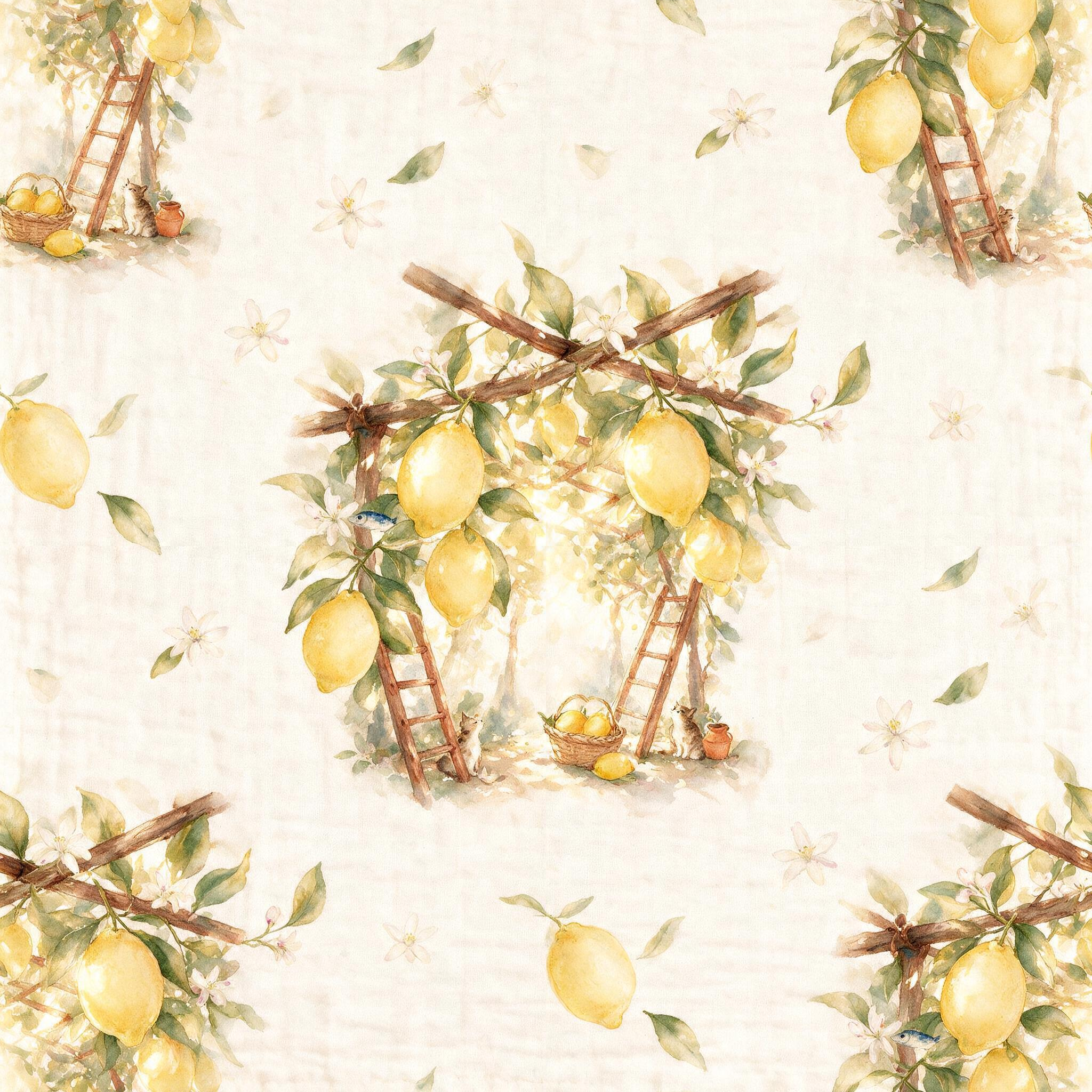
Looking up through the pergola — big lemons overhead, the old ladder leaning to one side, the cat watching from below, two fresh lemons in the basket. Sixty percent whitespace: the breath of standing beneath the frame.
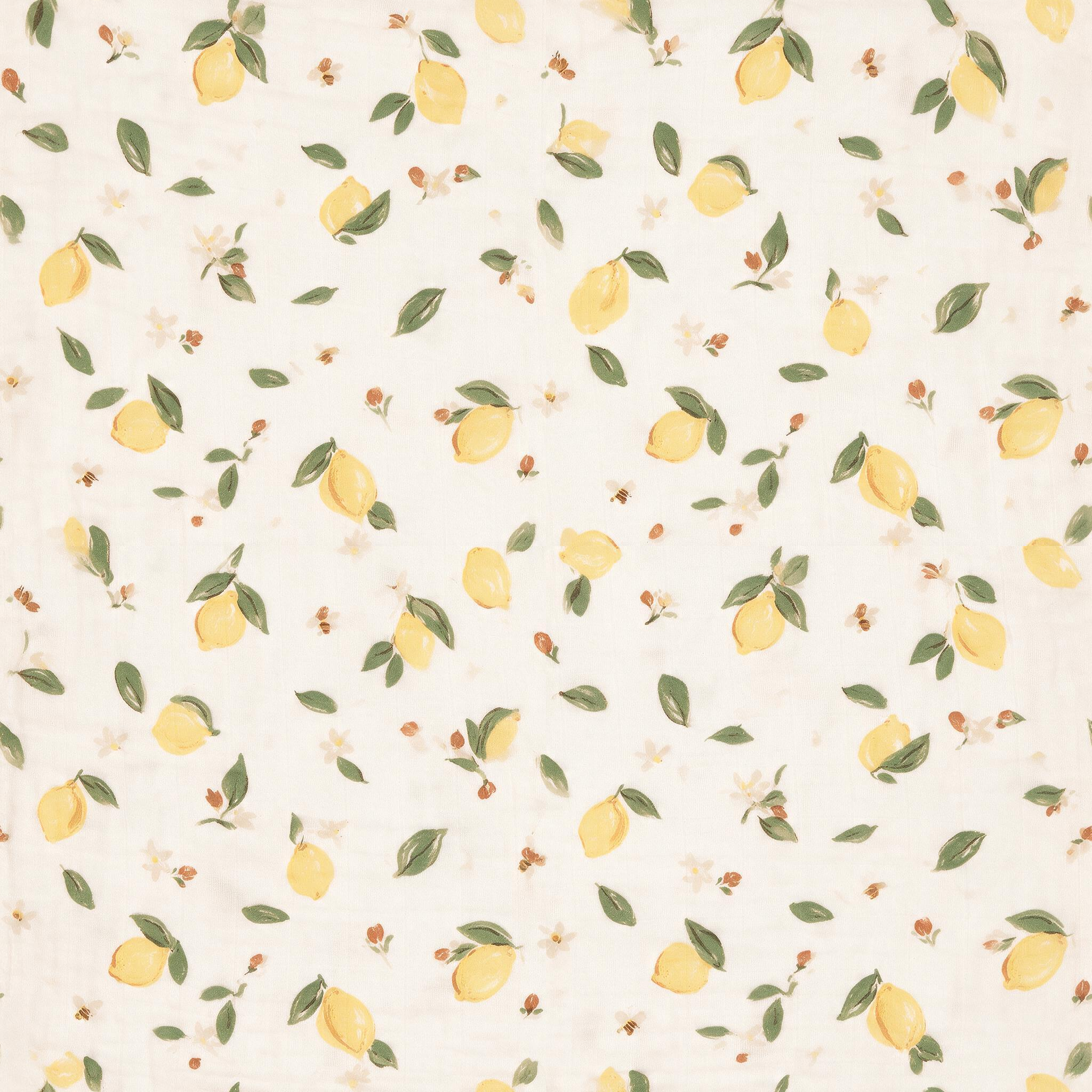
Miniature motifs in the hand-painted maiolica tradition of southern Italy — small lemons, blossoms, single leaves, a tiny bee. Flat brushwork, slightly imperfect, exactly as the Amalfi coast has painted ceramics for centuries.
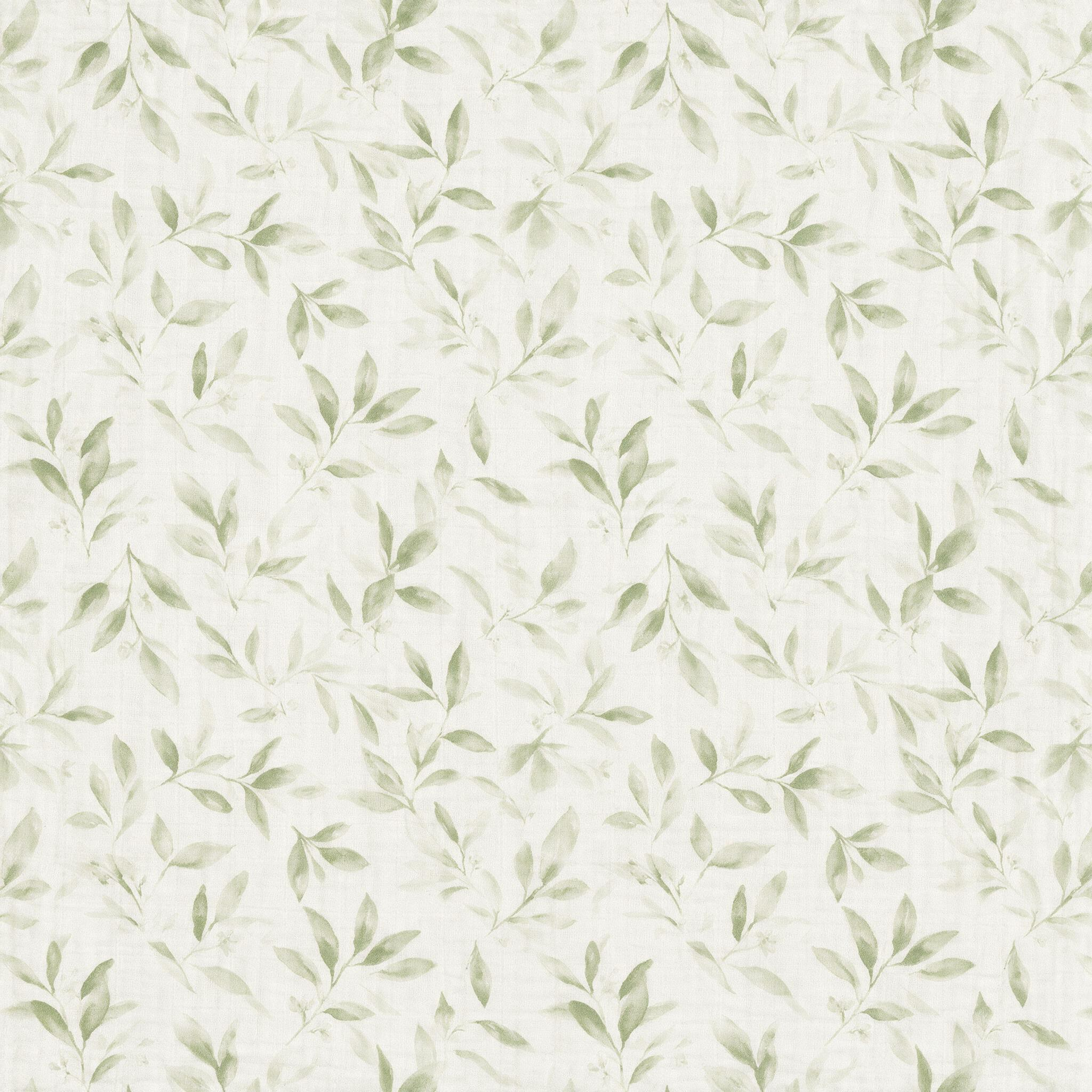
A low-saturation lemon-leaf green with the faintest texture — like lemon leaves casting shadows on sun-warmed cloth. Clean from across the room; quietly detailed up close.
Every color lifted from the grove itself — as if dried by a whole Mediterranean summer.
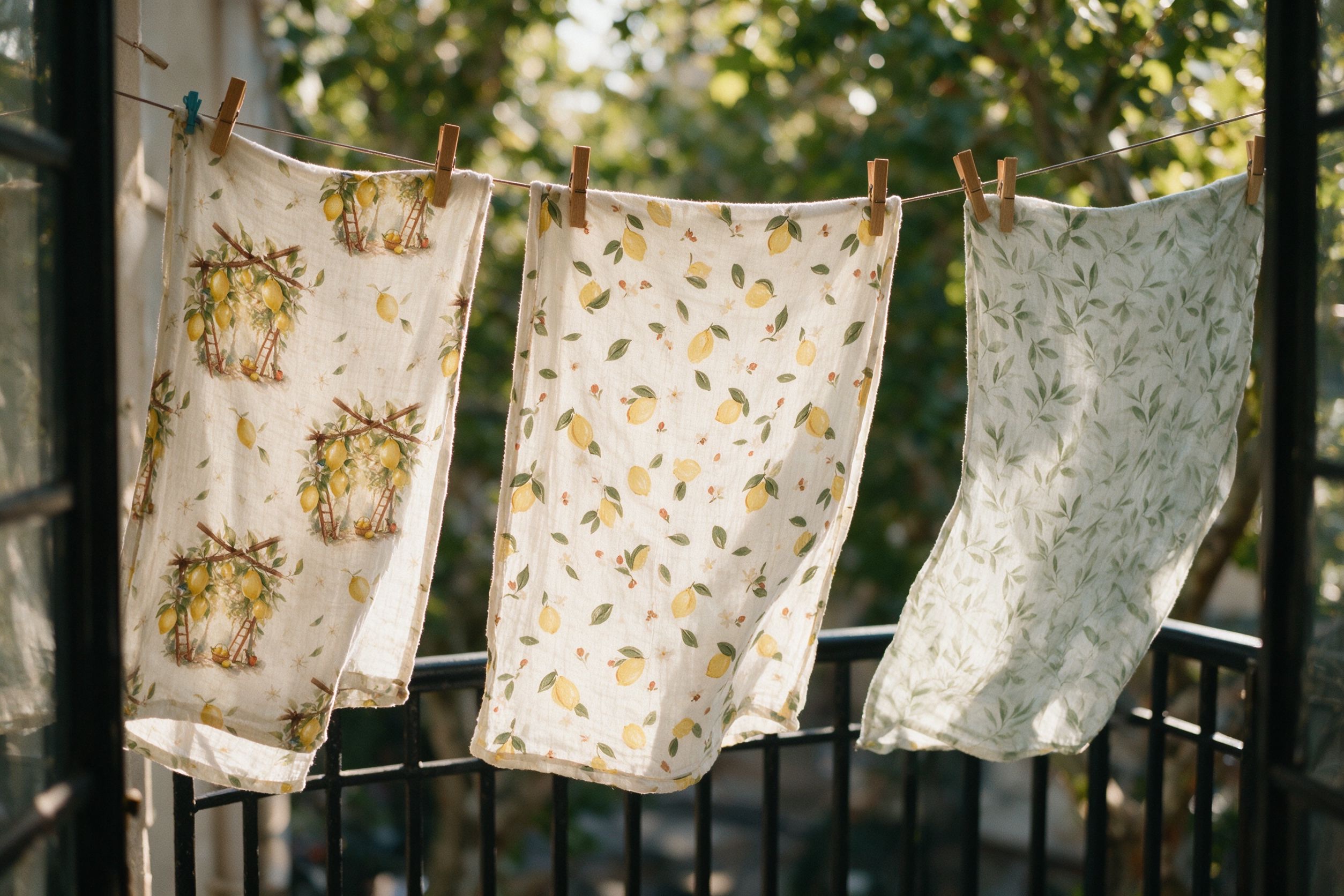
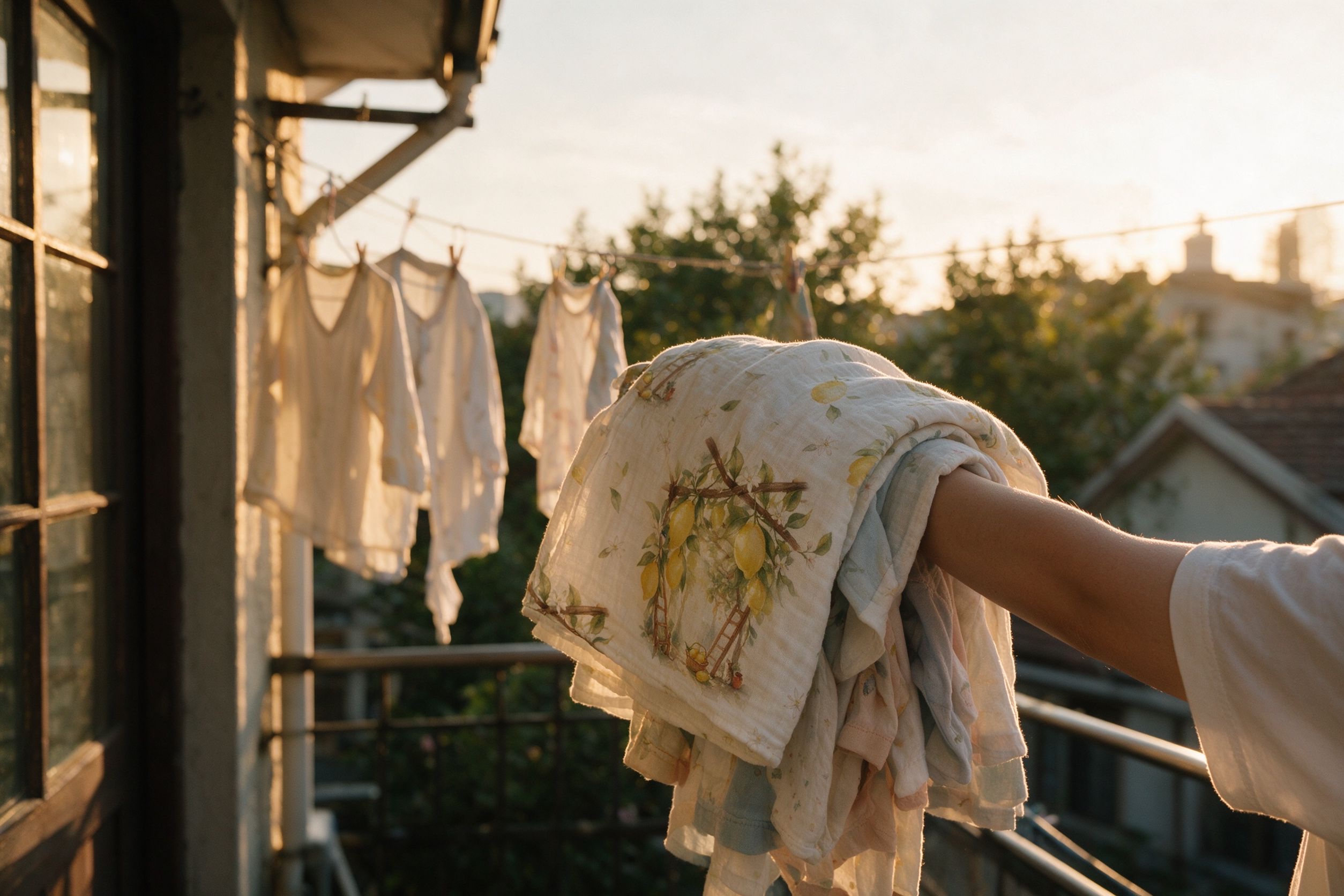
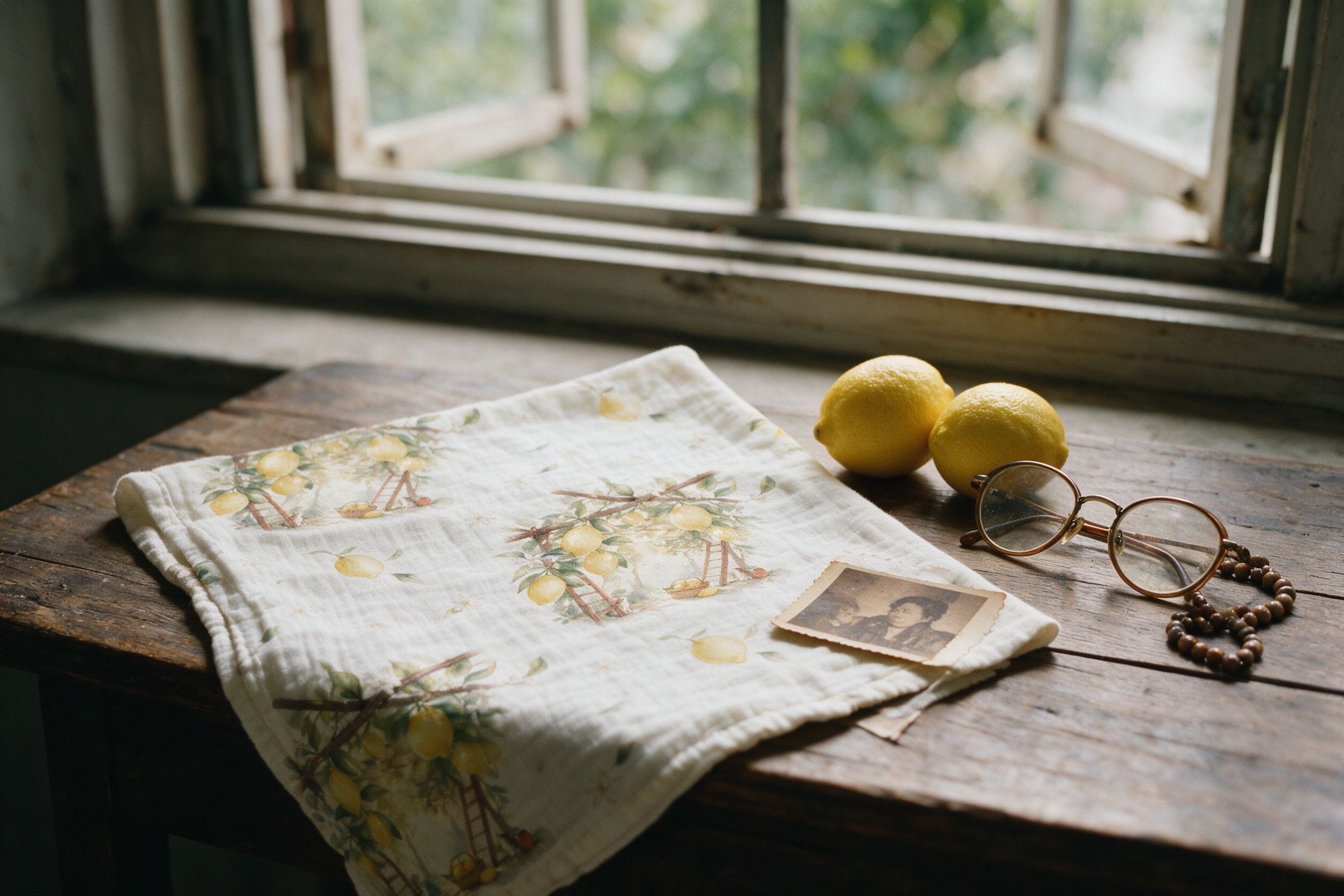
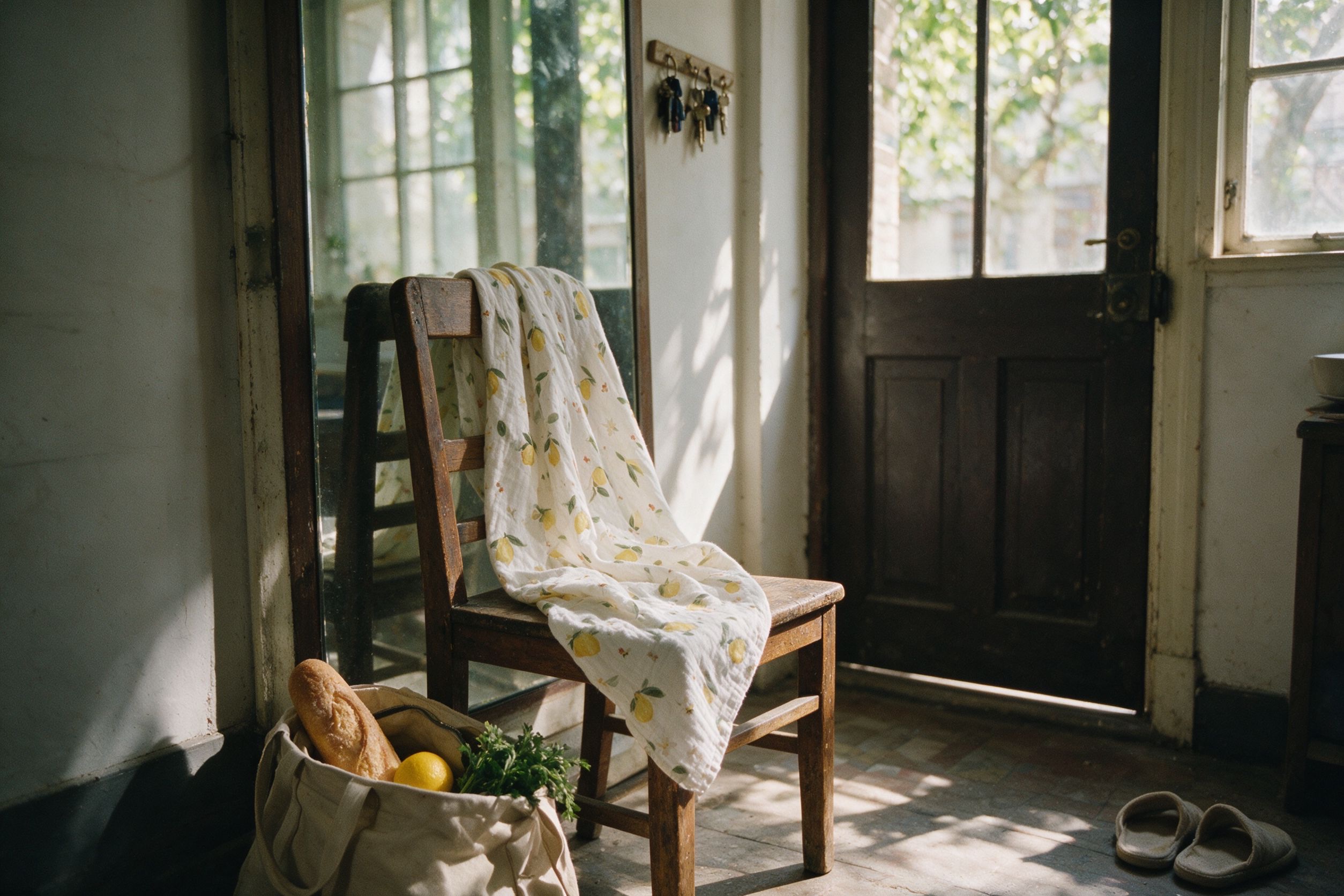
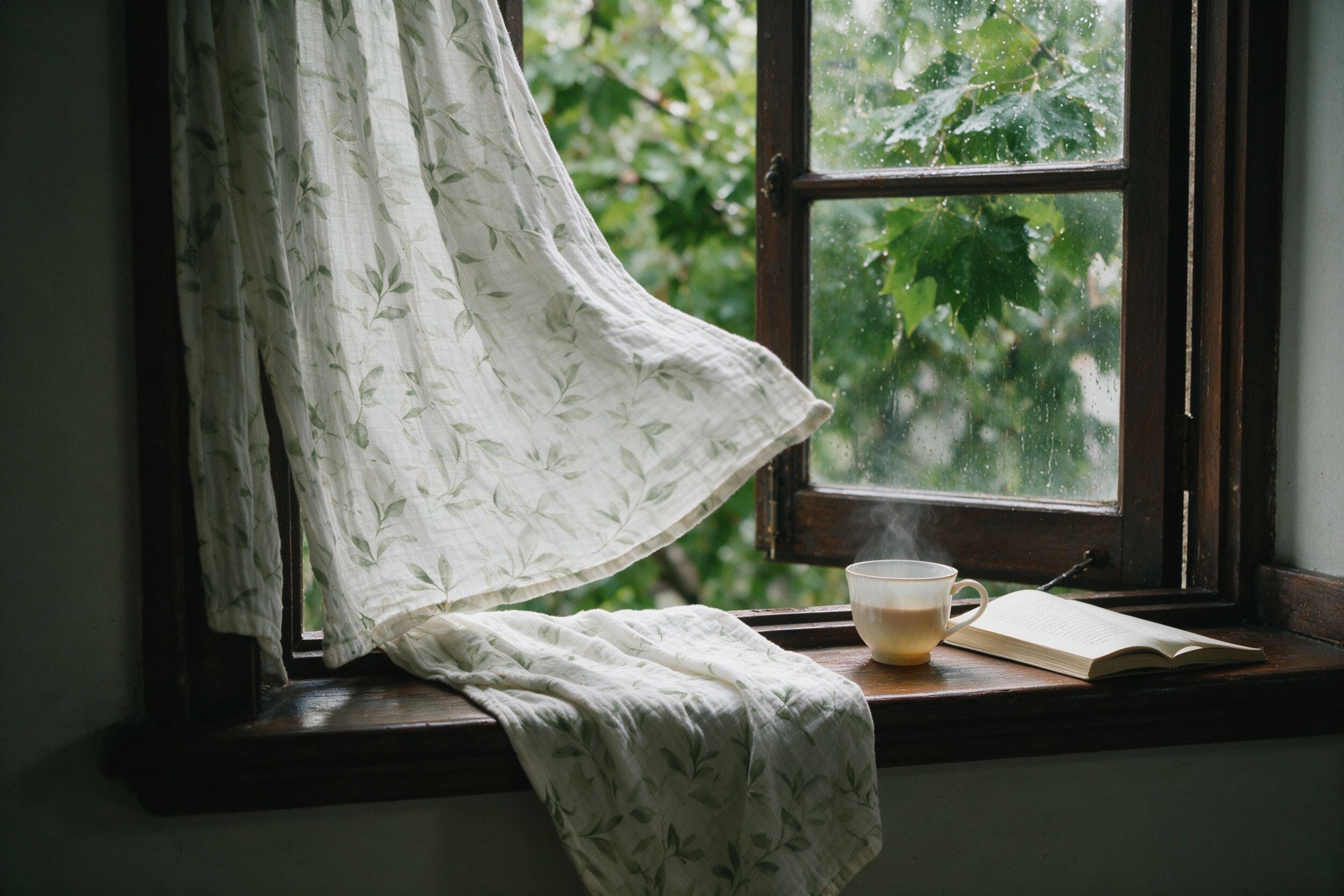

The grove's three patterns, already traveling across the range — every story grows into a family.
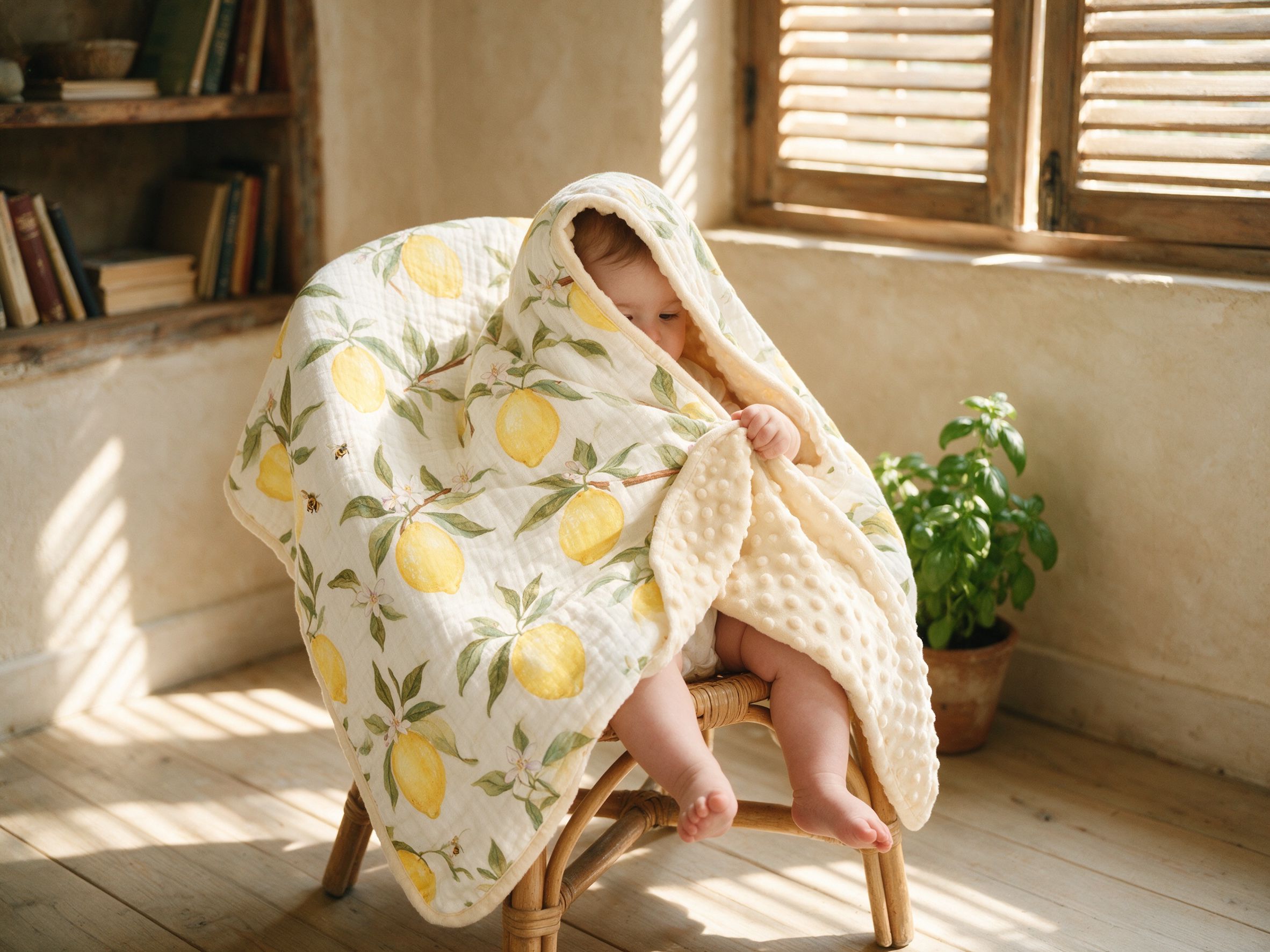
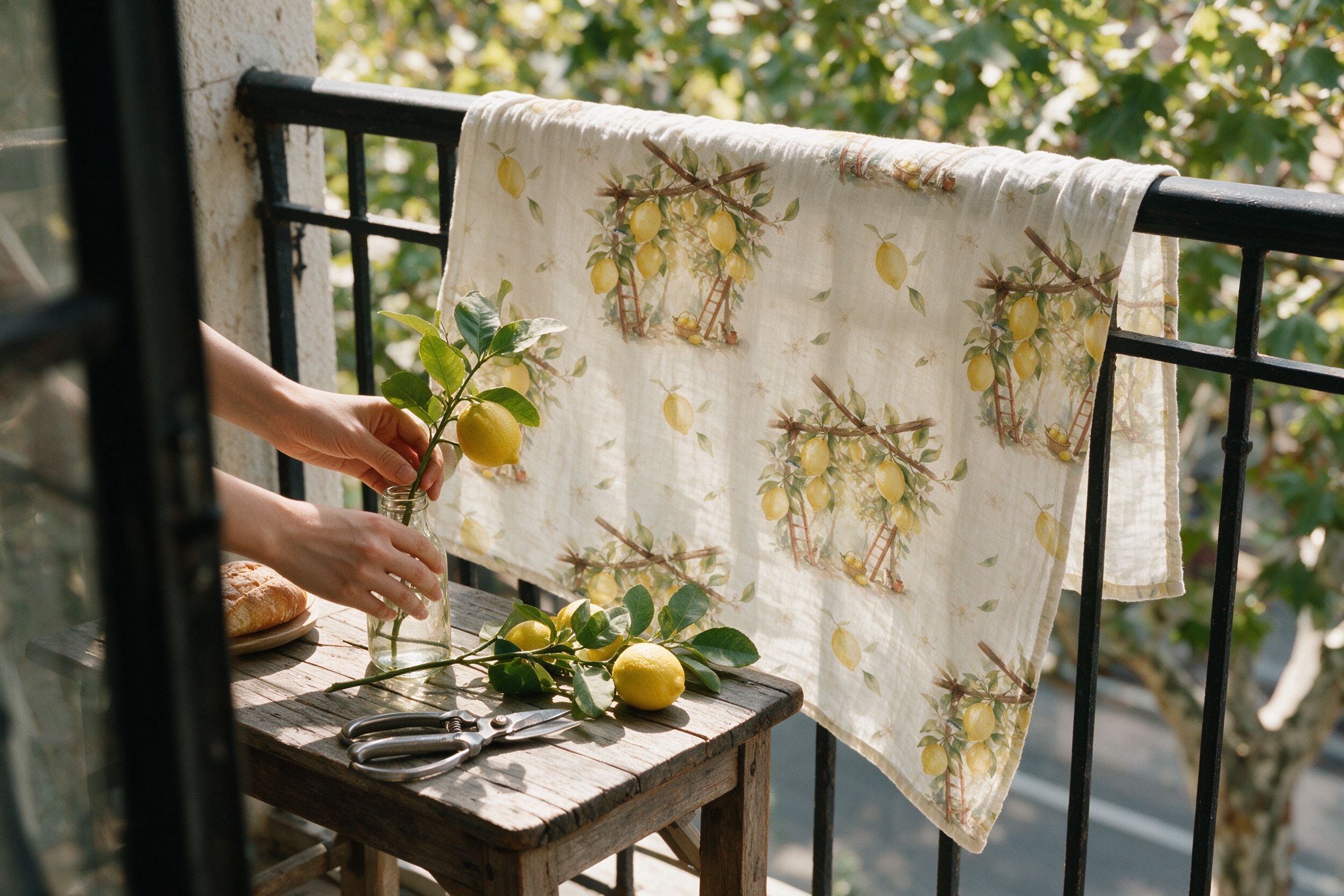
A grove of lemons laid gently over the baby — morning light leaking through the leaves.
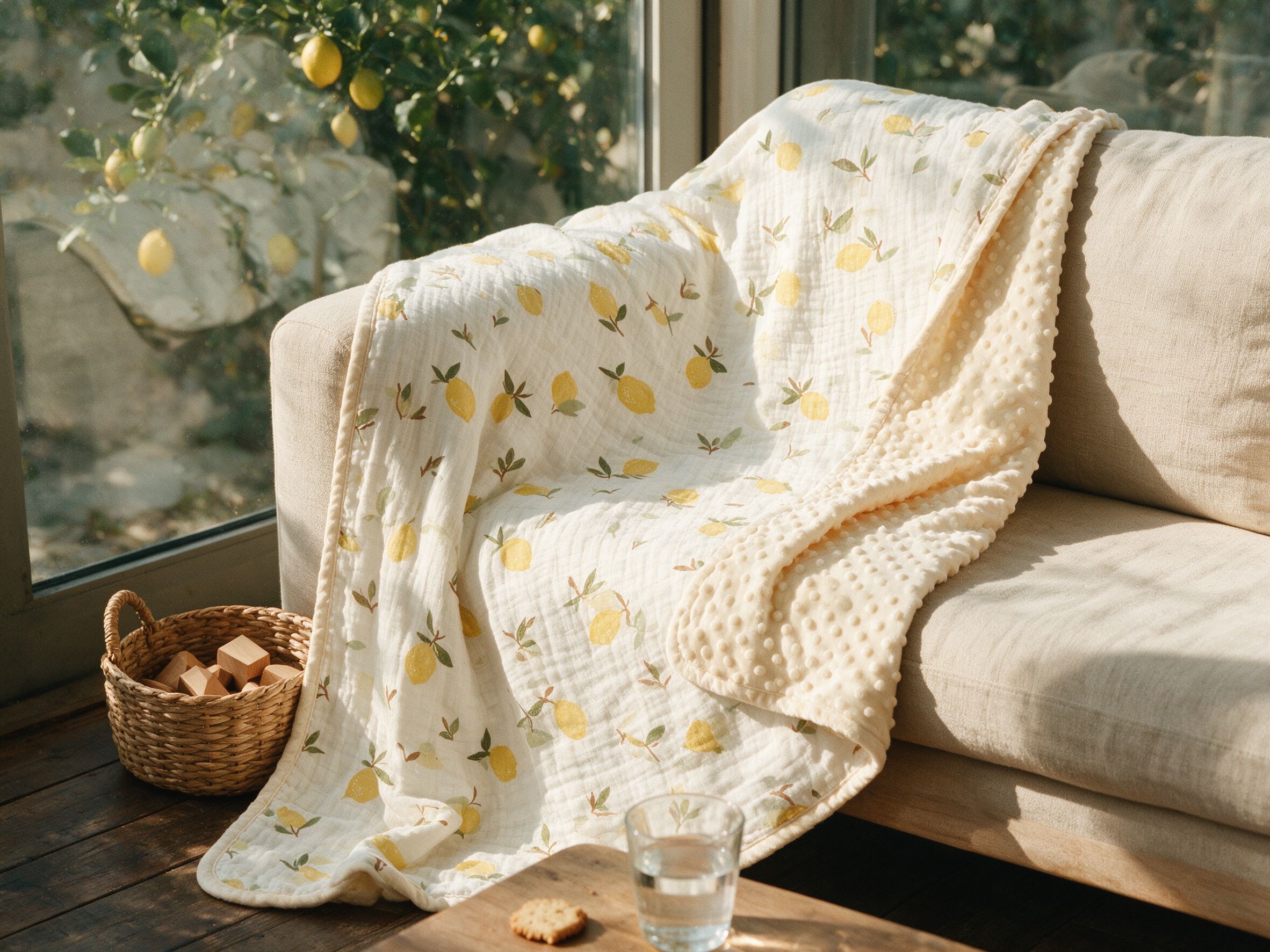
An afternoon on the sofa — small lemons, blossoms, a bee, scattered across cream.
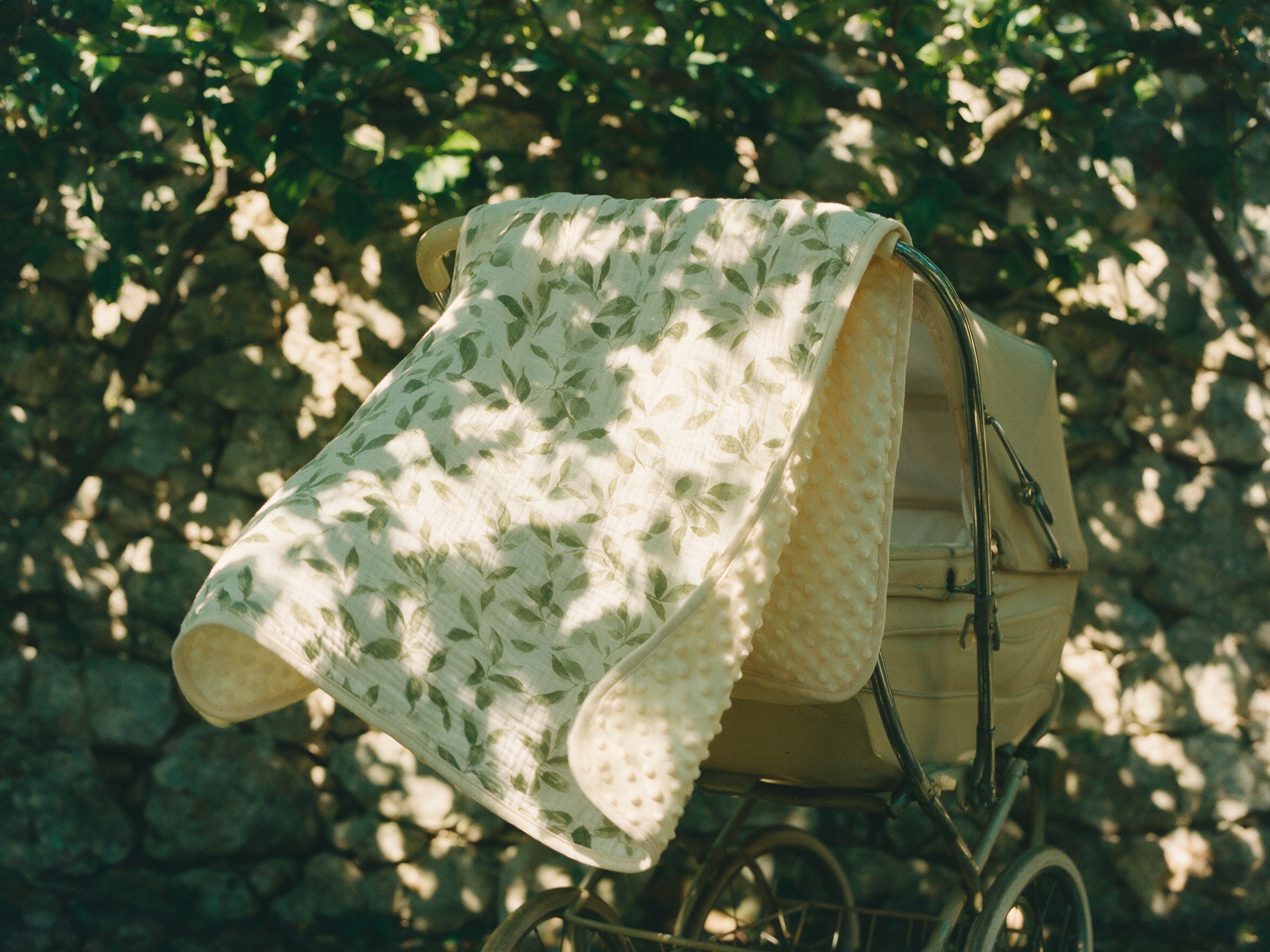
A nap in the pram — faint leaves, warm green.
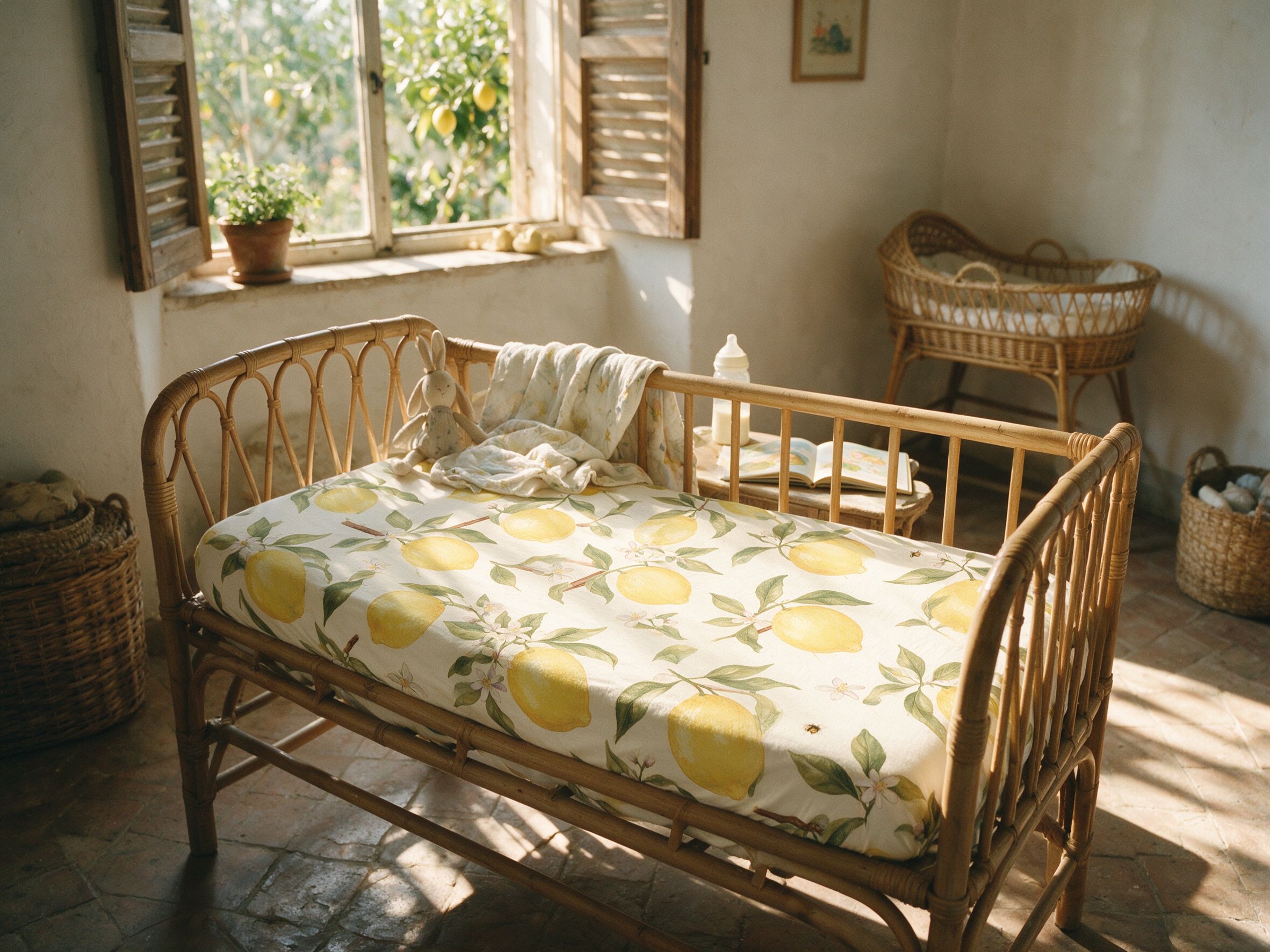
The keeper pattern of the grove, laid across a small bed.
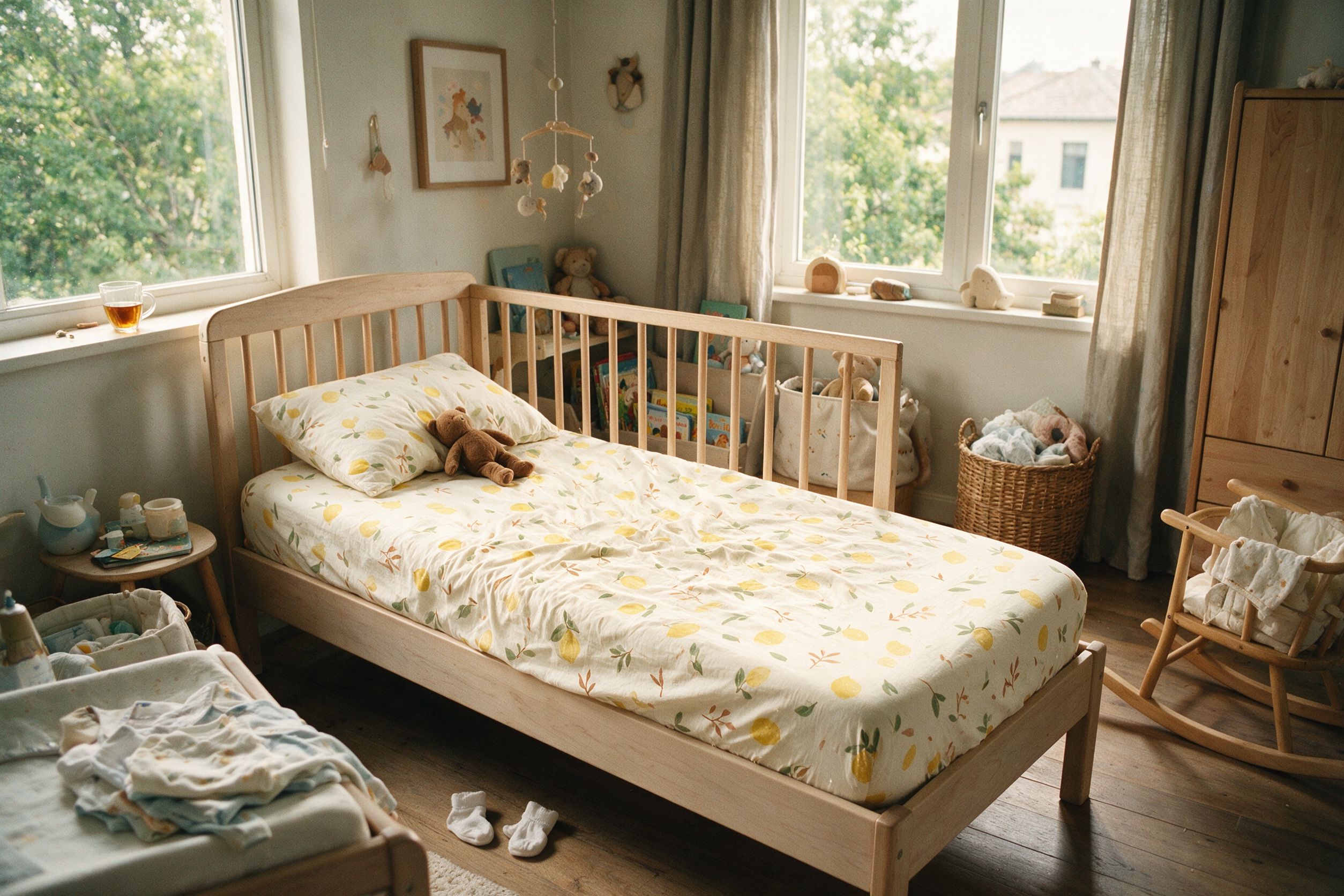
Ceramic-brushed lemons that soften with every look.
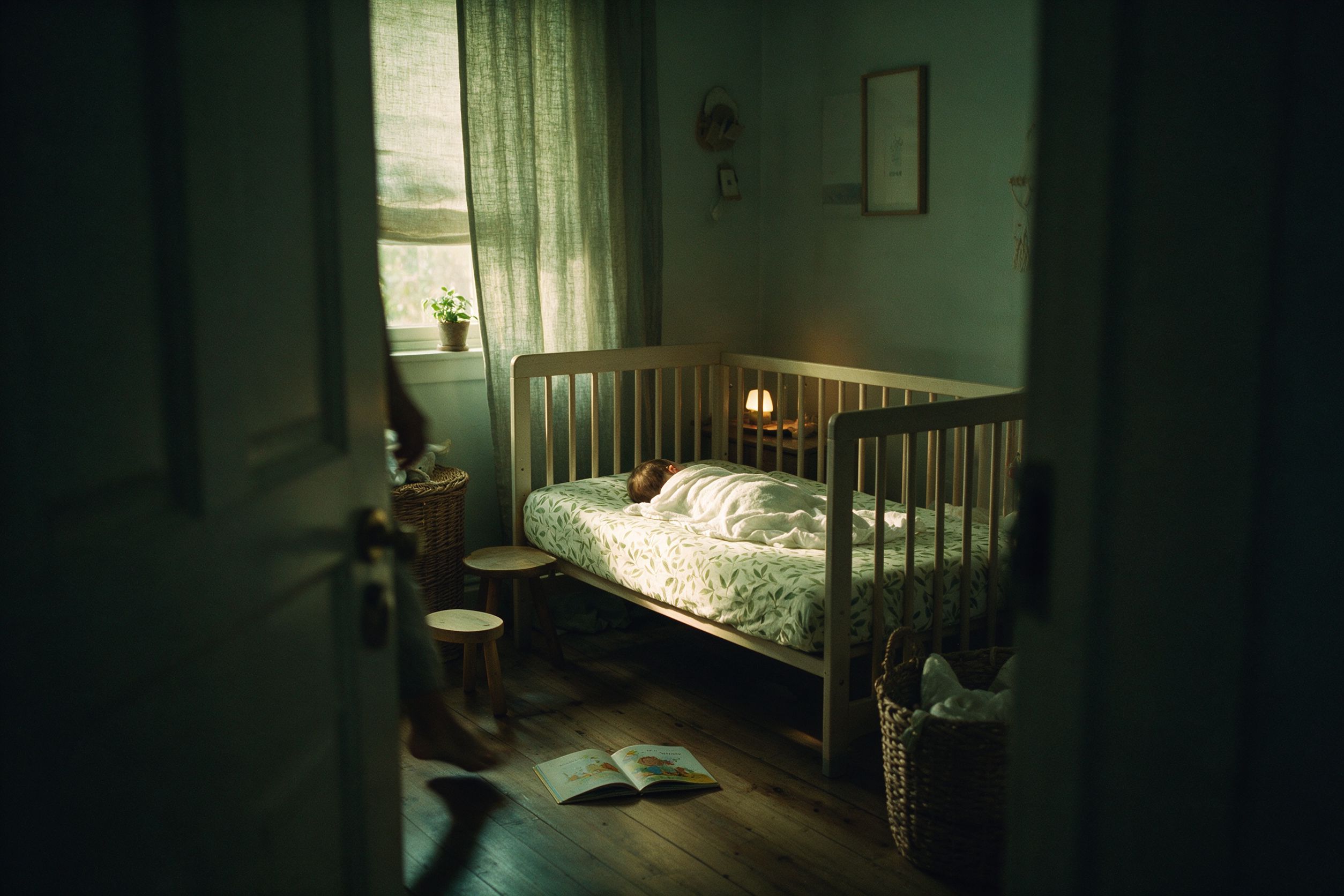
Leaf shadows on the cloth — and on all four corners of the bed.
Sfusato Sorrentino — elongated, tapering at both ends, thick-skinned, an IGP-protected product of this peninsula alone. Not the generic supermarket lemon: the one that only grows here.
The pergolato — chestnut posts and beams holding up the whole grove, a growing method unique to Sorrento. Walk beneath it and you walk under a golden roof. It is the skeleton of this collection.
Hidden in each pattern: a blue-and-white ceramic fish the size of a fingernail, in maiolica brushwork — the old tile that hung in Nonna's kitchen her whole life. It is the preview of the coast line (The Little Bay); in those patterns, a tiny lemon hides in return. The two lines visit each other.
No Limoncello bottles, no cocktail lemon slices, no pizza, no leaning tower, no Vespa. A working grove, not a postcard.
Nonna's garden didn't come from nowhere. I lived in Italy; I have really seen lemon trellises like that, really smelled lemon blossom on sun-warmed stone. Every faraway place in this series began somewhere someone had truly been.
— Sophia, Shanghai, Summer 2026