No. 03 · The Kitchen Garden
The Strawberry Thief
Kelmscott, Oxfordshire · Early Summer, First Light
"The thief is back. Let him be."
Kelmscott's kitchen garden has a low wall. The strawberries grow inside it; the song thrushes wait outside.
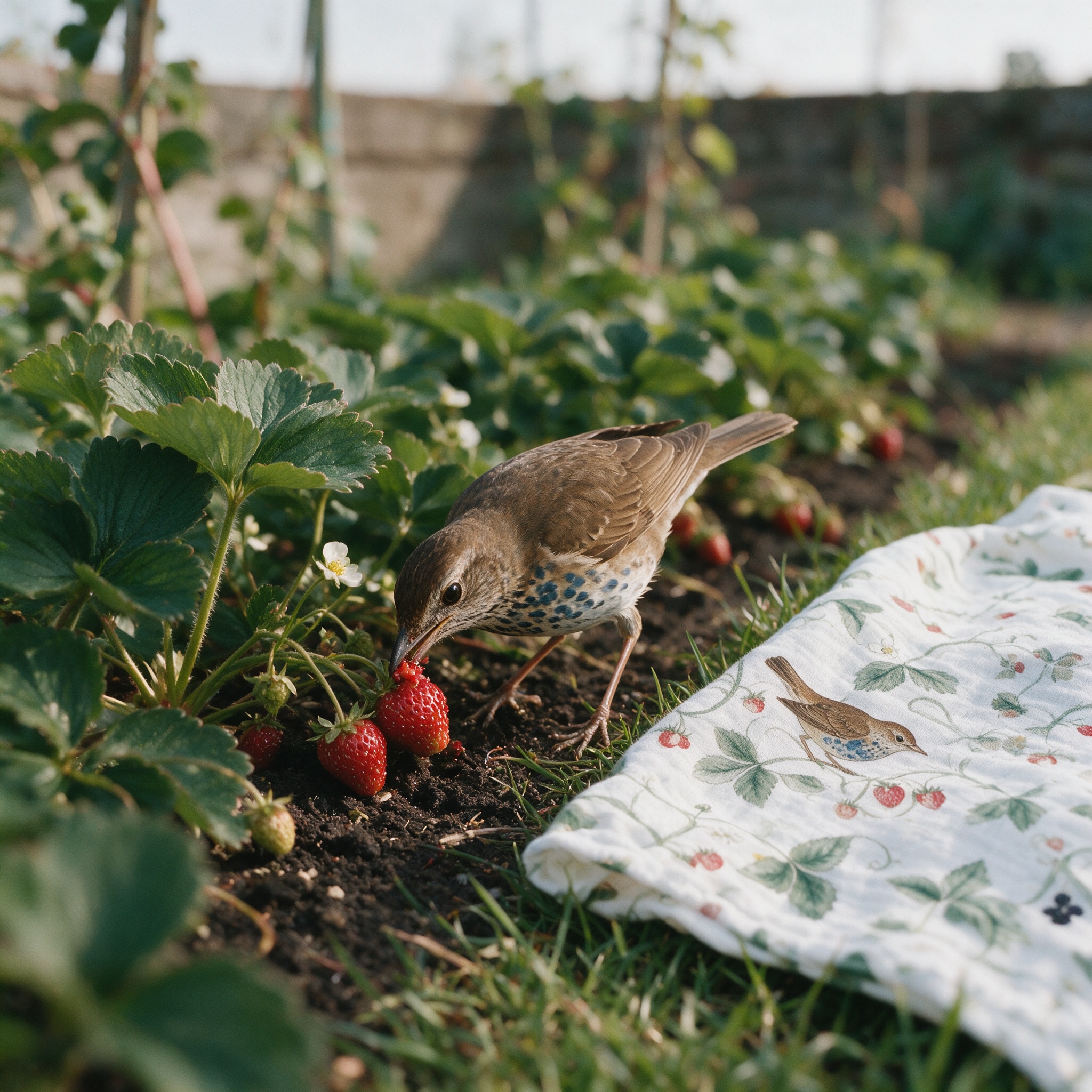
Every morning, while the dew is still on, they come. They land in the blackcurrant bush first and tilt their heads — checking whether anyone is watching — then hop down and take the reddest fruit on the row.
In 1876, a man who lived here wrote home: "The thrushes are at the strawberries again." He never once chased them off. Later, he drew them into his cloth, and the pattern has outlived them all.
The strawberries come back every year. So do the thieves. Let them be — a garden is big enough to share.
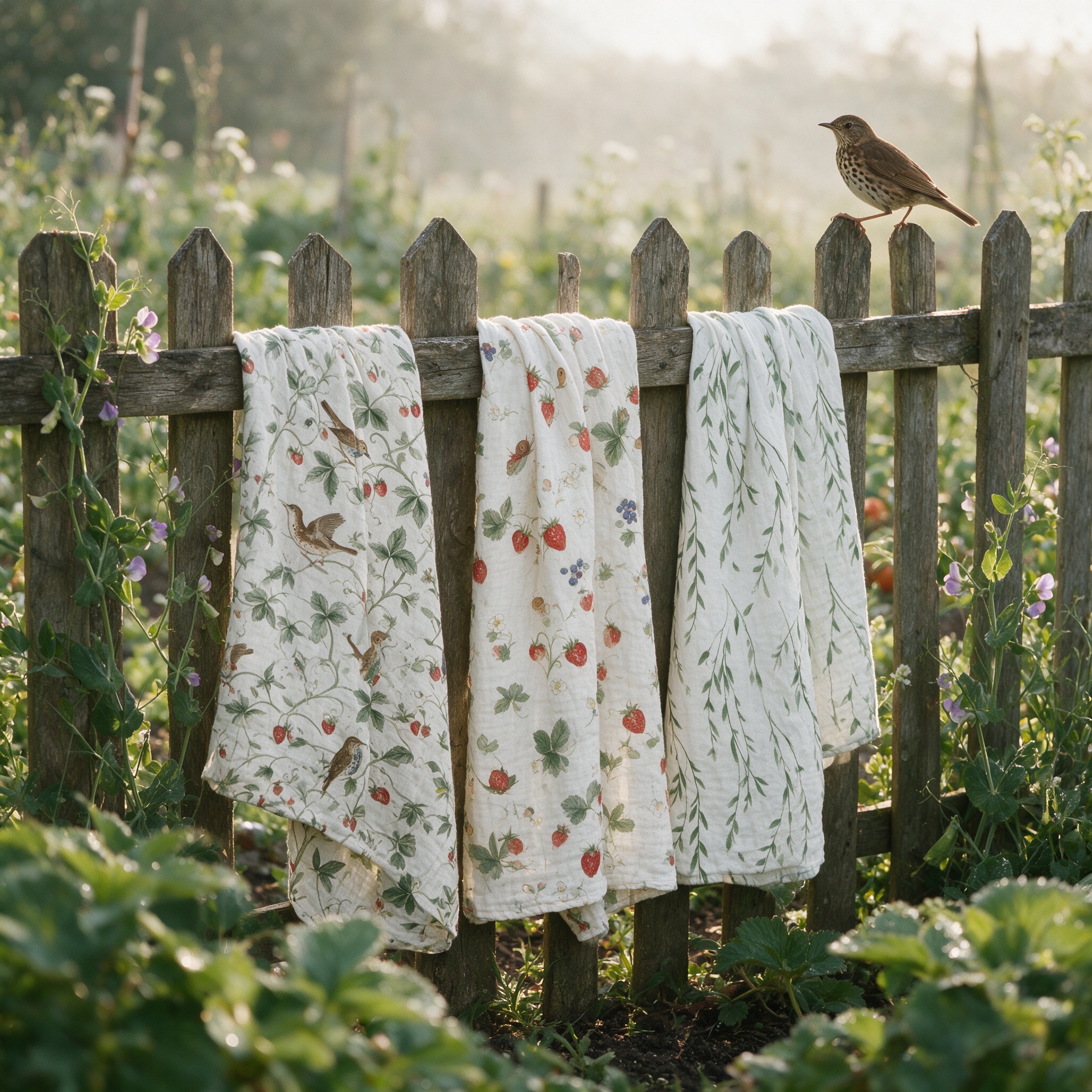
Inside the wall, along the row, and over it — the same garden, three mornings running.
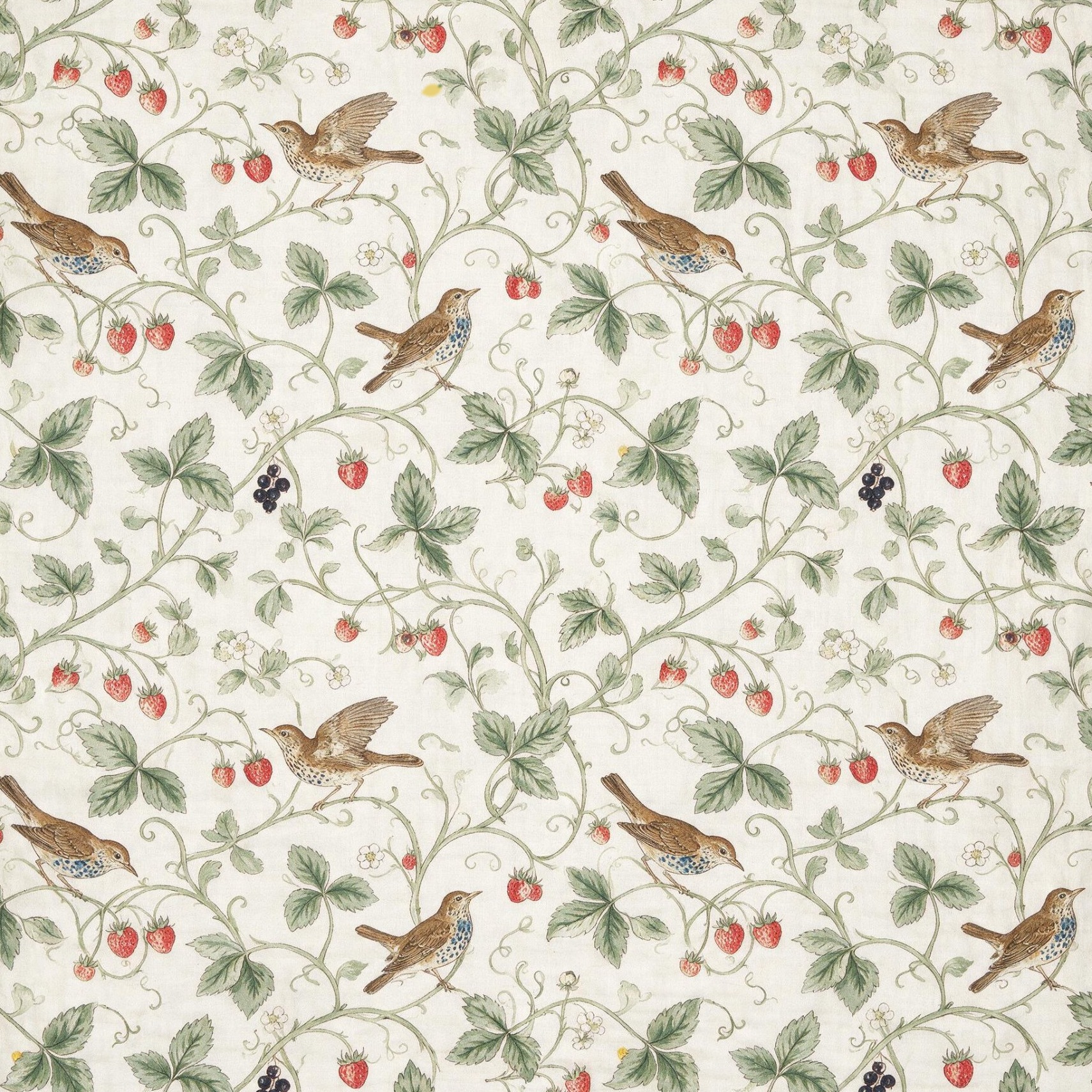
The thrush lands on the blackcurrant bush, tilts its head, looks to see if anyone is in. On that morning in 1883 the thief had not yet arrived.
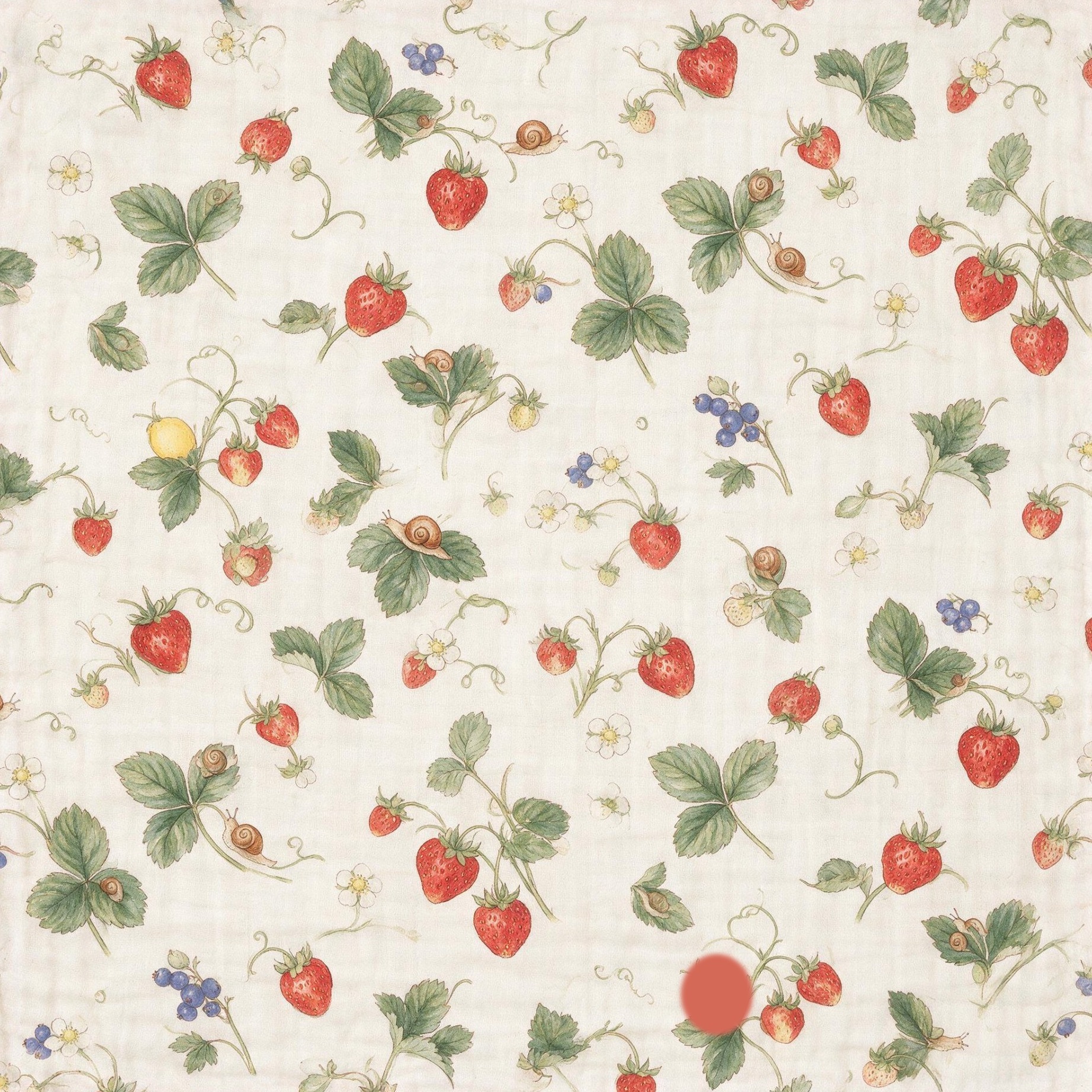
The strawberries on the row grow every year, and every year a thief comes — red ones, white ones, spiralled ones, plump.
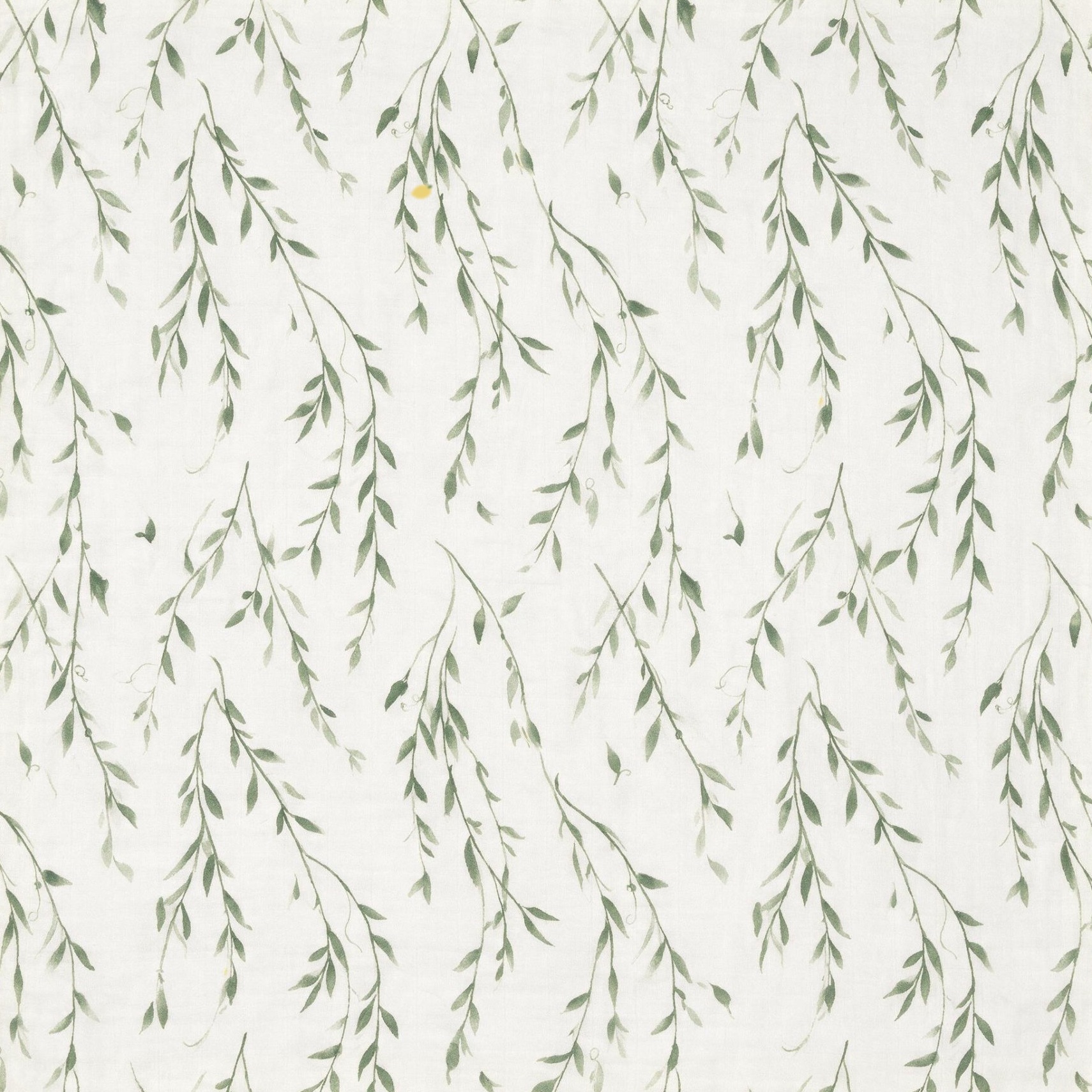
A few seeds on the ground outside the wall — after the thief has been, the next spring will sprout here.
The hour the birds come is the coolest hour of the garden day.
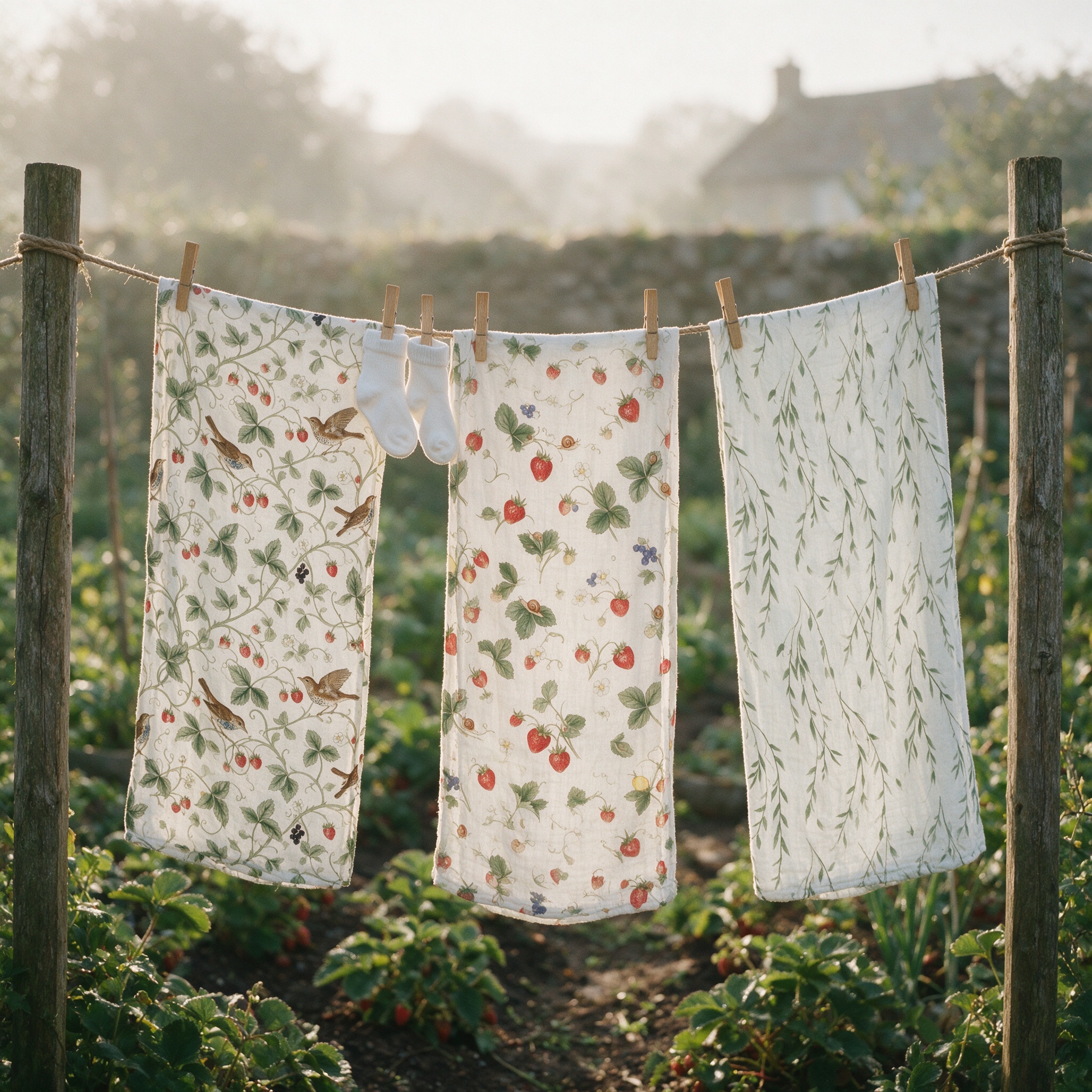
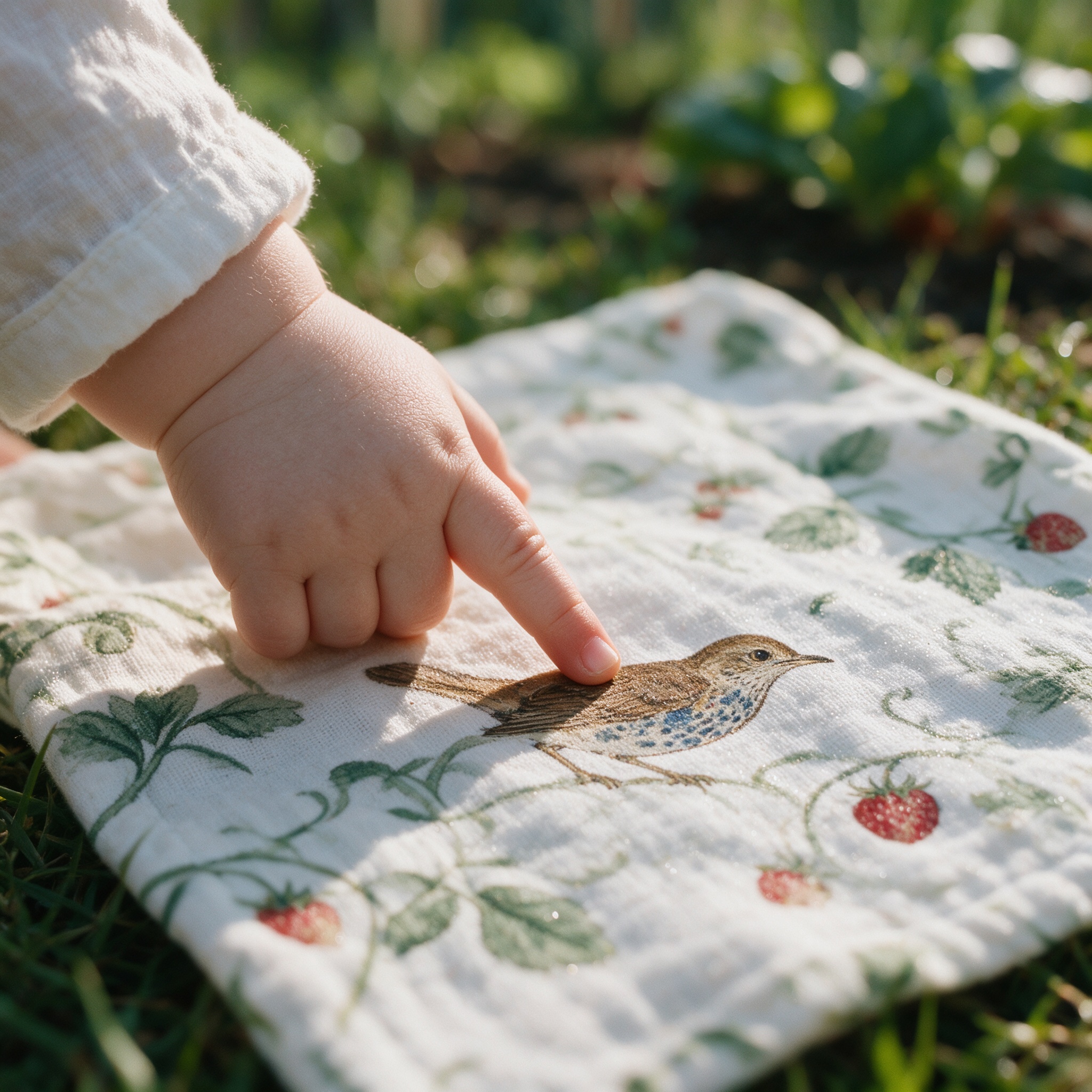
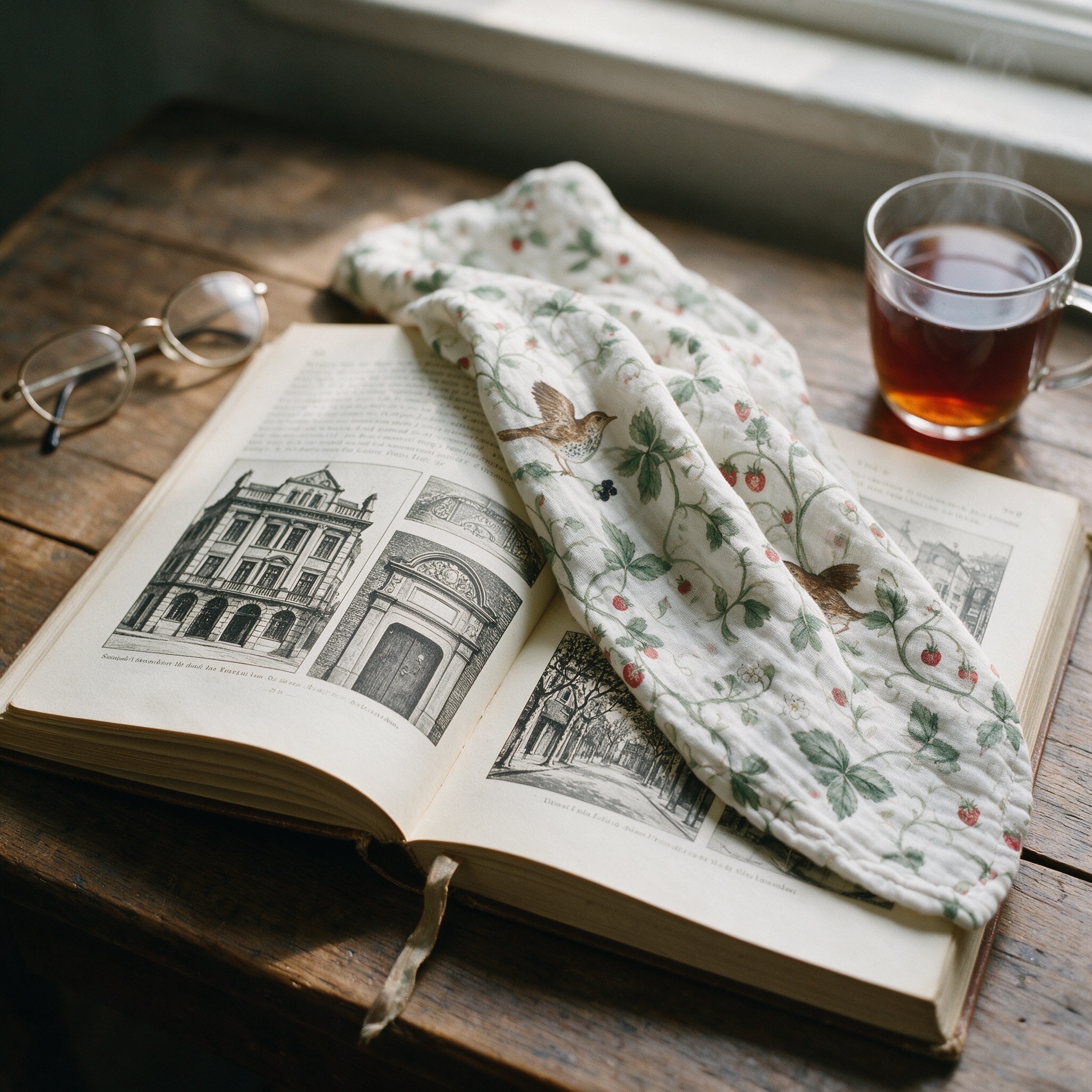
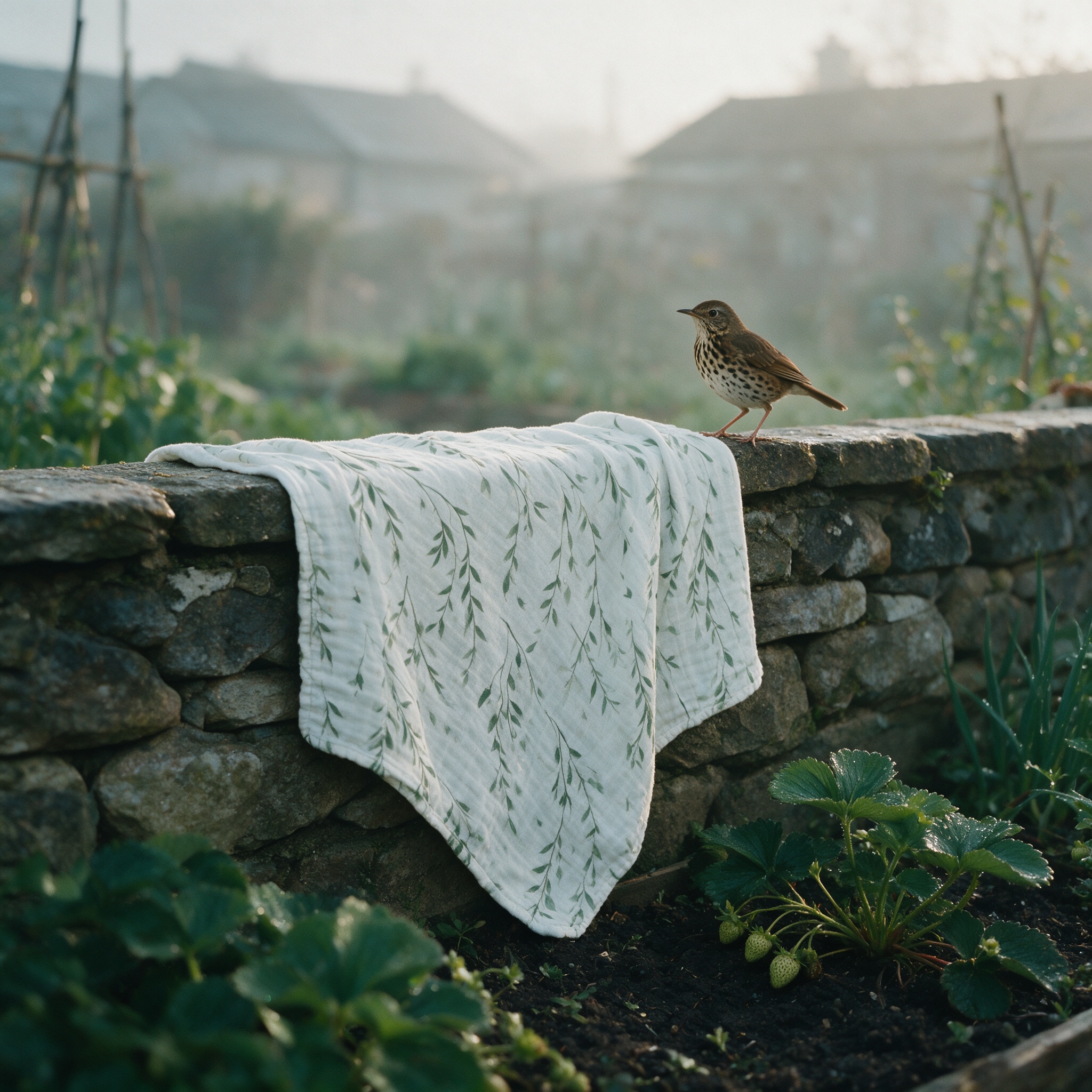
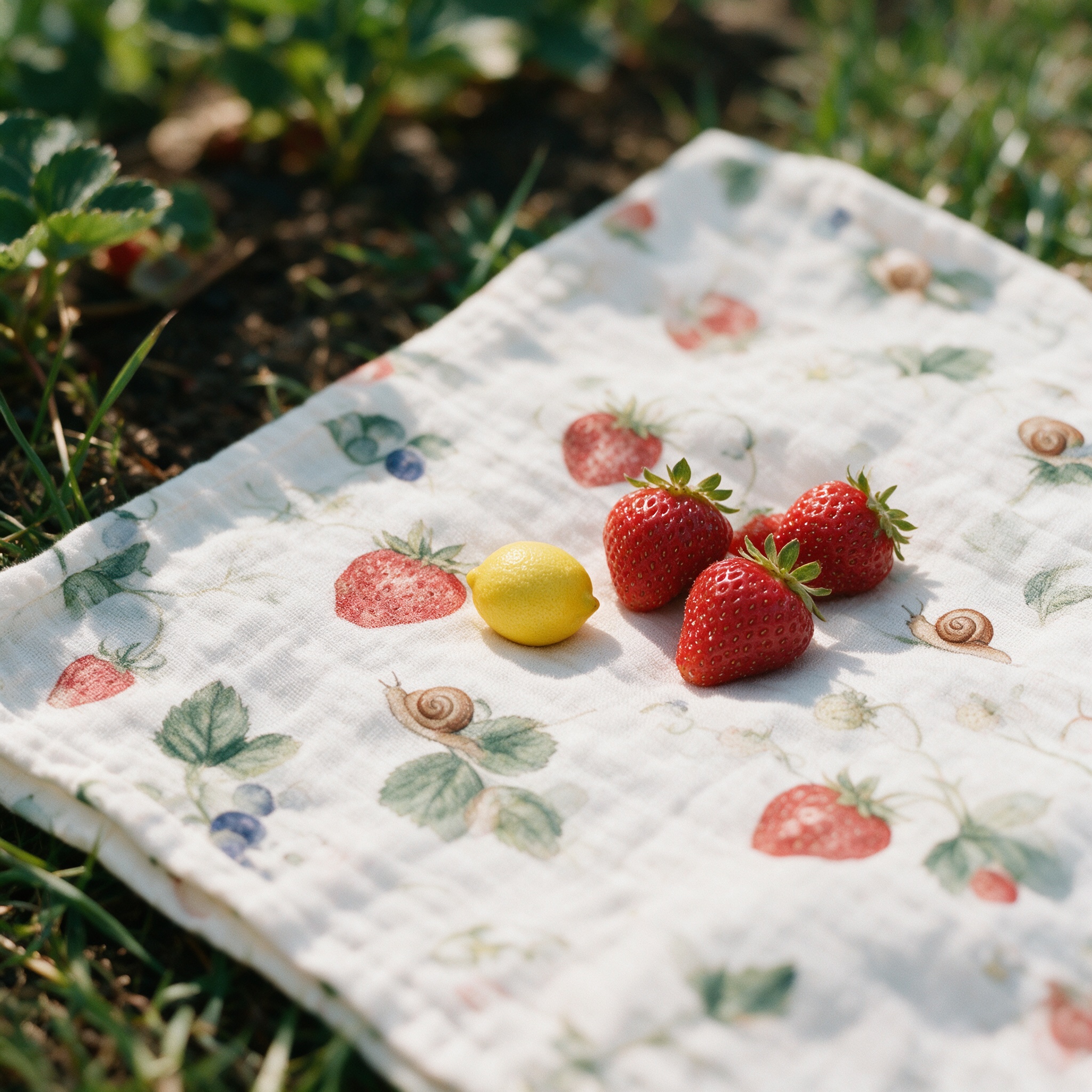
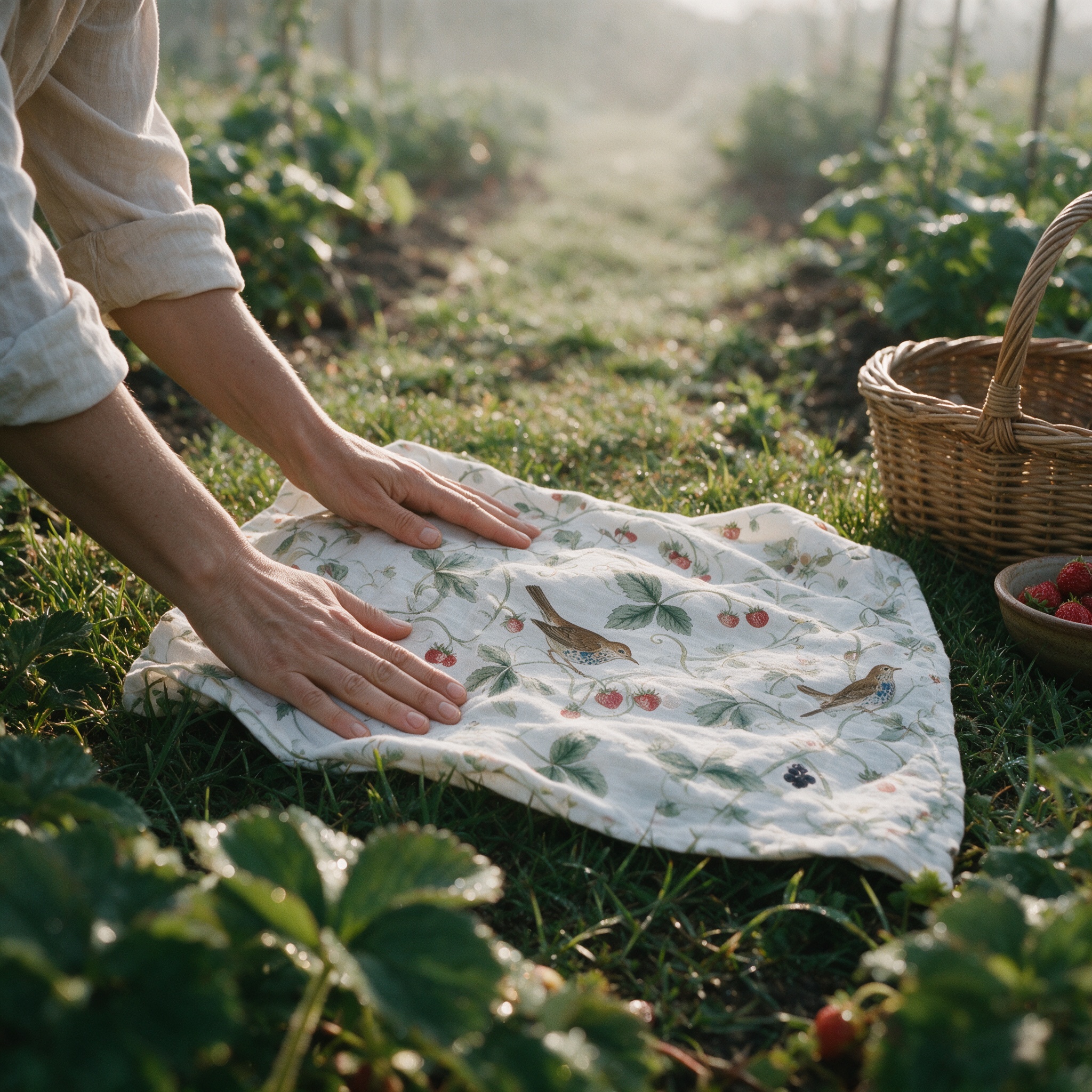
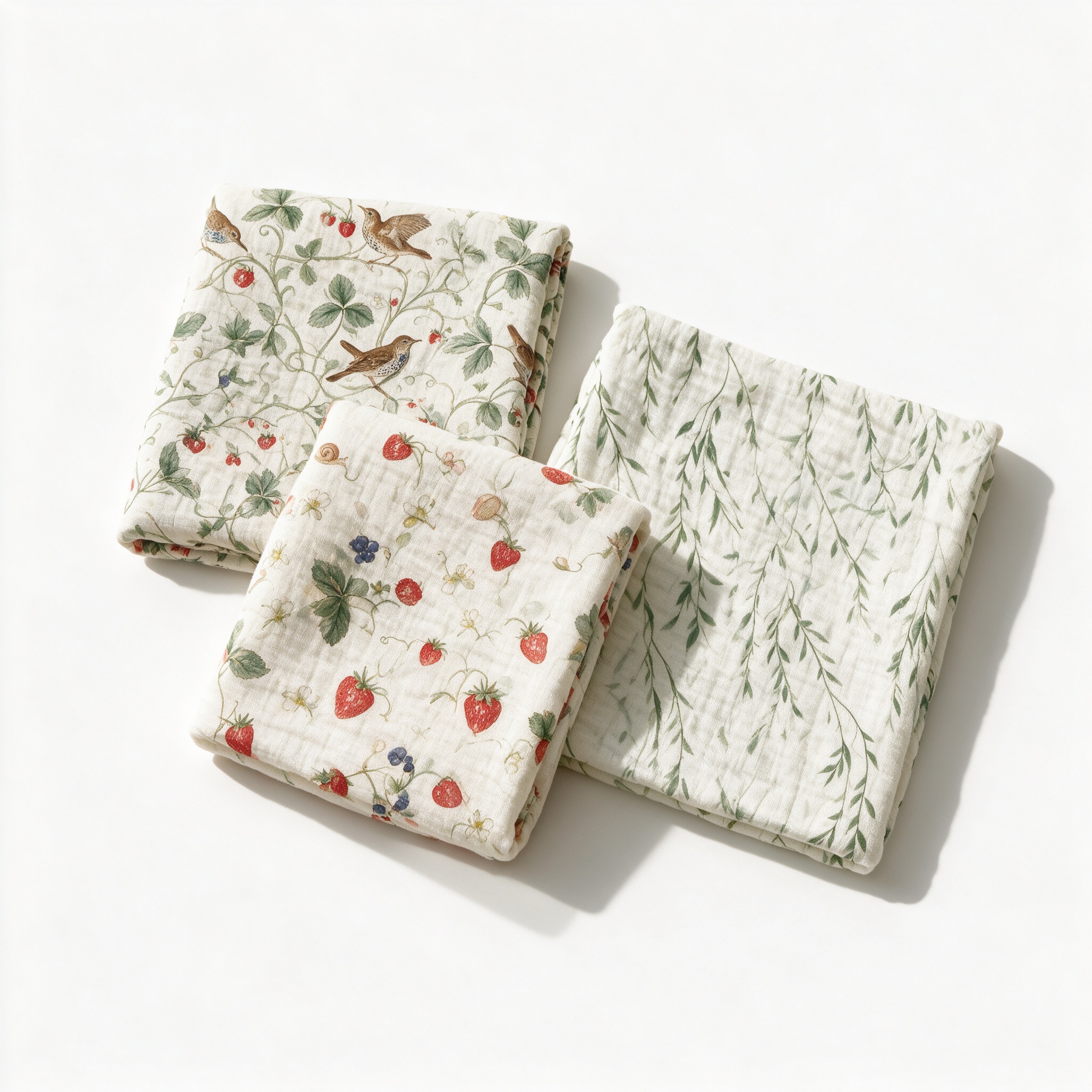
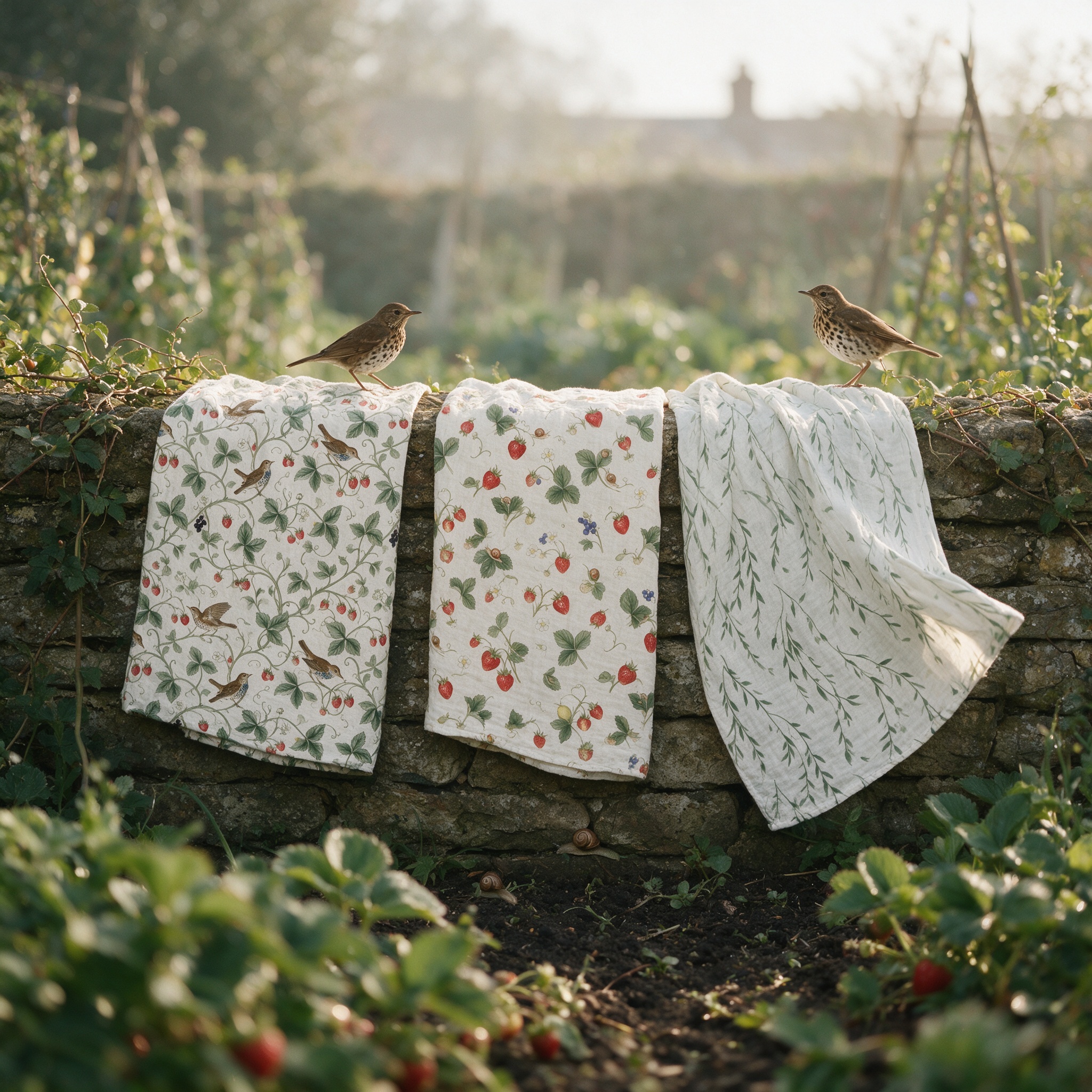
Three prints extended into the fitted-sheet line — the products of this story.
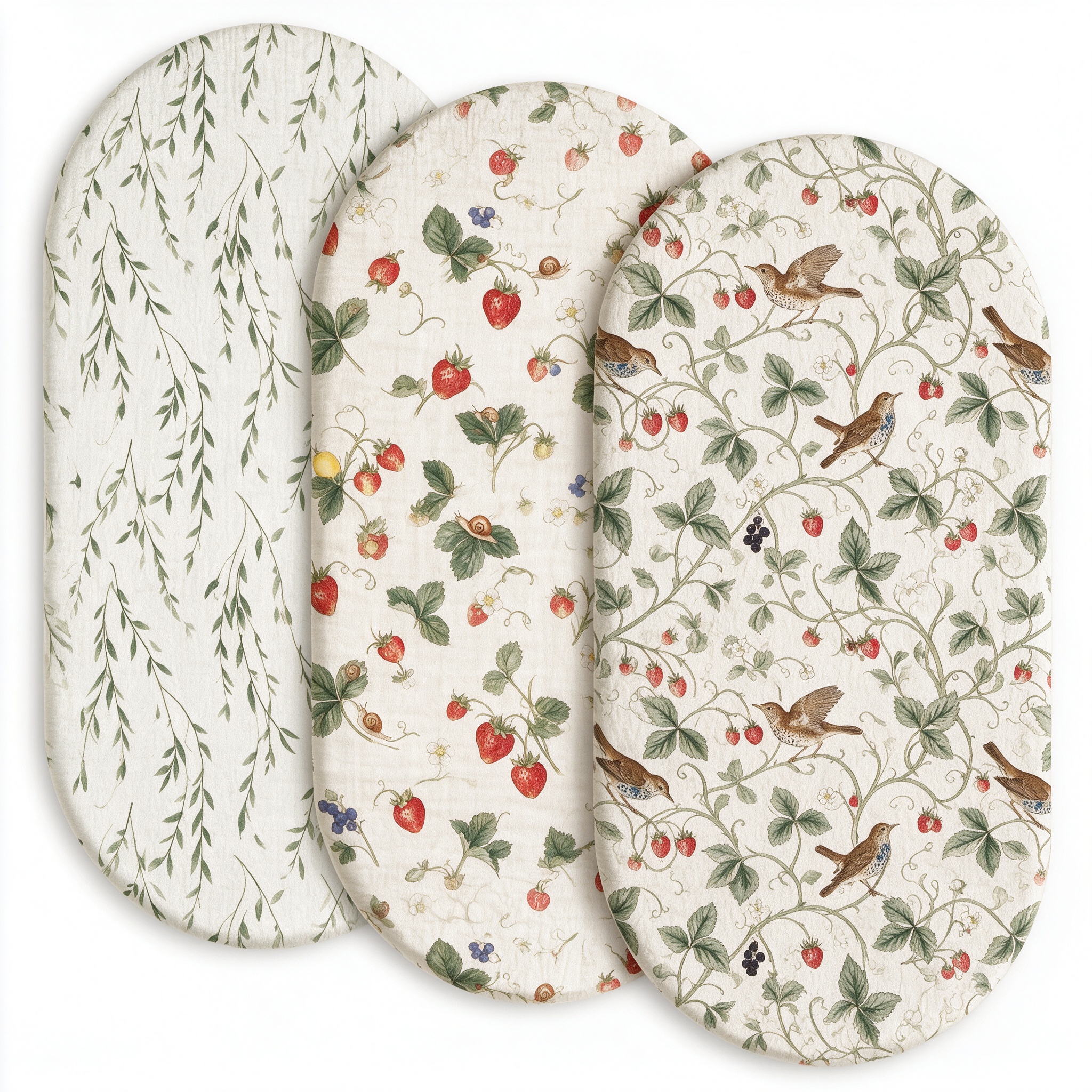
The three together — the whole of this story in one view.
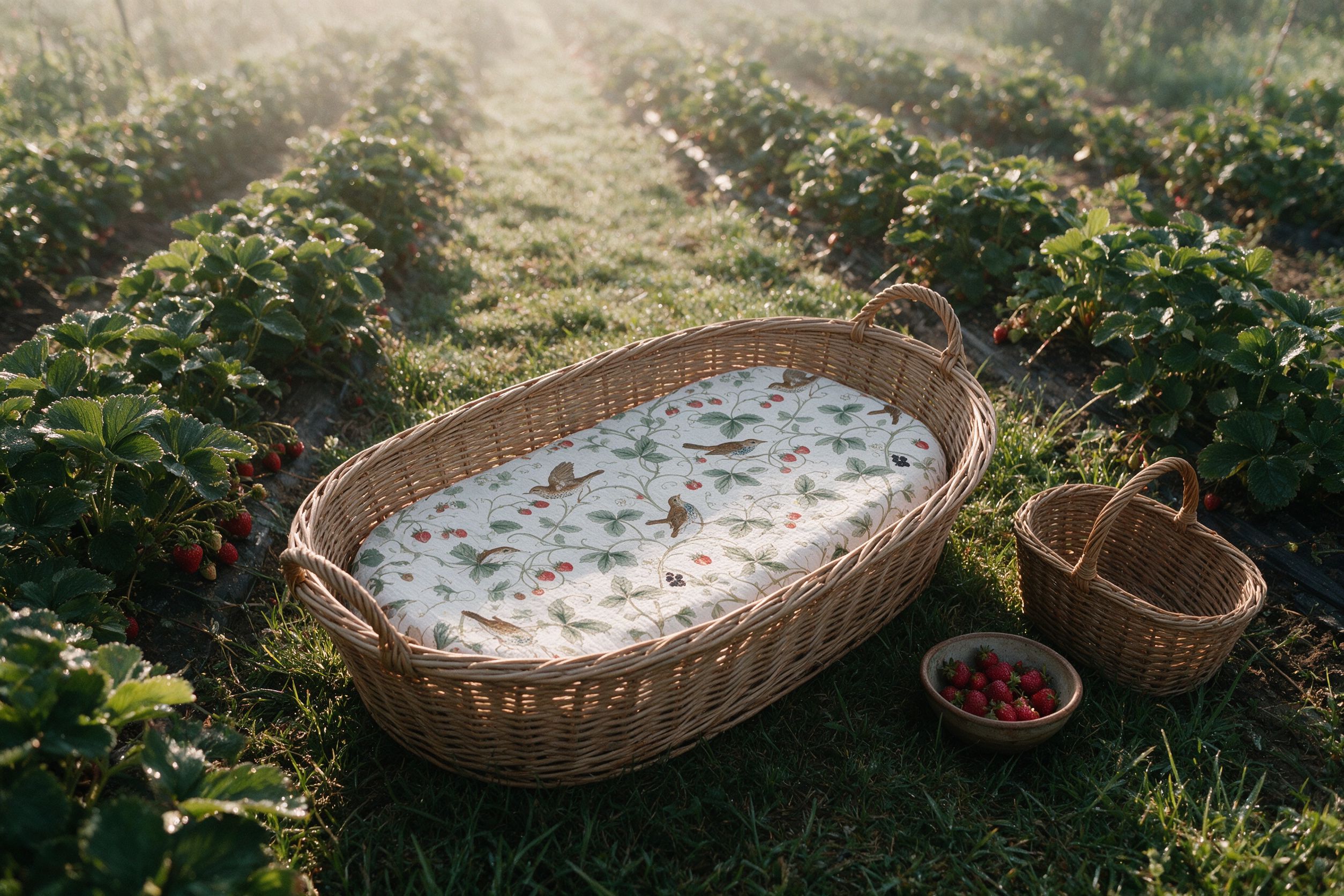
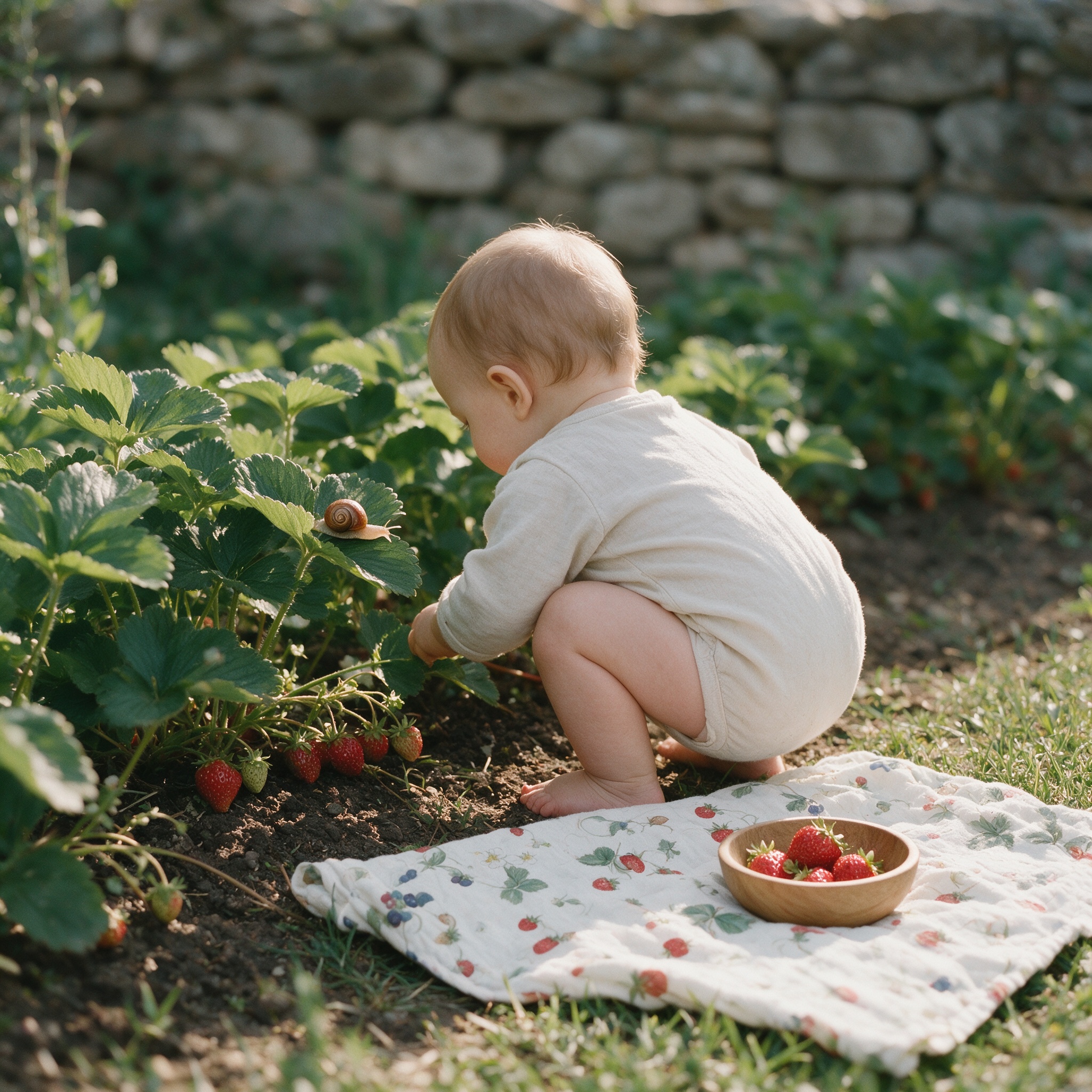
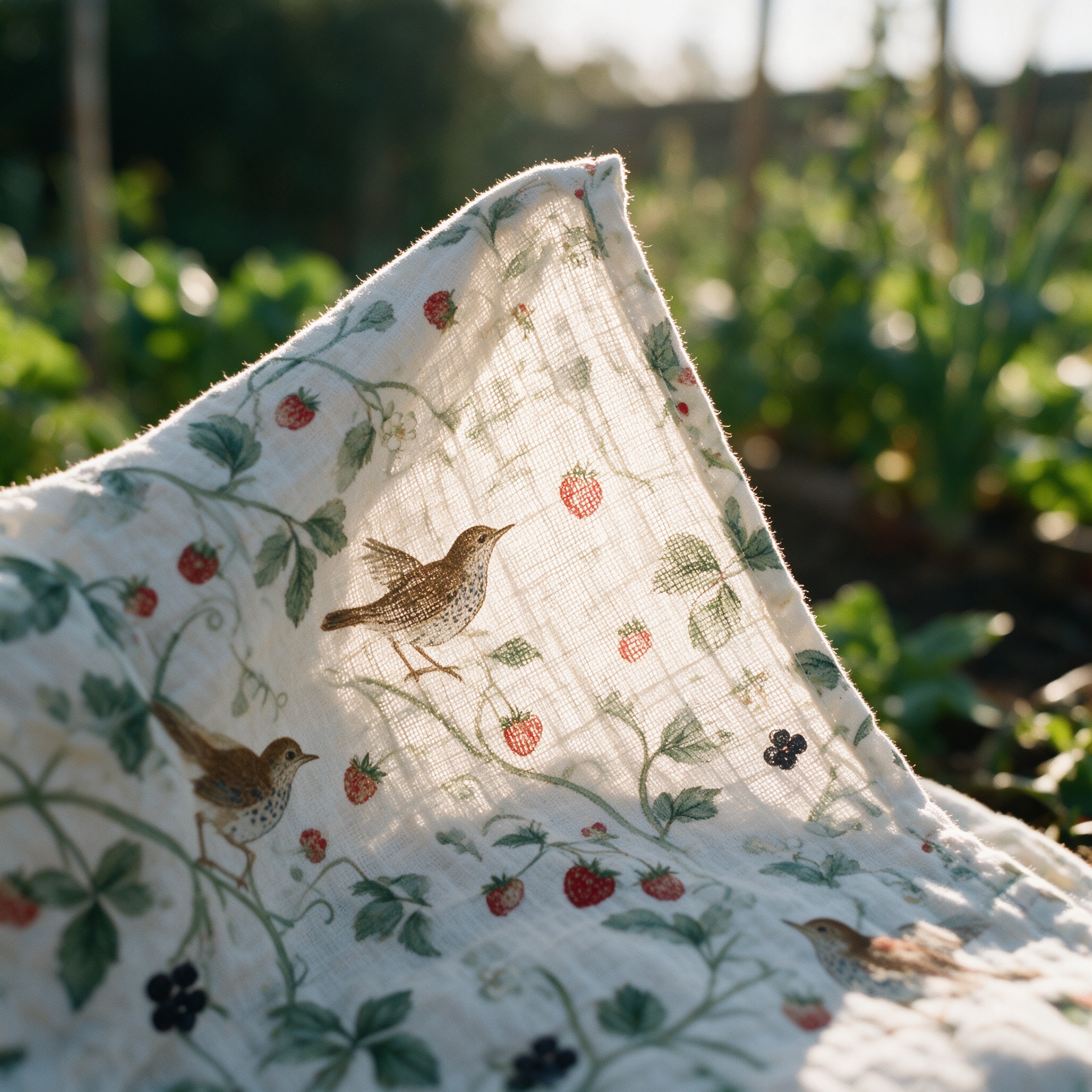
The story's lead print laid on the cradle — the side the baby sleeps on by day.
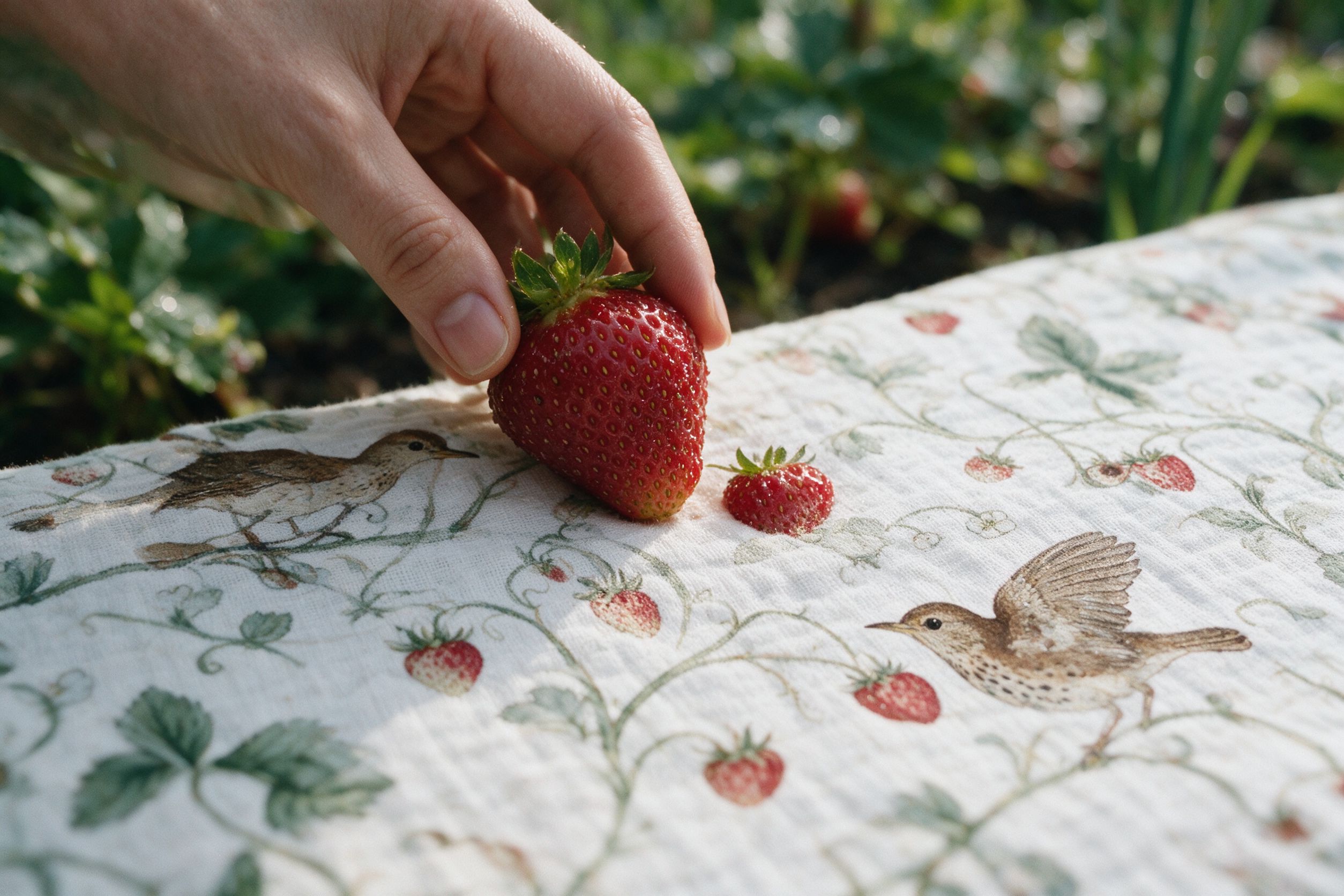
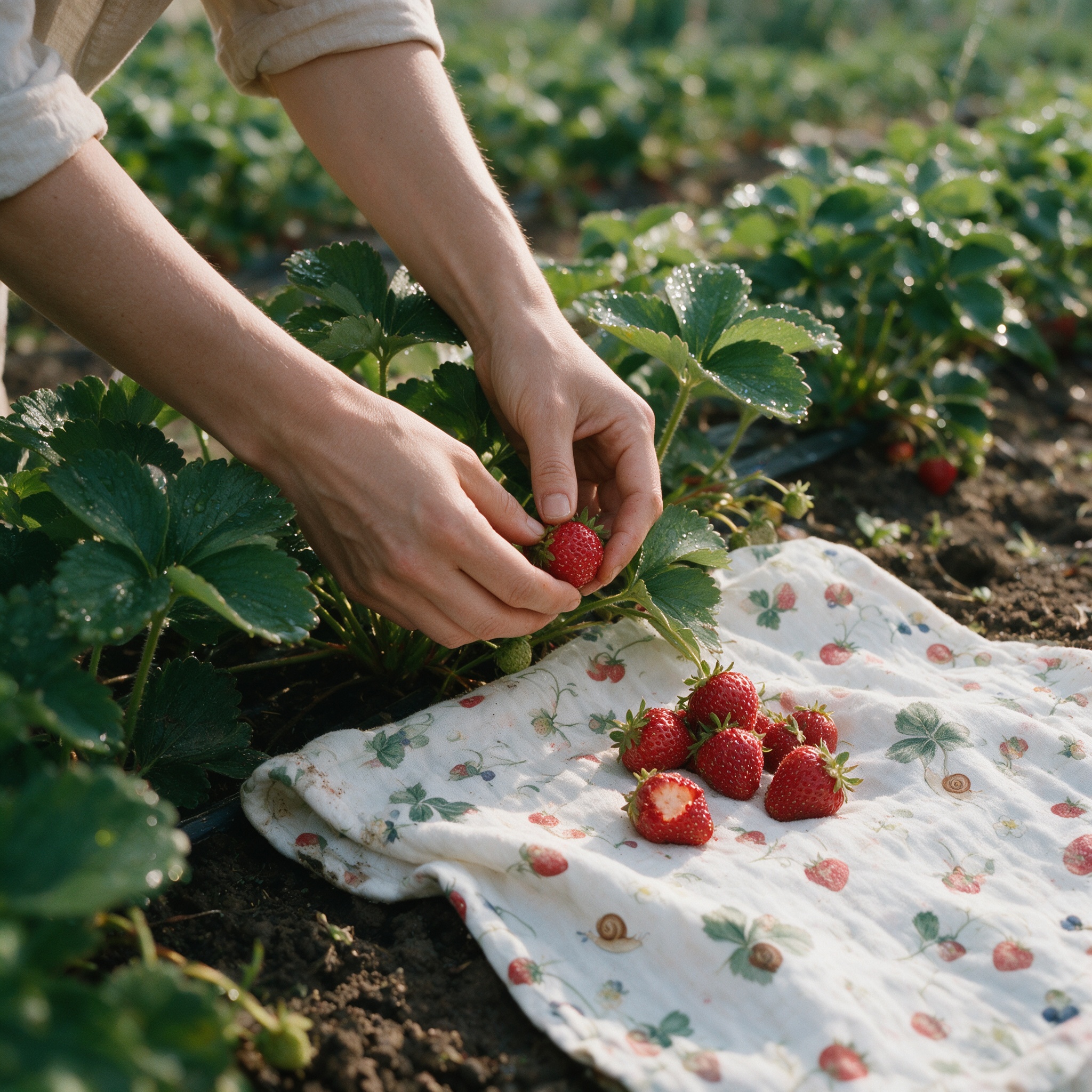
The side closest to the skin of this story — pass a hand over, and you remember.
The 1876 letter is real — William Morris, writing from Kelmscott, about the thrushes in his strawberries. He died in 1896; the pattern is now in the public domain. We redrew it in our own hand, and we do not trade on his name.
One frame in the shoot puts a real thrush beside a printed one — the bird from the garden and the bird from the cloth, in the same picture. Finding it is half the fun.
A Morris vine connects everywhere, so the repeat was drawn to survive its own seams — the pattern runs on forever, the way the garden does.
No rabbits, no blue jackets, no talking animals. An English garden, kept honest.
It is the same thing: to draw the good things of daily life, and let someone else be covered by them.
— Sophia, Shanghai, Summer 2026