No. 01 · The Keepsake
Lizzy's Pressed-Flower Journal
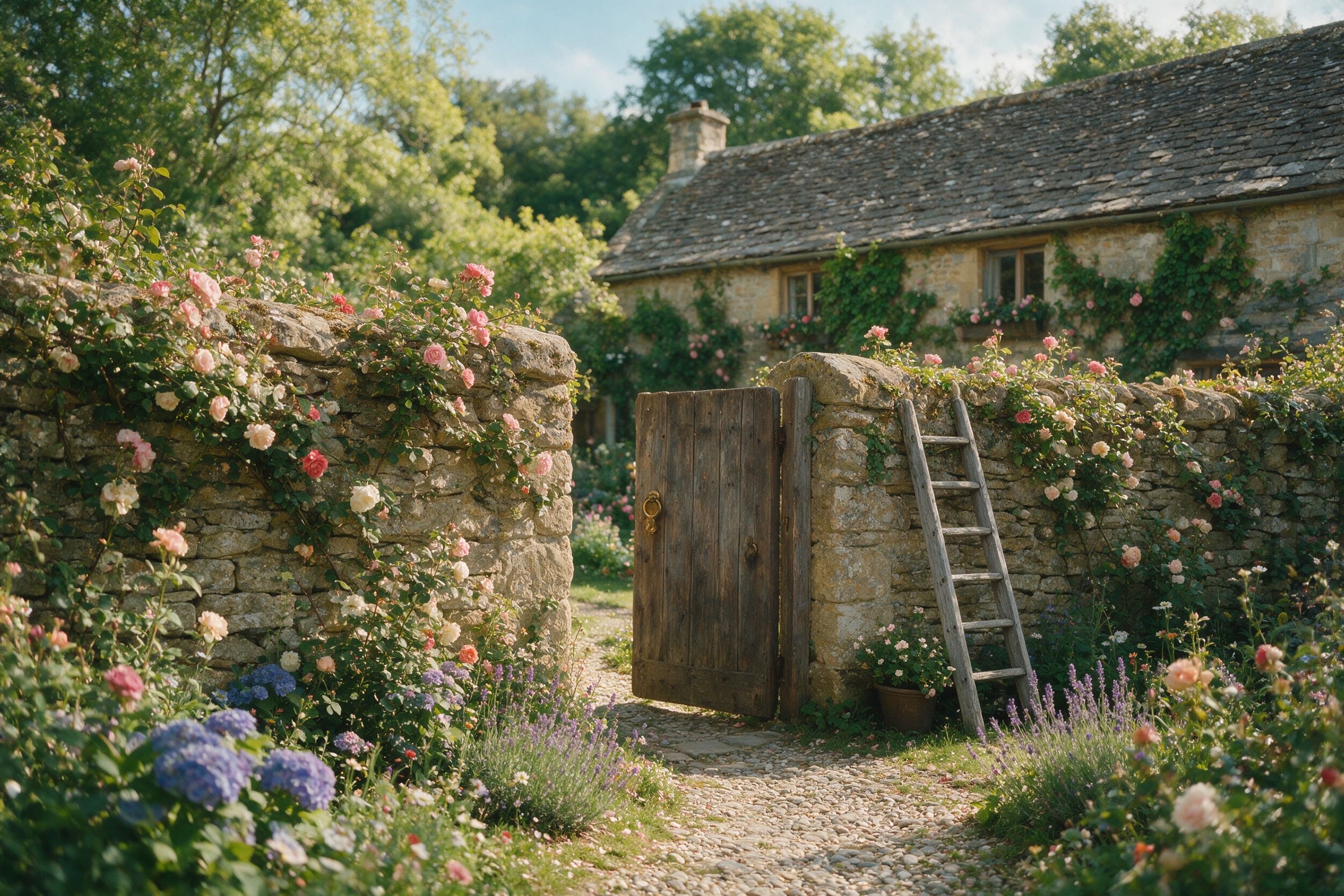
Waddesdon, England · A Summer Afternoon
"She pressed the summer flat, and filed it between the pages."
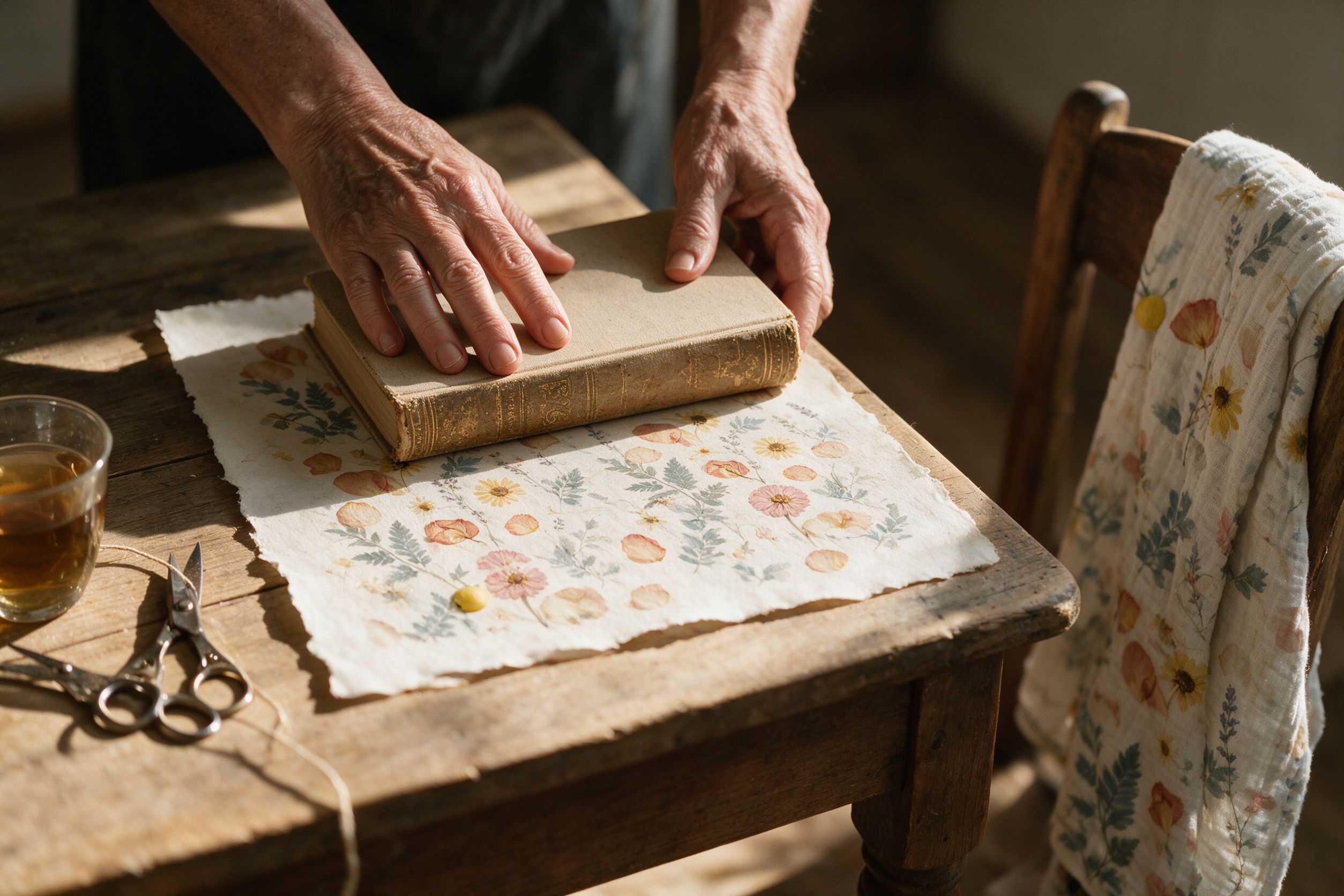
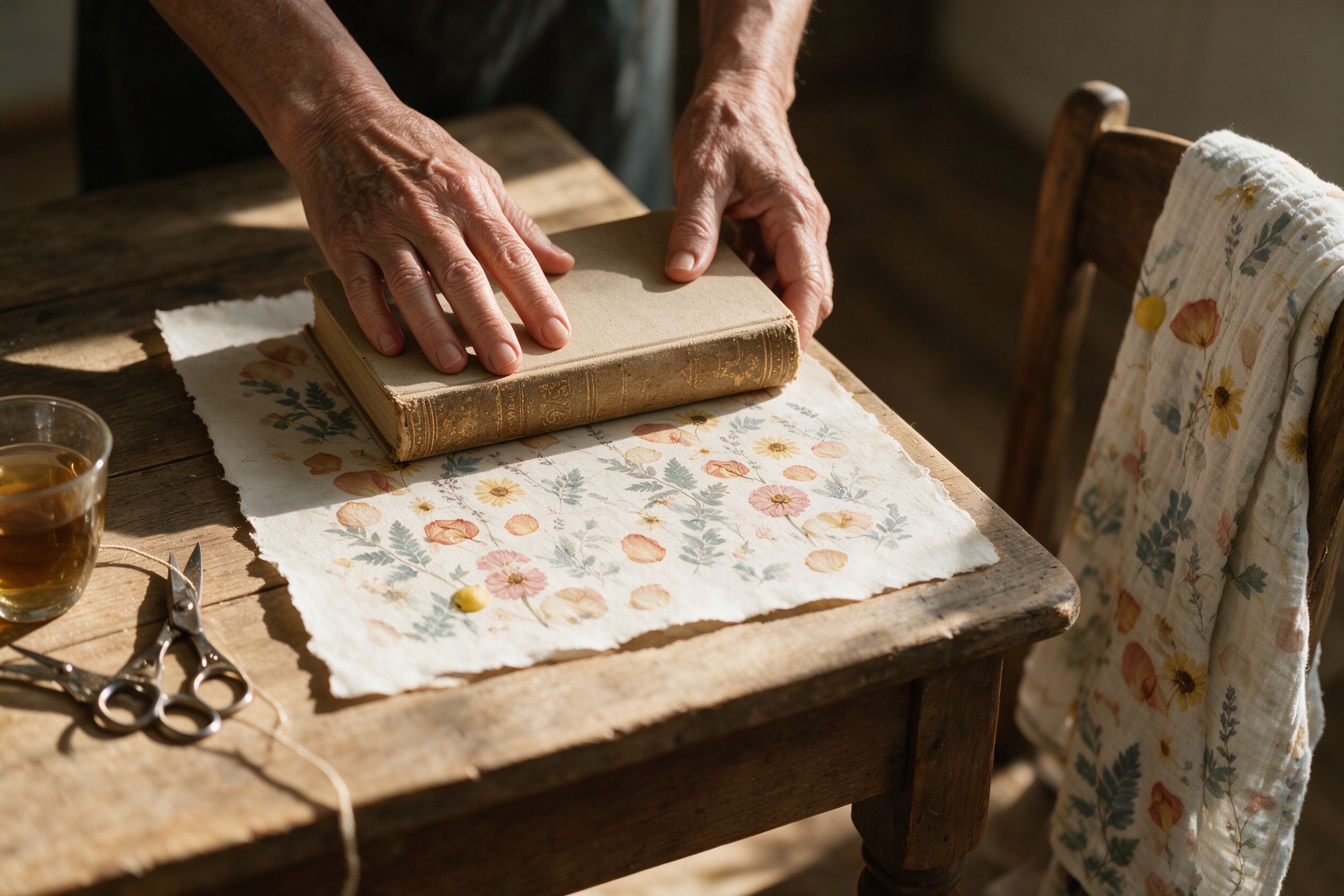
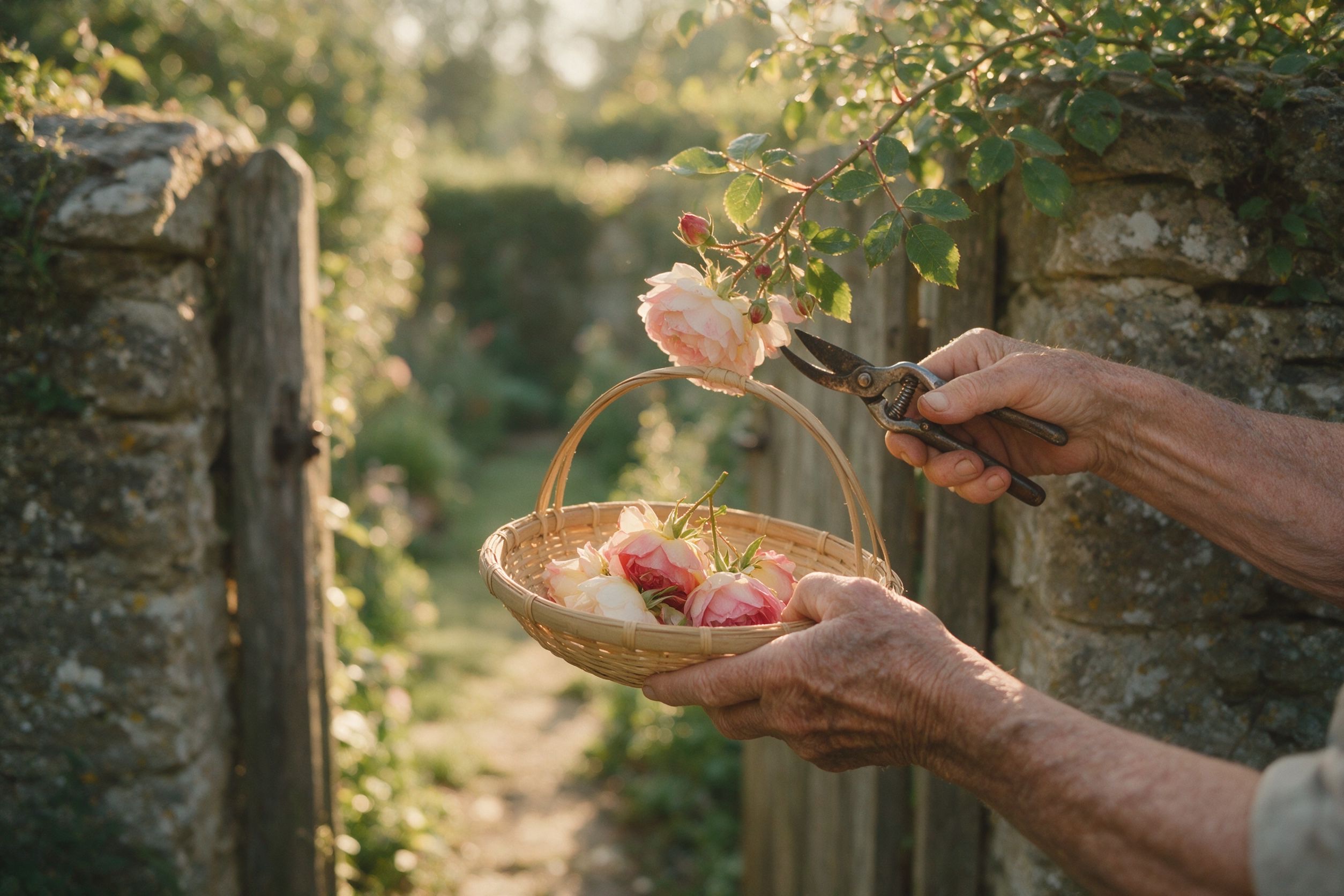
A girl — she left no name behind — pressed the garden's spent roses, one by one, into a 1970 edition of Wuthering Heights. Granny always said that flowers fade, but a flower pressed between pages is a letter to your future self.
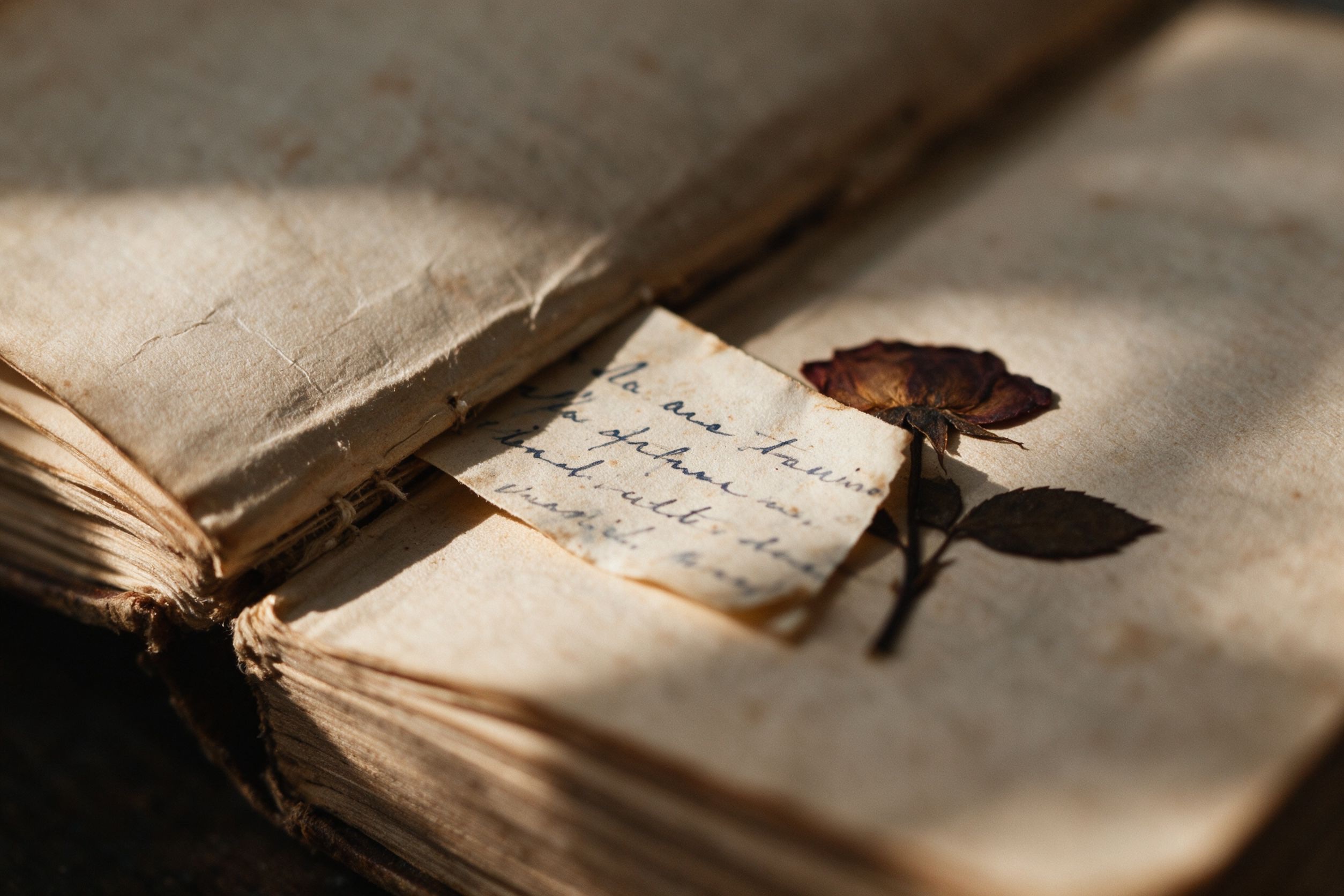
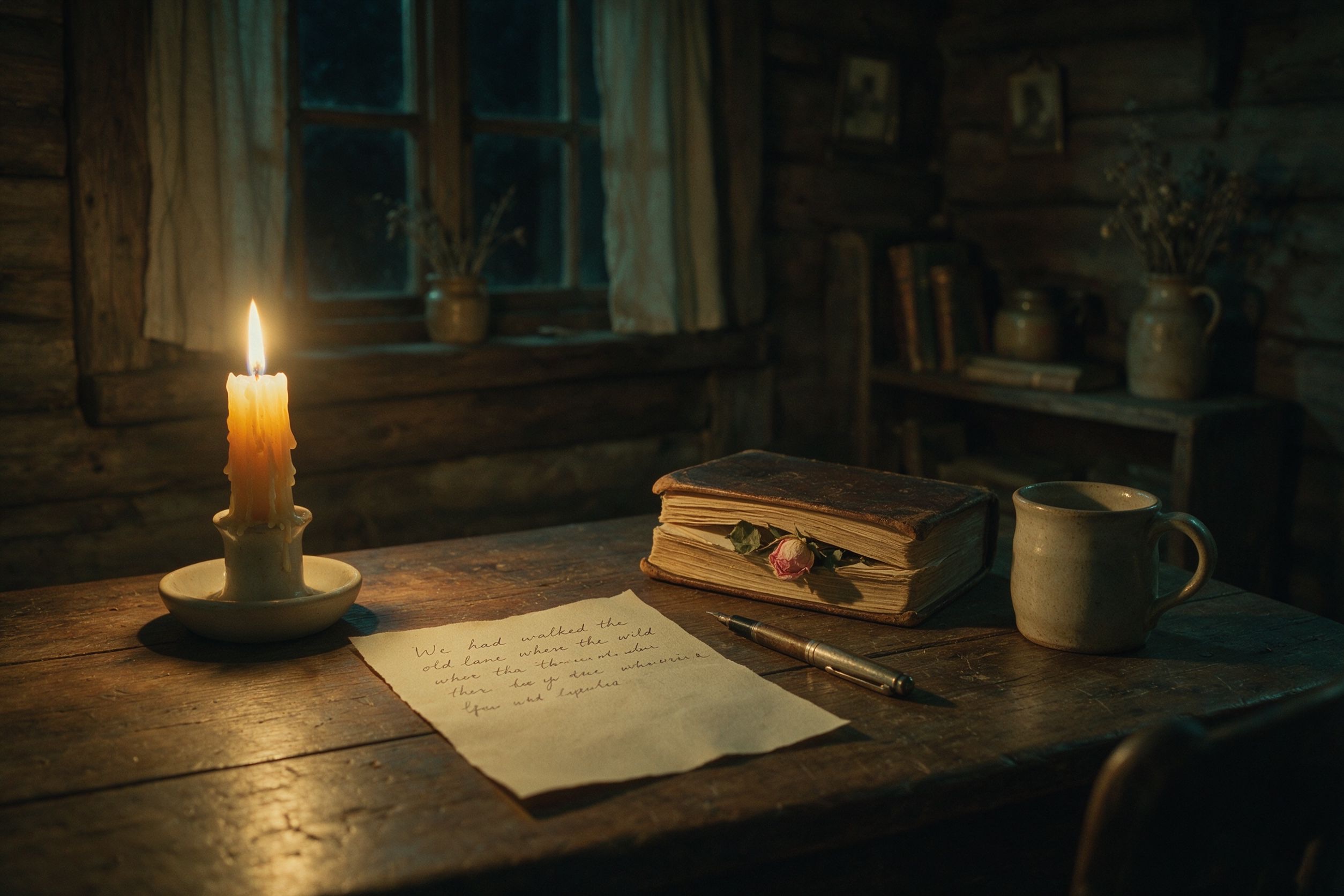
The girl arranged the last rose, laid the tissue paper over it, and stacked the books on top. She wrote half a note. The ink was still wet when something called her away — and she never came back to finish it.
The best rose of the summer stayed at page six hundred.
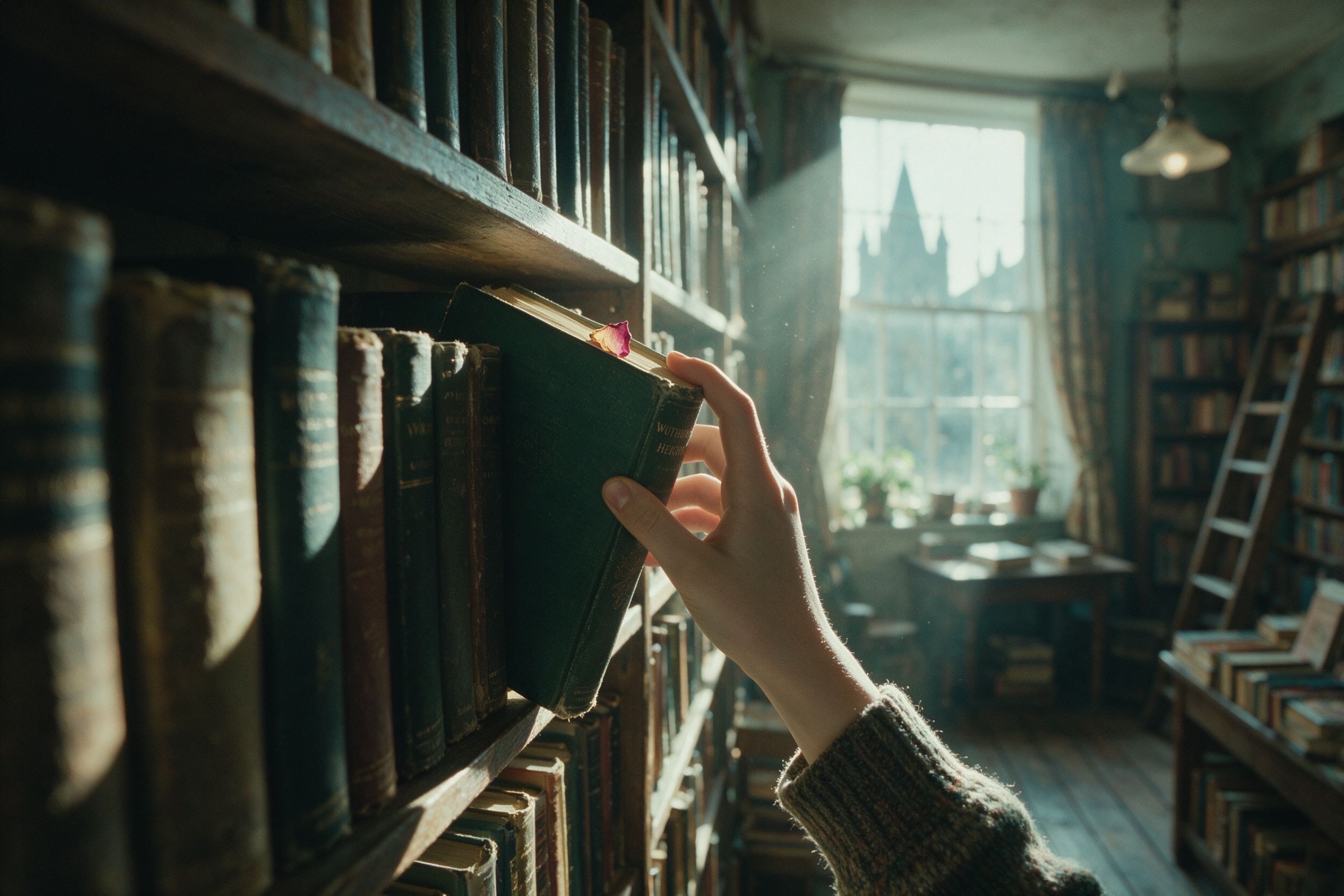
Twenty-nine years later, in a second-hand bookshop in Cambridge, an art student named Lizzy opened the book.
One page of blooms. One page of specimens. One page left blank — waiting for next summer.
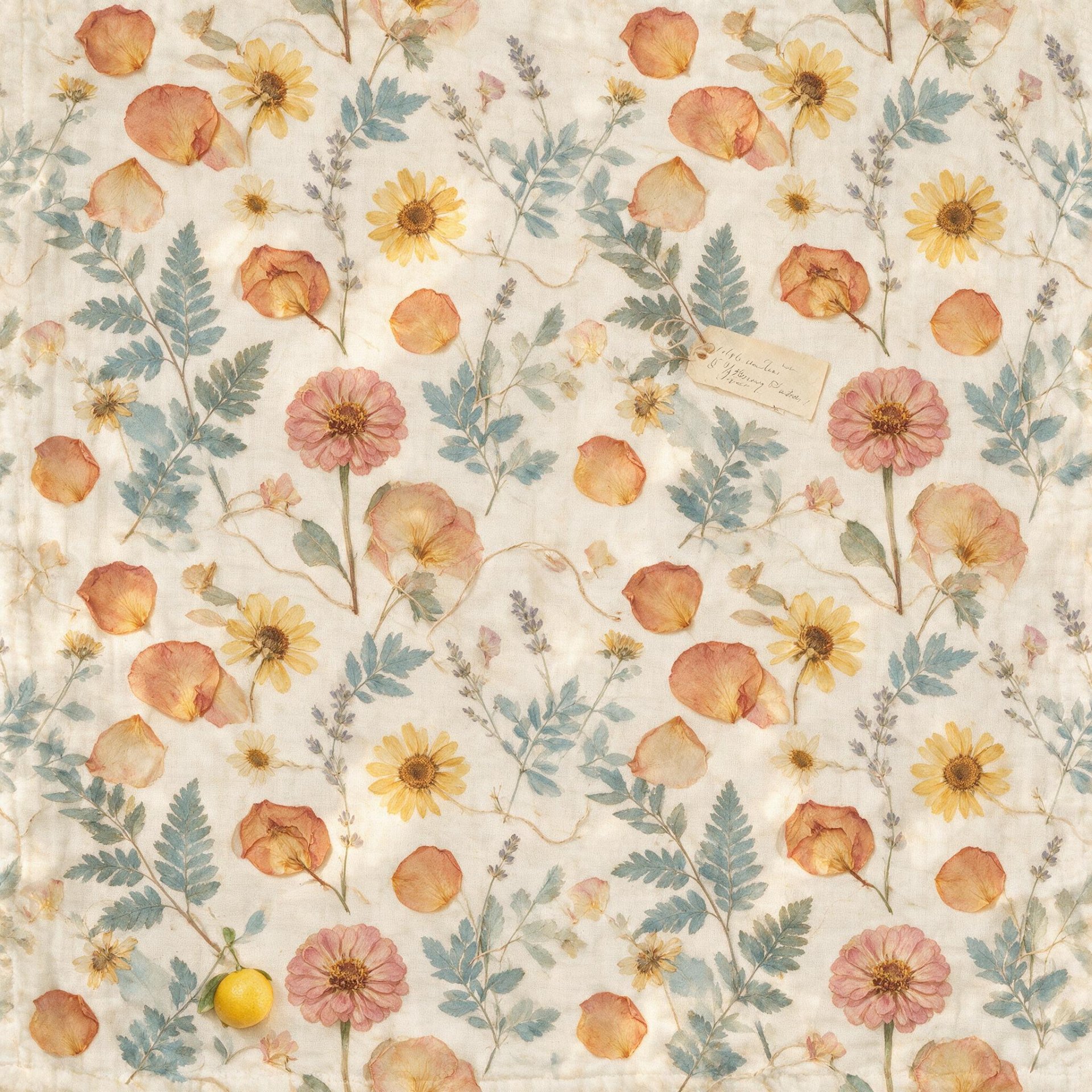
The flowers pressed in a Waddesdon garden in 1970 — rose, daisy, lavender, dried blooms in a small envelope. A complete pressed-flower page.
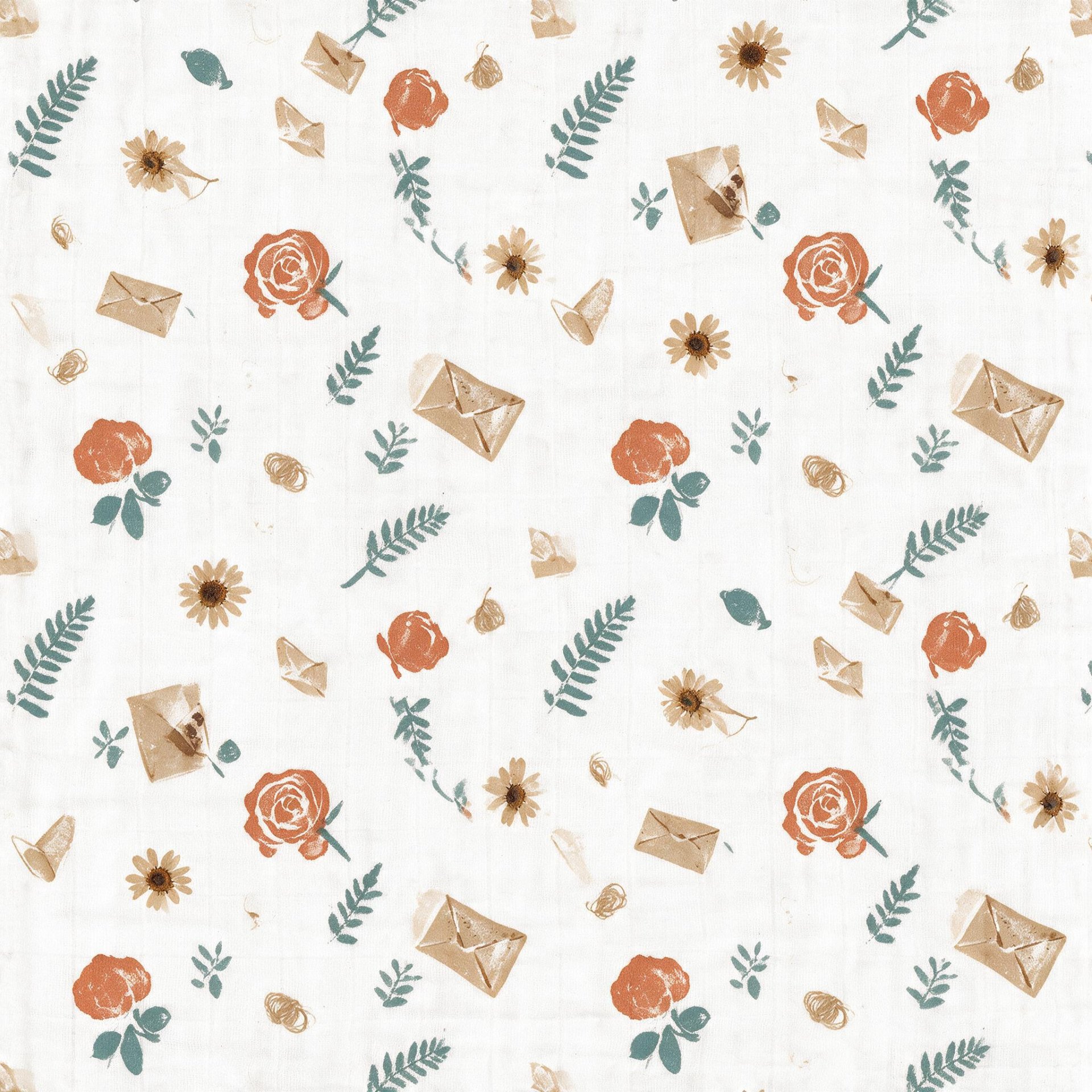
In a 1999 Cambridge bookshop, an old book with a letter slipped inside — half a dried flower between the pages, edges yellowed, a stranger's mark.
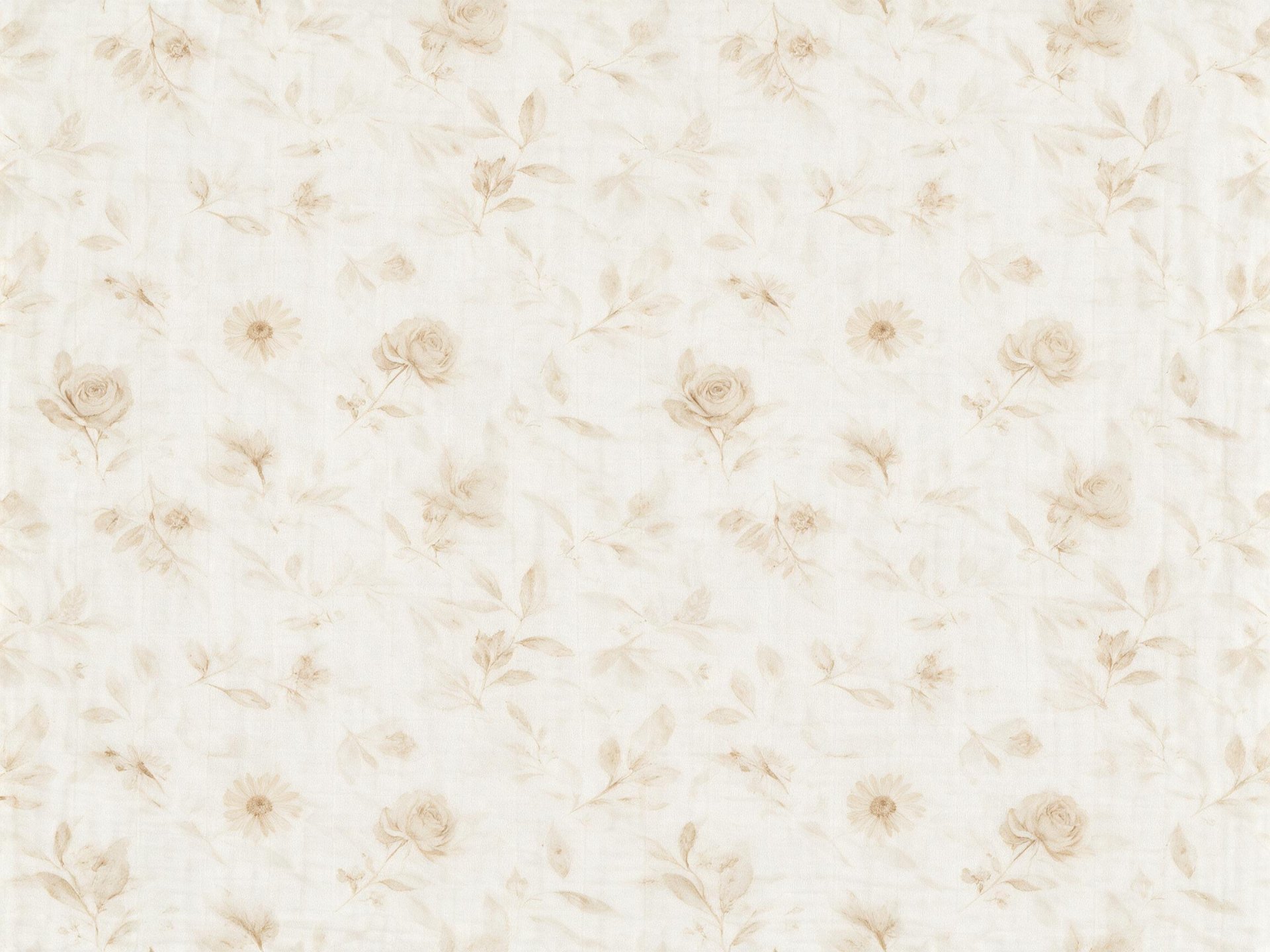
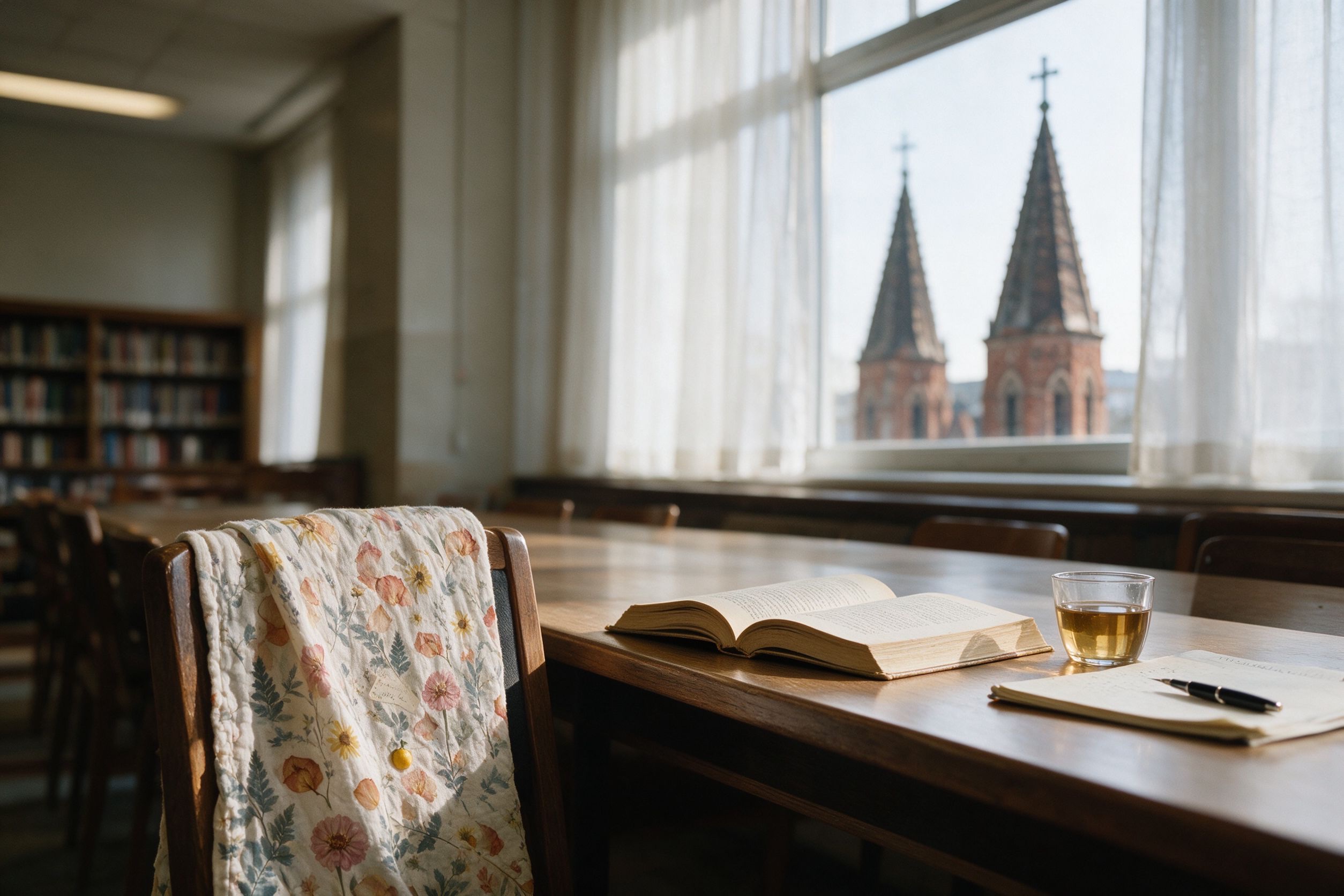
In 2026 at the Xujiahui library, a child reads that old book; the blanket has slipped aside, and the flower's shadow falls on the glass.
Every colour faded two shades, the way a bookshelf fades a spine.
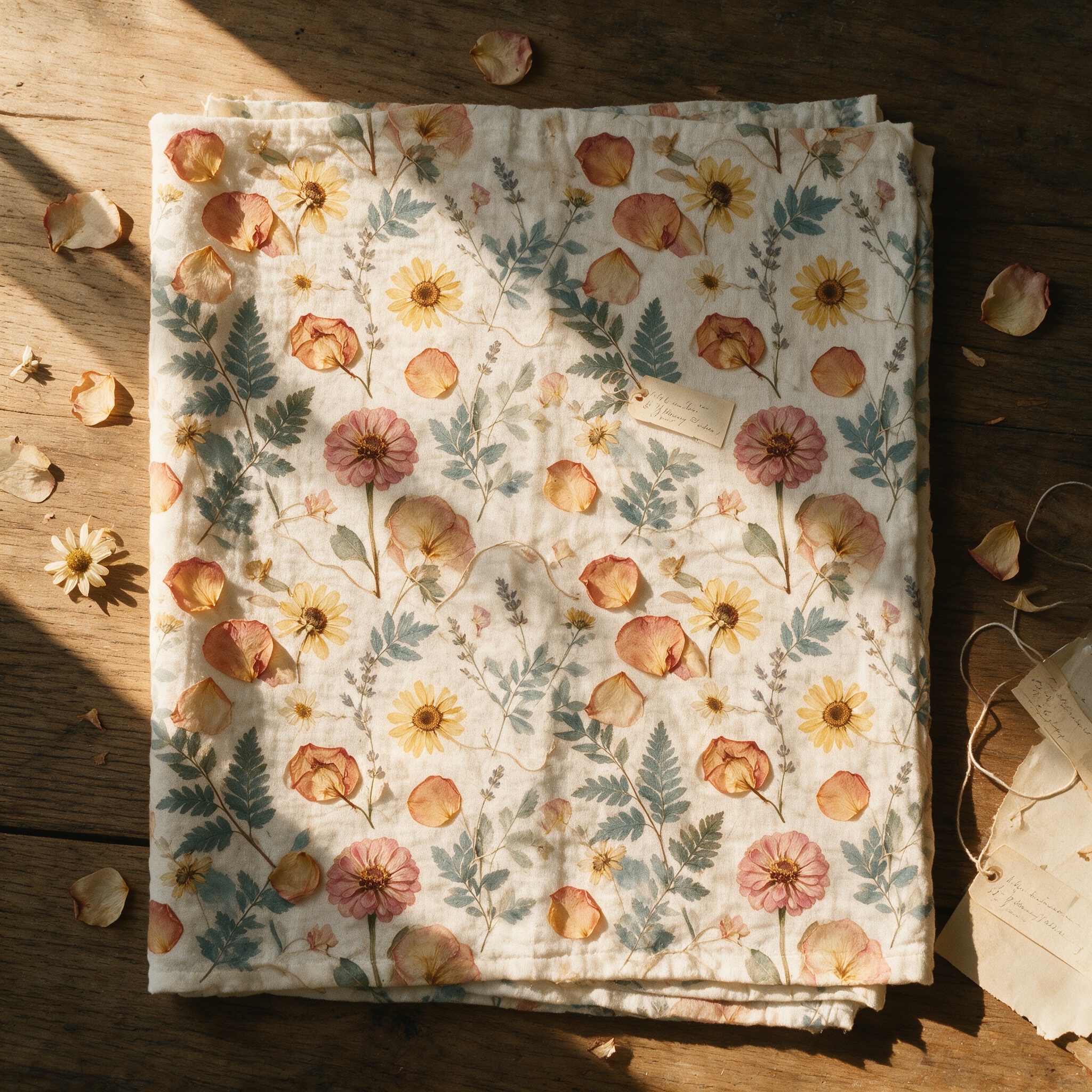
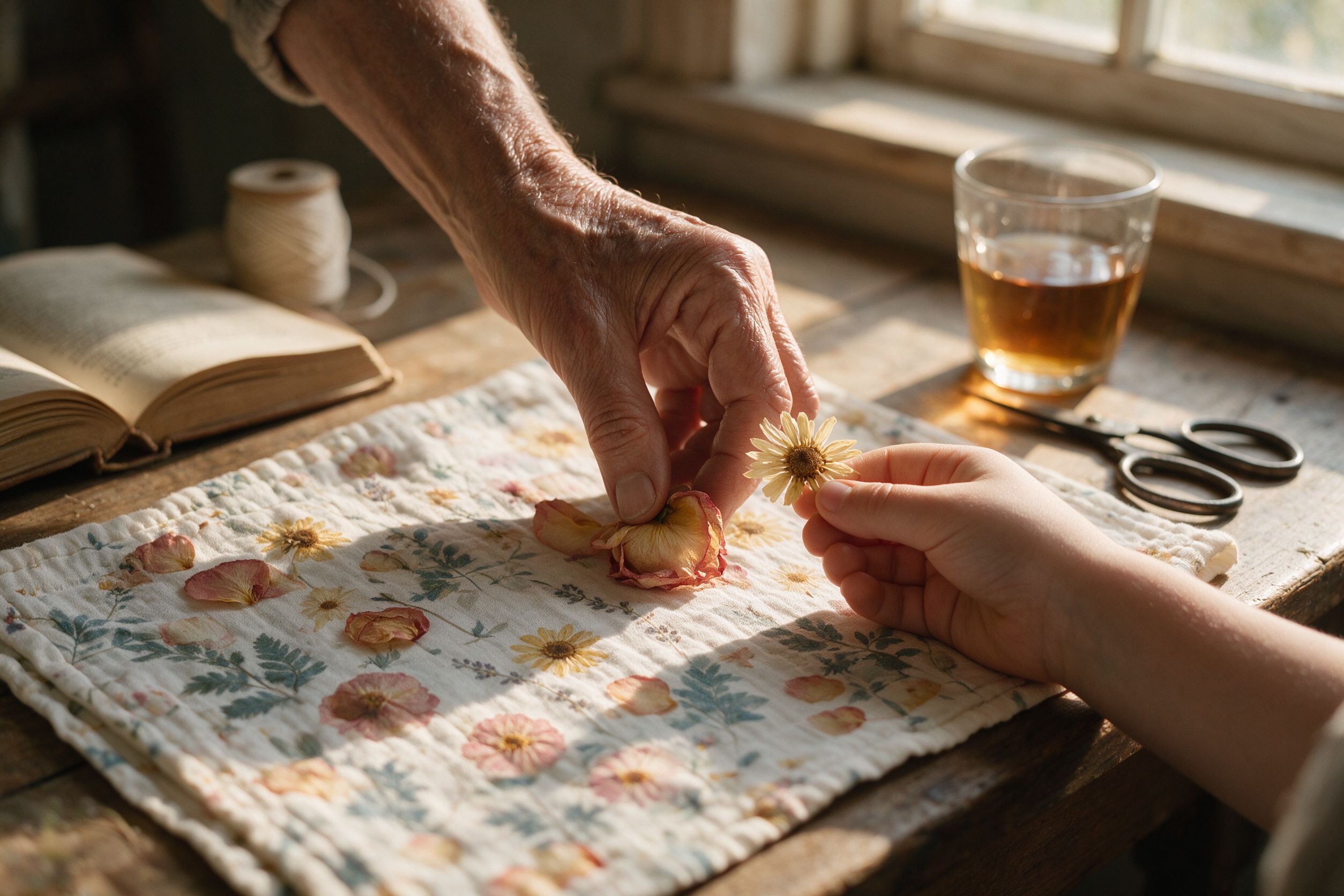
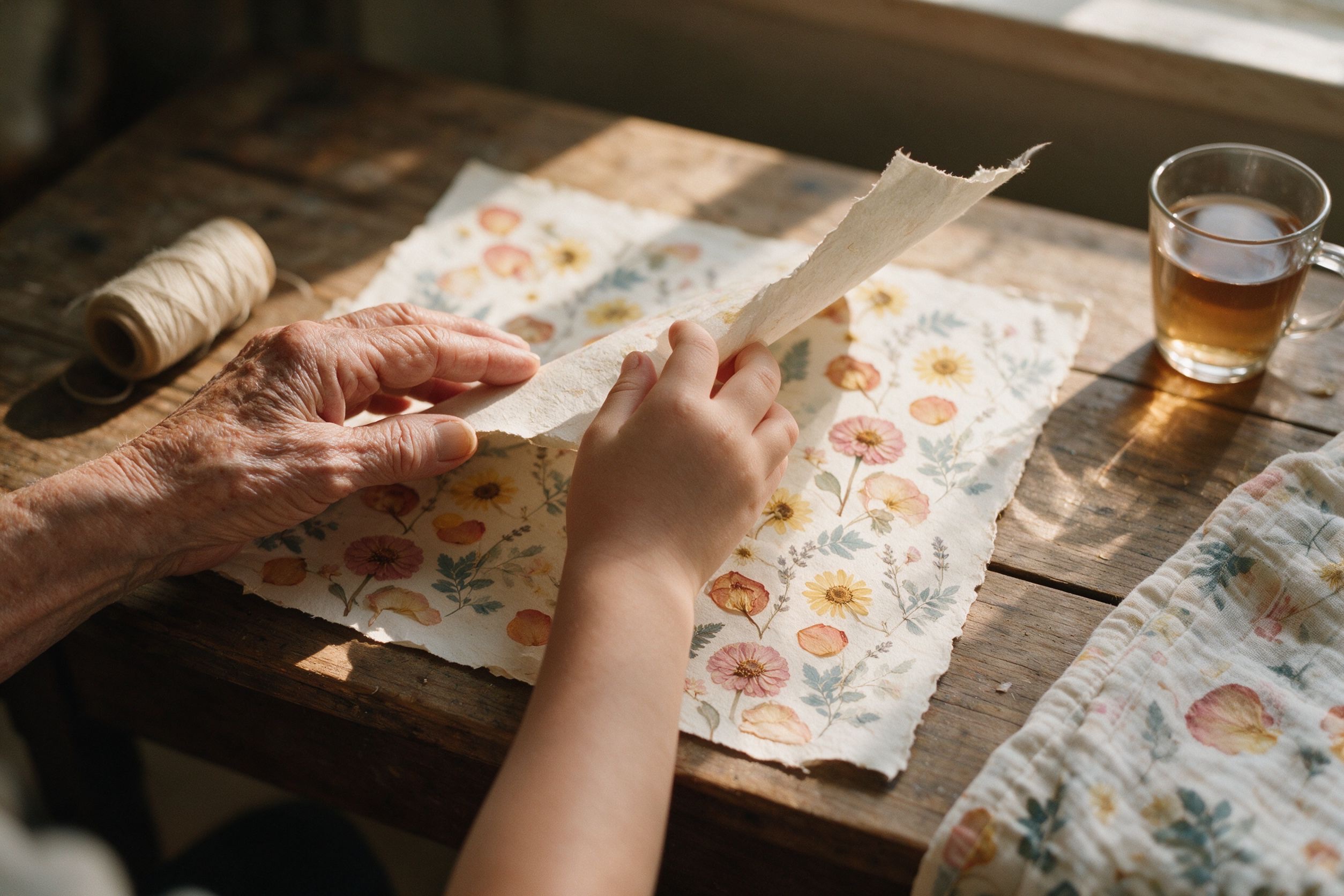
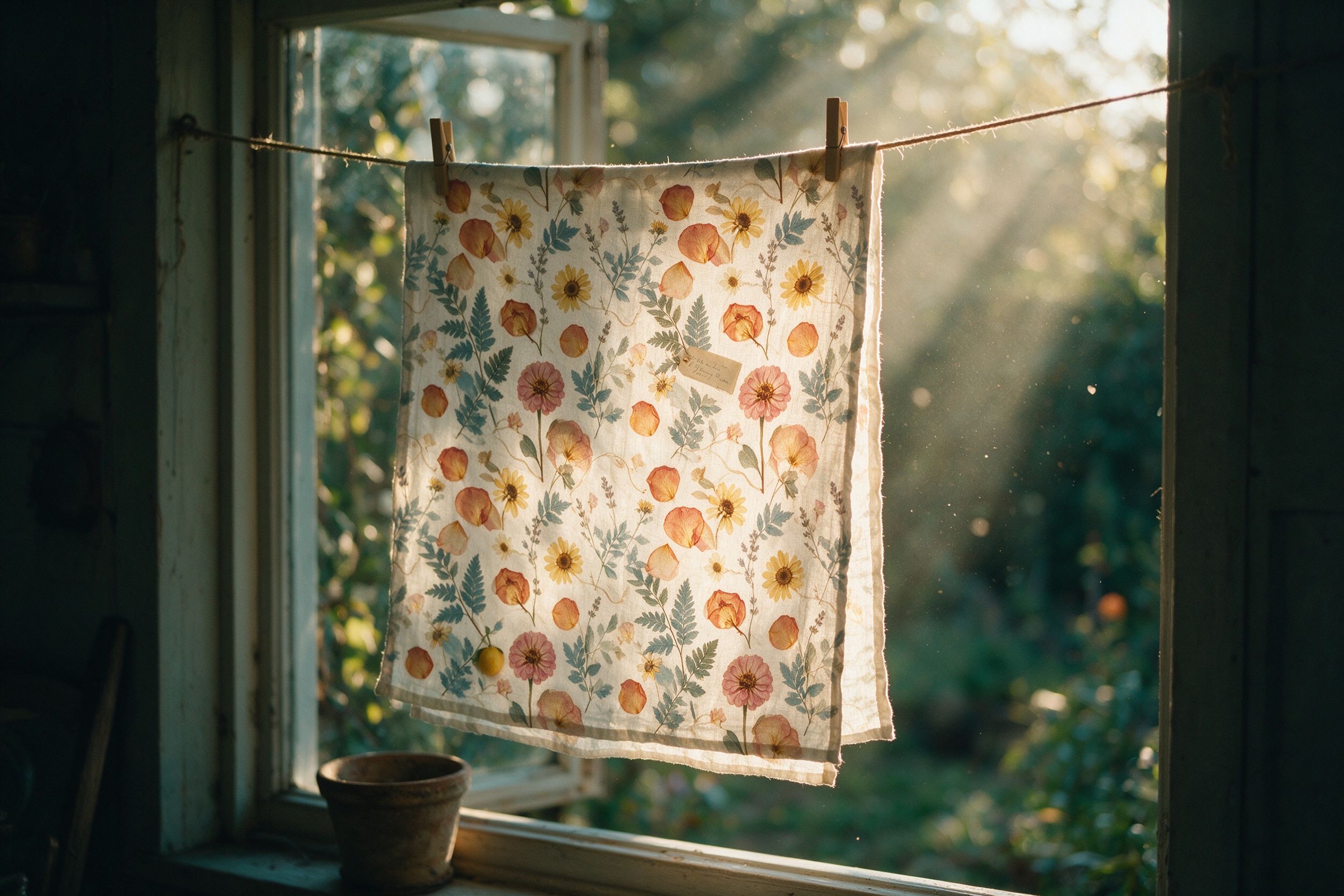
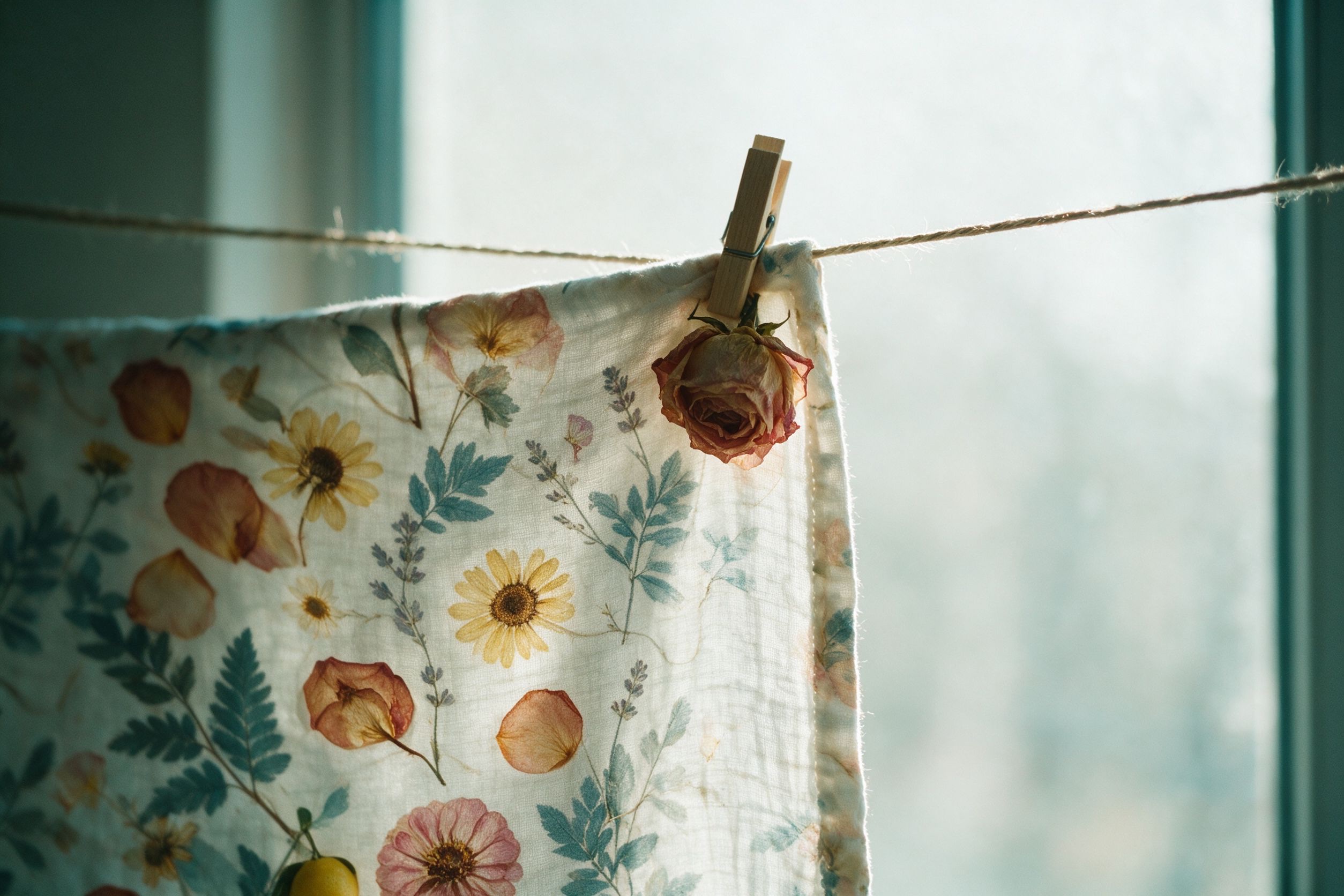
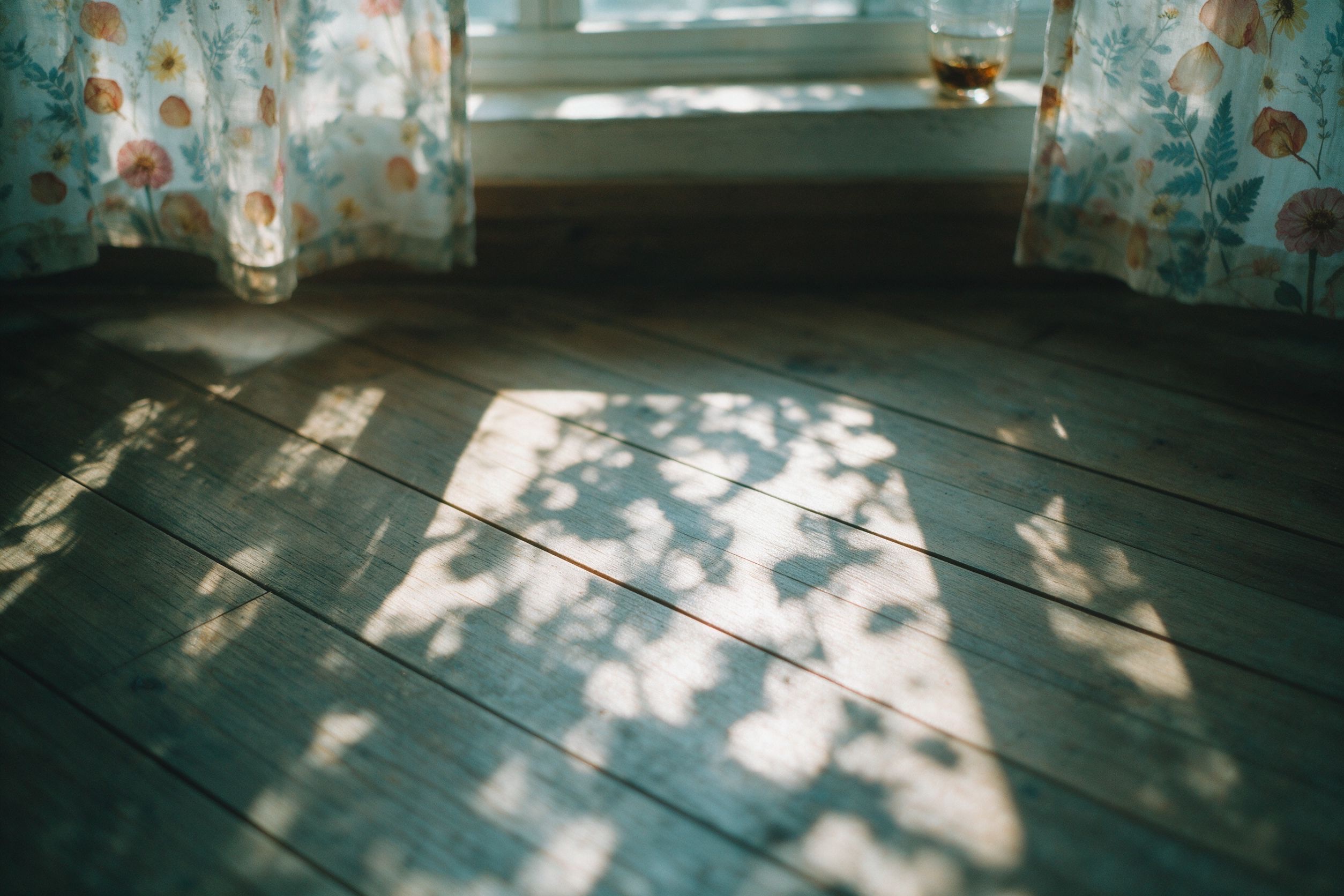
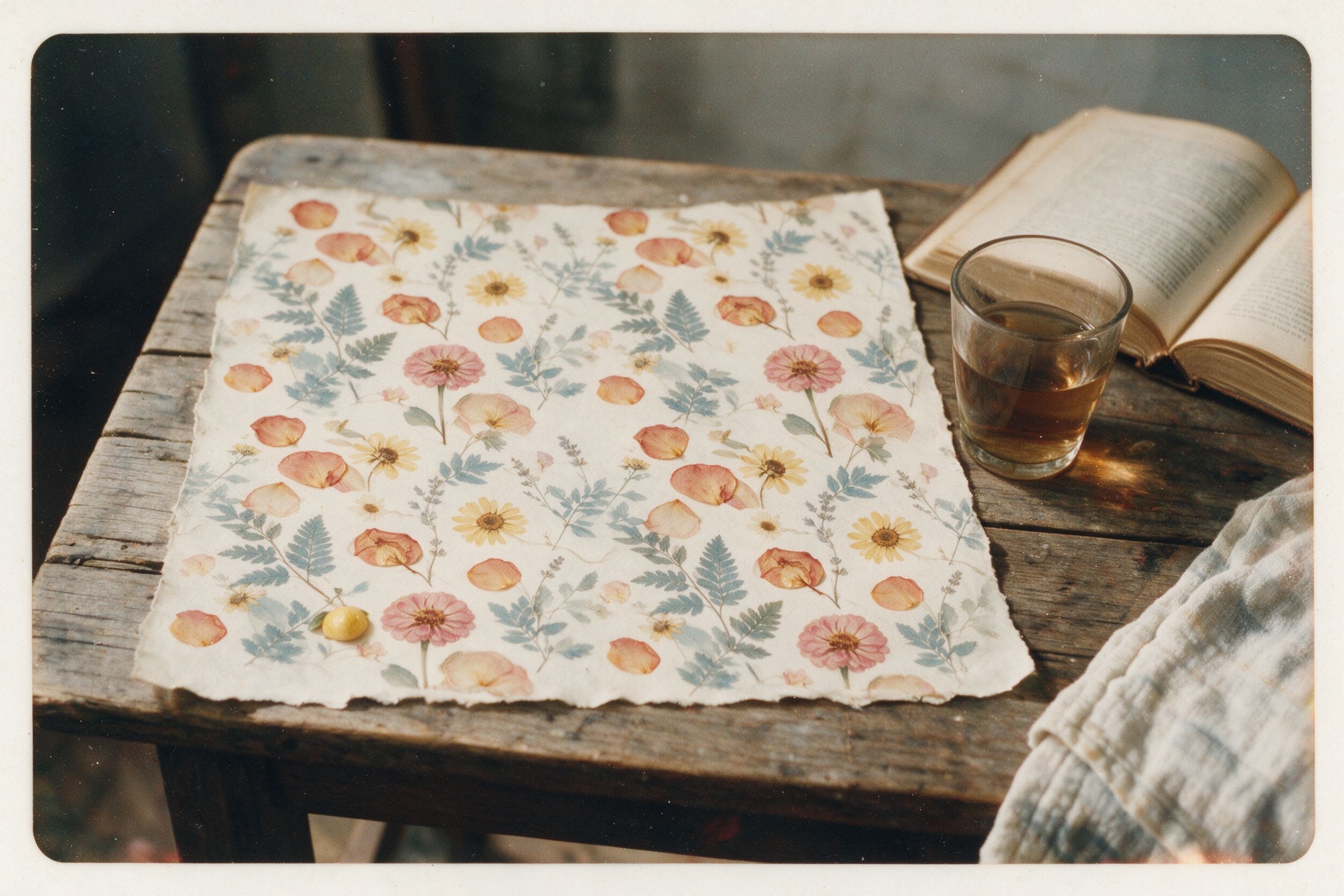
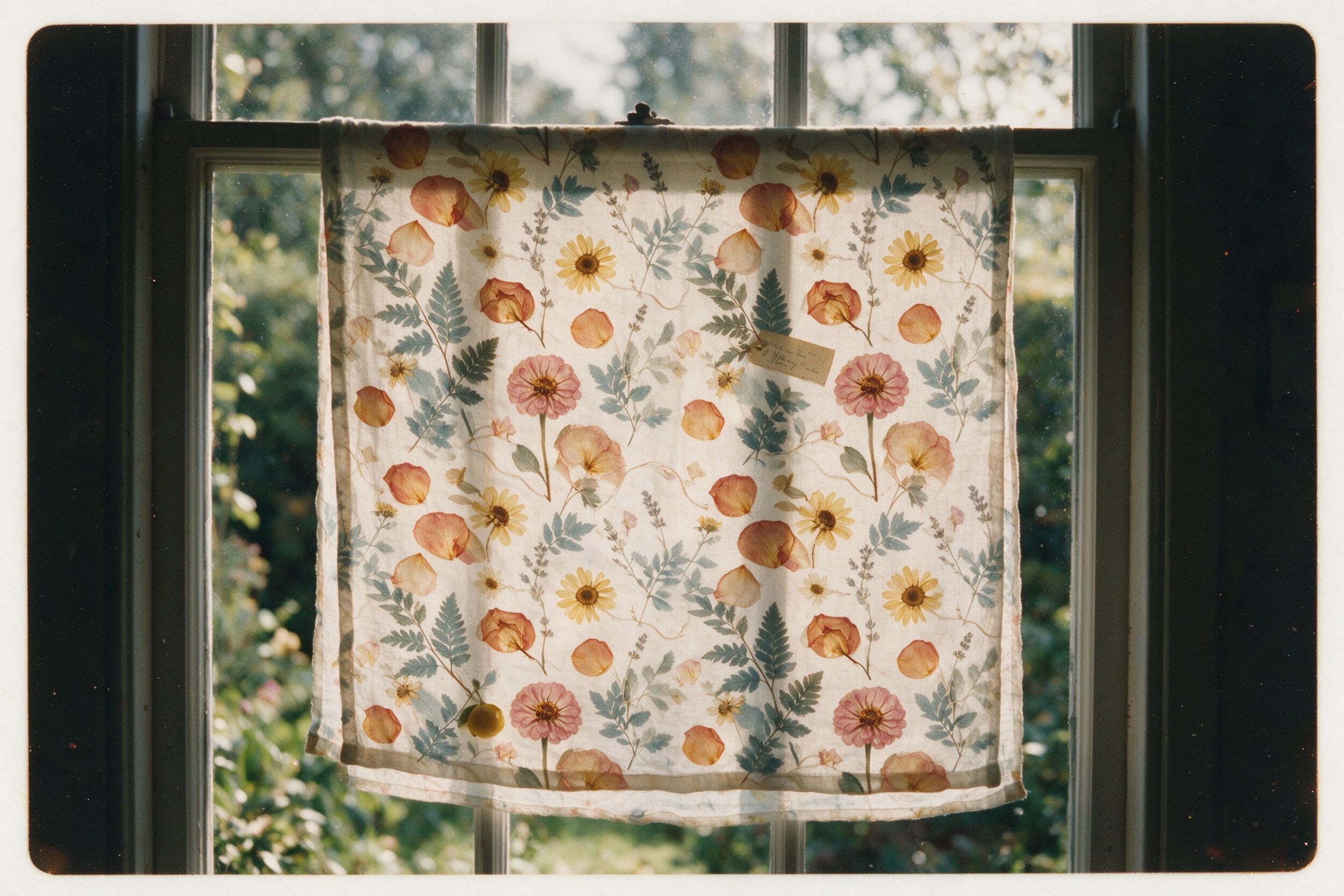
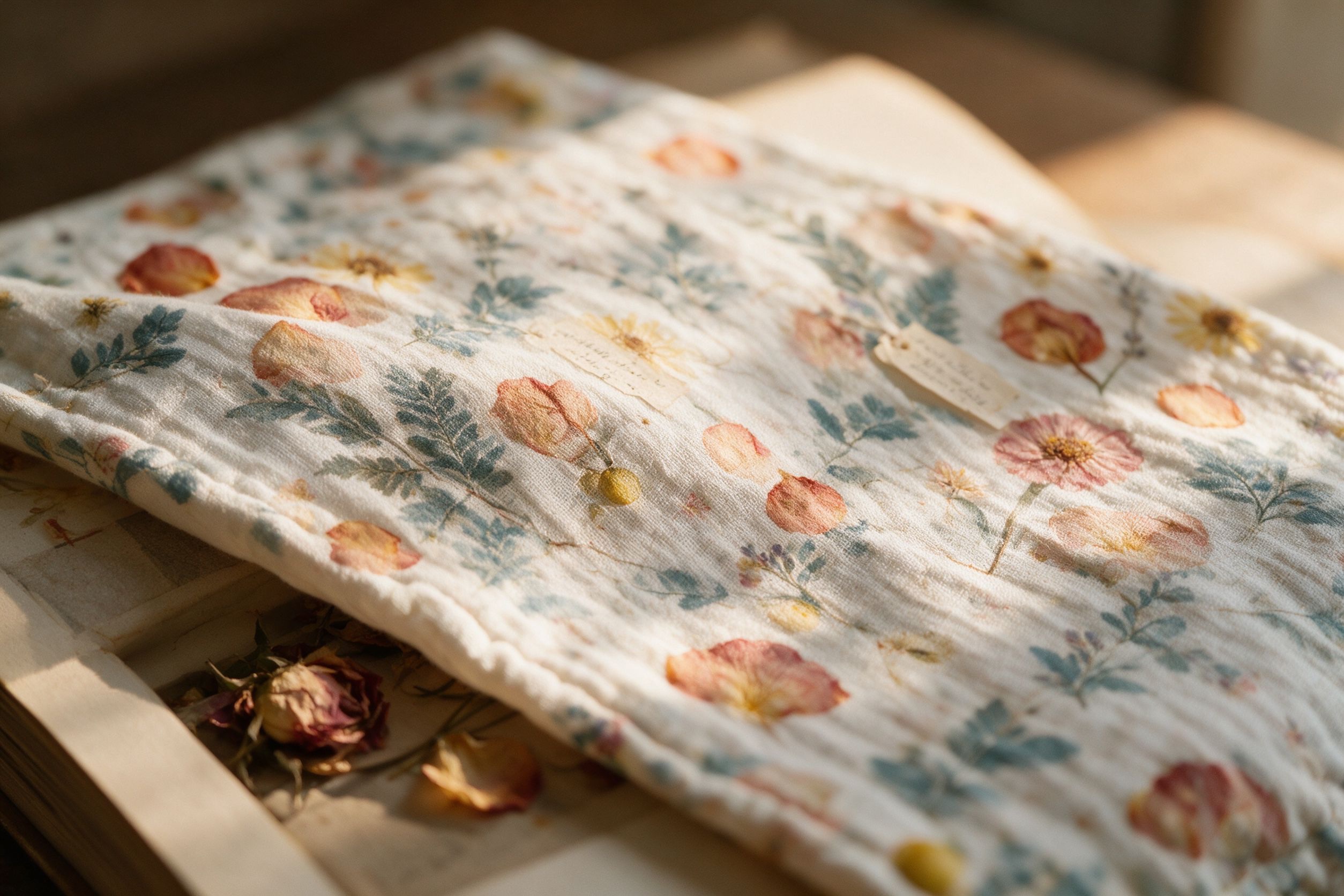
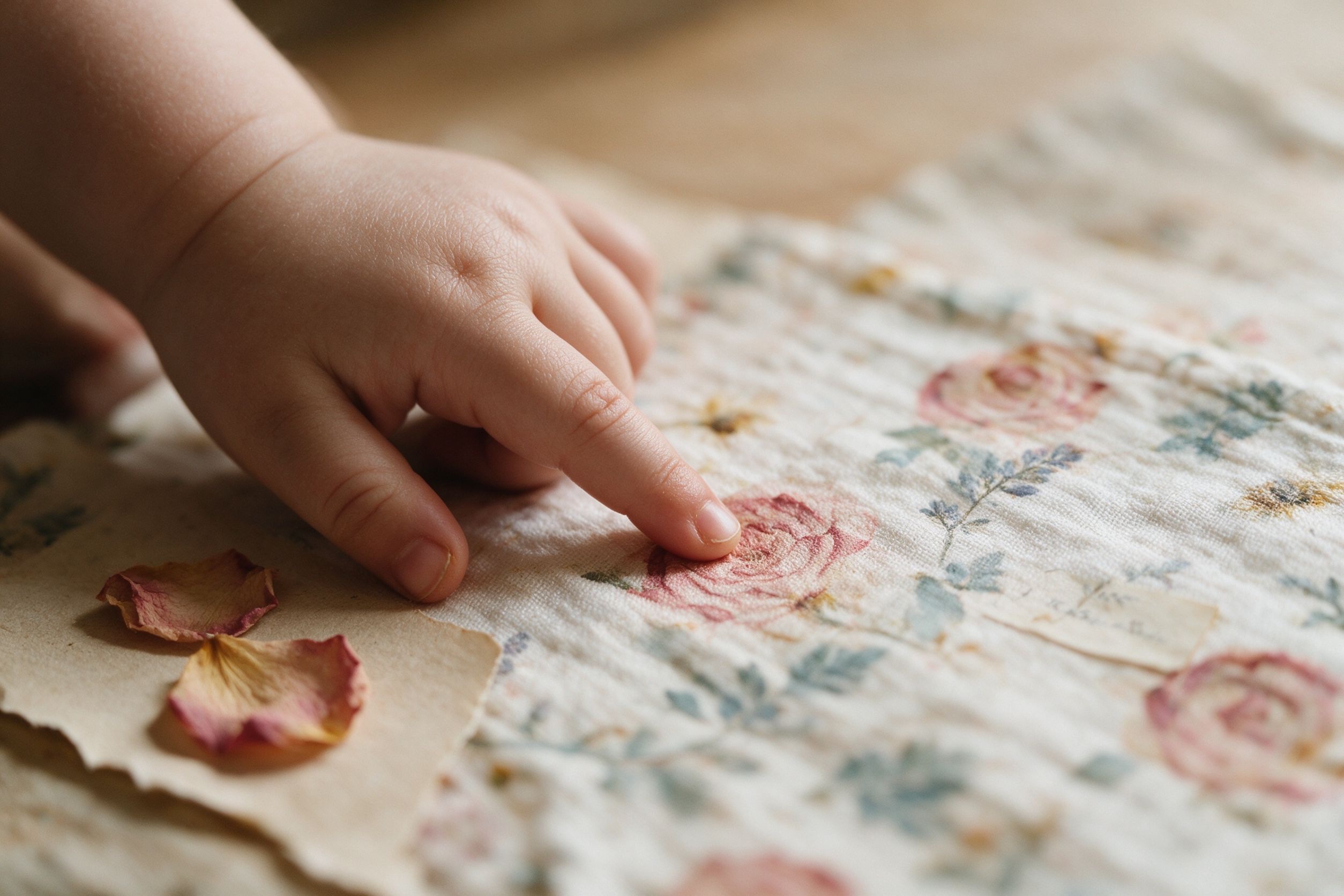
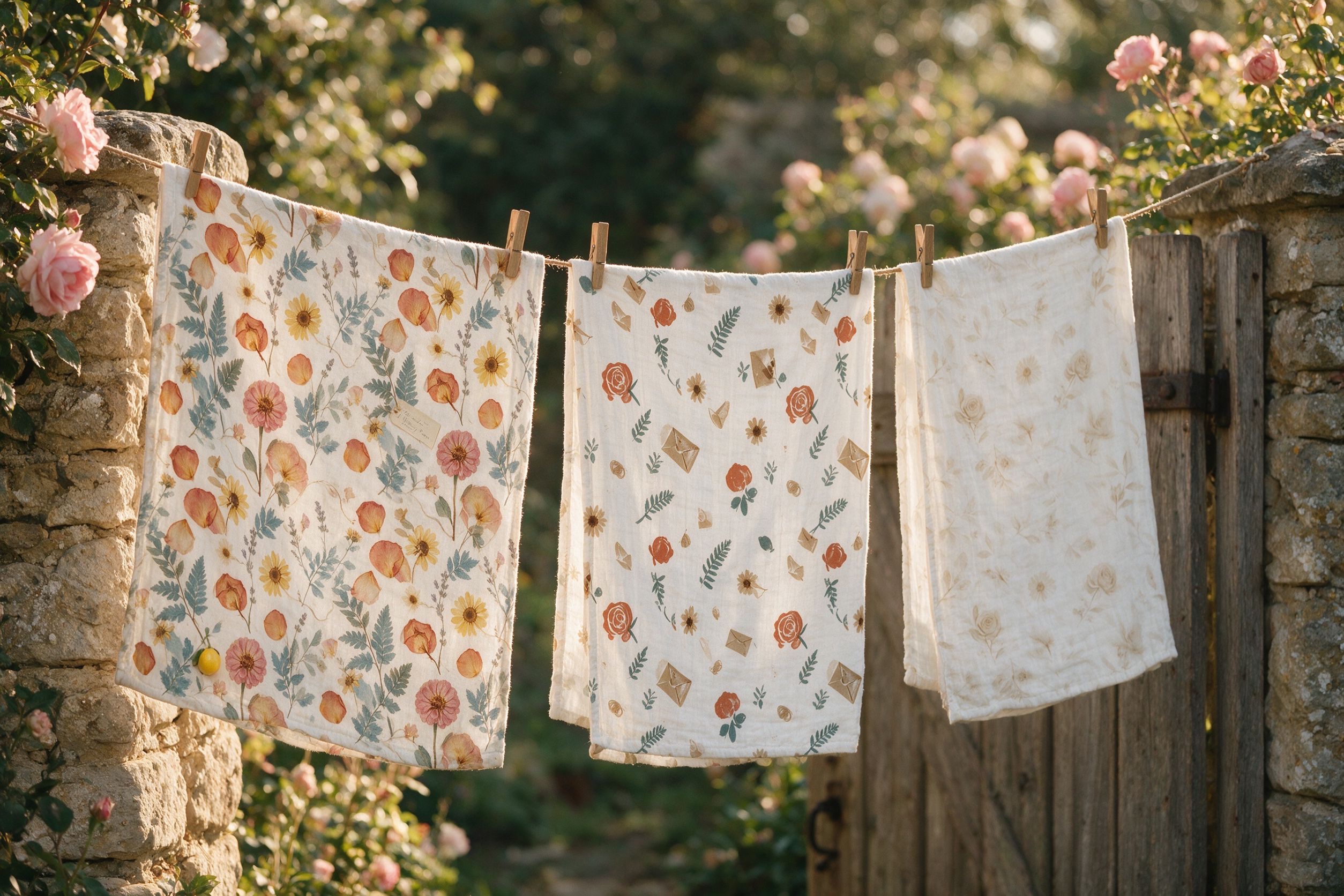
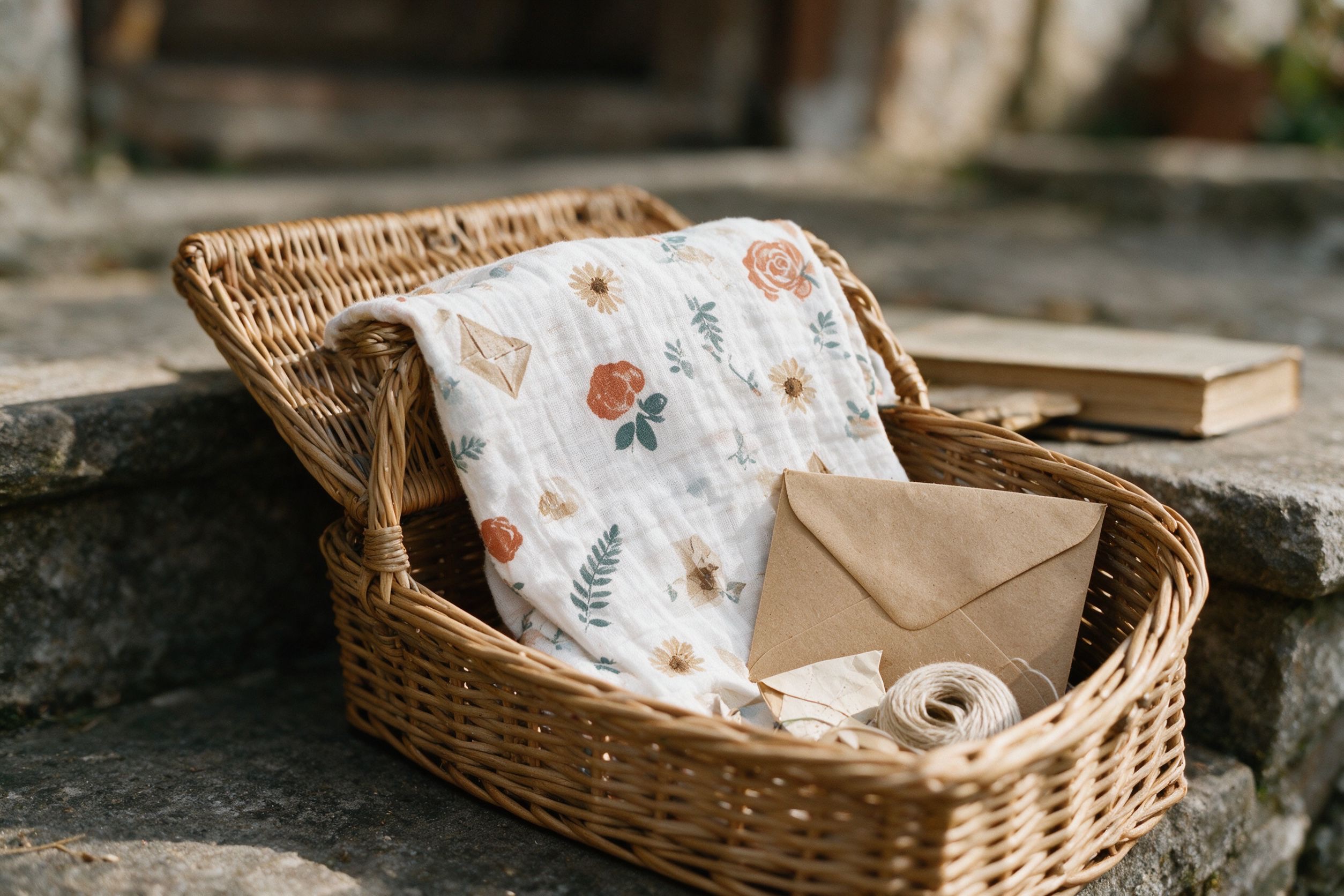
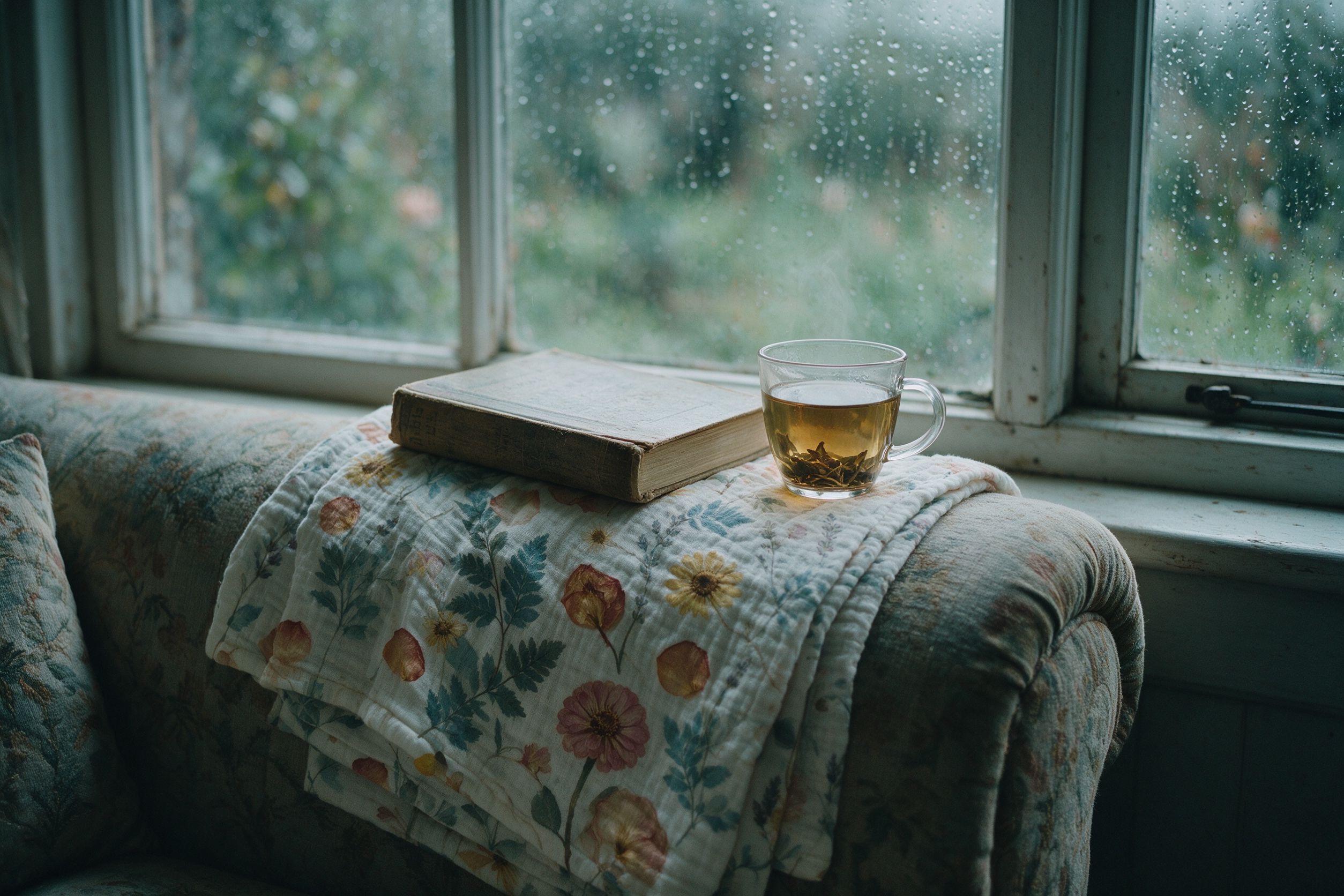
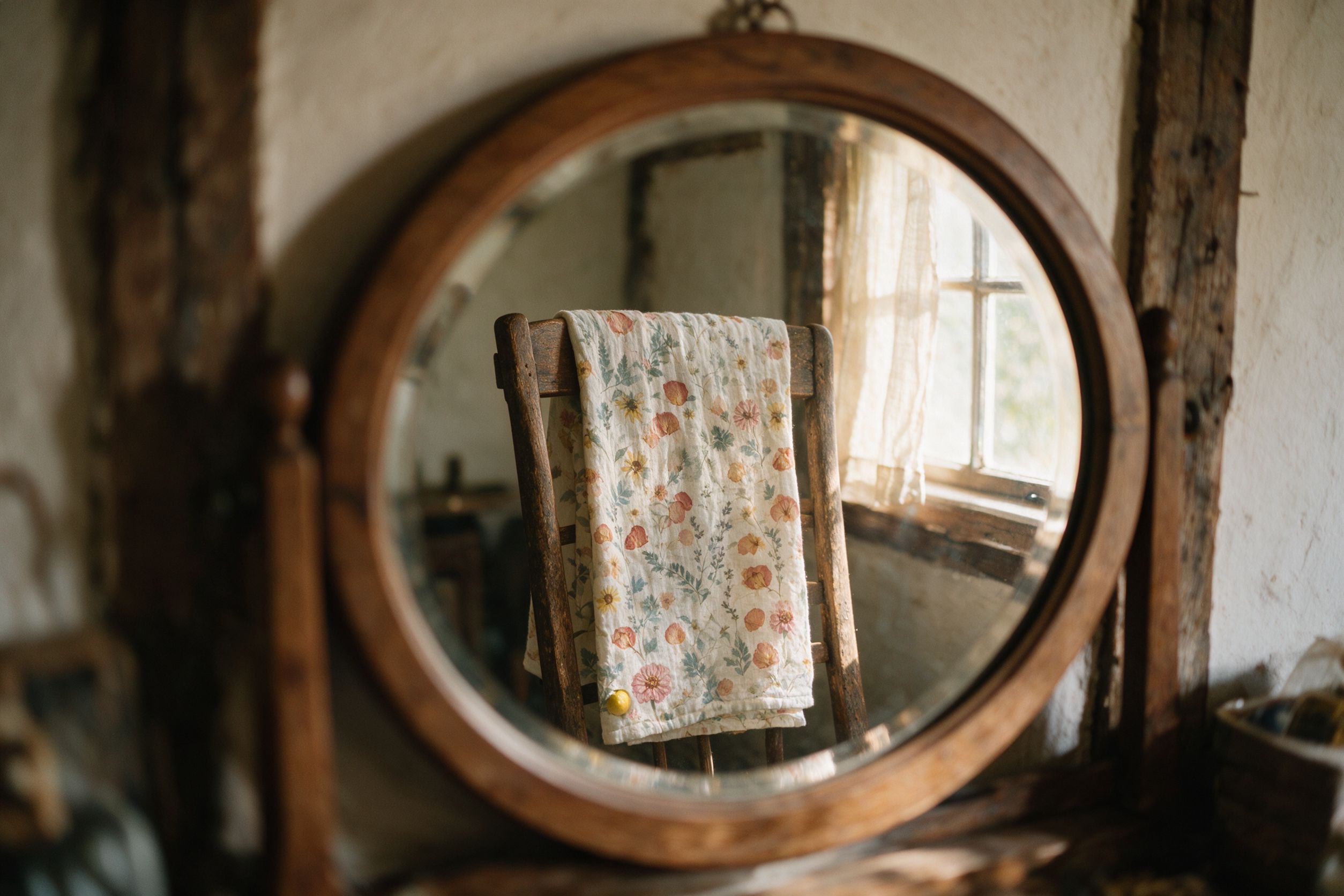
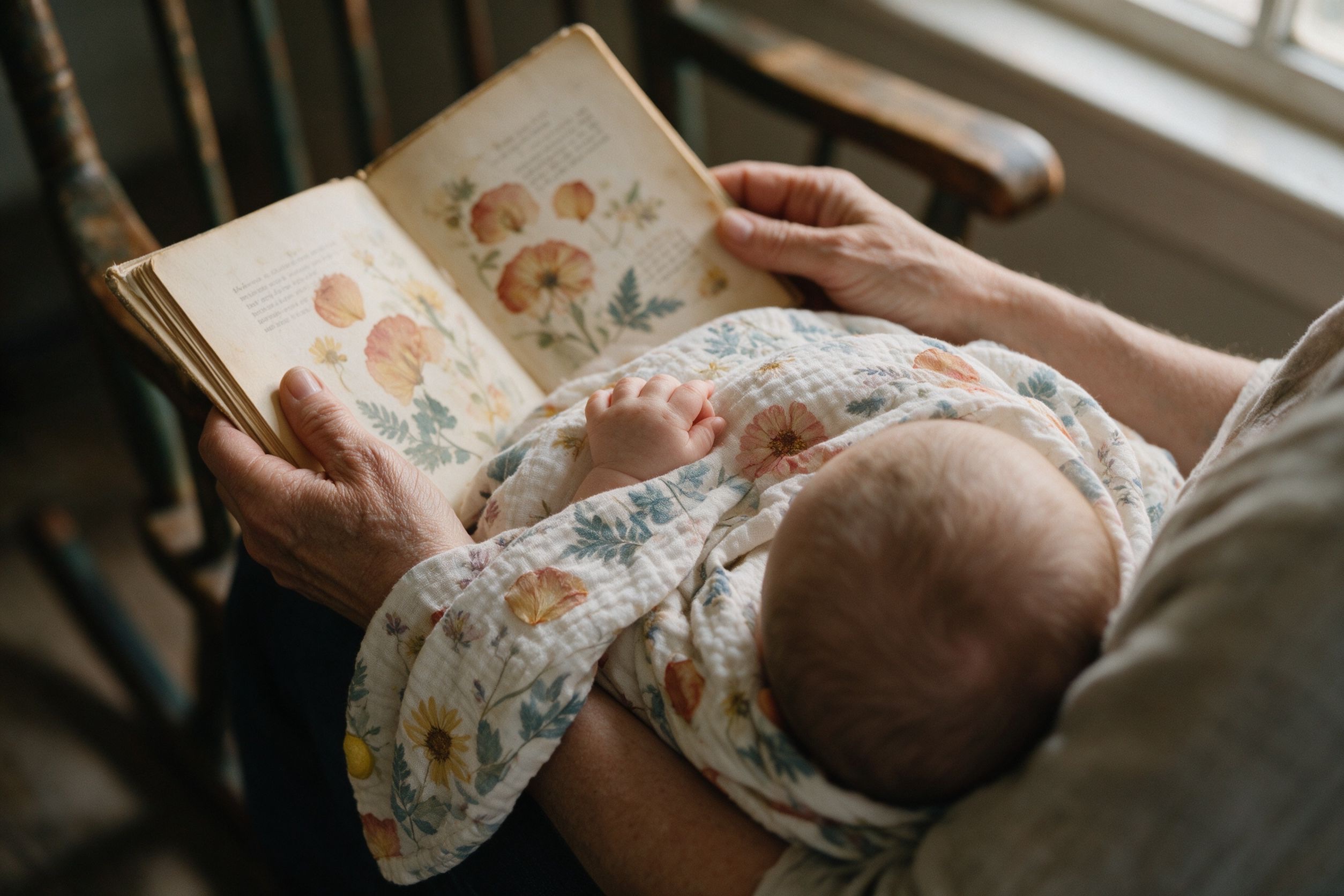
Three prints extended into the fitted-sheet line — the products of this story.
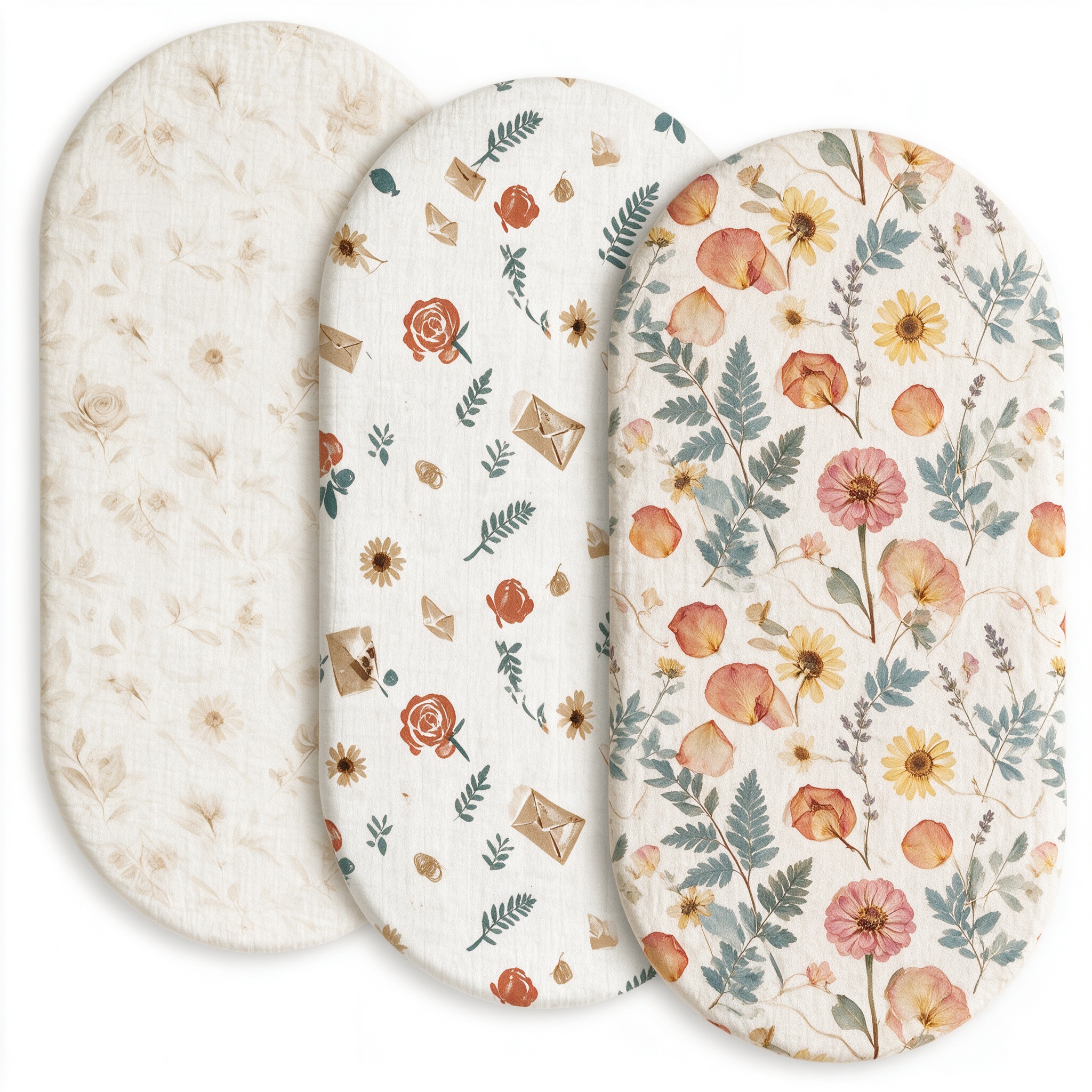
The three together — the whole of this story in one view.
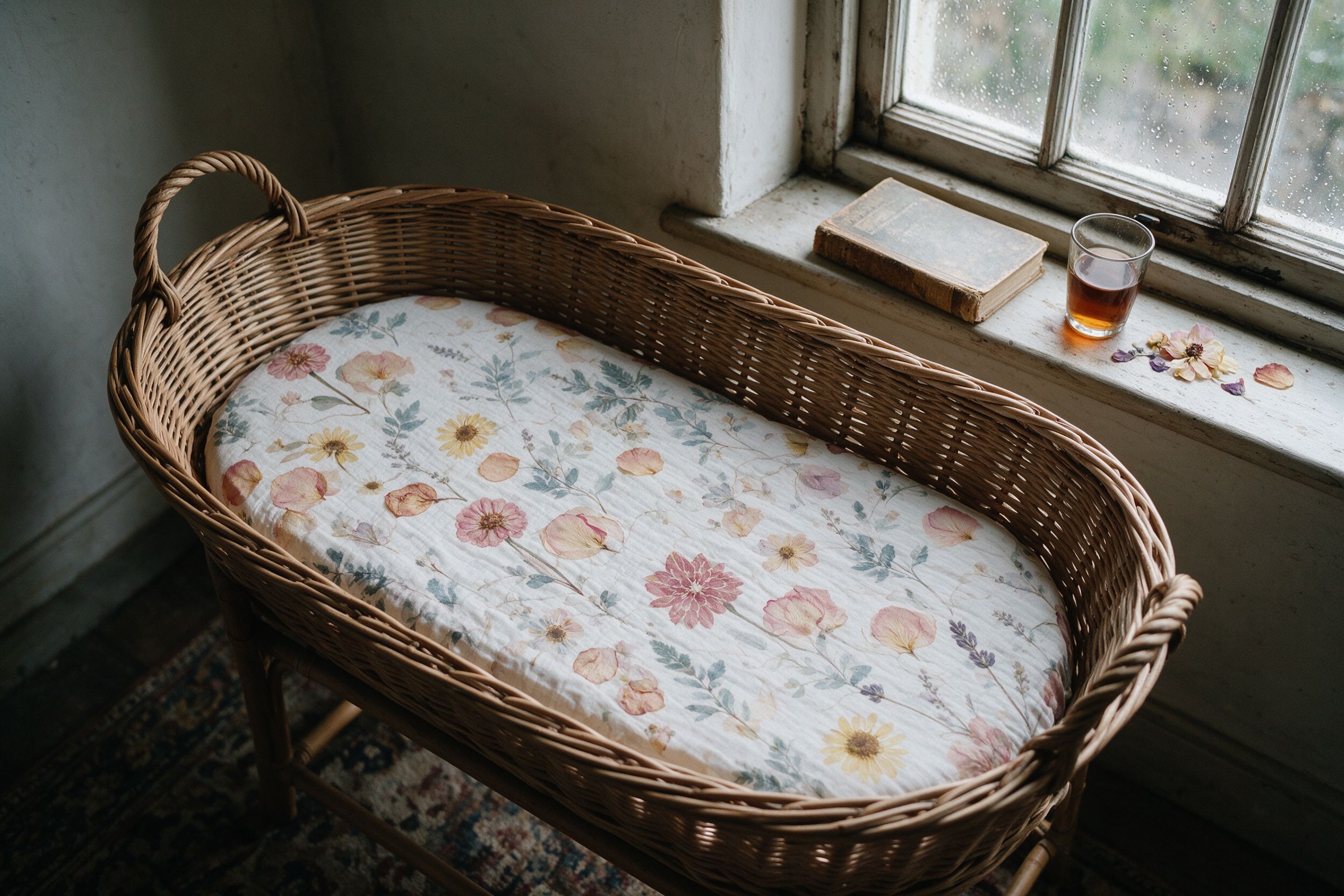
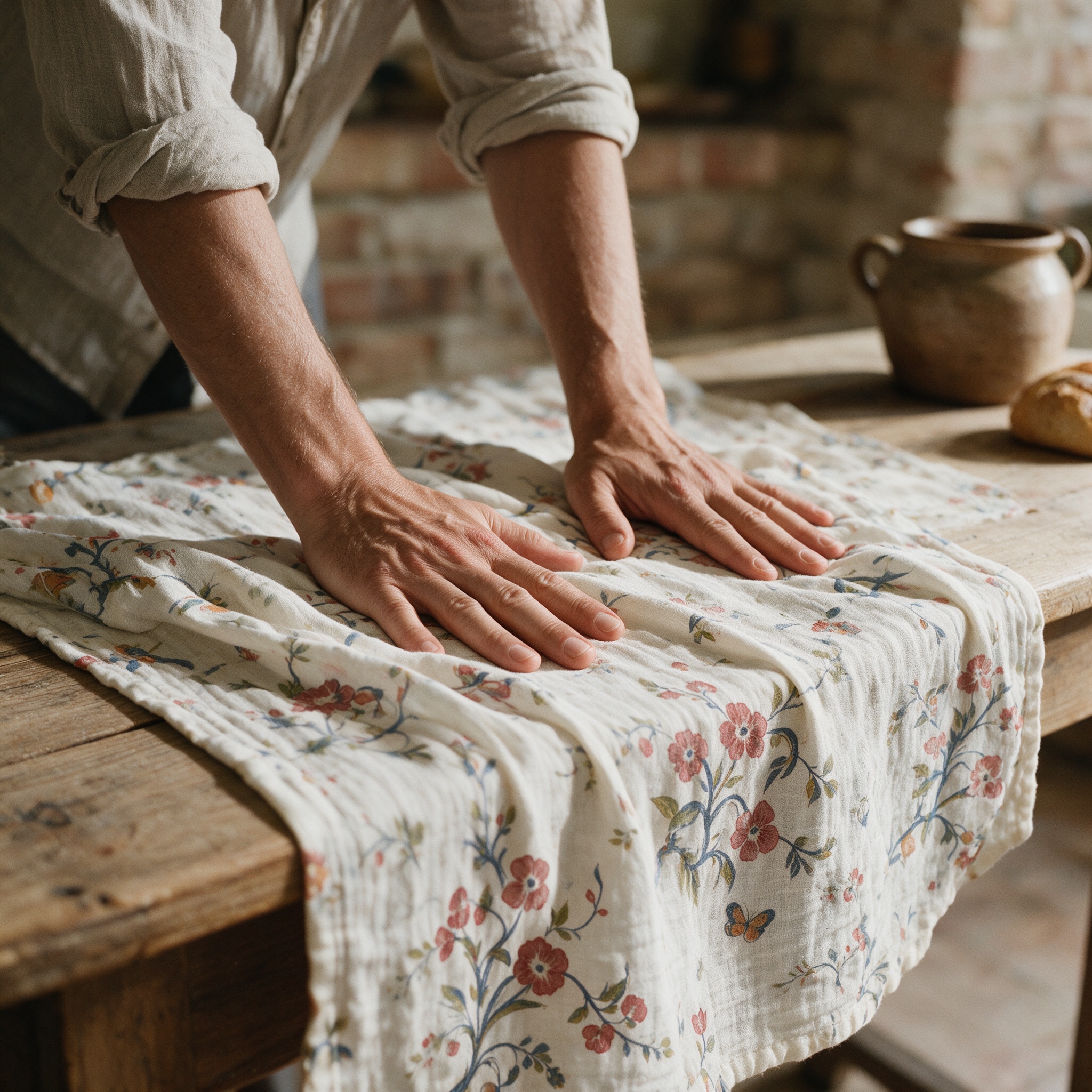
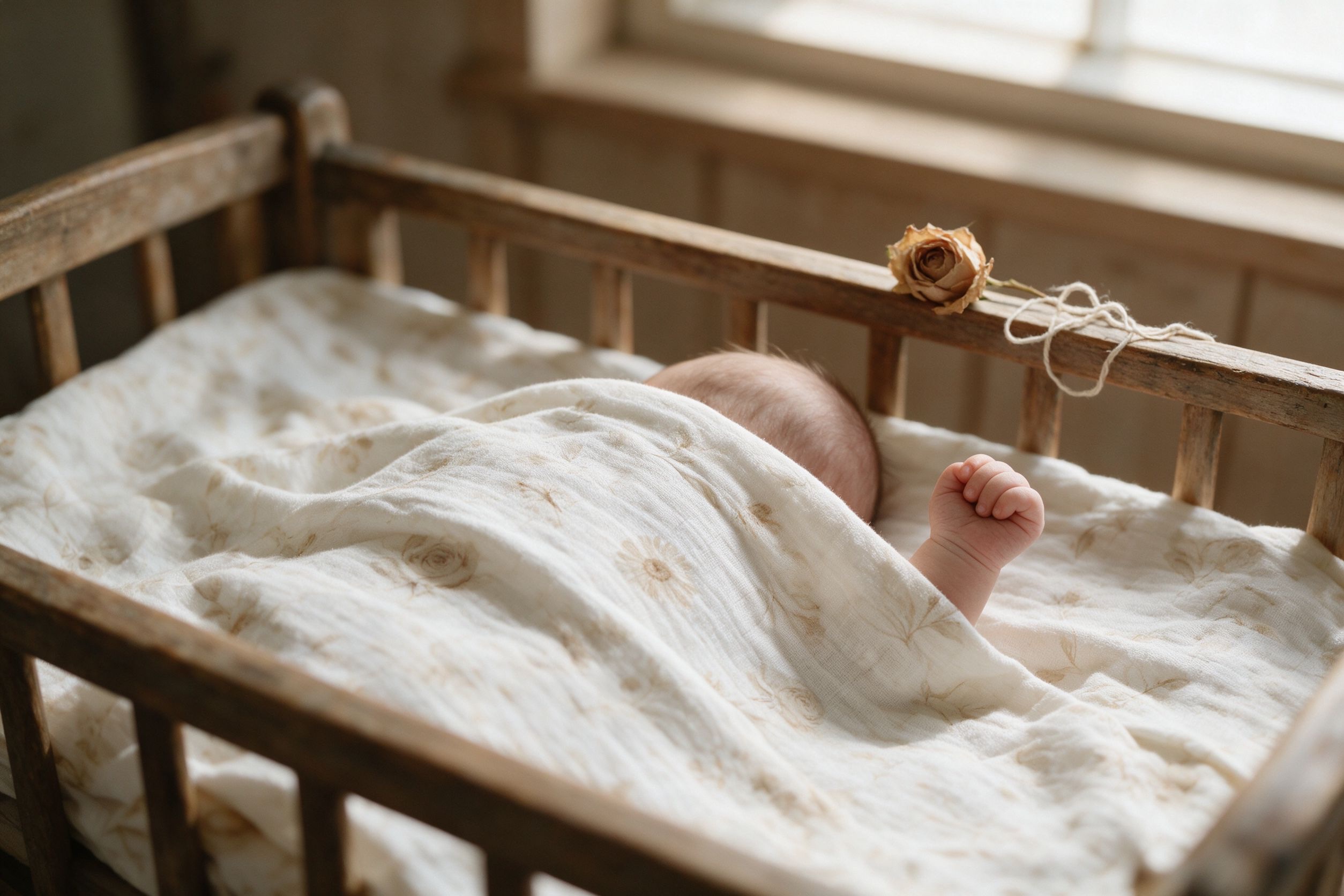
The story's lead print laid on the cradle — the side the baby sleeps on by day.
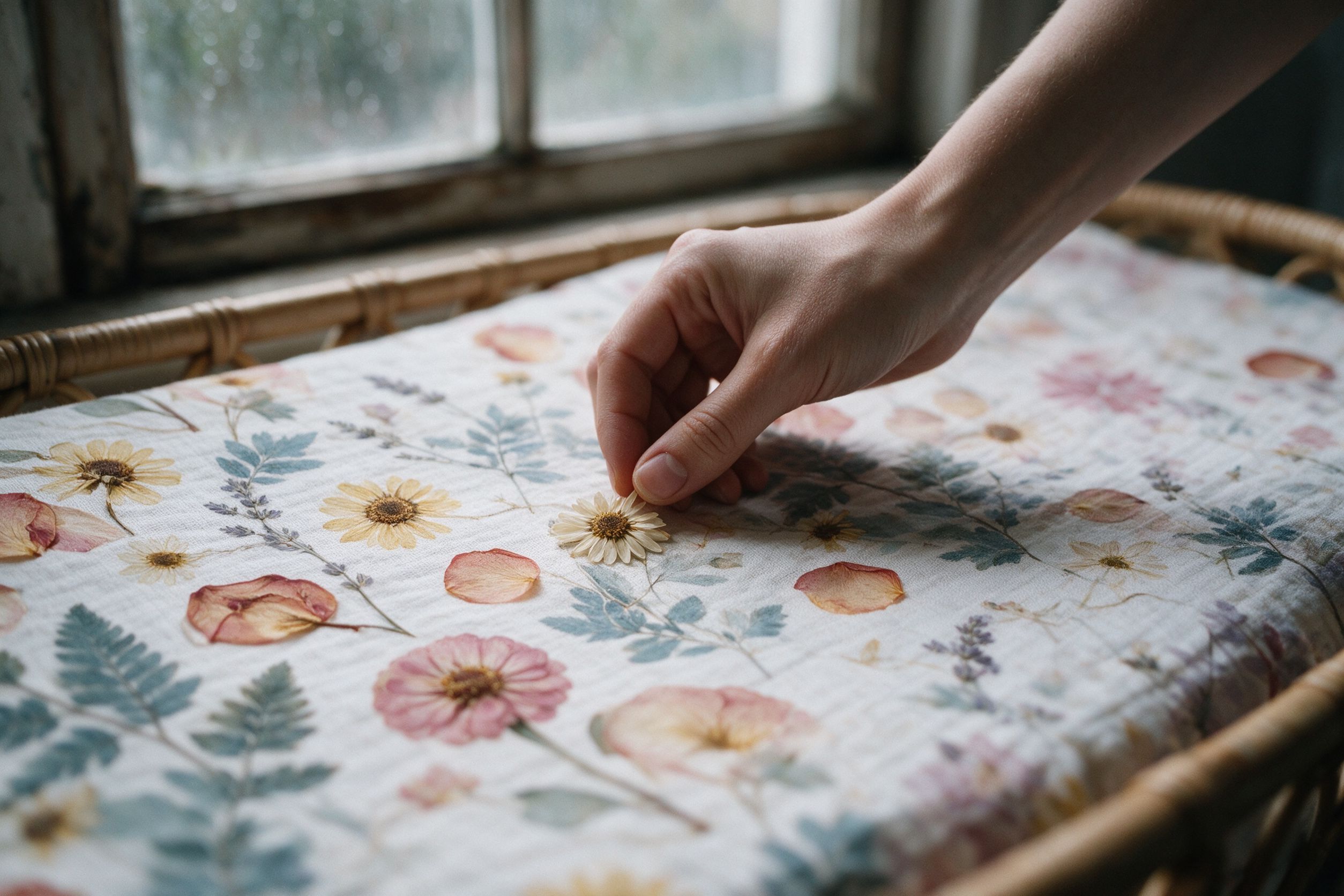
The side closest to the skin of this story — pass a hand over, and you remember.
The flowers are taken from the kind you find in cottage gardens — rose, daisy, lavender — the kind that walk past your window.
Pressing flowers under heavy books is a Victorian family tradition, still an ordinary English afternoon in the 1970s. The tissue, the thread, the little scissors — all true to the table.
The 1970 edition of Wuthering Heights is a real object in our atlas — the same edition that appears in Nonna's diary pages. One book, two stories, sixty years apart.
Somewhere deep in the petals hides a tiny lemon — a visitor from Nonna's grove, three thousand miles of story in one stitch. Finding it is the game.
I once found an old book in a second-hand bookshop, a dried flower pressed inside. No one knows who pressed it. Every faraway place in this series began somewhere someone had truly been, truly remembered. Some of those flowers are still blooming.
— Sophia, Xujiahui Library, Summer 2026