No. 02 · The Everyday
Mémé's Tablecloth
Provence, France · Sunday, Just Before Noon
"A beautiful cloth is meant to be lived on."
In the Provençal countryside, there is a quiet half hour before Sunday noon.
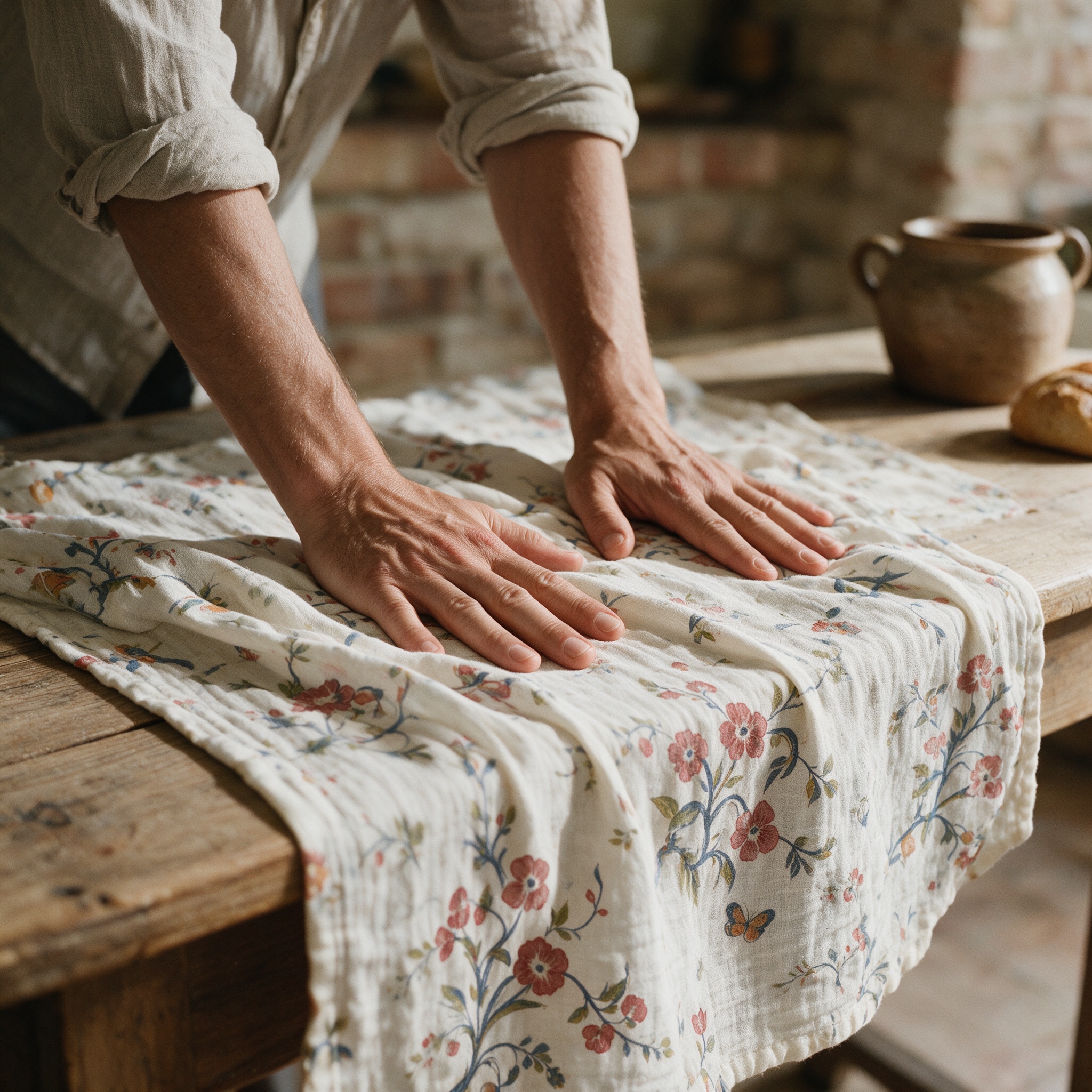
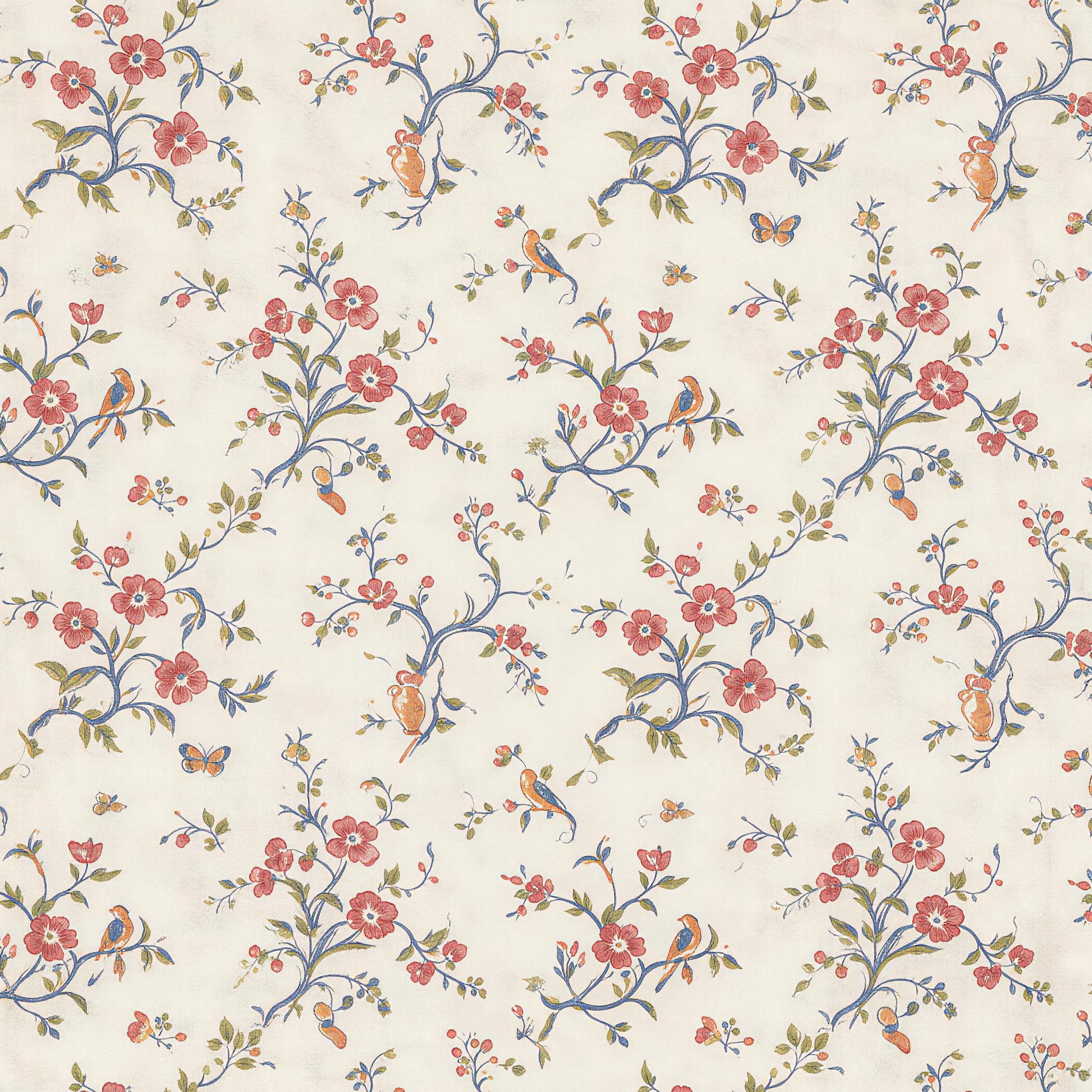
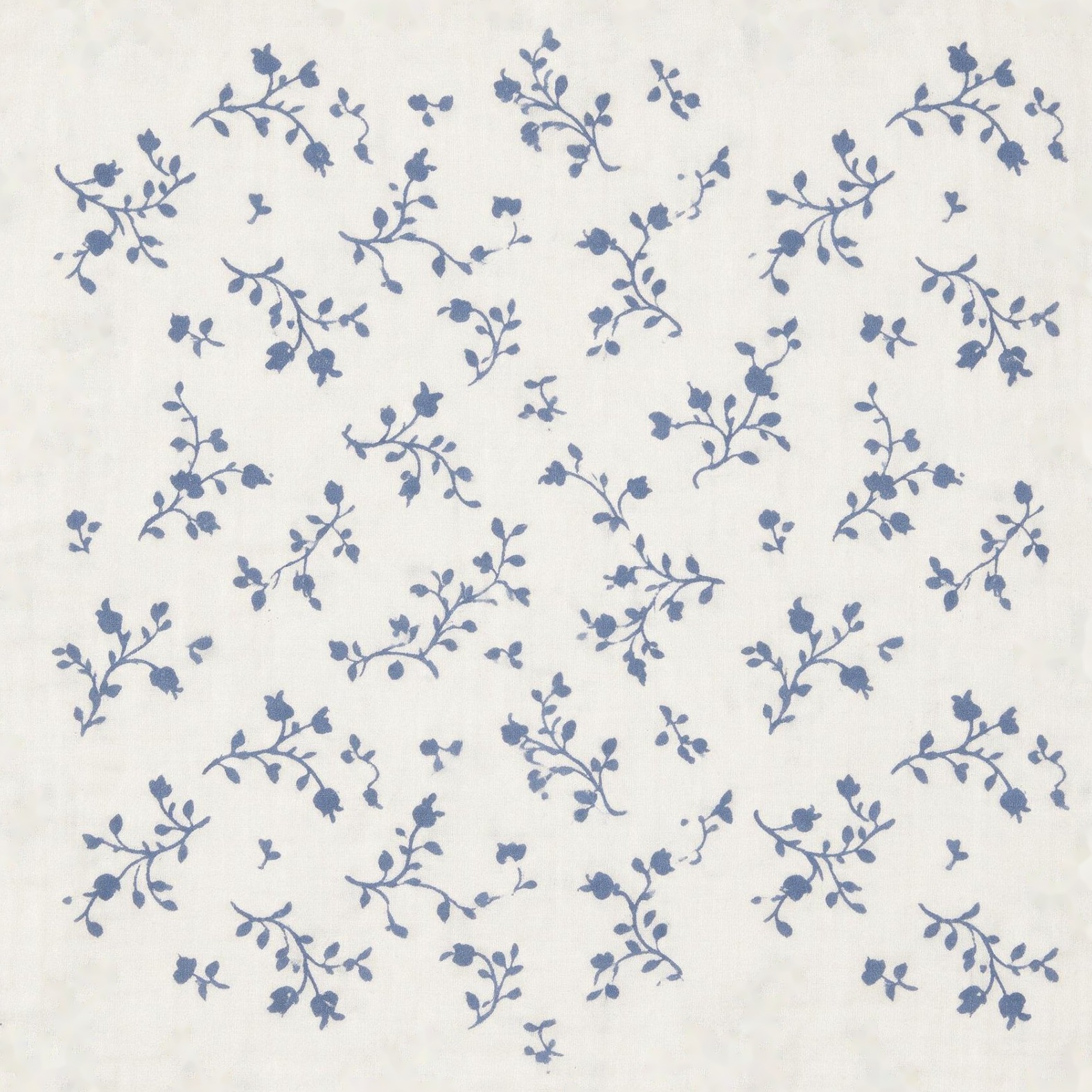
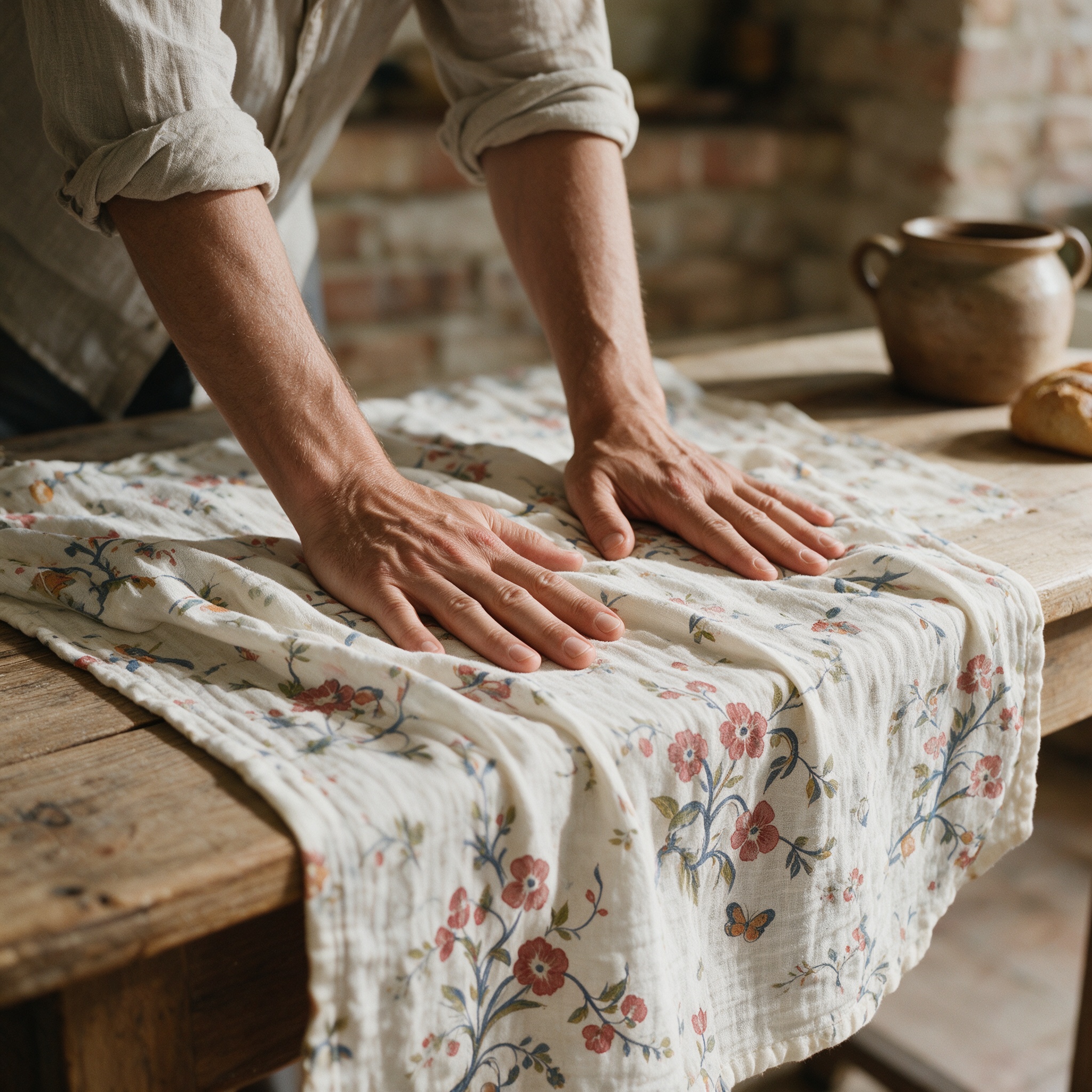
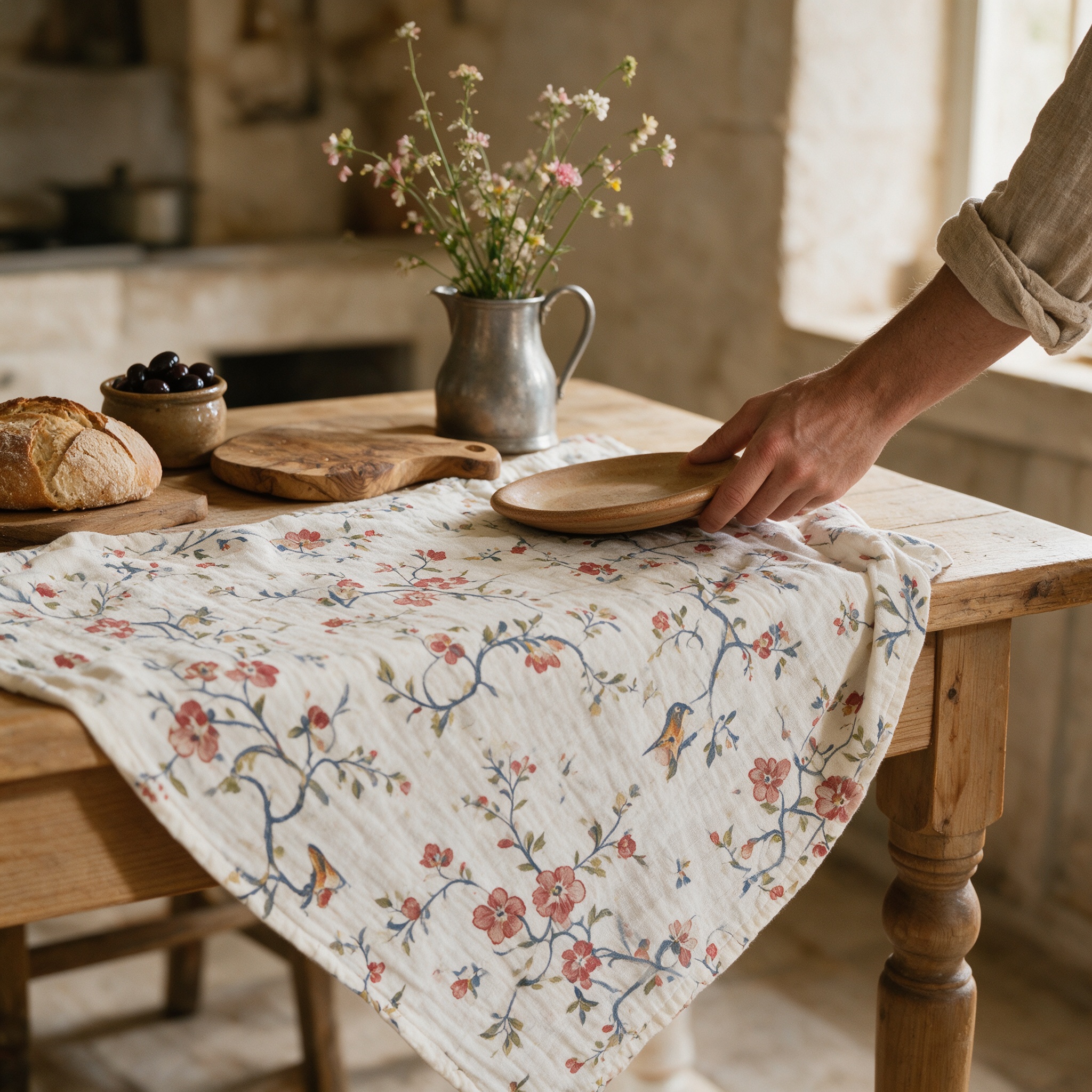
Mémé spreads the cloth over the long pine table. Thirty years of Sundays are in its weave — small flower-sprays and vines and birds on an ivory ground, washed so many times the colours have only grown softer. She smooths the wrinkles flat with the palm of her hand, one by one, the way you press open a book you love.
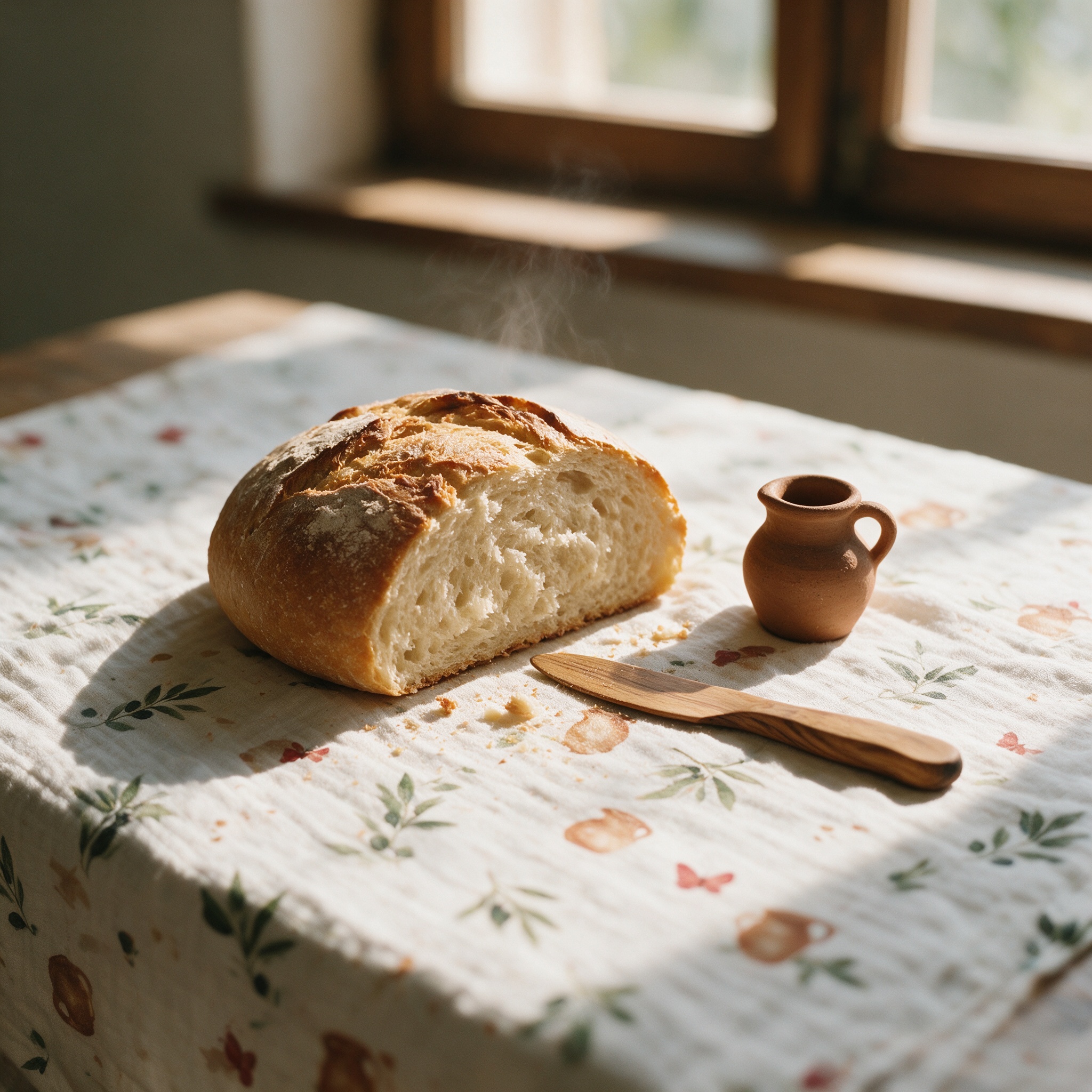
Then the round loaf, cut while it was still warm. Black olives in the earthenware jar. Wild flowers from the windowsill standing in the tin jug, their shadows falling across the printed sprays — the real flowers and the printed ones leaning together, and you cannot say which is livelier.
The children are not here yet. Mémé sets down the last plate, steps back, and looks at the table: beautiful things are not for keeping pretty. They are for living on.
The cloth, the crumbs, the vine — a Sunday afternoon, folded three ways.
The printed cloth laid out on the long Provence table — small flower sprigs scattered across the pine, a glass jug with a sprig from the windowsill.
A round loaf cut in two, a pot of olives picked that morning, a wooden board — a corner of the Sunday table.
Black olives in the jar, the sun, the warmed cloth — a little motion and it is the afternoon light.
Provence at noon is a white light — not golden hour. These are its colours.
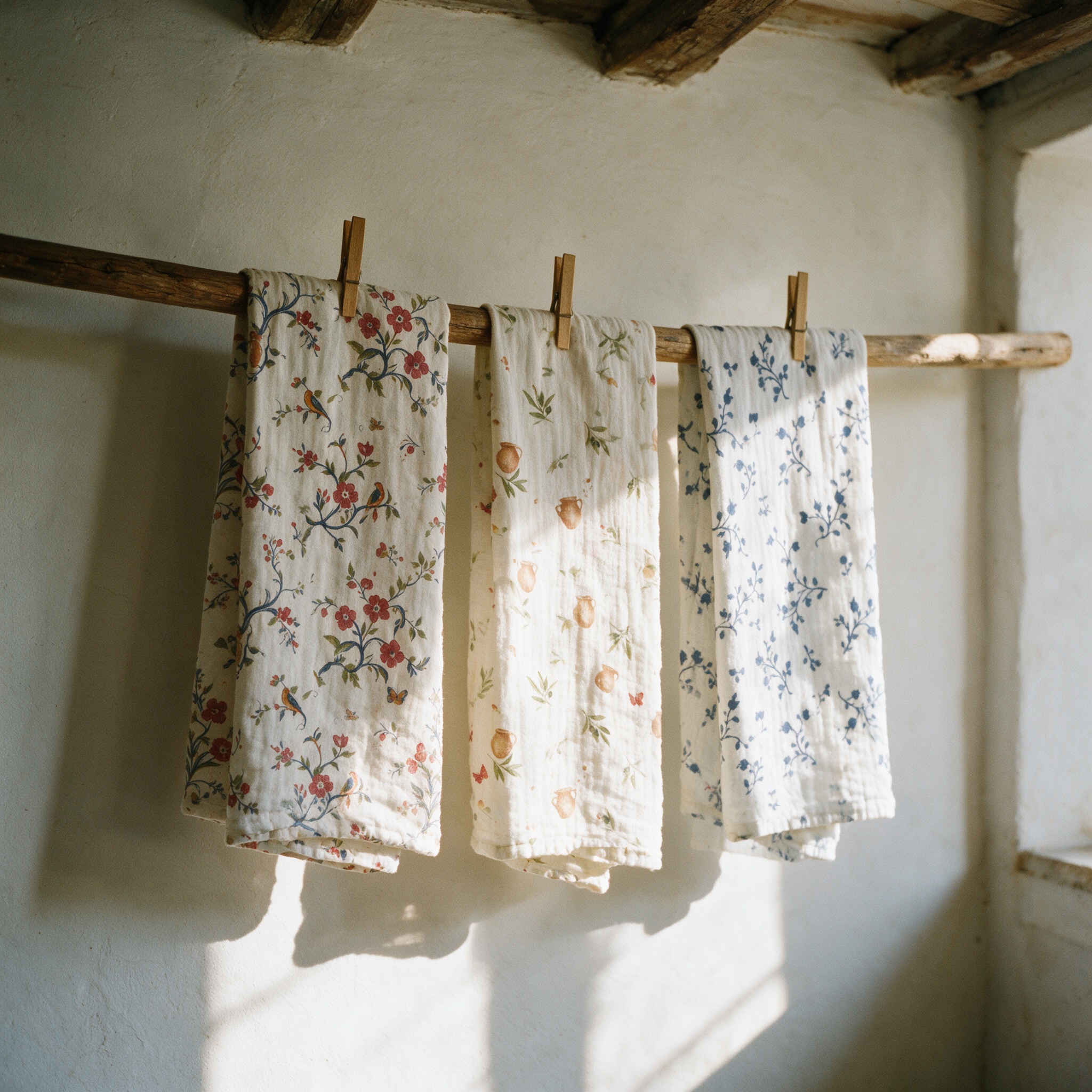
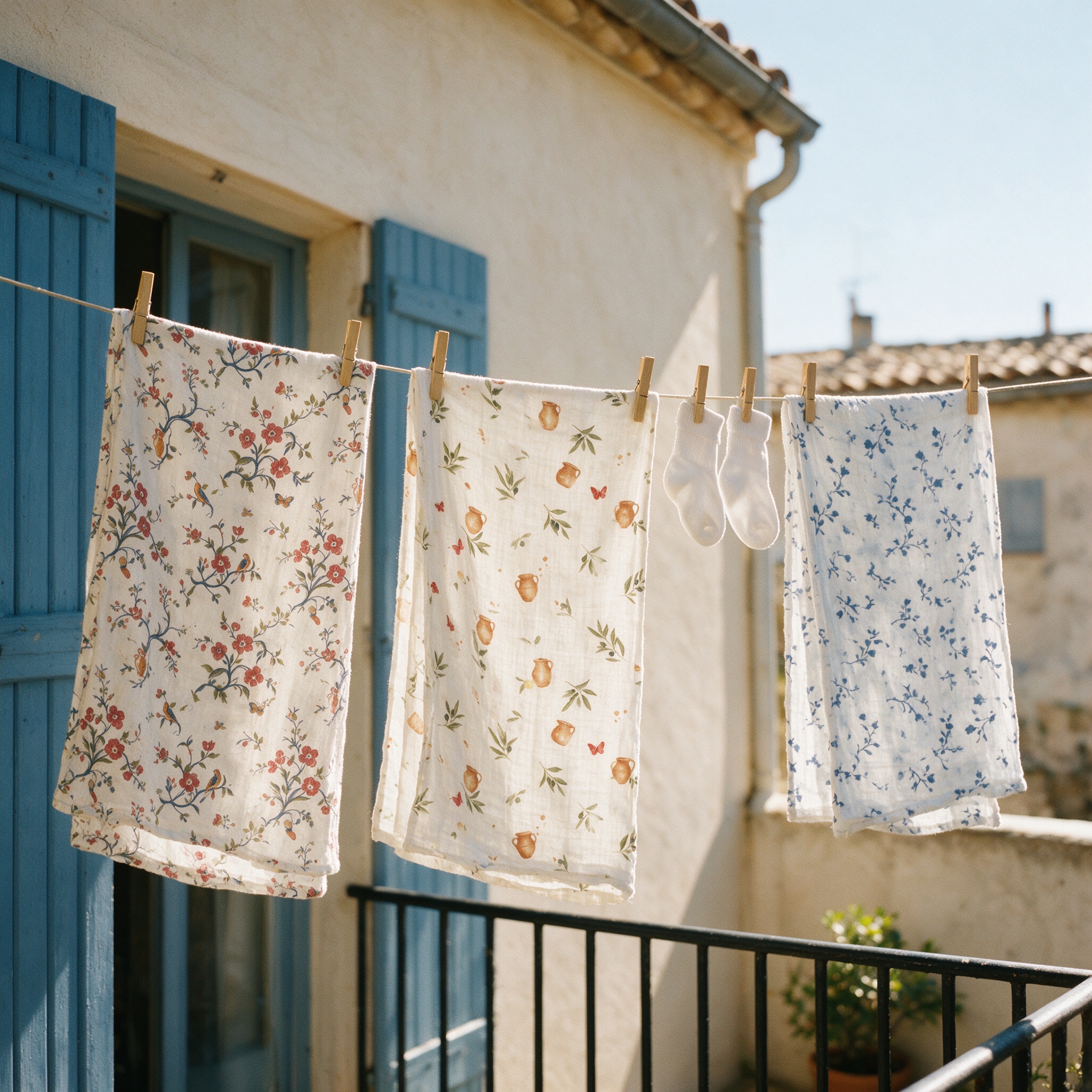
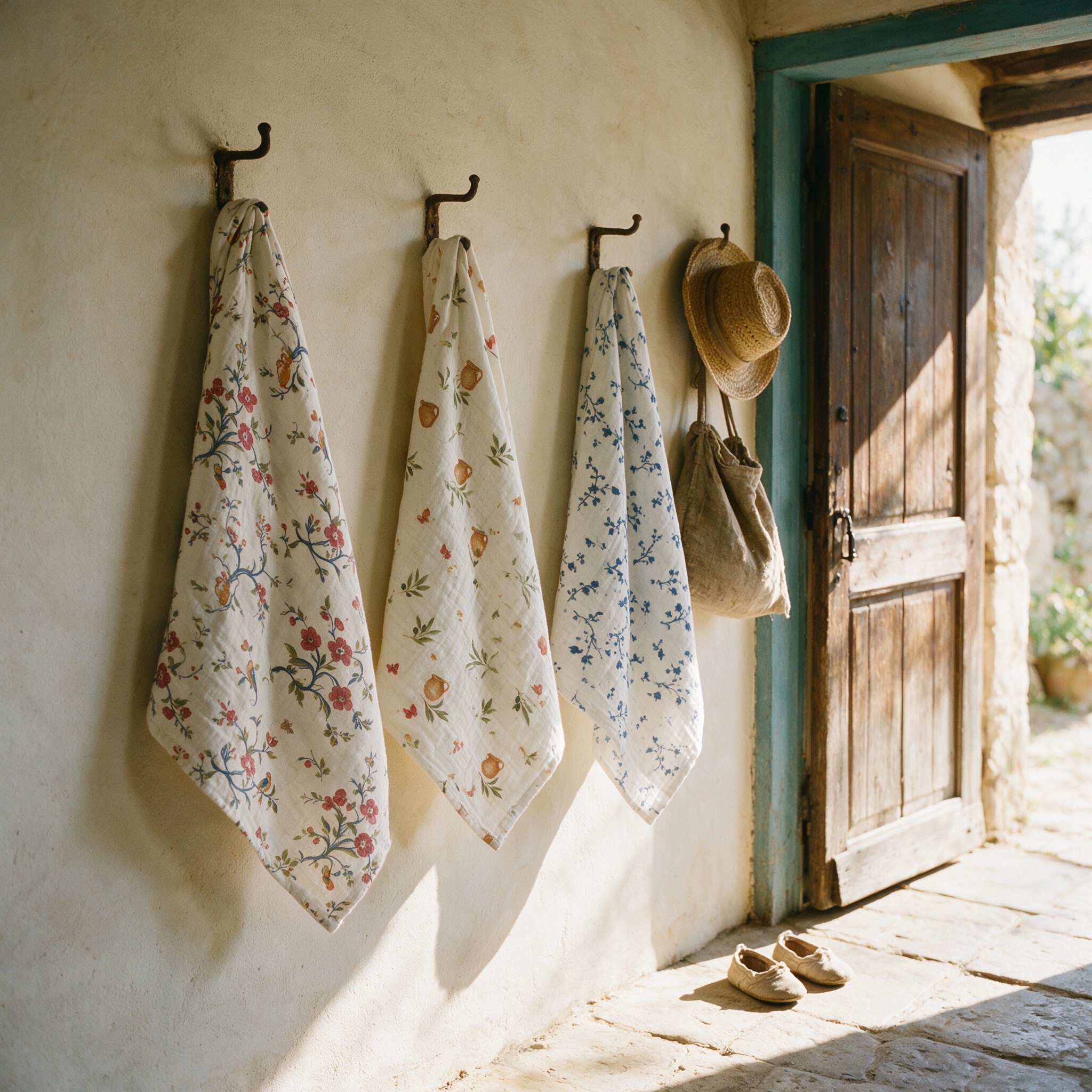
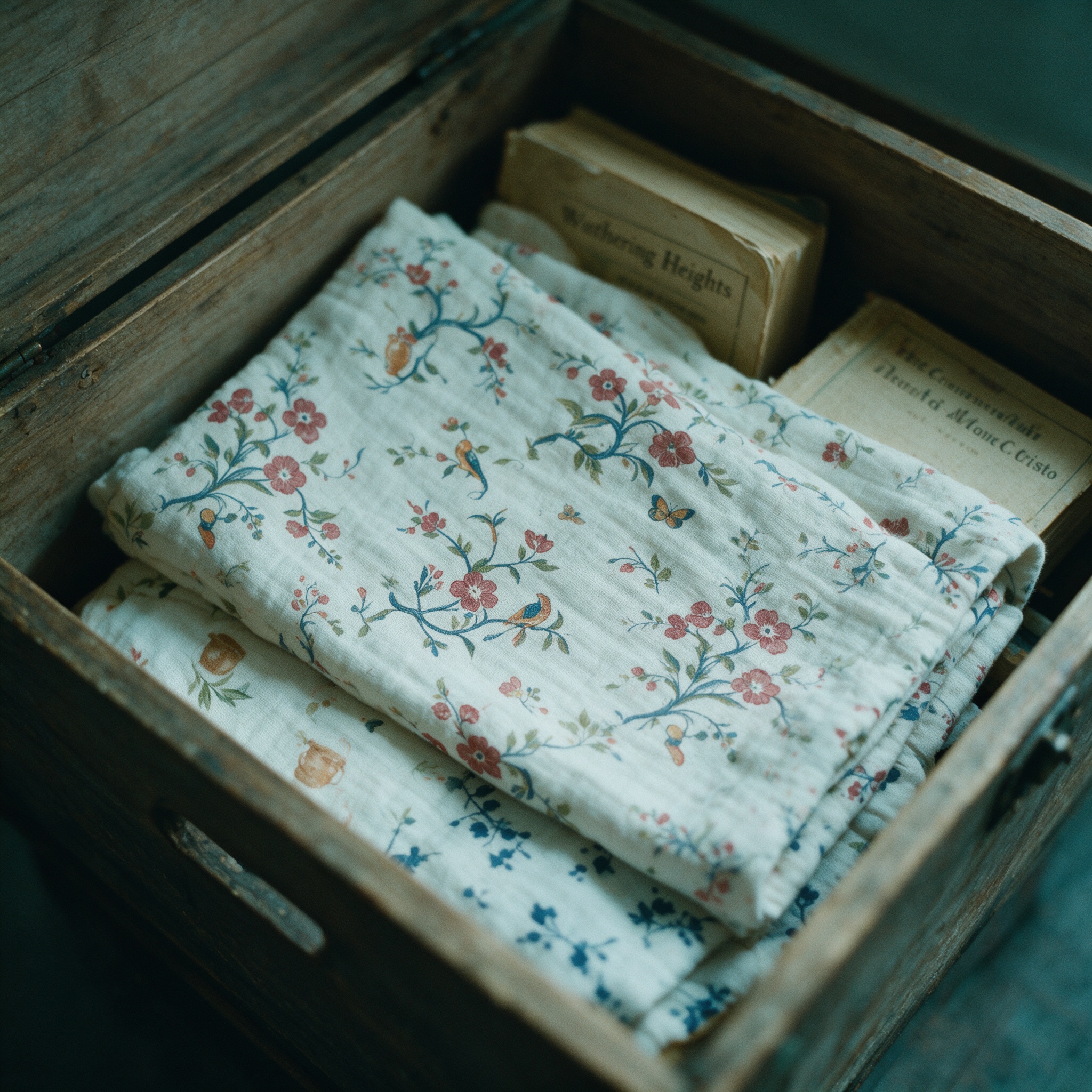
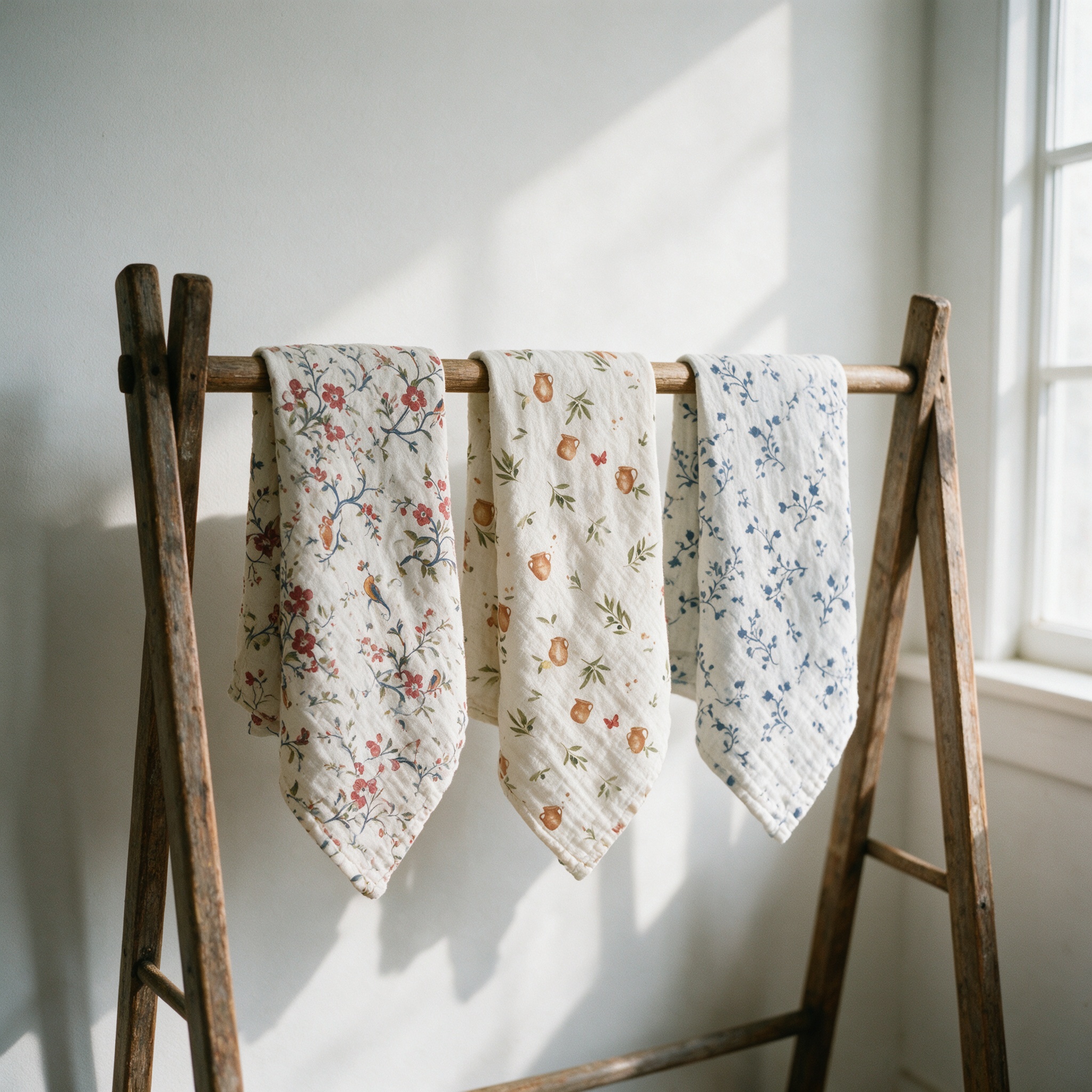
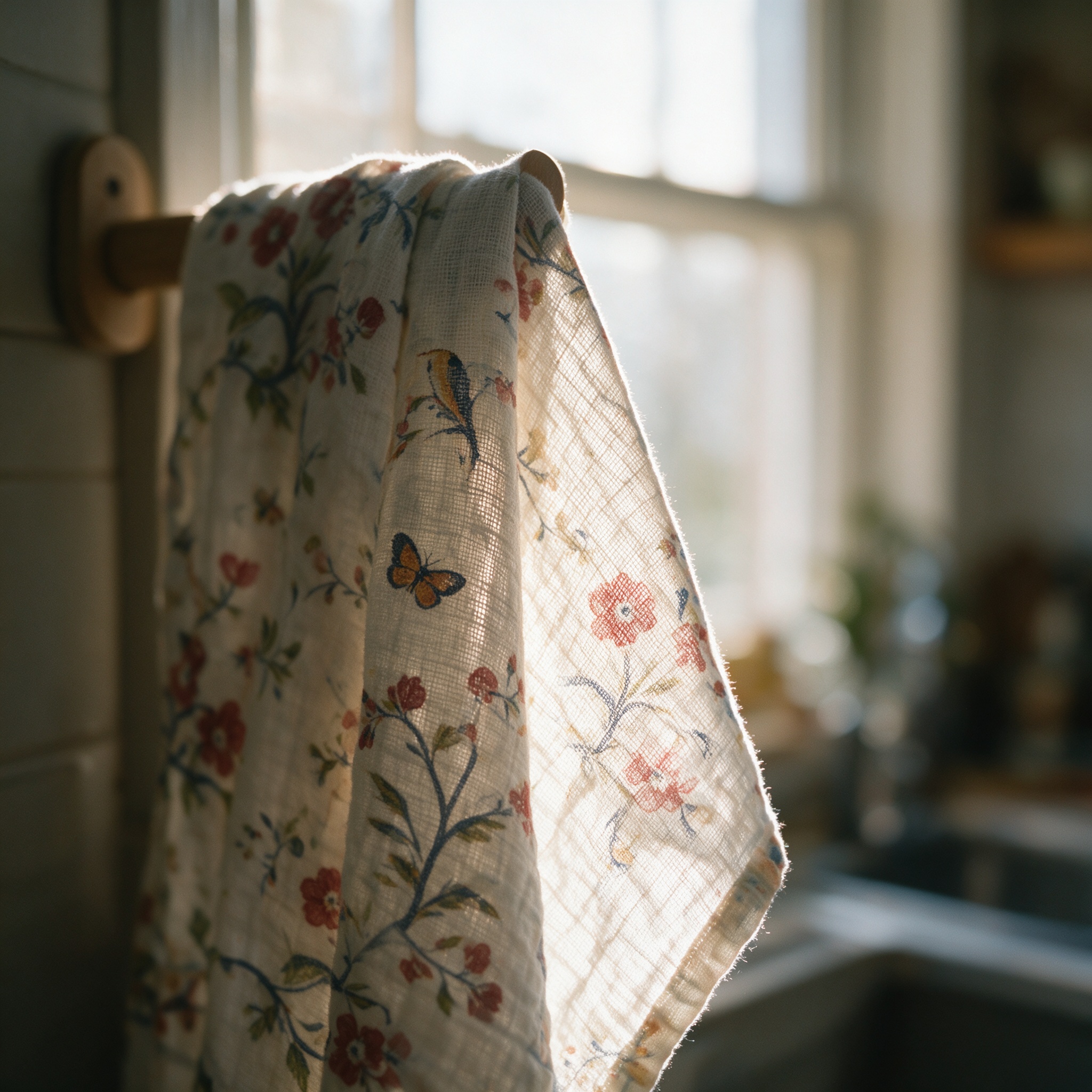
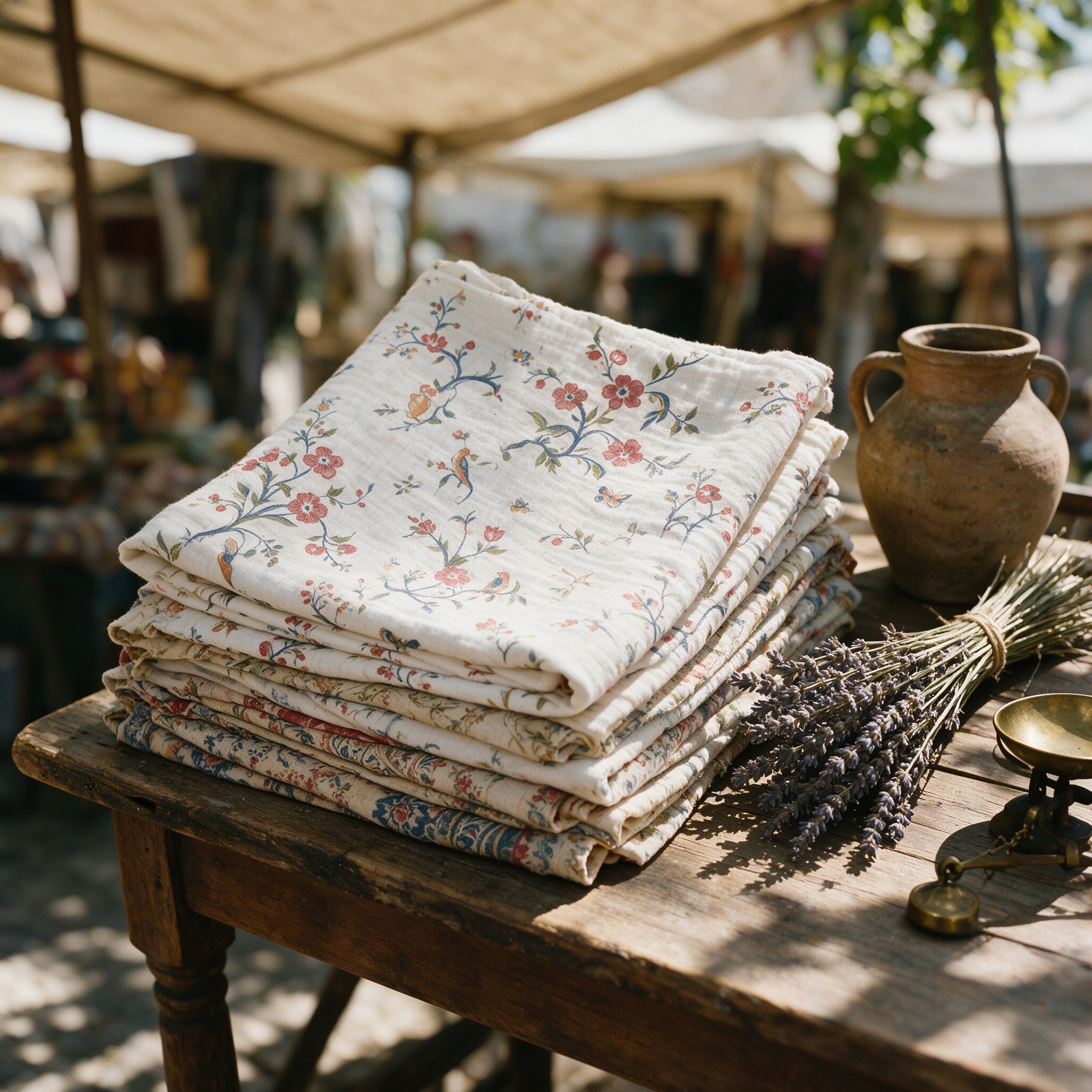
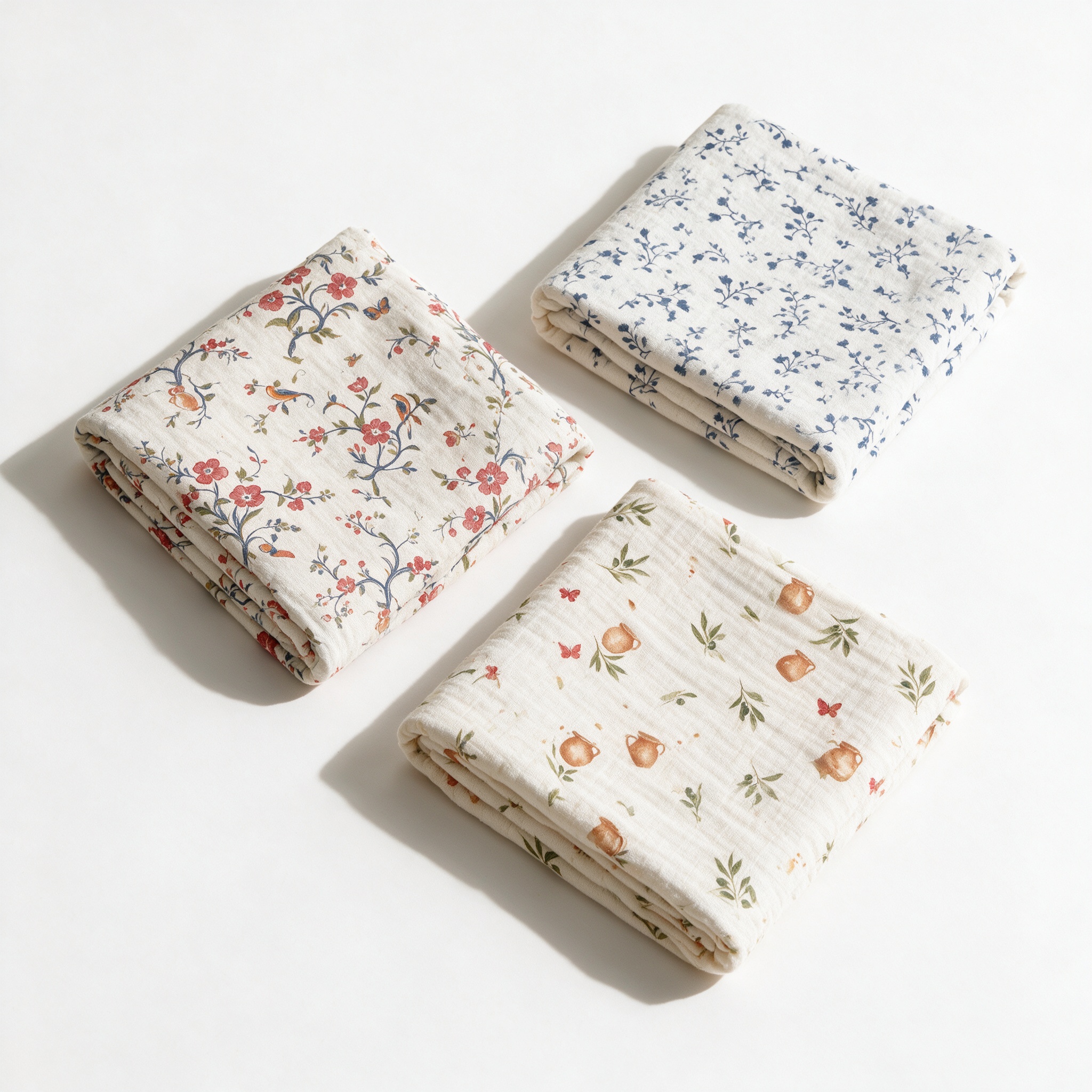
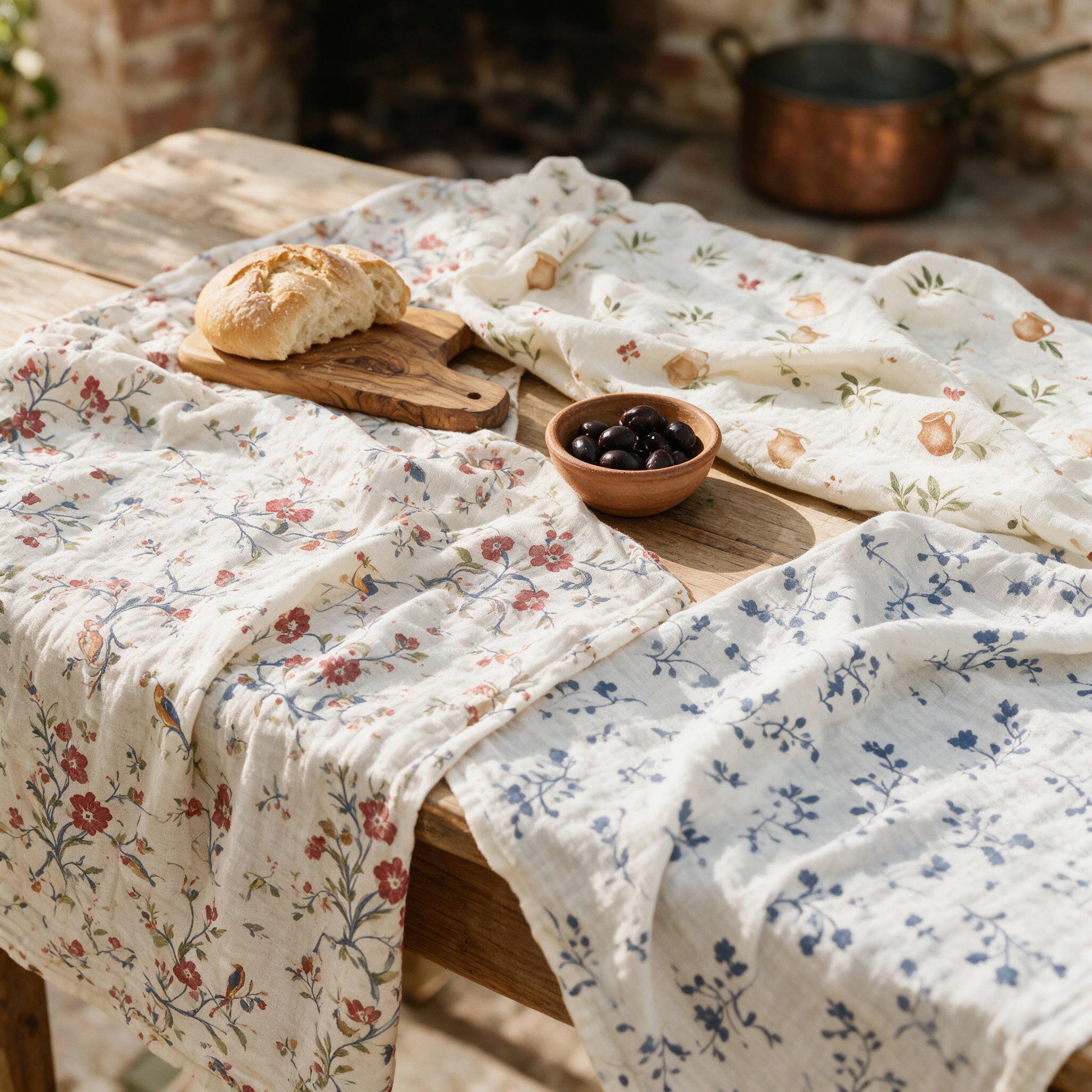
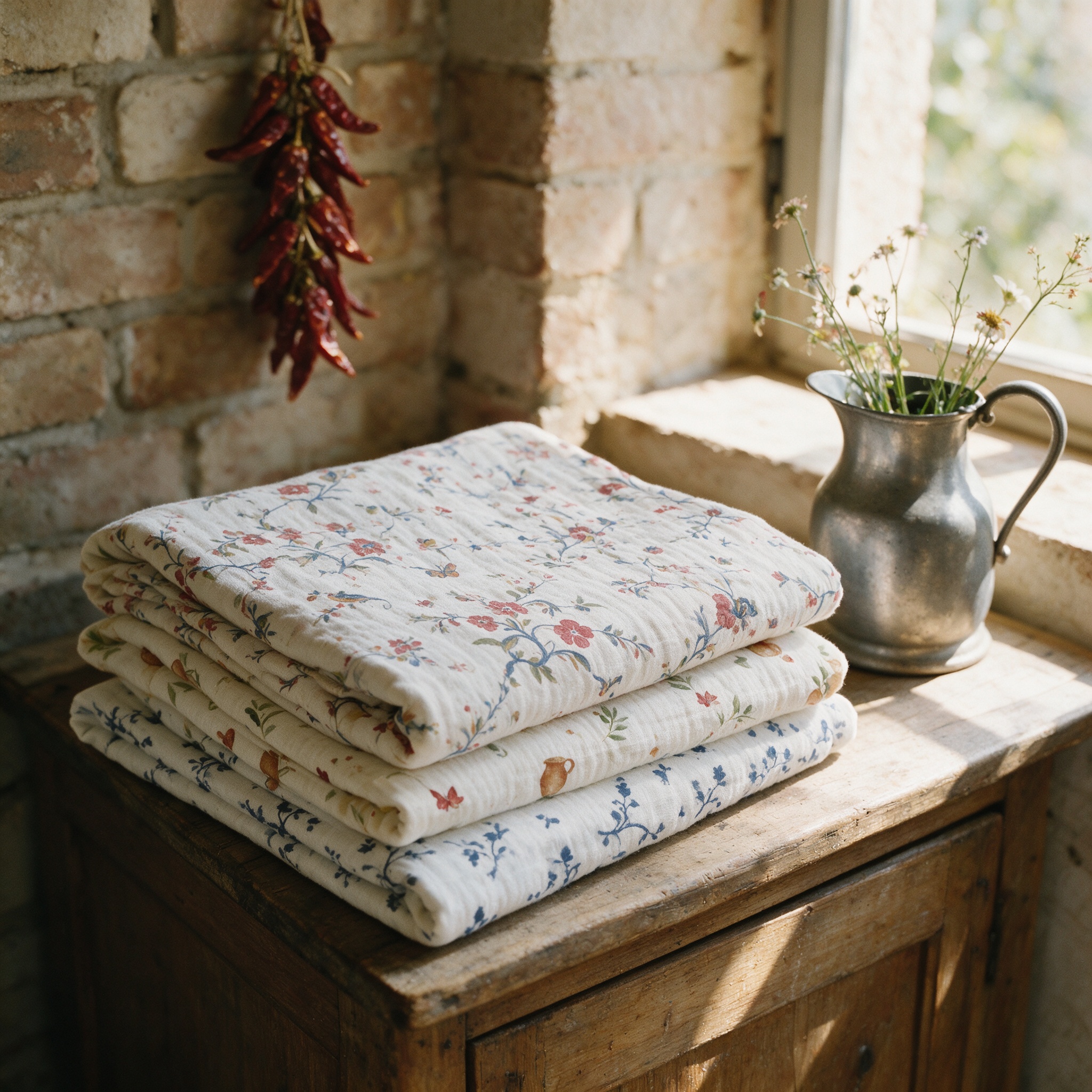
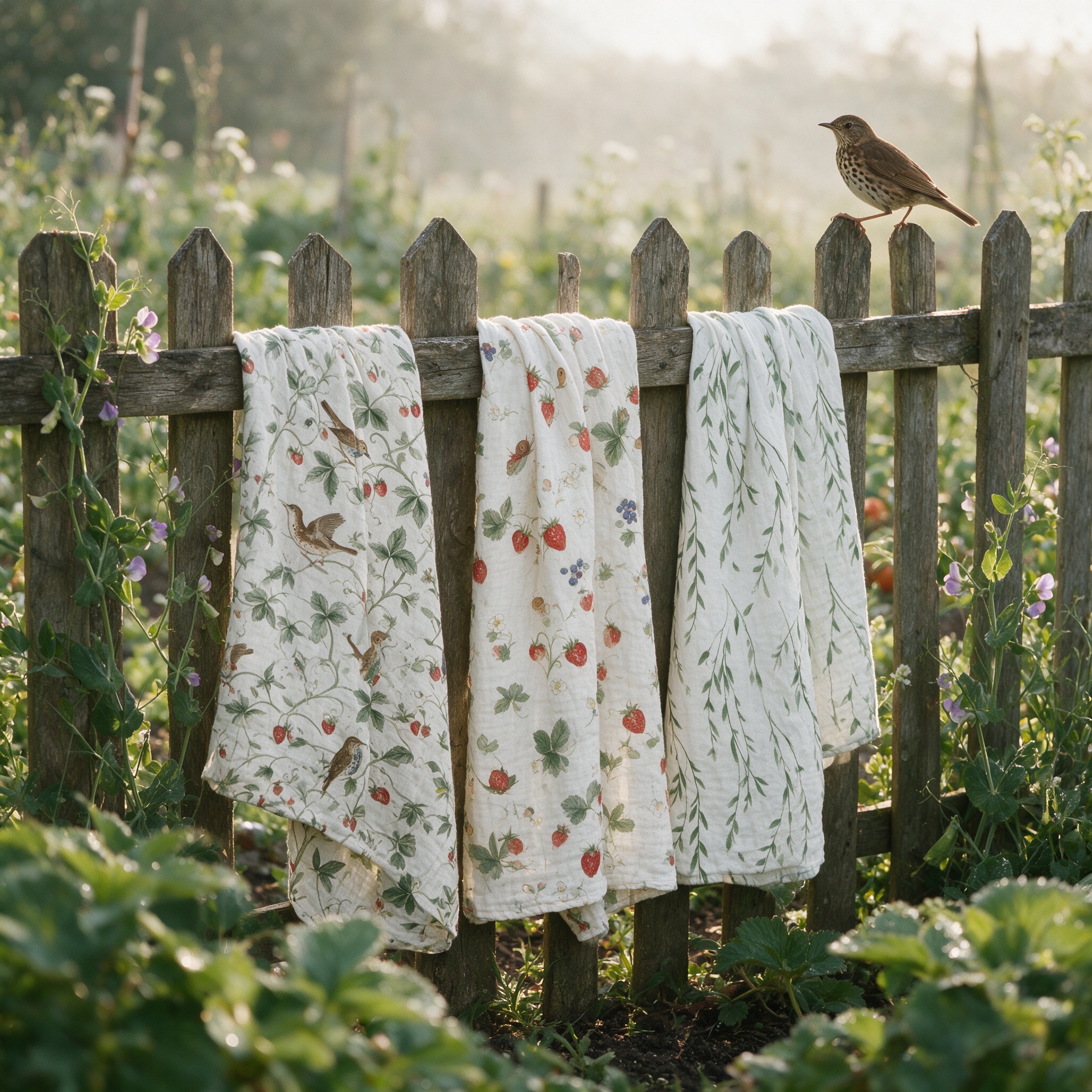
Three prints extended into the fitted-sheet line — the products of this story.
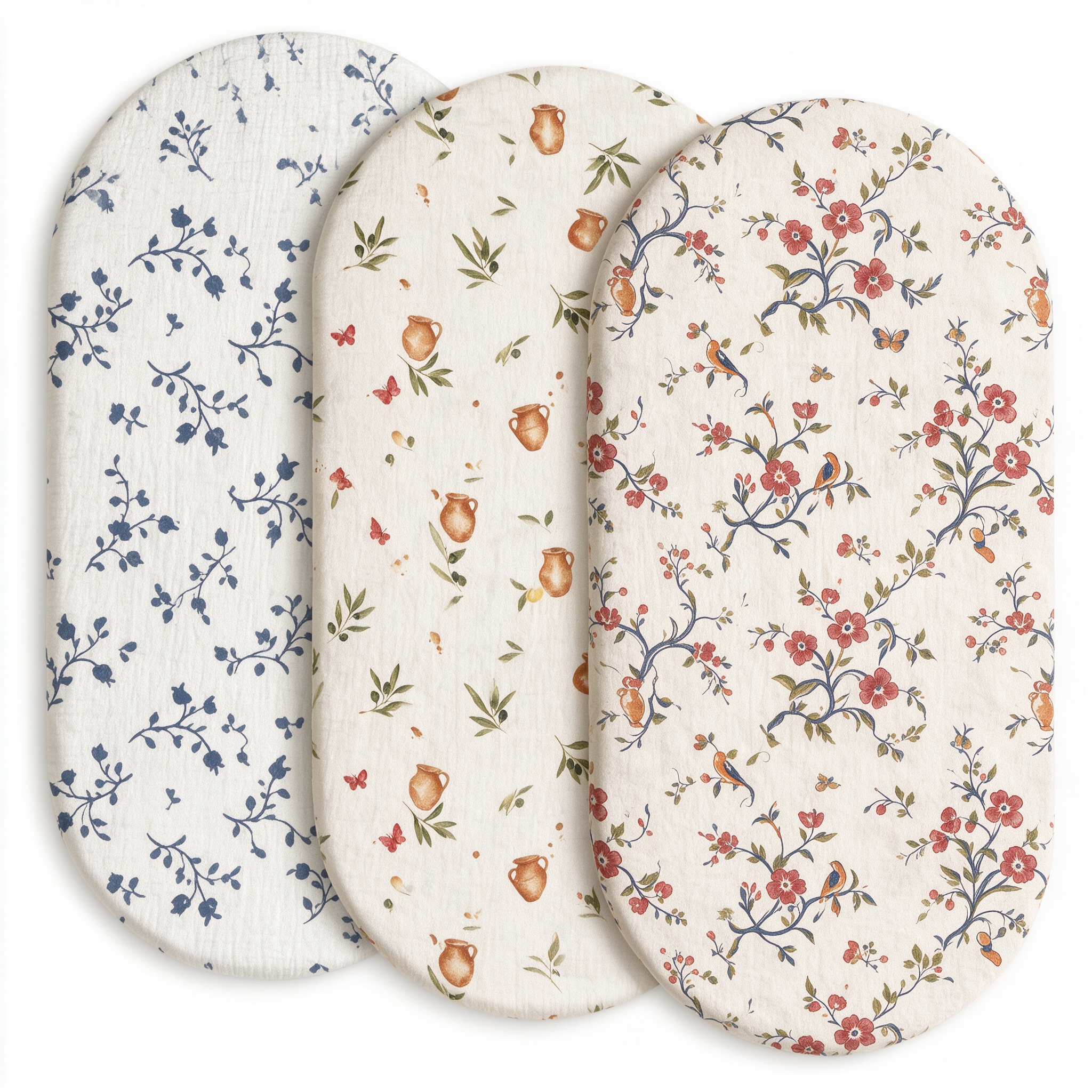
The three together — the whole of this story in one view.
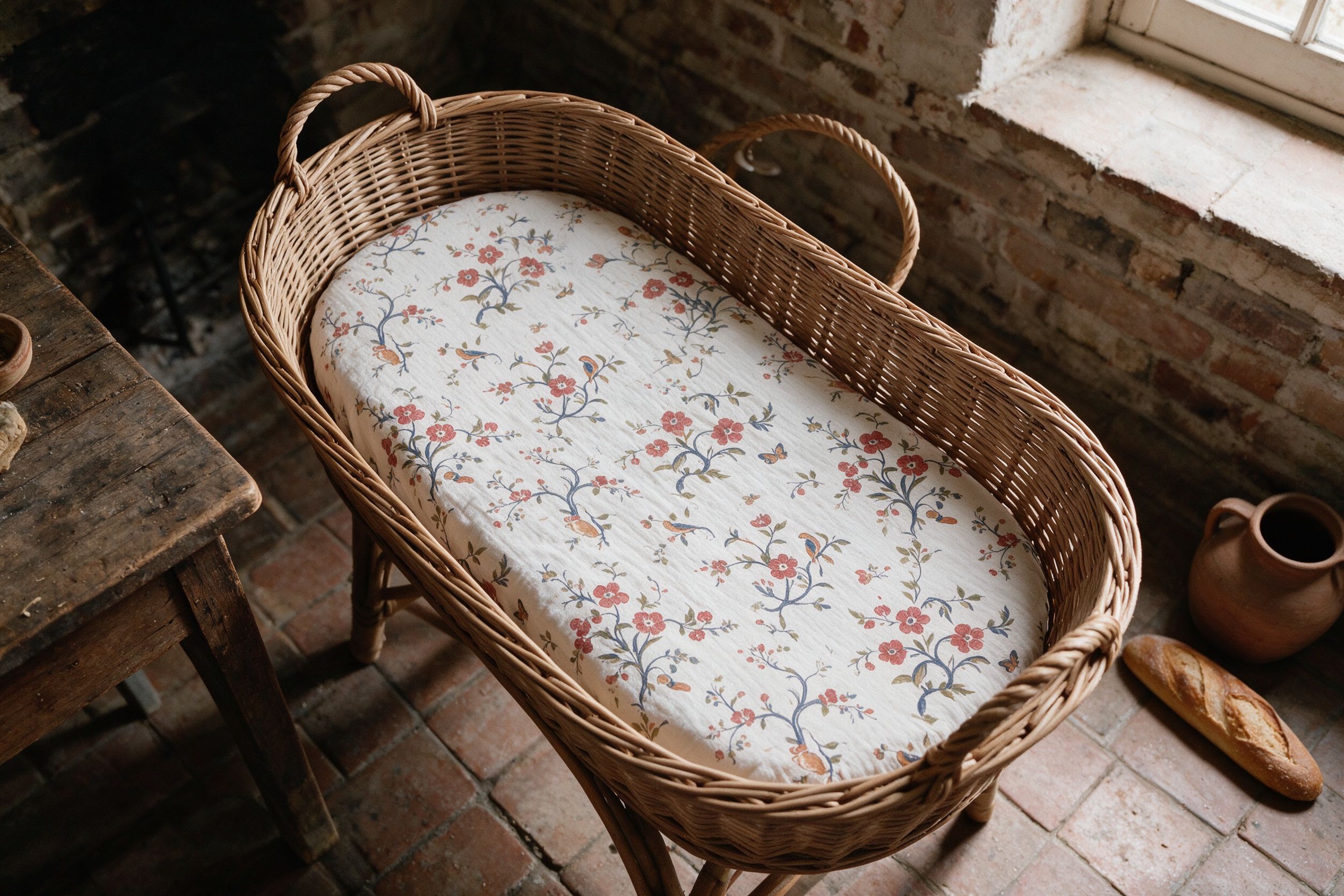
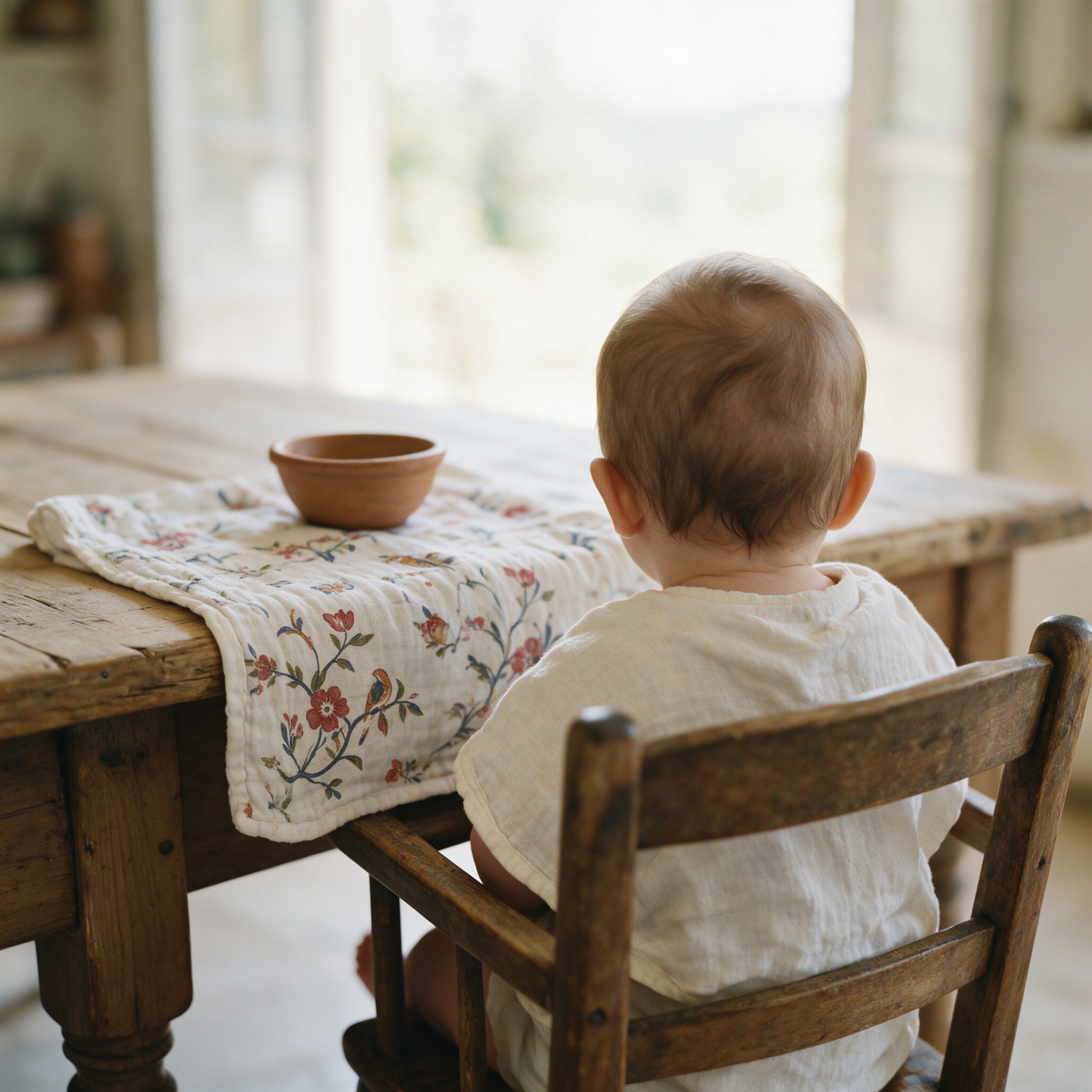
The story's lead print laid on the cradle — the side the baby sleeps on by day.
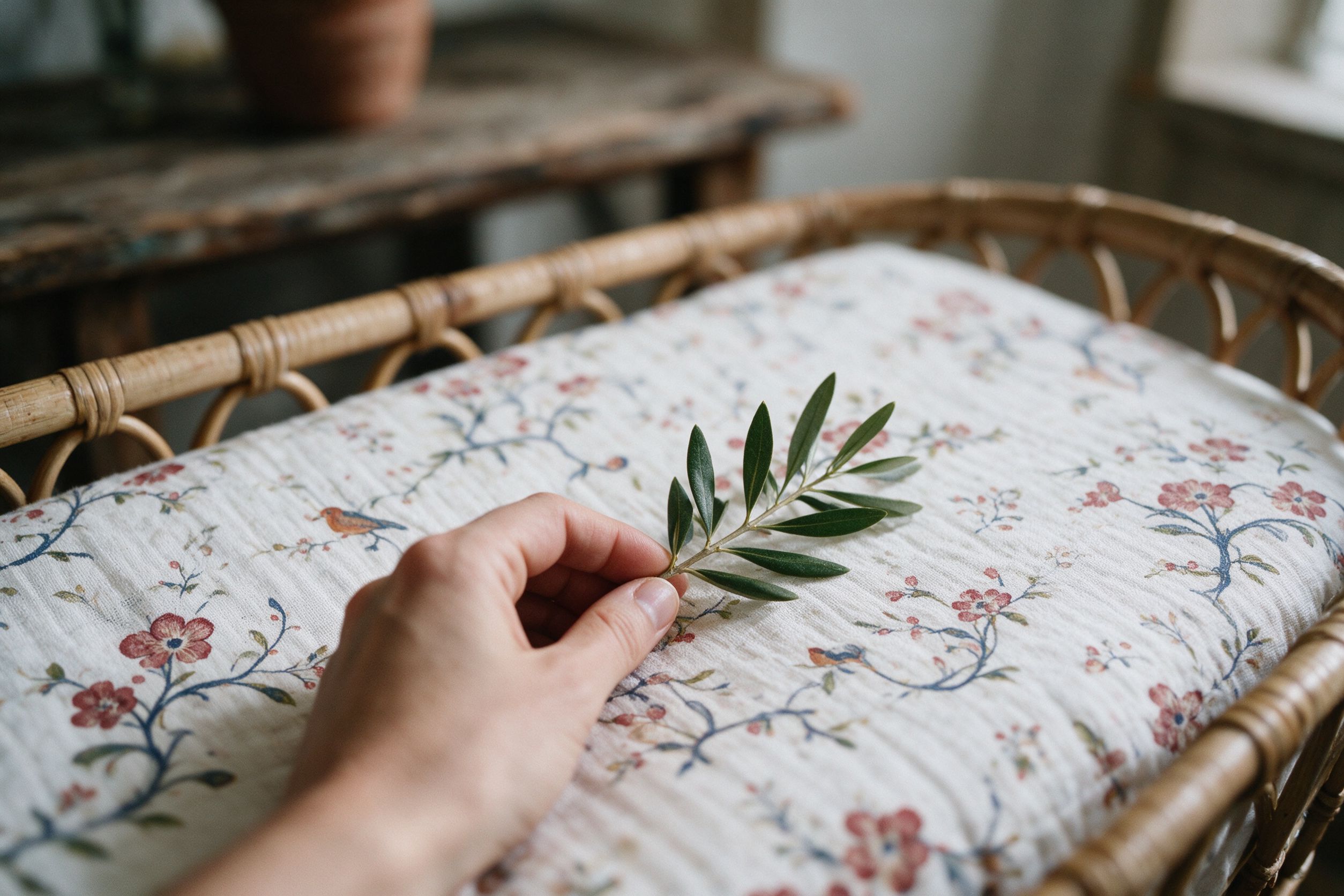
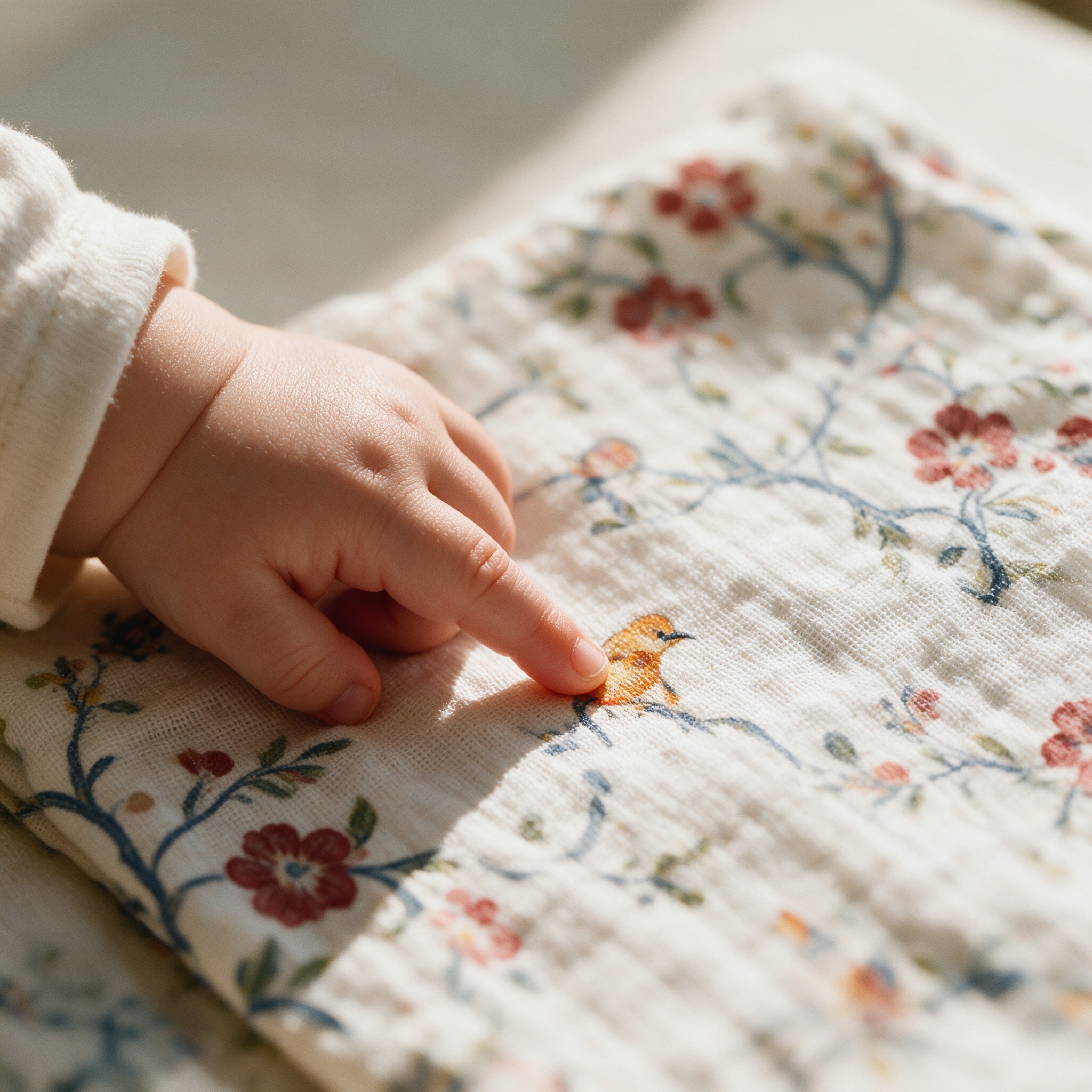
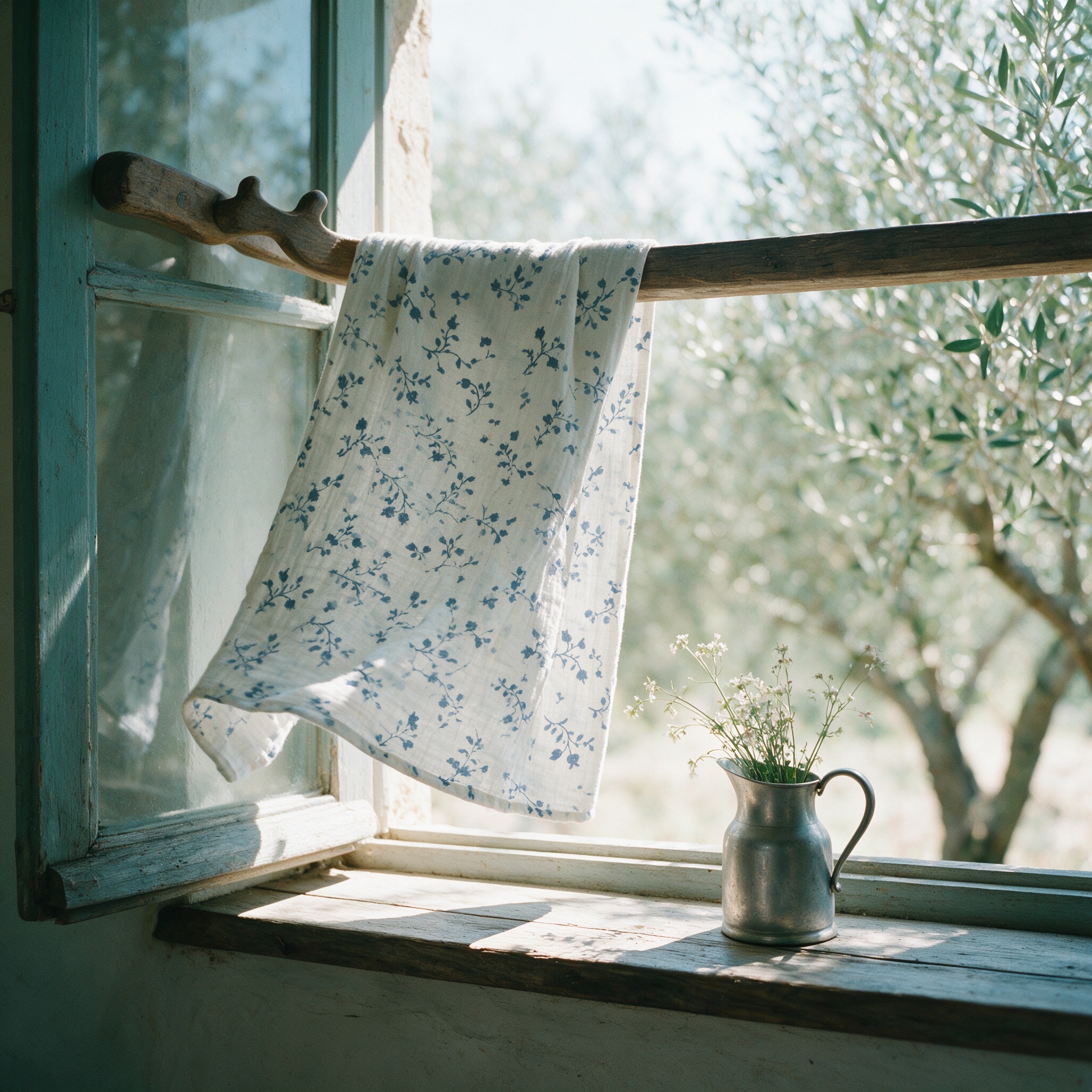
The side closest to the skin of this story — pass a hand over, and you remember.
The print is real: Les Indiennes — cottons printed in India, landed at Marseille in the eighteenth century, re-cut by Provençal block-carvers and worn in farmhouse kitchens ever since. A cloth that was already a traveller before we ever drew it.
No lavender fields, no iron tower, no Riviera. No macarons, no posing. The postcards stay in the drawer — this line is about the table, not the tourist trail.
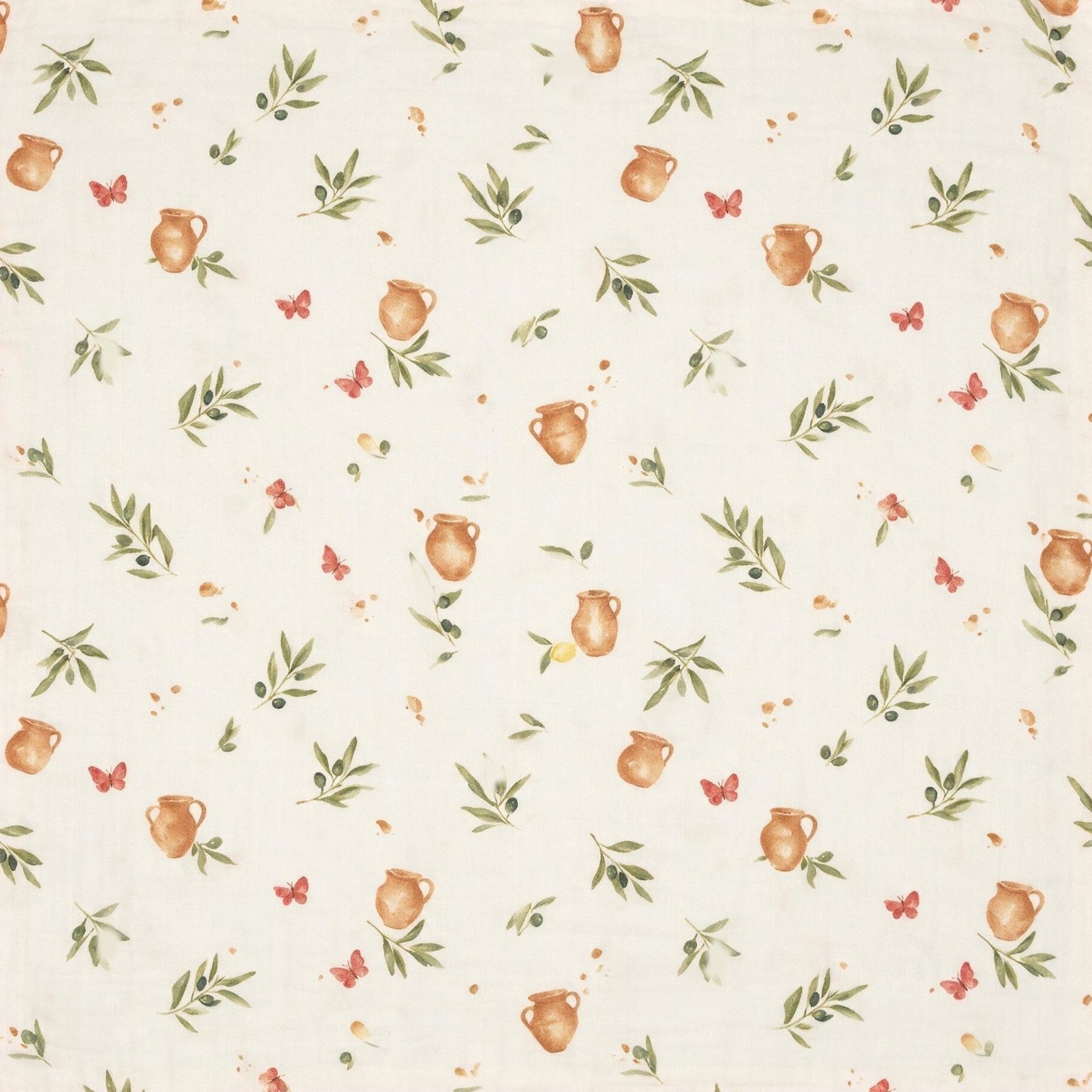
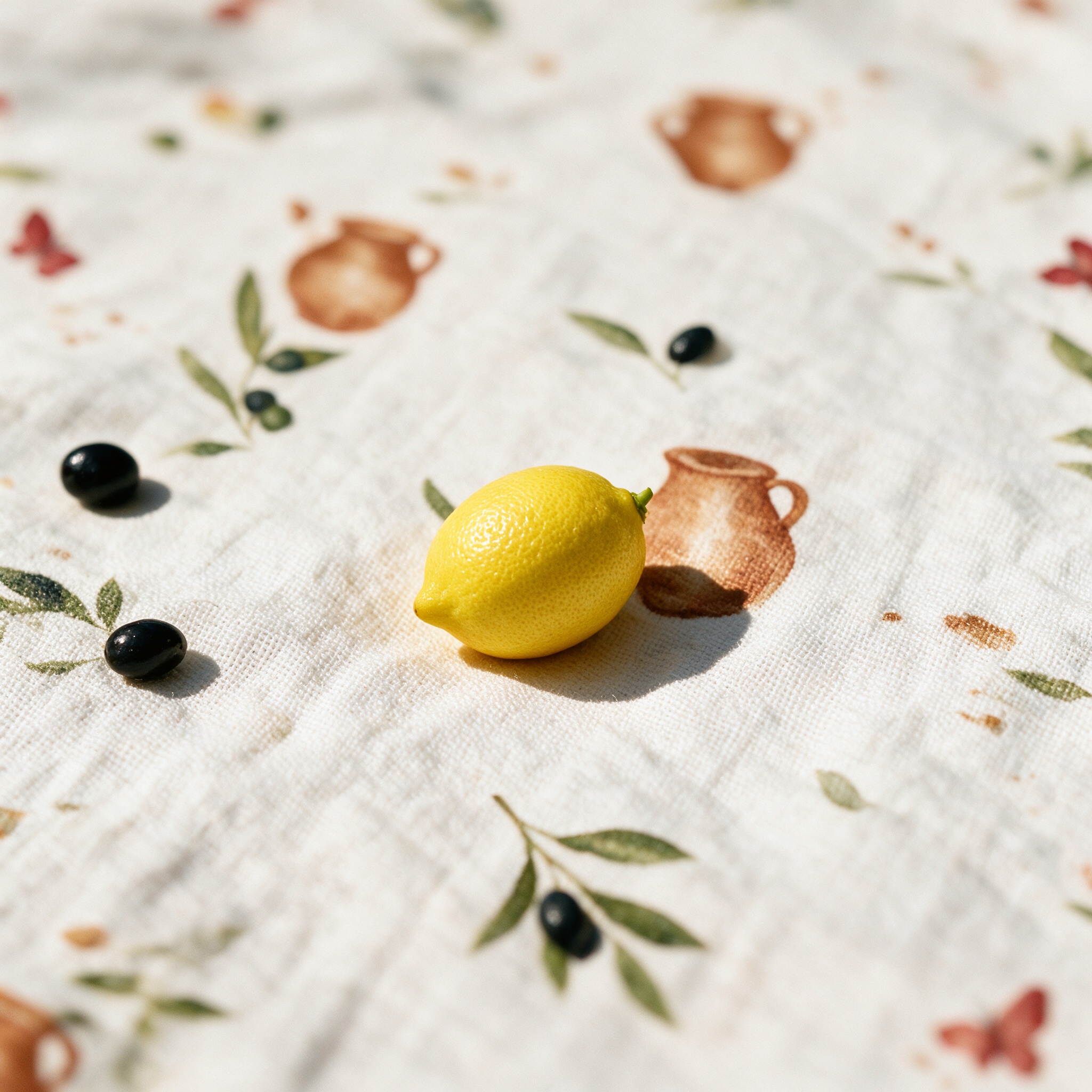
One miniature lemon hides behind the olive jar in every repeat. It began in a baobab hollow in Madagascar; this season it has reached a Sunday table in Provence. Where it turns up next, we won't say.
Every line in the atlas has a song. This one's is "L'été Indien," Joe Dassin, 1975 — a summer that never quite ends, which is the whole idea.
Living your days with care — every grandmother in the world knows how to do that.
— Sophia, Shanghai, Summer 2026