No. 14 · Oceania · The Dusk Watch
The Back Paddock
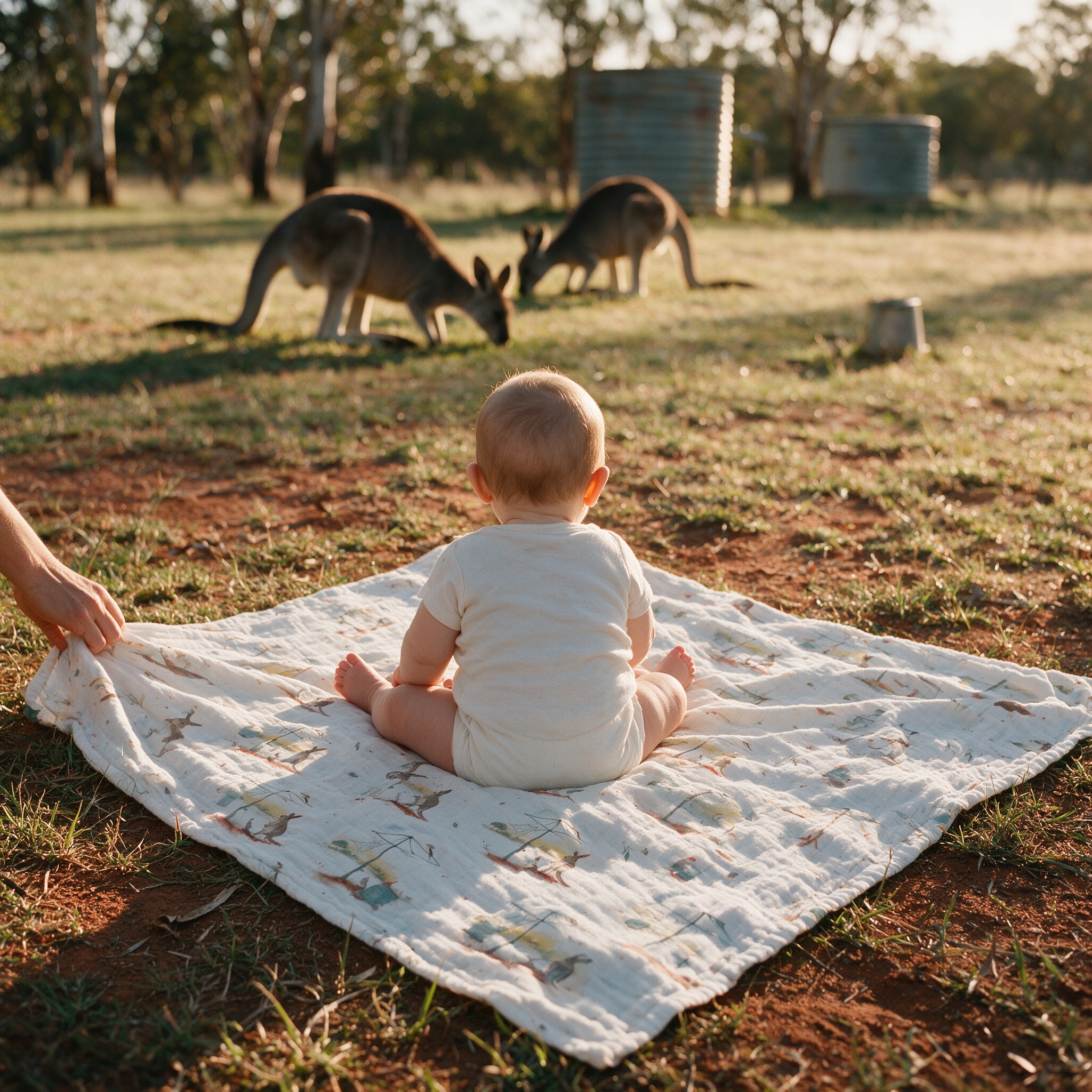
New South Wales, Australia · A Late-Summer Evening
"The kangaroos only come at dusk."
Three hours west of Sydney, the asphalt gives way to red dirt, and that's Nan's place. Behind the house runs a wide paddock, a wire fence the only thing between it and the eucalyptus forest beyond. All day there is nothing out there but wind.
But every evening, the moment the sun touches the treetops, Nan pegs the muslin squares onto the turning clothesline and says: "Watch — it's kangaroo o'clock."
A family of grey kangaroos comes out of the treeline — one, two, many — grazing quietly across the back paddock, at their closest only ten steps from the line. A kookaburra lands on the crossbar and laughs louder than anyone.
They come every day, Nan says. No tickets required.
Only later did I understand: Nan's back paddock has no gate — because the guests never needed to be invited.
One for kangaroo o'clock (the keeper), one for the small guests, one for the gum shadows.
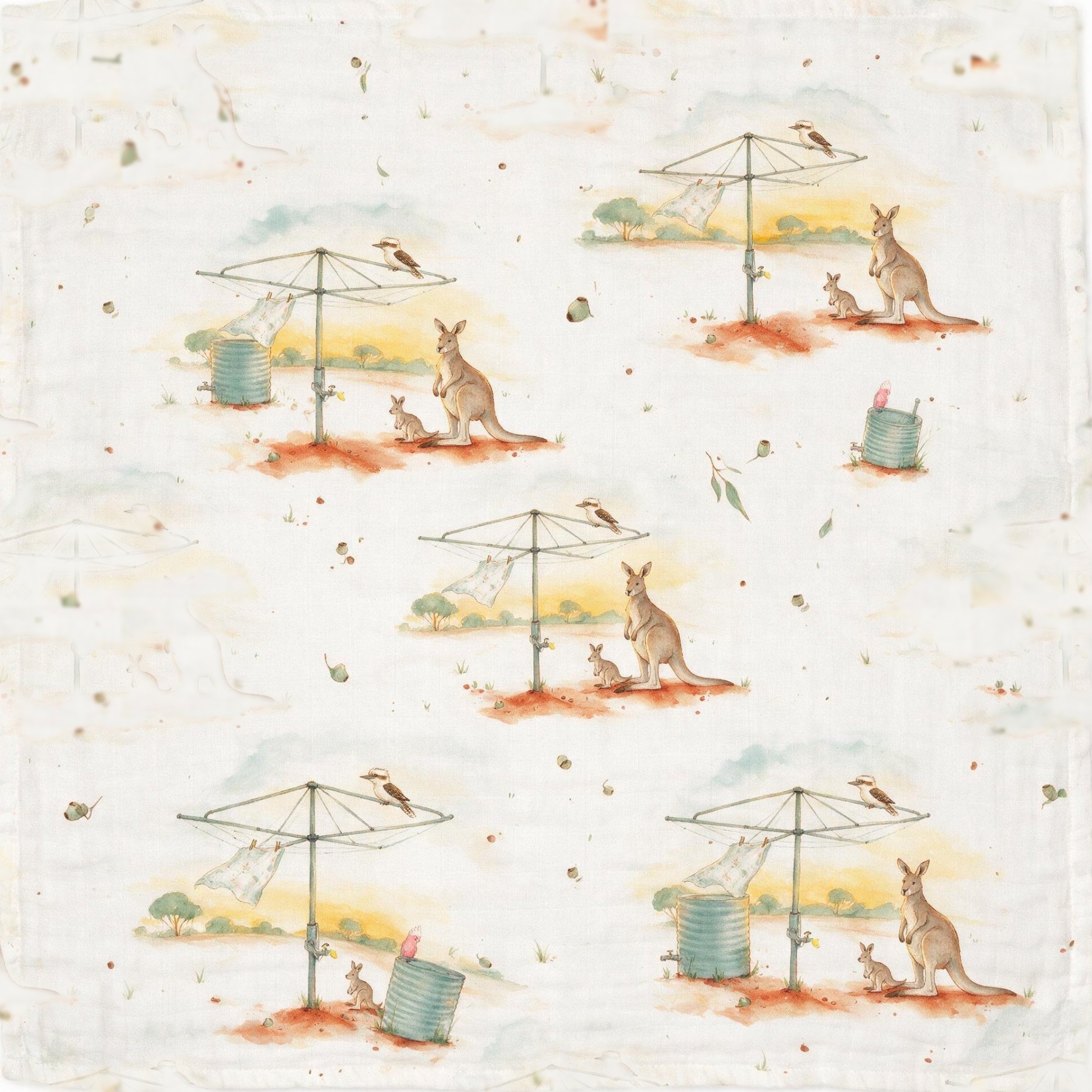
The turning clothesline (one small square pegged to it), a family of kangaroos, one line of eucalyptus silhouette, a kookaburra on the crossbar — the scene that starts on time every evening.
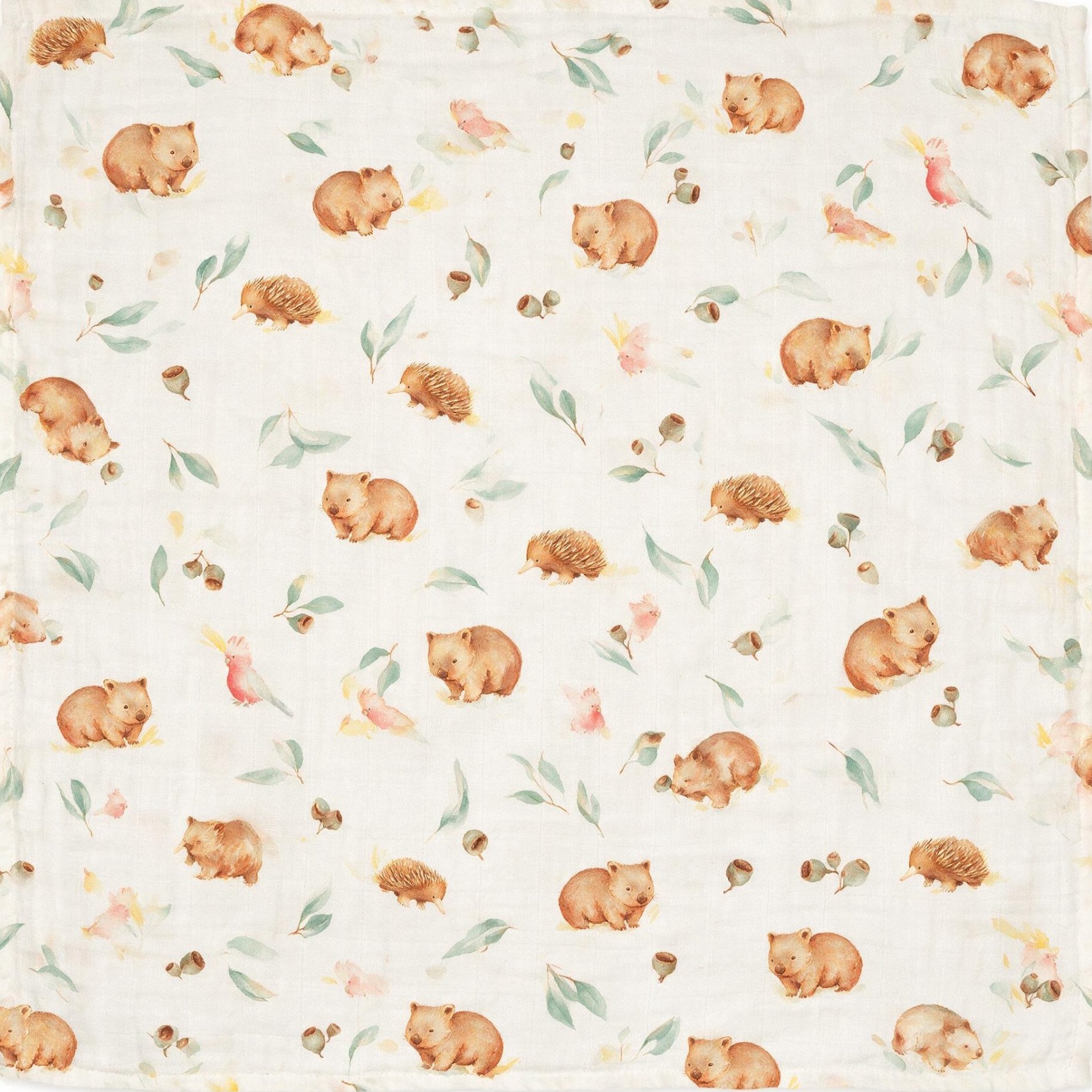
Wombats, echidnas, gumnuts, pink-and-grey galahs — the daytime paddock looks empty, but it's full of guests; they're all just keeping out of the sun.
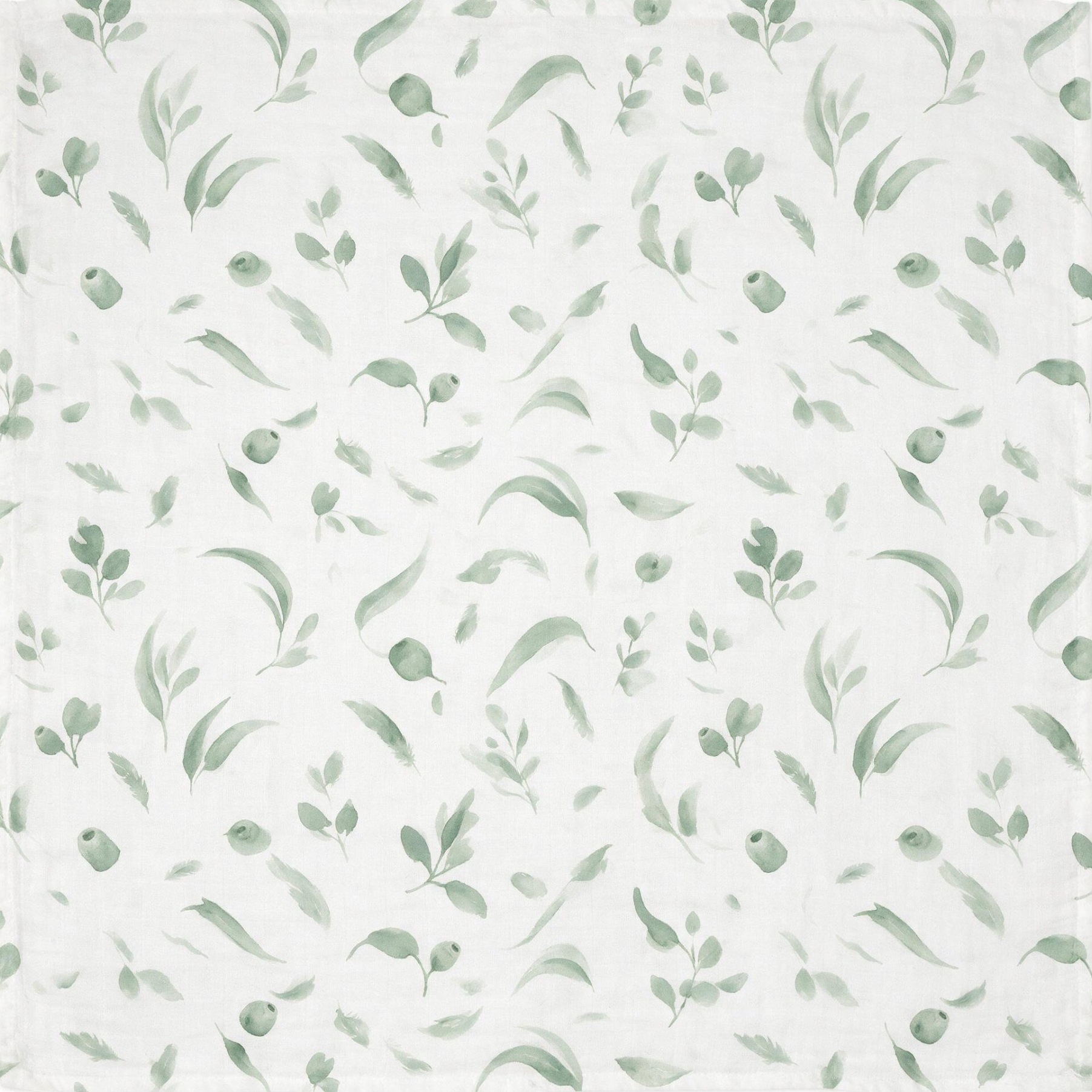
A single eucalypt grey-green — gum leaves, gumnuts, a feather, arcs of grass. A solid from afar; a bush full of shadows up close.
The gum green stays lifted and faintly blue-leaning, never greyed — this line's biggest color trap.
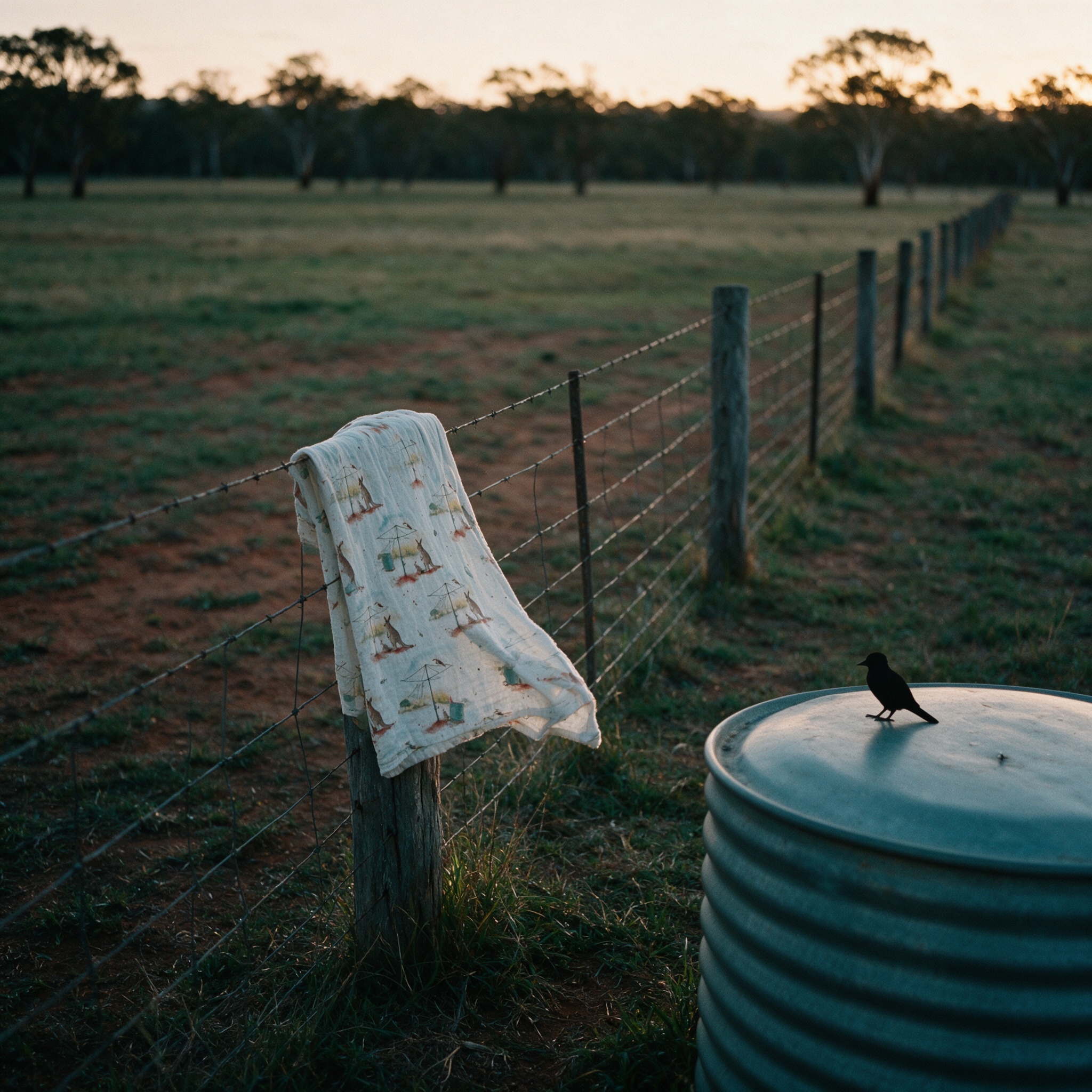
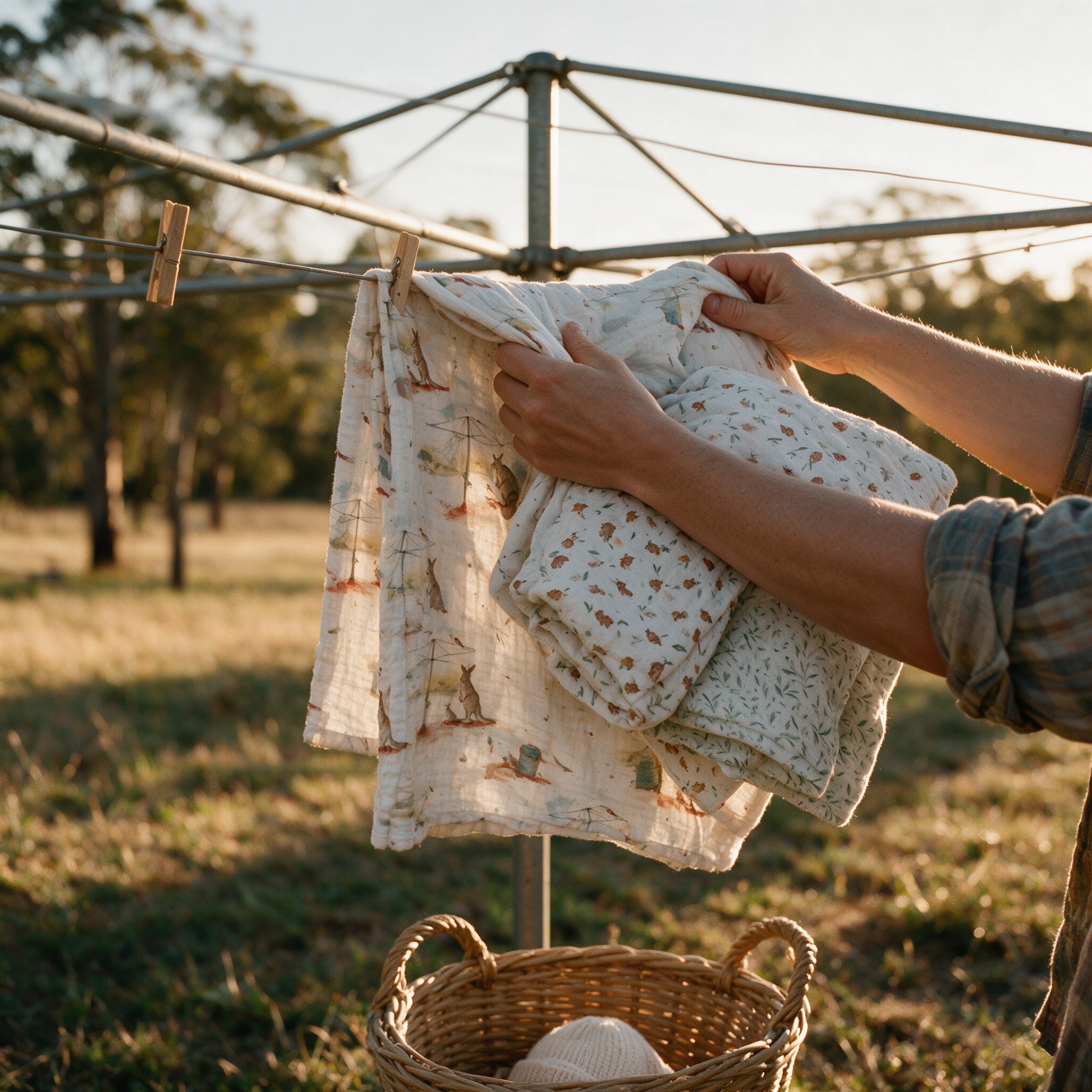
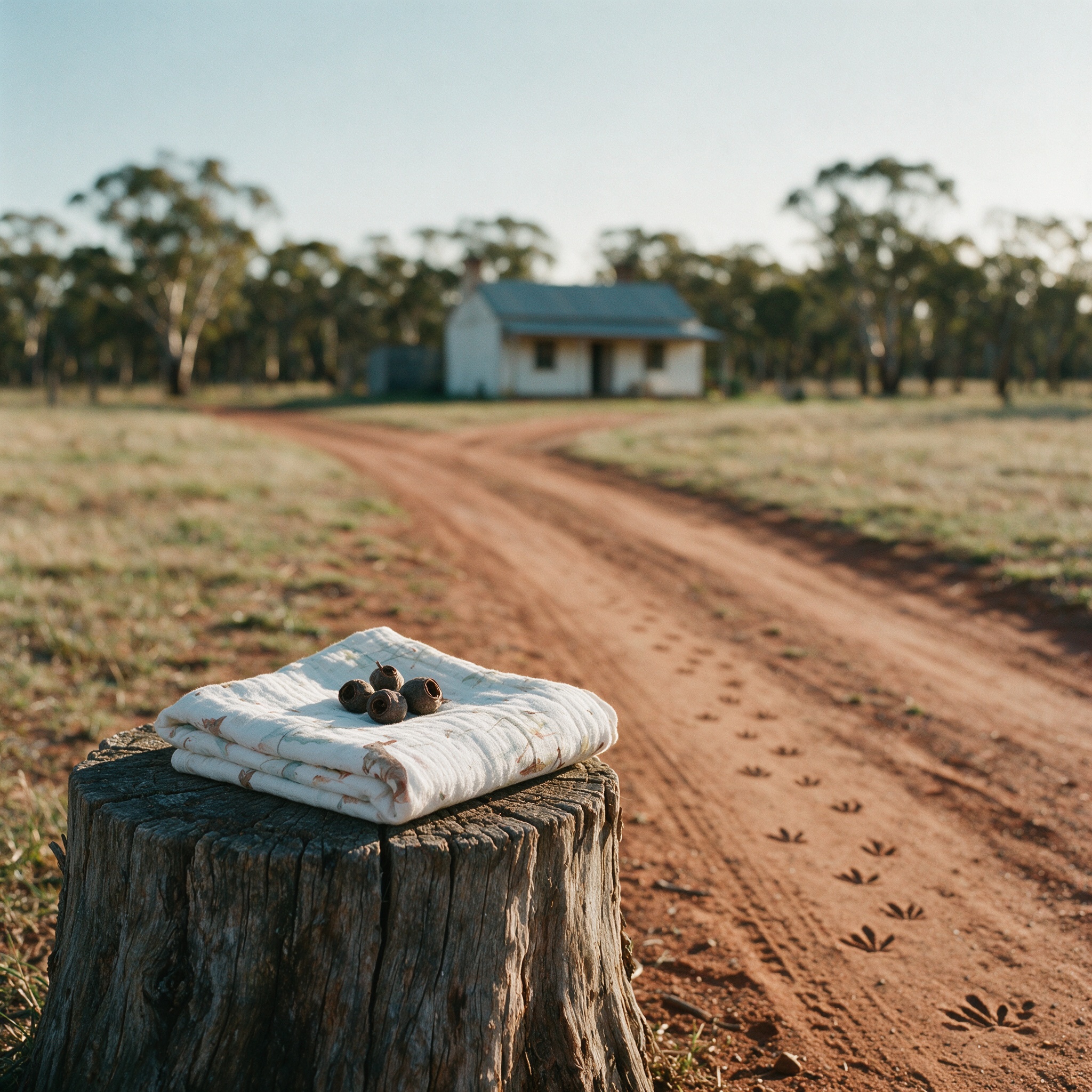
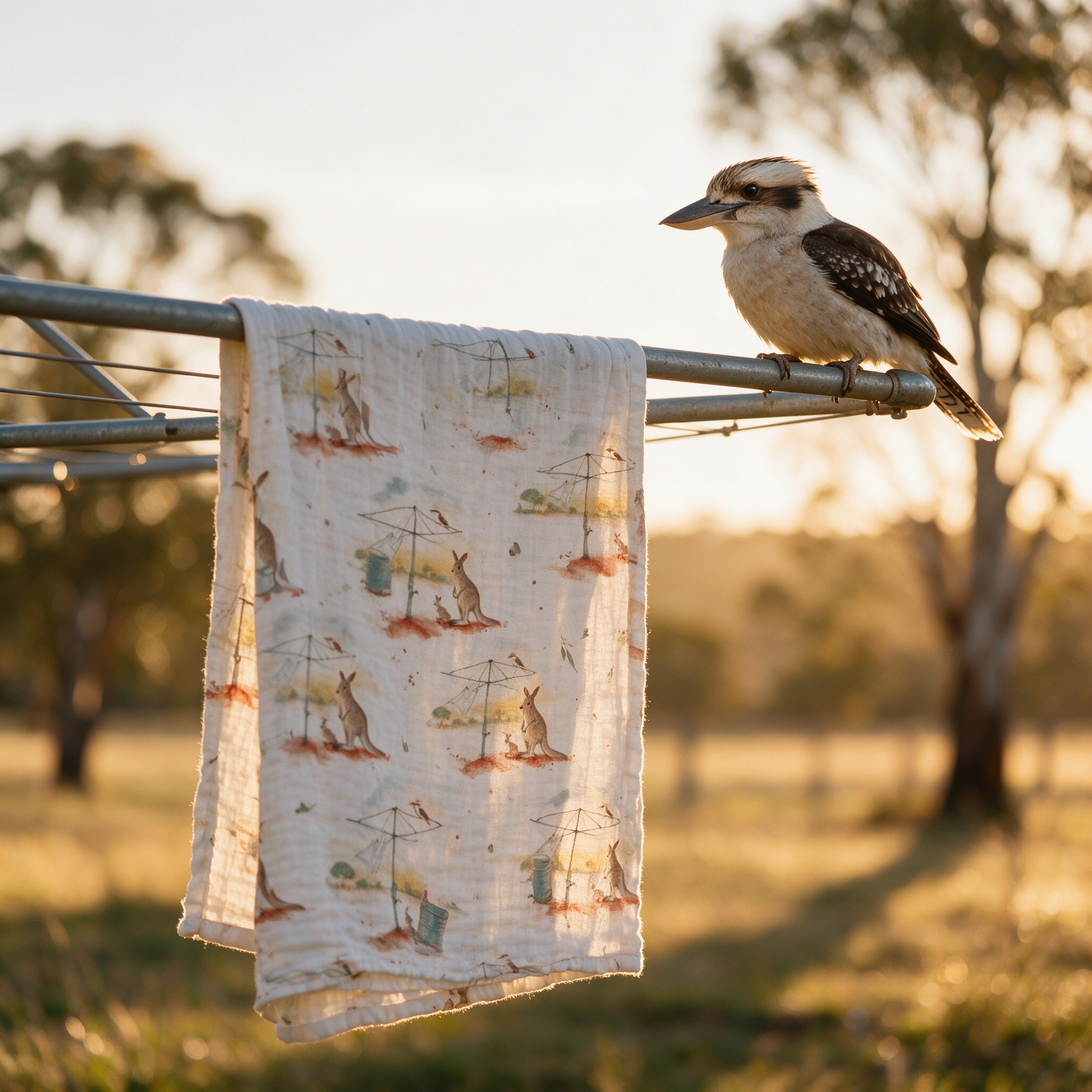
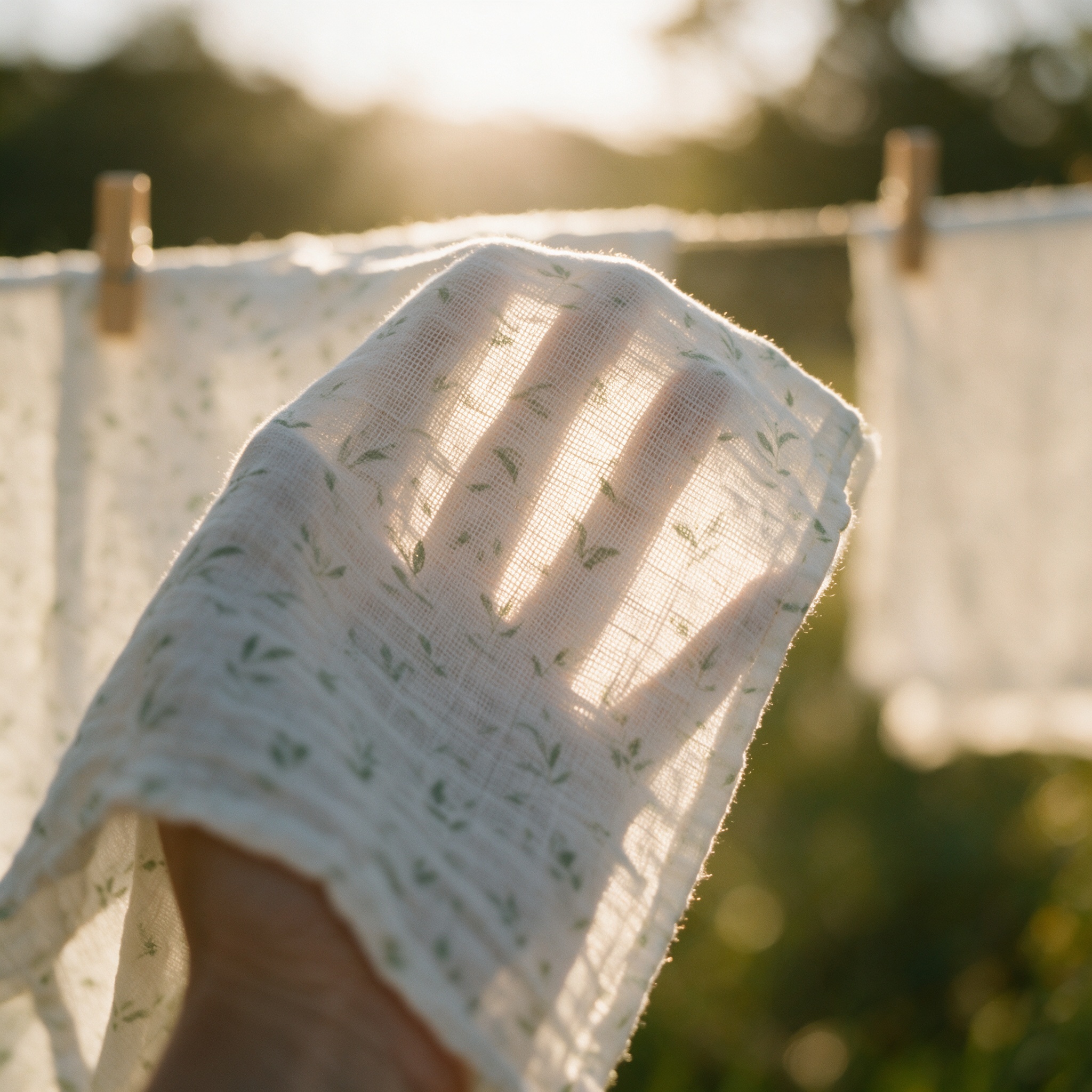
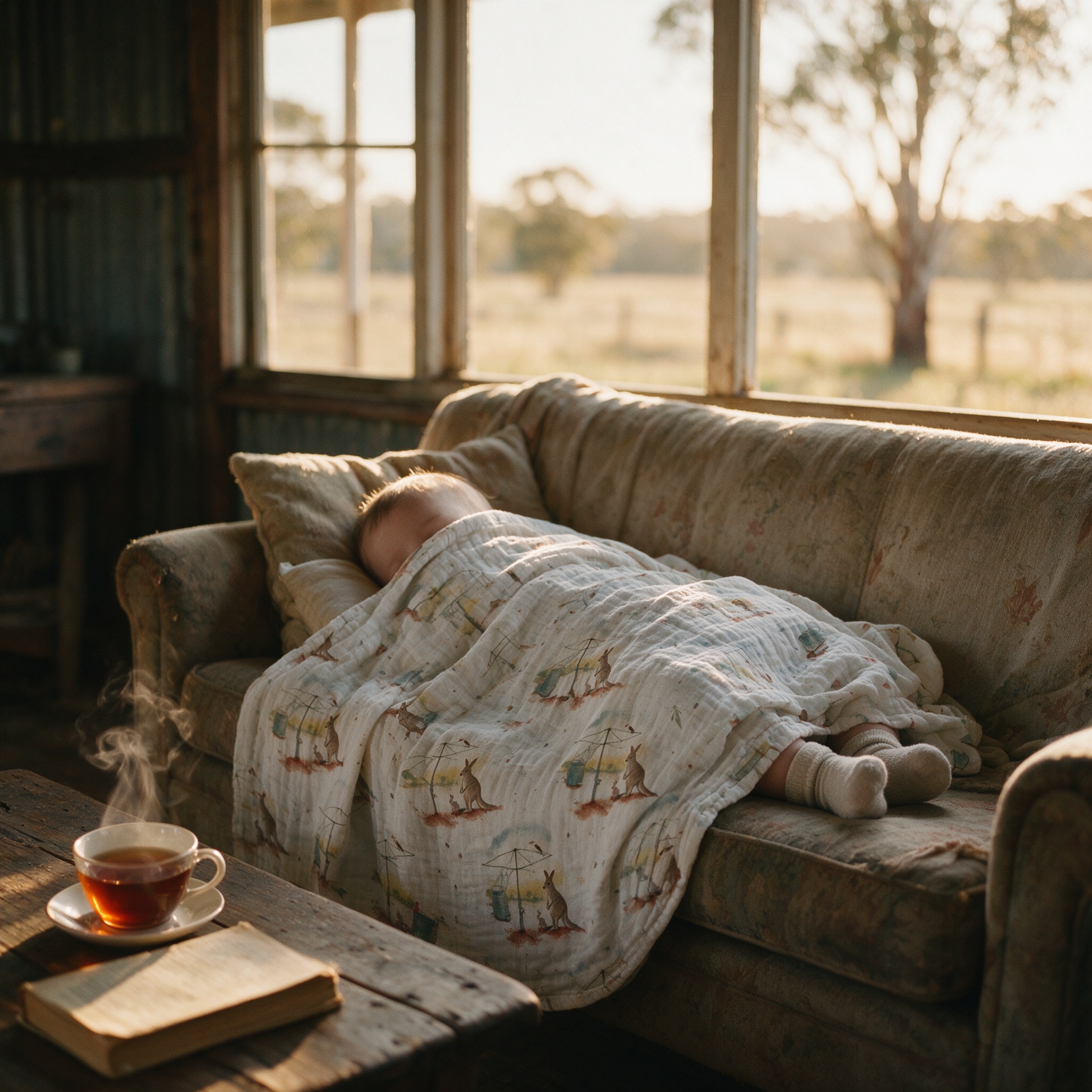
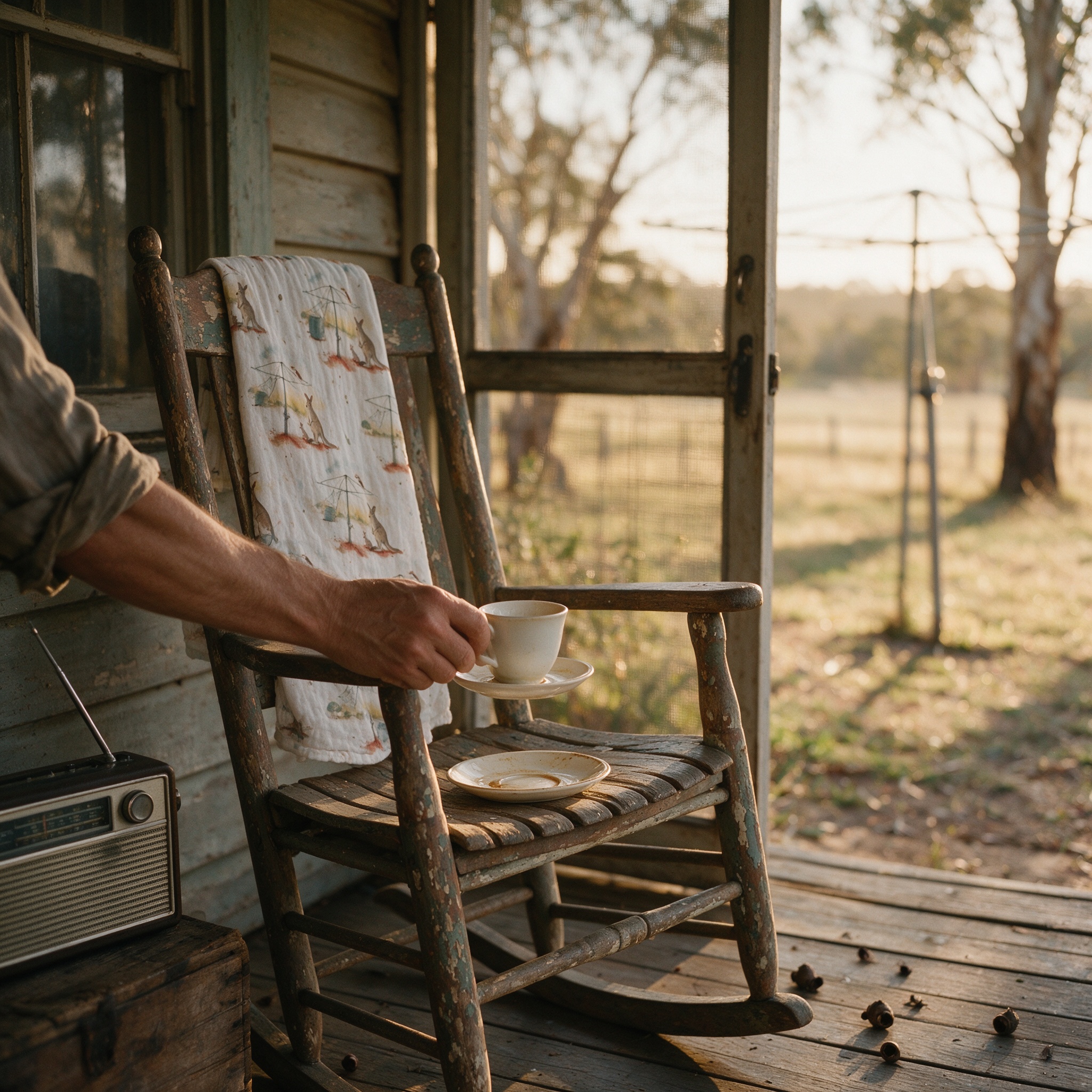
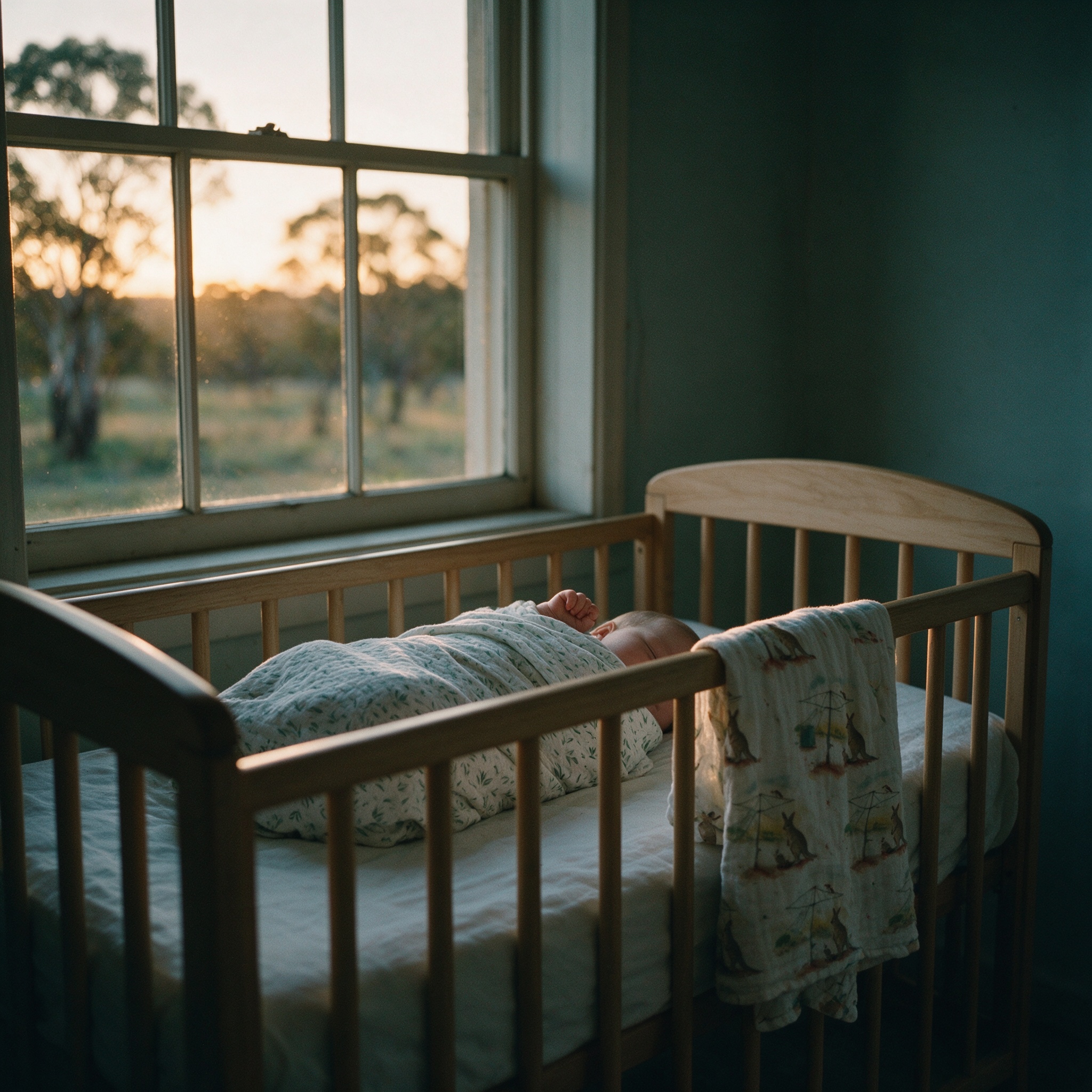
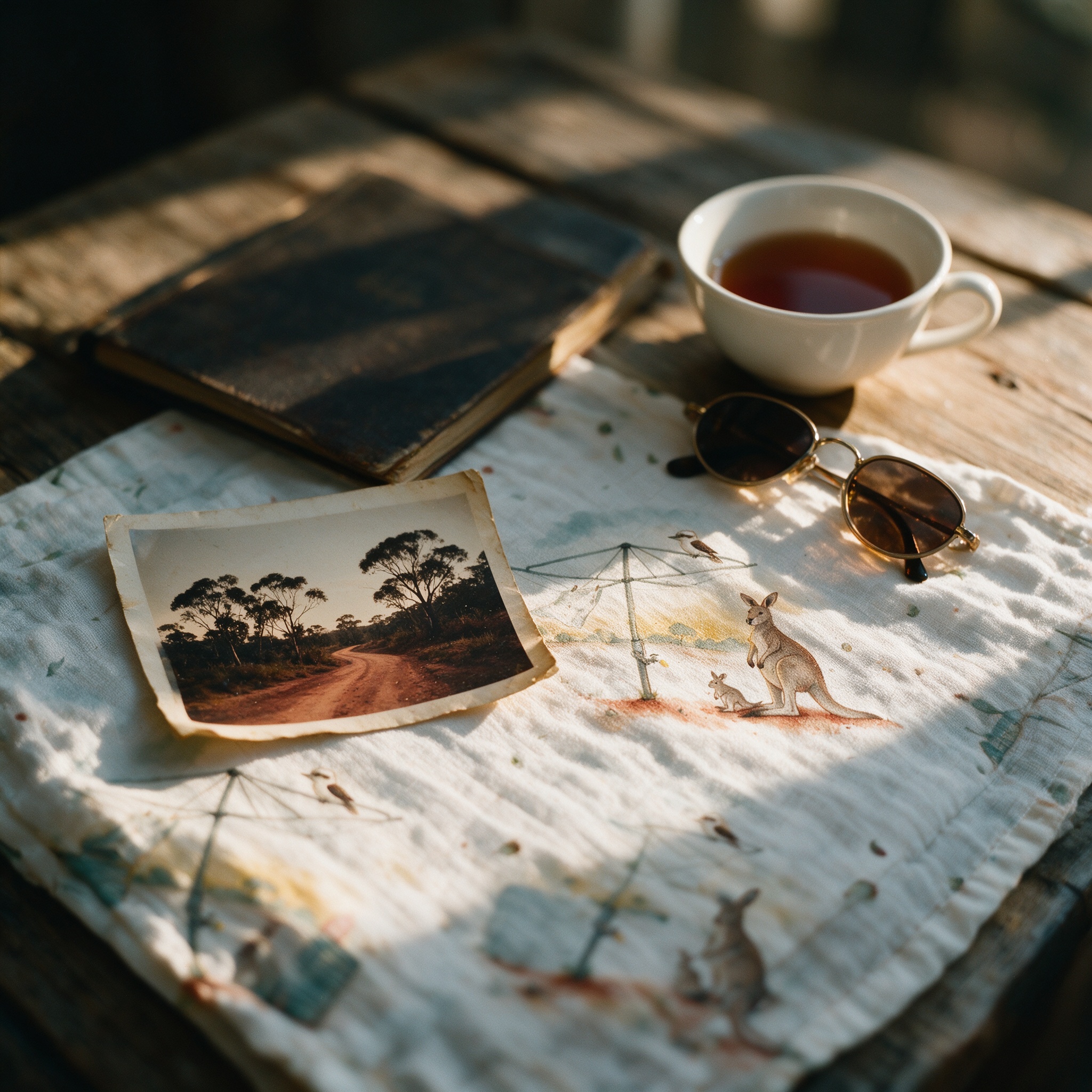
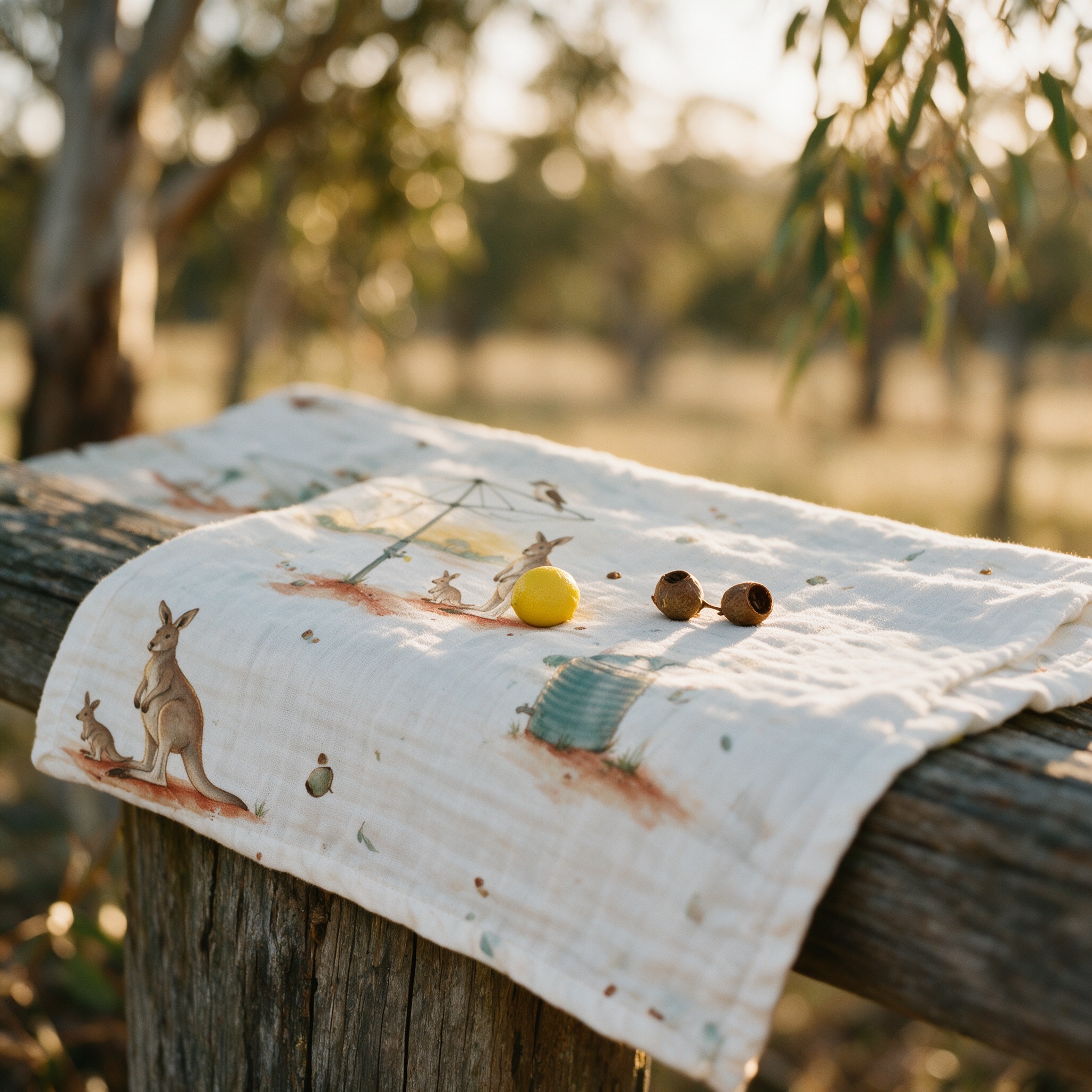
Pegged to the clothesline — in this line, the product is part of the scene.
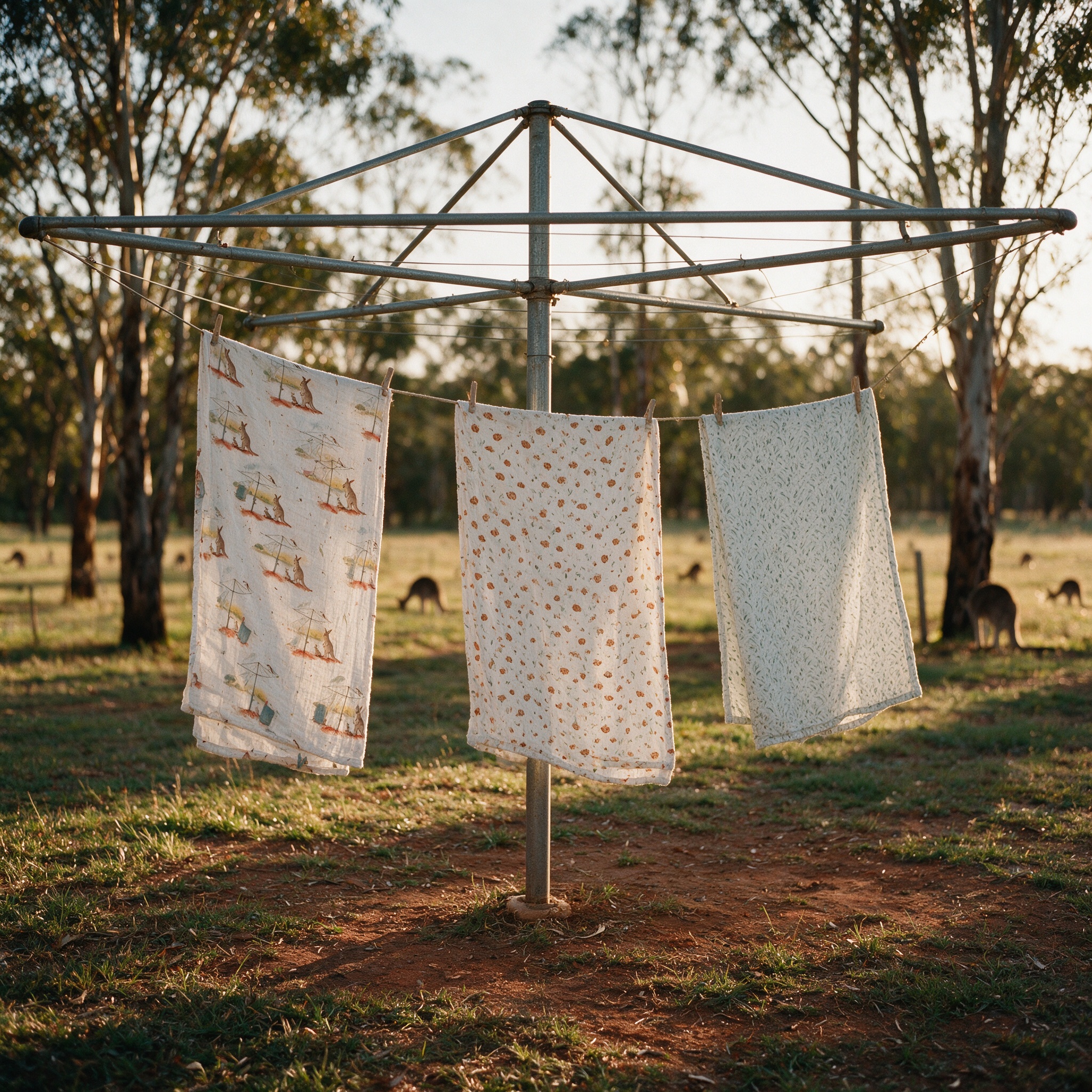
Pegged to the line — the fixed program of kangaroo o'clock.
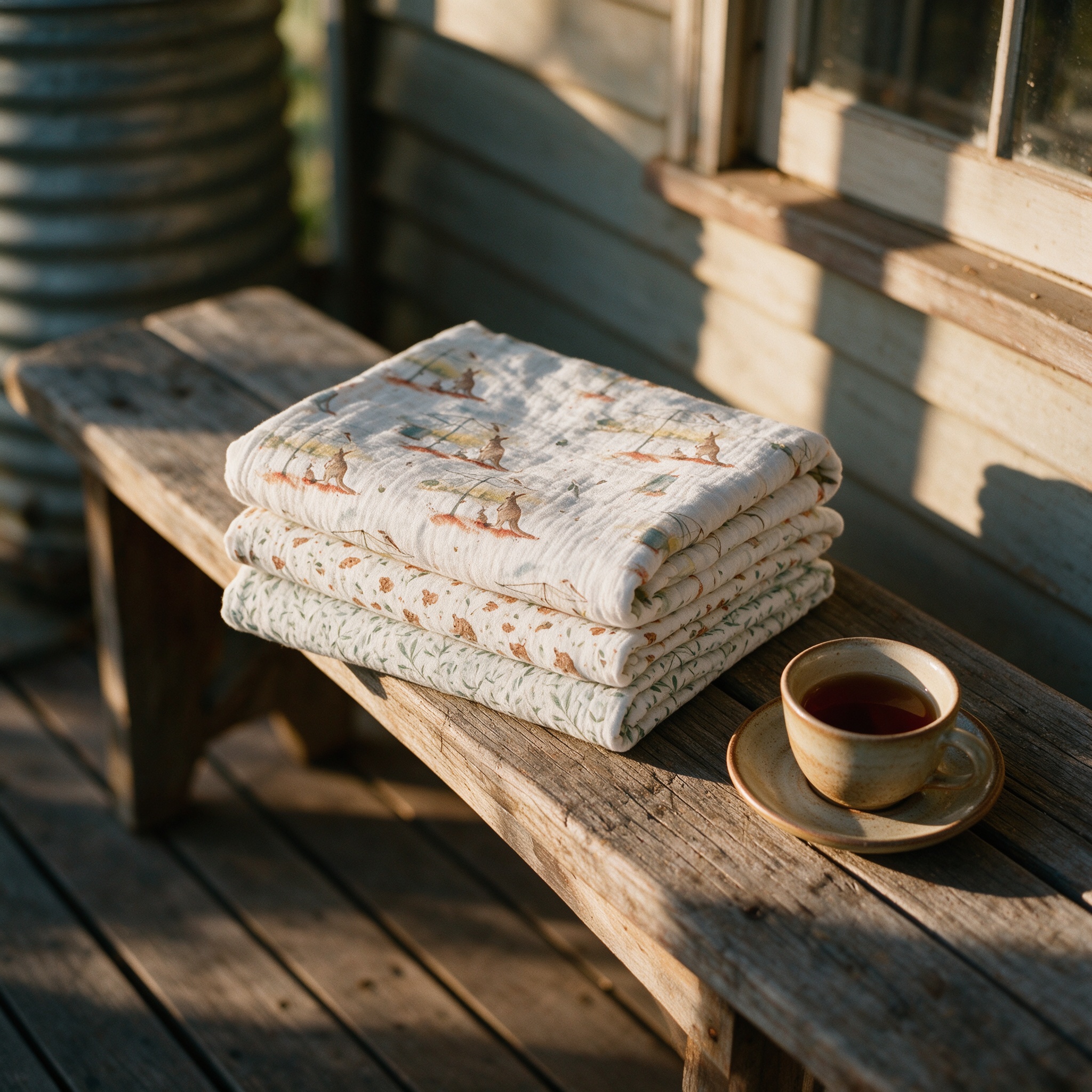
Taken in and folded — the paddock after the guests have gone.
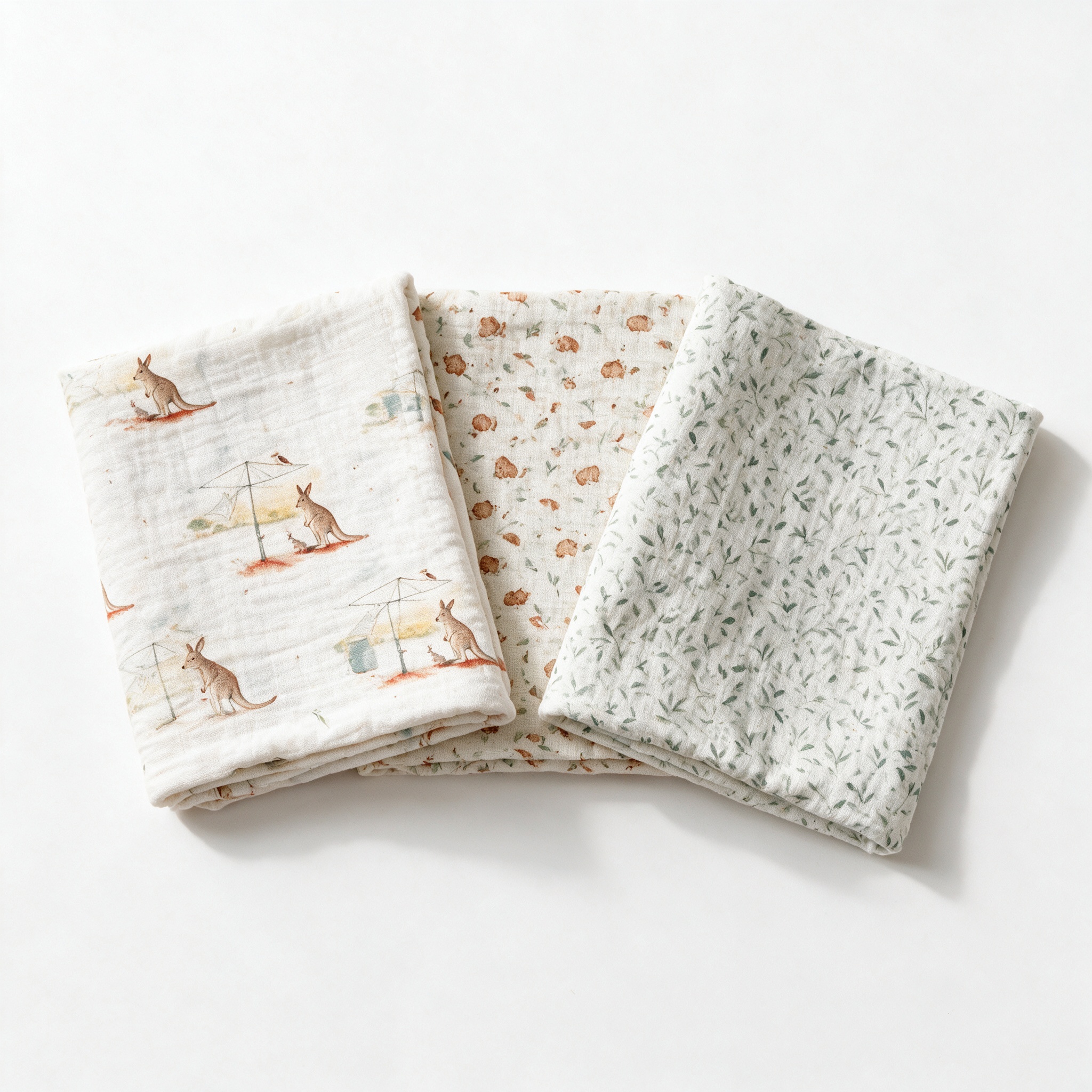
Three folded together — red earth and gum shadow.
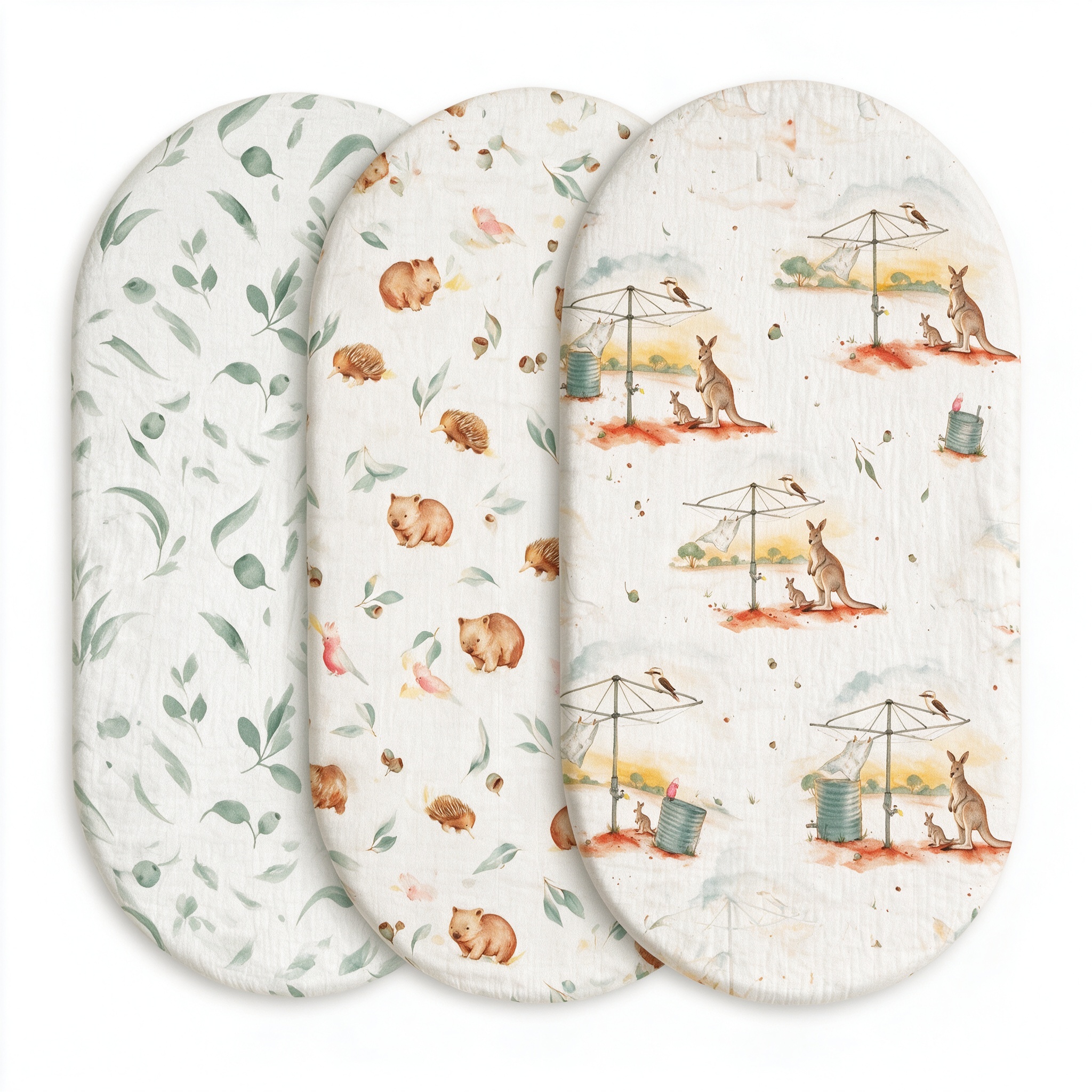
The whole family in white — three layers of kangaroo o'clock.
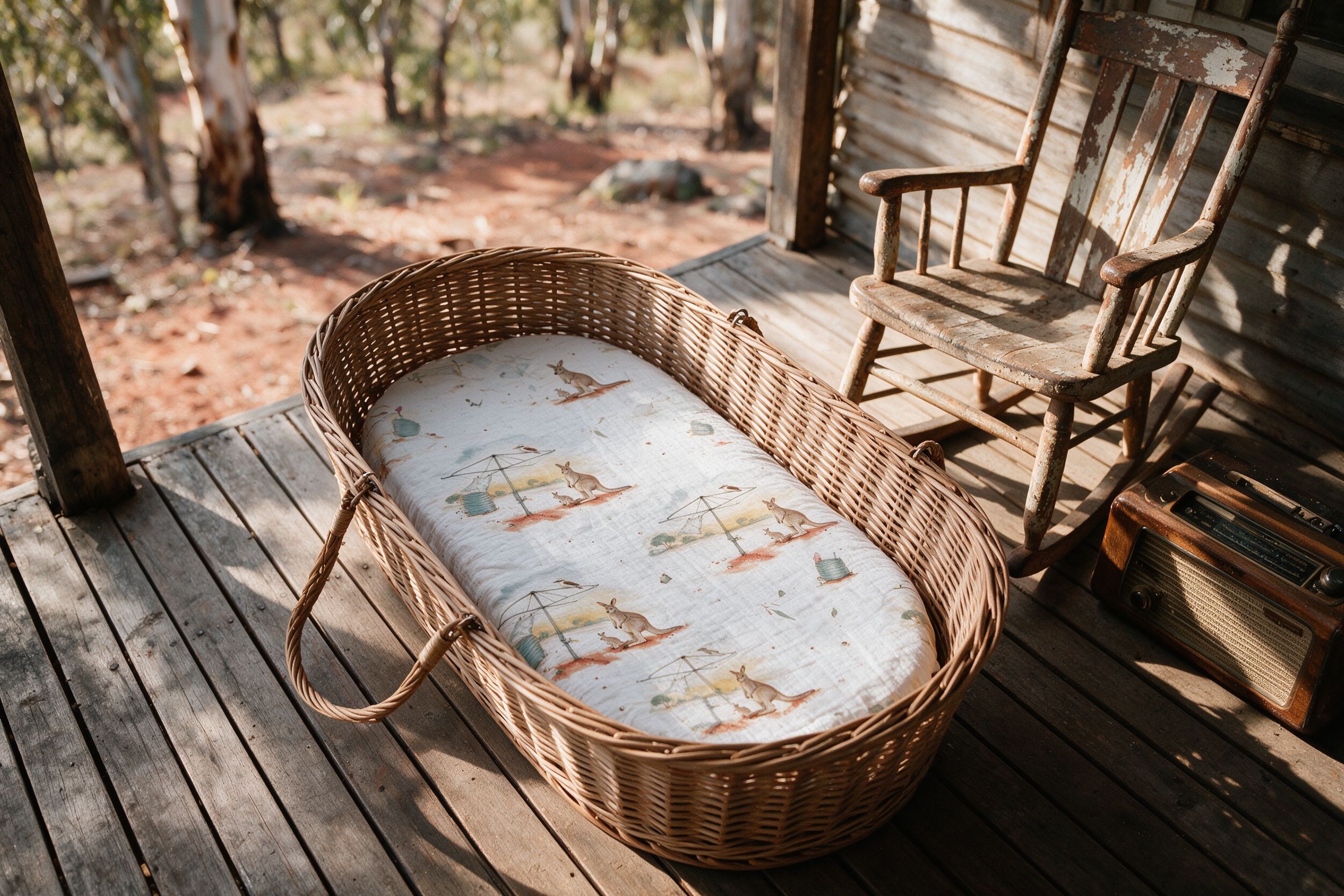
Kangaroo o'clock, over the little bed — tonight they'll come too.
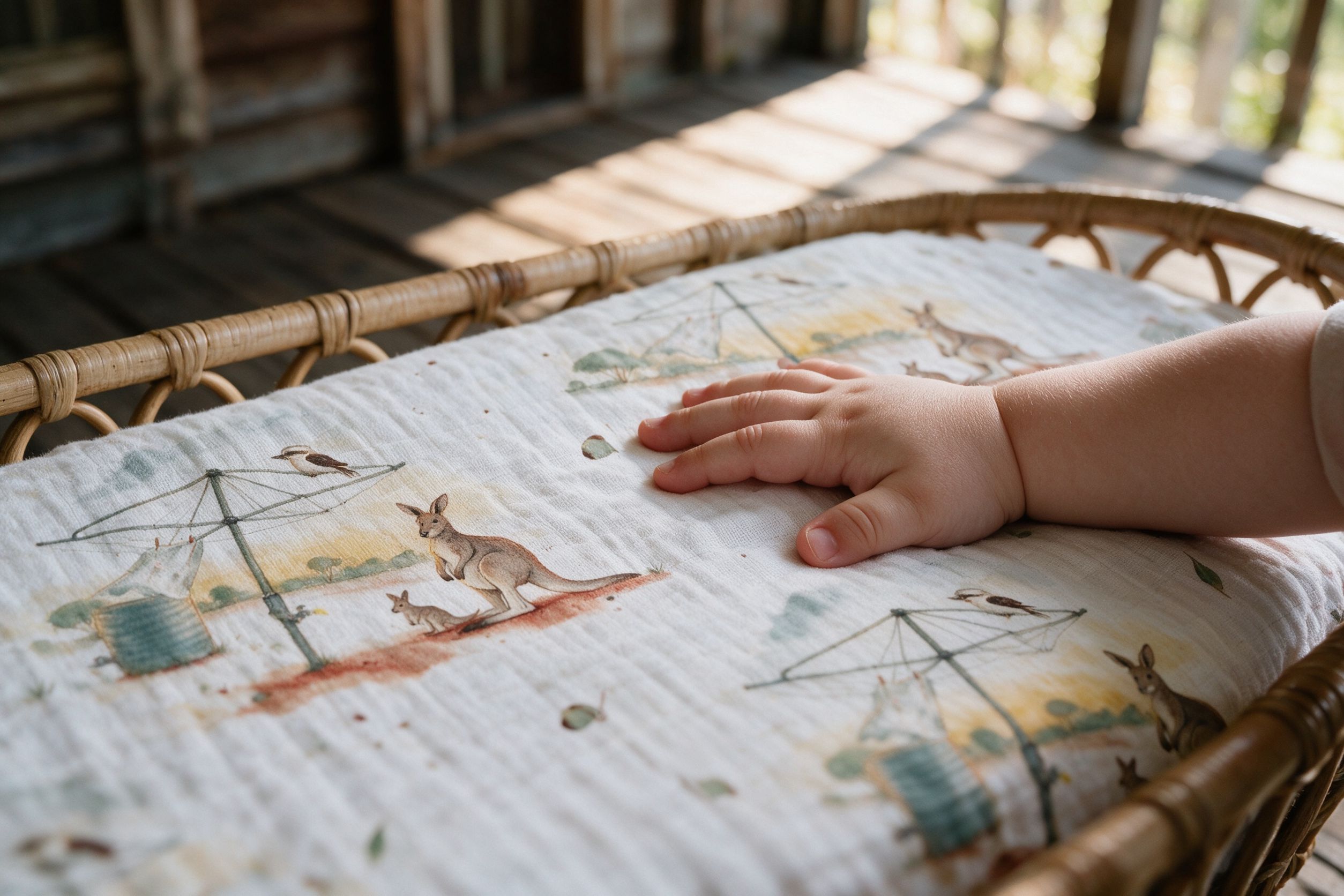
Softness drying in the wind — red-earth-paddock soft.
The Hills Hoist — invented in Adelaide, 1945; the national icon of the Australian backyard. In this line it is not a prop but the stage: the cloth goes up on it, and only then does kangaroo o'clock begin.
Grey kangaroos grazing at dusk, a kookaburra on the line — real, everyday eastern Australia, not a zoo spectacle. Nan's back paddock has no gate, because the guests never needed to be invited.
In every repeat hides one tiny lemon, beside the rain tank's tap — this stop on the lemon's journey: from behind the popcorn bag at the Starlight, all the way to the red-earth paddock. With Goodnight, Madagascar it forms the pair: been / not-yet-been.
No African animals (that's the savanna notebook's territory), no koala close-ups (overdone — small silhouette at most), no desert monoliths, no opera house. One Australian backyard at dusk — no need to go out; the wonder comes to you.
One day I will set foot on that continent. Before that, the back paddock I have been to comes first.
— Sophia, Xujiahui, Shanghai, August 2026